A picture may be worth 1,000 words, but just a few of the right words in the right places can add clarity and meaning to students’ technically focused multimedia presentations.
Students have many occasions to read and create text that is not linear and discursive but that can provide a rich mix of words and images that help readers navigate to make meaning. The adage that “one picture is worth a thousand words” may lead students and teachers alike to believe that pictures alone can do the talking. That clearly is not the case.
The Common Core State Standards call for students to attend to the norms and conventions of the discipline and context in which they are writing. In scientific and technical writing, this includes using graphics to aid comprehension. While many students can use technology with ease to capture and incorporate original and existing images in written documents, their ability to include such text features has outpaced instruction on basic principles and practices for doing so. Pictures are certainly valuable, but they often need at least a few words of captions, legends, titles, and labels to make them meaningful. By sharing with students even a few examples of faulty practices of incorporating graphic features in texts and identifying ways of remedying them, we can bring this lesson home.
A useful window into the current state of writing in STEM disciplines, including students’ use of graphics (drawings, schematics, photographs, and data displays for example), can be found on the Innovation Portal (www.innovationportal.org). This free and publicly available site allows students to create engineering design project e-portfolios to document their work and to share it for instructional purposes and in the pursuit of scholarships, content prizes, college entrance, or course placement. Sample portfolio entries available on the site as instructional resources highlight common problems and pitfalls students encounter when including graphics in scientific and technical writing, such as missing or inadequate captions, labels, and source information.
Text doesn’t explain images
Design process portfolios, like science logbooks, are the “biography” of a project that can be shared with anyone. Readers — particularly those outside the classroom — typically seek “connective tissue” that clarifies the intended function of a graphic attached to text. When a student simply drops in illustrations without explaining how they relate to the body of the text, as in the case of the excerpt from one portfolio entry (see Figure 1), readers can be confused.
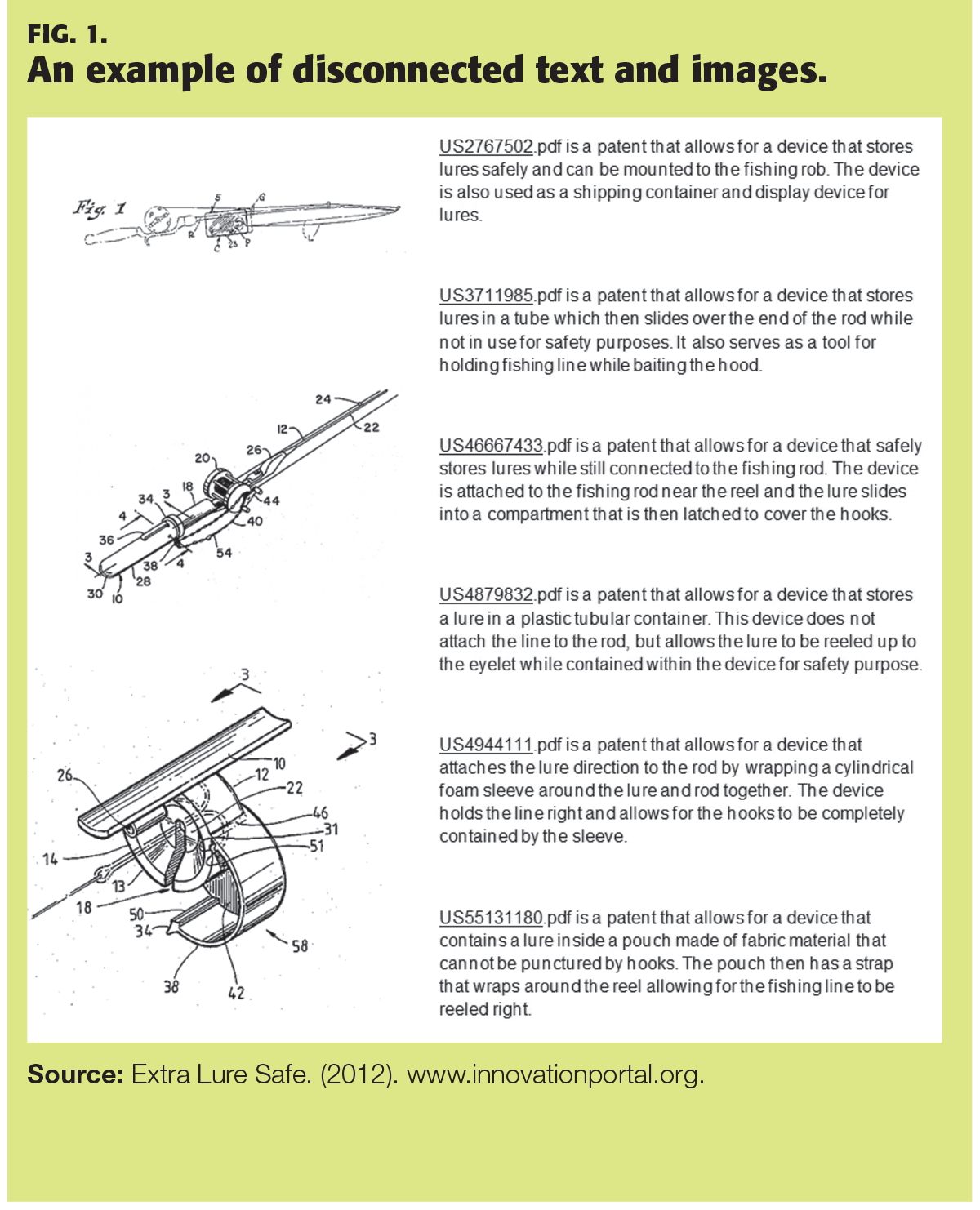
The intent of this project was to solve the problem of unsafe storage and transportation of fishing lures. The entry attempts to address one element of the engineering design process: documentation of prior solution attempts. The several images accompanying the text evidently represent some previously designed and patented devices, but the images do not clearly correlate spatially with the brief patent descriptions and, as a result, fail to aid comprehension. A label or brief caption beneath each of the figures obtained from one of the patents mentioned would solve this problem and make clear that not every patent description is accompanied by a corresponding illustration.
Which drawing? Which idea?
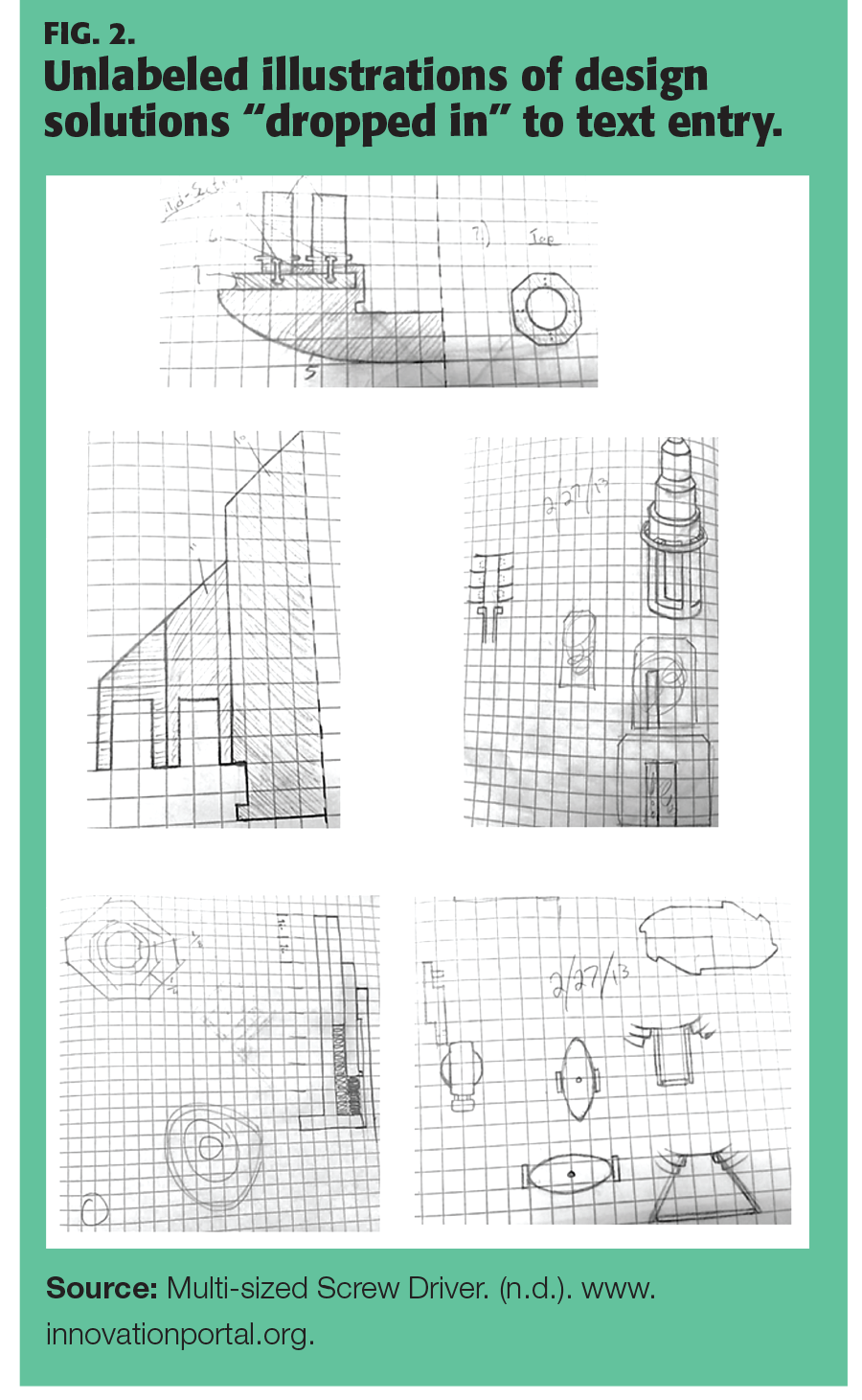
When documenting another element of the engineering design process — design concept generation, analysis, and selection — students included a decision matrix and detailed drawings based on ideas that they deemed successful. Their portfolio entry for this element includes an array of drawings (see Figure 2, below), all devoid of text connections. This omission actually led an engineering educator reviewing this portfolio to remark, “Which drawing, which idea?”
Insufficient documentation of sources
Today’s technology makes it exceptionally easy to locate, copy, and insert images. Students often take this route to enhance their writing with photographs, diagrams, and illustrations. Without documentation, however, cutting and pasting pictorial features, similar to appropriating words and ideas from another source, is tantamount to theft. Library/media specialists and teachers of various disciplines are already teaching documentation skills and conventions, but examples of student work suggest that adhering to those conventions often is limited to appropriate attribution for text resources only. Instruction on when and how to attribute graphic resources such as photographs, drawings, diagrams, charts, and tables must be included along with instruction on complete and correct citation from written texts.
Sometimes students demonstrate good intentions by noting a web address, but they do not make clear precisely what they took from the site. So, for example, readers may assume but do not know for sure whether the photographic image in this excerpt from a portfolio entry has been taken from the web site noted (but not, as the citation suggests, from the home page). This portfolio entry also includes without accurate citation the company logo taken from a different web page (but without indicating that fact) as well as various details from the web site text. The single reference to the web site is insufficient to address the origin of all of these components. The problem could be solved by including a link to each of the pages consulted, along with a note clarifying which components originated or are based on information on that web site. Indicating whether content was “taken from” or “based on” a source is also helpful.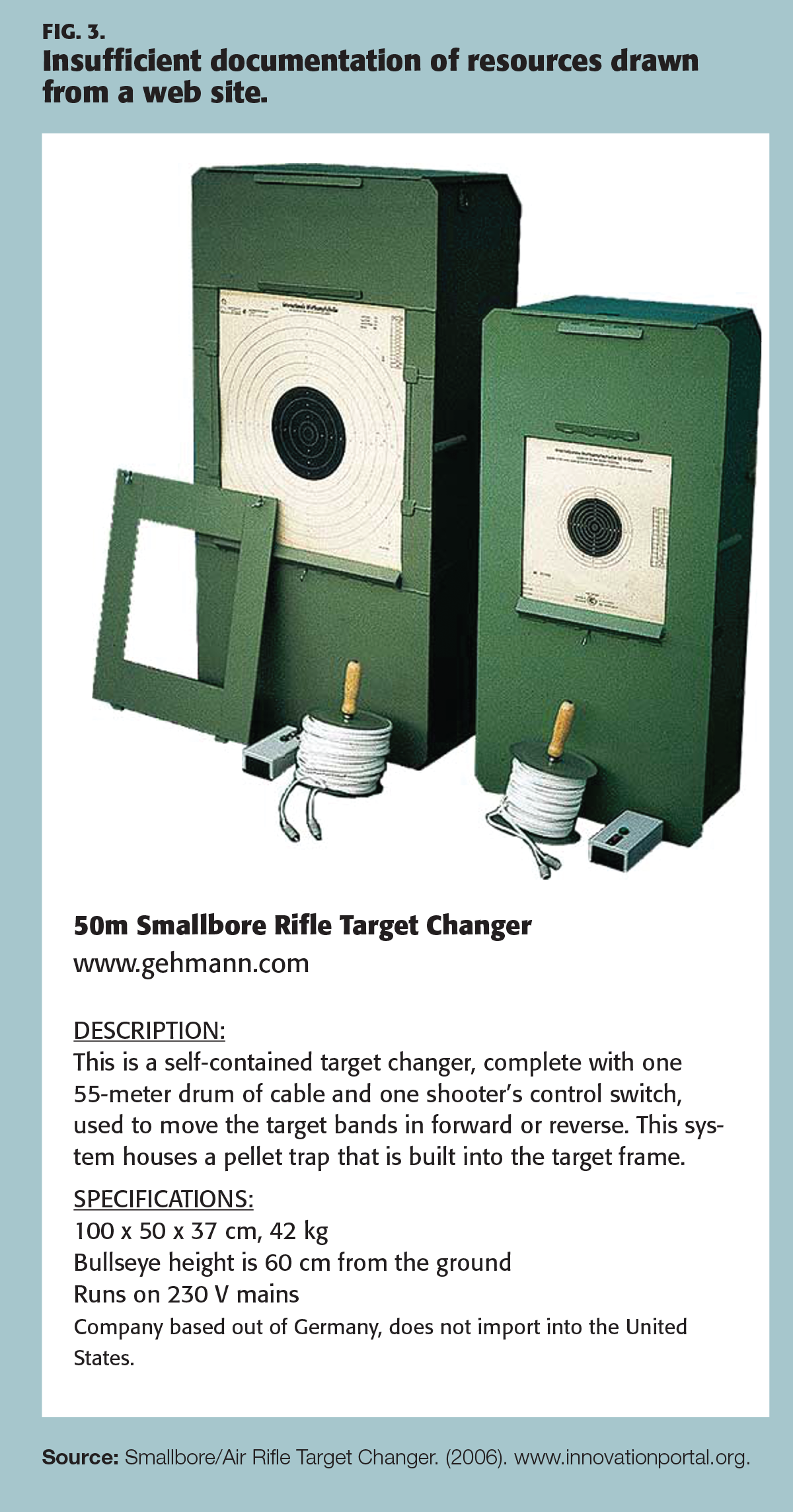
Images of uncertain origin
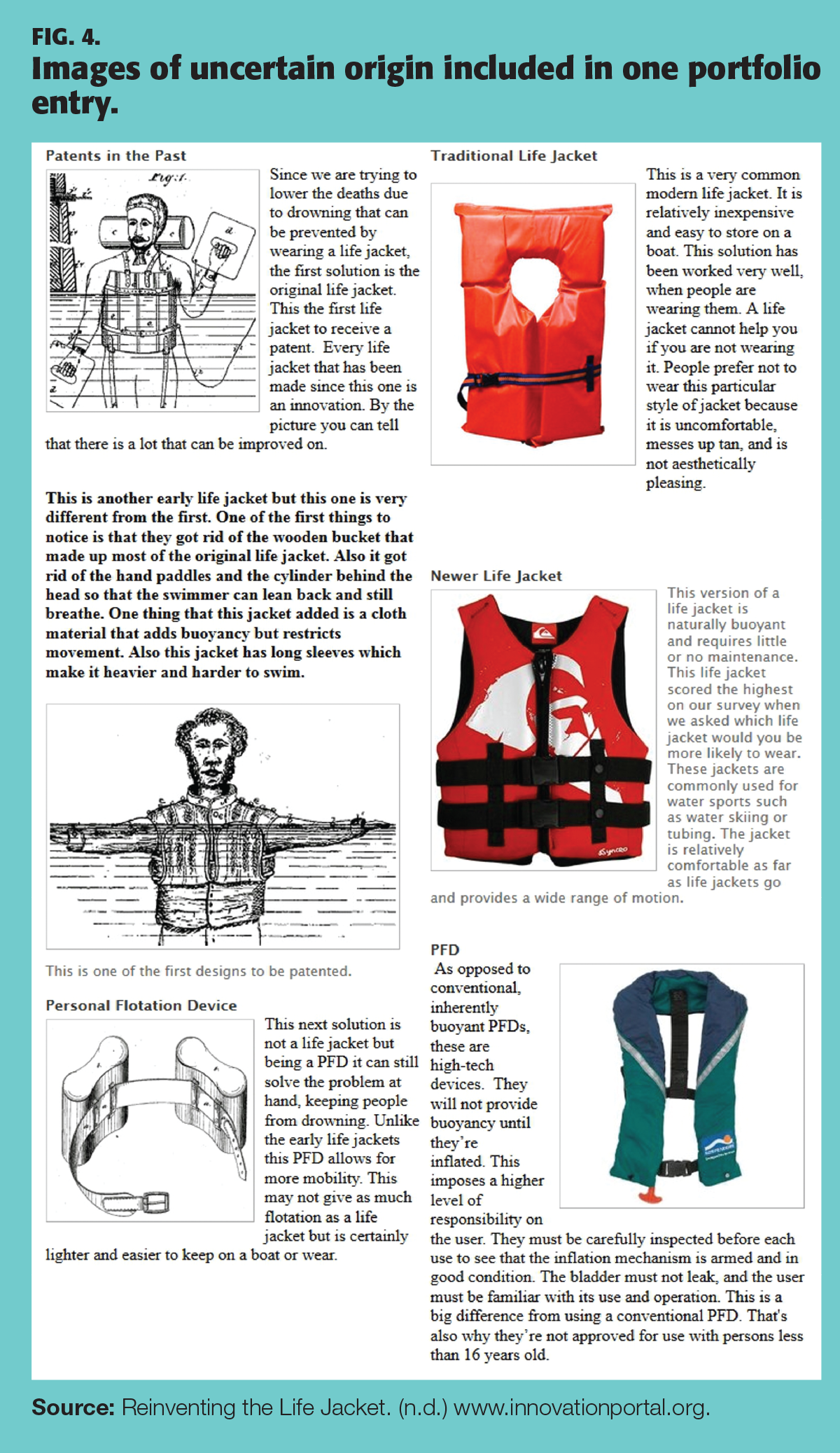
To be fair to students, the sources from which they “borrow” graphics are sometimes guilty of inadequate or missing documentation as well (as is sometimes the case with Wikipedia files). That appears to have been the case with a web resource from which students obtained the images included in this portfolio entry (see Figure 4). When original sources are unclear, students must provide a caption for all graphic materials to indicate their secondary source. Readers have no way of knowing where the illustrations of early life jackets first appeared, nor do they know whether the photographic images of traditional and newer life jackets were taken by the students or (more likely) also copied and pasted from an unknown web resource. When original sources are unclear, students must provide a caption for all graphic materials to indicate their secondary source and note that original sources were not identified therein. To avoid confusion, when images are originals — drawn or photographed by students themselves — students should identify those images with a citation that describes the subject, names themselves as the photographer, and gives the date the photo was taken. Students who created this portfolio entry used captions above each image to identify what it is (although not where it is from). The placement of text beneath images helps support the reader’s understanding.
Using text and images effectively
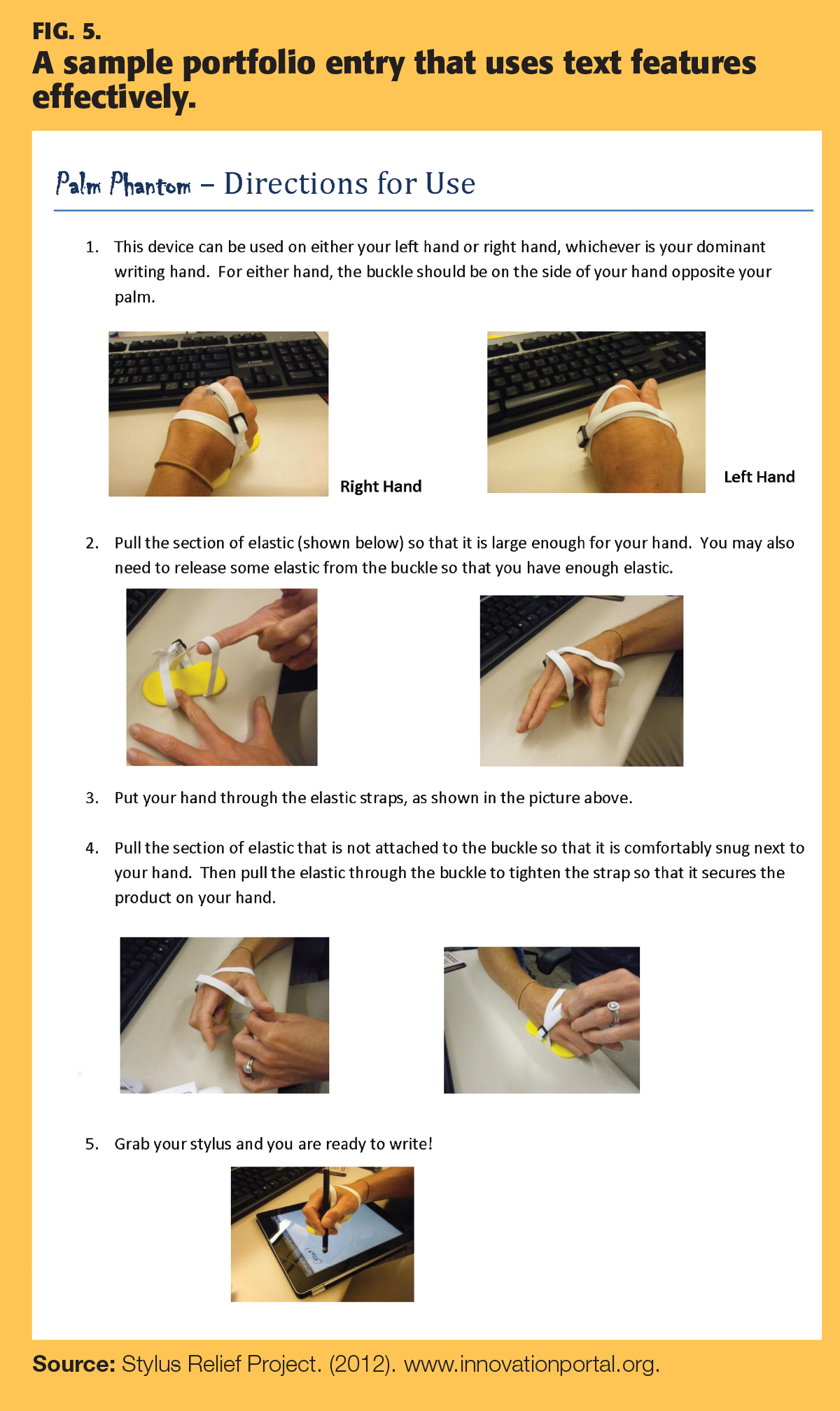
Use of space on hard copy or electronic “pages” is another aspect of effective integration of text and image that students increasingly need to master. Some, like the creators of the portfolio entry in Figure 5, already have done so. Text features including numbers, labels, and photographic images all contribute to readers’ understanding of how to use a tablet stylus control device. The absence of any attribution of photo source suggests that the project creators have photographed themselves demonstrating the use of their prototype; while not essential, some statement regarding photo credits would eliminate any uncertainty and honor the conventions of attribution.
A few last words
Whether the examples used to do so have been created by students or professionals, and are serious or humorous ones, introducing the interplay between pictures and words in classroom instruction will serve students well. The practice can facilitate writing that is appropriate to the content and conventions of engineering and other STEM disciplines and incorporates graphic elements appropriately and with powerful effect.
Note: Student portfolios were provided in redacted form, with all identifying information about author(s) and academic institution removed, making it impossible to provide references for these other than to identify the portfolios by title.
CITATION: Goldberg, G.L. (2014). One thousand words, plus a few more, is just right. Phi Delta Kappan, 96 (3), 49-53.
ABOUT THE AUTHOR

Gail Lynn Goldberg
GAIL LYNN GOLDBERG is an educational consultant based in Ellicott City, Md.