Ten years ago, in Kappan, the author published a detailed account of the old-fashioned and unengaging instruction used at his son’s Chicago elementary school. Now he updates readers with a reflection on his son’s high school years, describing a curriculum and teaching practices that are desperately in need of an overhaul.
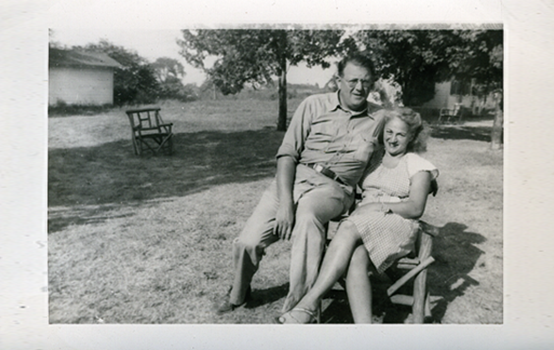
These are my grandparents, Milton and Gertrude. Milt was born in 1902 and died in 1974; Gertie was born in 1906 and died in 2004, nearly 99 years old. One hundred years ago, in 1917, my grandfather was in high school, and my grandmother was in 6th grade. Women could not vote, horse-drawn wagons clopped along their downtown Chicago streets next to Model Ts, air travel involved biplanes, and the high school graduation rate was 15%.
Yet, if my grandparents walked into a typical classroom today, they would know exactly what to do: Sit at their desks, be quiet, and listen to the teacher. Our schools are educating children for a world that no longer exists; our Industrial Revolution curriculum and teaching methodologies are so obsolete that I’m surprised students don’t take classes in Hunting and Gathering.
10 years later
My previous article “Why go to school?” was published in the May 2007 Kappan. It was a critique of the dominant purposes and practices in the nation’s schools, and it was framed around my son Max’s 1st- and 2nd-grade experiences in his traditional Chicago public school. I began the article:
Last year, in 2nd grade, my son’s homework was 400 worksheets. The year before, in 1st grade, his homework was also 400 worksheets. Each day, he brought home two worksheets, one for math and one for spelling . . . At seven-years-old, school was teaching my son that the wonderful world of “learning” is about going home each day and filling in worksheets. That was two worksheets a day times five days a week times 40 weeks for the year, and there you have his 400-worksheet school years (p. 648).
Today, Max is in college, and it seems like a good moment — 10 years later — to check in on his journey through the American educational system.
One leg of that journey was terrific. Following Max’s 400-worksheet experience in 2nd grade, we pulled him out of our neighborhood school and enrolled him in another Chicago public school, Burley School, which was child-centered, literature-rich, and project-based. Max did not bring home a textbook in six years at Burley. He had a wonderful experience and graduated 8th grade a confident learner, with happy school memories, who liked to read.
But then he started high school.
The big picture view of one of America’s “best” high schools is far less than stellar.
One of the very best high schools in America
Max did not attend just any high school. His was one of the Chicago public system’s 11 selective enrollment schools (out of 172 high schools in all), where the competition for admission is fierce (based on scores from two standardized tests and final grades in 7th grade). Max’s school has been touted as one of the best high schools in America by Newsweek, U.S. News & World Report, and the Washington Post, and it has been awarded National Blue Ribbon status by the U.S. Department of Education.
Many people think Max’s high school is an exemplary model for public education writ large. How did they determine that? With lots of numbers: reading and math test scores, AP and IB class enrollments and test scores, ACT and SAT scores, FTE ratios, graduation rates, scores on a college-readiness index, the number of college-level tests, and college attendance rates. One thing that the number-crunchers have not done, however, is set foot inside the school.
The criteria that I use to examine the quality of Max’s high school are quite different from the endless counting of quantitative data: I will look at what my son’s high school actually taught and how they taught it. Needless to say, I was not privy to Max’s experiences inside his classrooms, some of which I know were valuable — many of his teachers were caring, smart, and wanted him to do well, and Max said that some of his classes had excellent discussions. But this article is a holistic impression of my son’s overall experience, and the big picture view of one of America’s “best” high schools is far less than stellar.
The American high school curriculum: 1917 vs. 2017
What classes did Max take in high school? Algebra, Geometry, U.S. History, Sociology and World Issues, English, Spanish, Biology, Chemistry, Physics, Journalism, and so on — largely, they were the same classes I took 40 years ago and which, I am quite sure, my grandparents took 100 years ago. In short, they are the liberal arts staples of the high school curriculum that date to recommendations made in 1893 by the Committee of Ten. As Tony Wagner and Ted Dintersmith (2015) write, “It’s shocking that the typical student day in 2015 is eerily similar to what it was at the beginning of the 20th century” (p. 40). Yes, Max took Digital Imaging as an art elective, but overall, his classes were remarkably conventional and familiar; his great-grandparents would have fit right in.
This also means, by extension, that Max did not take any classes that focused on a wide range of knowledge and ideas that are central to life, work, and citizenship in our complex 21st century: media literacy, systems thinking, environmental literacy, creative thinking, multicultural literacy, critical thinking and problem solving, information literacy, or civic and social responsibility (Partnership for 21st Century Learning, n.d.; Robinson & Aronica, 2015; Wagner & Dintersmith, 2015; Zhao, 2012).
When we consider how much the world, life, and the scope of knowledge have changed since 1917, it should be considered educational malpractice to organize the curriculum around math, science, English, and social science and teach those subjects in discrete educational silos, as if such domains never mix in real life. But not once did Max have classes from different subject areas integrated on a theme or inquiry question. There is more interdisciplinary knowledge in cooking dinner than Max experienced in four years of high school.
Nor did Max’s school have any focus on teaching 21st-century habits of mind, such as passion, curiosity, innovative thinking, imagination, mindfulness, perseverance, and empathy (Claxton, Costa, & Kallick, 2016; Duckworth, 2016; Engle, 2011). It would also be difficult to find in Max’s high school anything resembling what Sarah Fine (2014) calls “intellectual playfulness,” which she defines as “instruction organized around tasks that are open-ended in that they have many valid strategies and answers, absorbing in the sense of supporting immersive ‘flow’ experiences . . . punctuated by opportunities for social and/or intellectual risk taking” (p. 4).
Max’s school also did not have any focus on what Yong Zhao (2012) calls “entrepreneurial spirit”: inspiration, direct actions, confidence, courage, creativity, fortitude, ambition, and (again) passion and being a risk taker (p. 82). Being entrepreneurial is not limited to business, of course — Zhao writes about social and policy entrepreneurs, whose work involves civics, empathy, social responsibility, and global literacy. Likewise, Wagner and Dintersmith (2015) write of the vital need for educating “creative problem solvers,” who often include original thinkers and nonconformists (Grant, 2016). For Max, however, high school was about coloring inside the lines and thinking inside the box.
Max was taught absolutely zero about some of the most important and practical knowledge needed to succeed in everyday life: financial literacy. His high school did not teach him anything about money, finance, paying bills, and the use of credit (e.g., how one gets a loan, obtains a credit card, and manages debt) or about saving and investing, the ethics of money, or even how to write a resume and cover letter. To be fair, the school did offer some interesting electives — including some with 21st-century content — but electives made up a tiny portion of the curriculum, and they do nothing for the vast majority of students who do not take them. In fact, Max’s school recommends students skip most electives and take more academic core classes.
In all of Max’s years of high school — that would be 720 days and 5,400 hours sitting in class — he was never taught how to use a power drill, pitch a tent in the woods, cook a healthy and delicious meal, plant a garden, fix a bicycle, paddle a kayak, build a piece of furniture, or travel to foreign lands. Nor was he given the option to take a “free inquiry” or “Genius Hour” class to create an independent study project on a topic of personal passion. Rather, nearly all of his high school experience involved the study of academic content that would be needed mainly to pass a test or a class and not allowed to learn about what brings meaning and joy to our everyday lives
Doing school in a desk
Larry Cuban (1993) notes that one significant 20th-century change in schools was the unbolting of student desks from the floors. Walk into classrooms today and you may not see desks placed in rows as once was the norm, but you will certainly still see desks and students sitting in them — even though confining students to desks should now be as obsolete as the clapping of erasers. I asked Max how much time in high school, other than in art and physical education, was spent sitting in a desk and he said 90%. The other 10% involved small group activities, class presentations, and science labs. Max told me, “We very rarely were not in our desks.”
This means that Max experienced very little of the collaborative and highly active, project-based learning that has become a core practice in 21st-century progressive schools such as High Tech High (Larmer, Mergendoller, & Boss, 2015; Mehta & Fine, 2012; Zuniga & Cooper, 2016). Rather, the vast majority of Max’s assignments involved short-term work, not in-depth inquiry projects with deeper learning, critical or creative thinking, sophistication, or the production of authentic, well-crafted products (Berger, 2008; Martinez & McGrath, 2014). In three years of math, Max was never assigned a project. Much of biology was watching slideshow lectures. Max could not recall a project in any class requiring a month or more of collaborative work done primarily inside the classroom as a lively workshop space.
If schools want to start their transformation to vibrant 21st-century learning communities, they can begin by getting rid of desks, eliminating textbooks and worksheets, limiting lectures to 15-minute minilessons, and stopping the use of traditional teacher-directed lesson plans. It is 2017 everyone; the lesson plan is dead.
An antiliteracy curriculum
How many books, other than textbooks, was Max assigned to read? About eight. That includes fiction and nonfiction for all of his 28 classes for all four years. In fact, Max went a year-and-a-half (his entire junior year and the first half of his senior year) without being assigned to read a single book in any class. That would be zero books in 18 months of high school. It wasn’t until the second semester of his senior year that the teacher of his Honors World Literature assigned two books. And there was hardly anything “worldly” about them: The Stranger by Albert Camus and Siddhartha by Herman Hesse. So much for a 21st-century global curriculum.
English teacher Penny Kittle (2013) writes that a goal for high school students should be to read 25 books each year, mostly through independent reading. Kittle knows the only way we become confident, skilled, critical, fast, and passionate readers is through voluminous reading. But Max’s school did not have any independent reading requirement; Max did not read a single book of his own volition in all four years of high school. My son left 8th grade as a reader, and his high school turned him into a not-reader.
The importance of reading widely holds true not just for reading literature but also for reading informational texts. The only books assigned for nearly all content classes were textbooks — and Max, like almost every other high school student I talk to, rarely opened them. The same applies to reading newspapers, which are powerful resources for building background knowledge, global understanding, civic responsibility, empathy, and vocabulary. Max could not recall being assigned to read a newspaper, not in Sociology, AP U.S. Government, or even in his Journalism class.
Further, none of the writing that Max was assigned in high school was written or published for a real audience outside of school. This removed any authentic purpose for writing other than to complete the assignment. He did take Creative Writing as an elective class, but most of his writing in high school consisted of short, academic “analytical reflections” — heavy on citing “textual evidence” — the kind of writing that he most likely will never do again after college. AP English Language was not about real writing; the class focused on nine months of prepping students for the AP test. In short, Max’s high school was so fixated on training him to do school writing that it neglected to teach or inspire him to be a writer.
Not schooling for citizenship
A primary responsibility of our public schools is to educate citizens to be informed, critical, and compassionate caretakers of our democracy. Max tells me that a few of his classes engaged him in interesting discussions about race, economic class, and LGBTQ issues, and his AP U.S. Government teacher had him watch some of the presidential debates and encouraged students to vote. But there were no common civic threads that ran through his four years to cultivate critical citizens who work to solve problems. Max was never assigned an in-depth inquiry project about another country and its people and cultures or a current global problem.
One of the best ways to teach for active citizenship and make school relevant is through problem-based learning, where students collaborate to investigate a real-world problem. Max did not experience any of this. In fact, he could not think of an example of being required to take something he studied in a class and go out into the real world to apply it in a substantive way. And while the school is in the dynamic, diverse, and troubled city of Chicago, Max was not assigned to go into his city and use it for authentic learning in the real world, for example, interviewing people for a neighborhood ethnography project, conducting a survey on social and political issues, or designing a public art installation.
This sort of schooling is not devoted to helping students learn in a deep, lasting, meaningful way; it is dedicated to the cramming of facts, formulas, and academic language into short-term memory.
The death of learning
Assessment at Max’s school was a data-driven horror show. Every assignment was awarded points that were logged into an online portal. Whatever the points added up to, that was his grade. In Biology, the teachers implemented what they referred to as standards-based grading; looking at Max’s scores was like trying to decipher hieroglyphics. All core academic classes had quizzes and tests and the dreaded end-of-the-semester final. Max had no authentic, outside-of-school audience for any of his work, and he recalls no performance assessments or exhibitions and did not have any student-led conferences. Attending his report card conferences in the sea of tables in the cafeteria was like being in a herd of cattle on an industrial farm.
I asked Max how he would do on his school tests today, just six months after graduation. He did not hesitate: “I would fail them all. Maybe I’d get a D on a few.” Sadly, he confirms what decades of research have shown: This sort of schooling is not devoted to helping students learn in a deep, lasting, meaningful way; it is dedicated to the cramming of facts, formulas, and academic language into short-term memory. Rather than cultivating knowledge, skills, and dispositions that matter, it turns school into four dismal years of jumping through hoops.
Tired, stressed, and bored
Did Max have some interesting and valuable learning experiences in high school? I know he did. For example, in his Digital Imaging class, he was assigned to make a short iMovie that involved creative thinking; in U.S. History, he had a unique biographical debate; and in Biology, Max — who is passionate about rap music — was able to write and record a rap song.
But Max struggled mightily to come up with other engaging assignments from his four years. I asked Max for three words to describe his overall high school academic experience. He said, “bored, unmotivated, and uninterested.” (Max wanted me to note that he didn’t work very hard in high school and did not get good grades. I agree, though I’d add that his school did little to inspire him to work hard.)
Max’s words should not surprise us. Boredom in high school is a disease of vast epidemic proportions (IU Newsroom, 2010). When 22,000 high school students answered the question, “How do you currently feel in school?” three of the top responses were tired, stressed, and bored (Toppo, 2015). English teacher Alexis Wiggins (2014) shadowed two students for two days and came to three eye-opening (for her) conclusions:
- Students sit all day, and sitting is exhausting;
- High school students sit passively during about 90% of their classes; and
- You feel like a nuisance because teachers keep saying to be quiet and pay attention.
The primary culprit here was not Max’s teachers but an obsolete and destructive paradigm of schooling. Max’s high school is no anomaly; it remains the pervasive practice of K-12 schooling across our country. I assume that some teachers in Max’s school would love to transform their classrooms for 21st-century learning, but they are beholden to an antiquated and narrow curriculum, archaic and harmful assessments, and myopic policies. They are also held responsible by parents who expect their children to get high test scores and get into good colleges. And colleges perpetuate the whole system by their own narrow and obsolete entrance requirements. But as Zuniga & Cooper (2016) write in their article advocating project-based learning in high school, “the biggest challenge lies with teachers and their ability to change their instructional practices” (p. 74).
Why go to school?
Most students in Max’s high school get very good standardized test scores. His school has a 99% graduation rate, a 96% “college-readiness” rate, and a 92% postsecondary enrollment. On paper, this is the kind of school that government and education leaders lavish with praise. My son’s high school is a living testament to their vision of college- and career-readiness.
But these numbers do not add up to the whole truth. They easily deceive us, telling us one story that blinds us to another. To most people, the eye-popping data from our “best” schools means that deeper learning must be occurring there and that students must be developing the kinds of knowledge and skills that our society holds to be most important. But that is just not the reality. By and large, K-12 schools continue to be stuck in my grandparents’ era, and they’ll continue to languish there until they transform the curriculum and move students out from their passive desks, inviting them into active interdisciplinary inquiry about topics and issues that matter in the real world.
There are some wonderful 21st-century classrooms out there. If Milt and Gertie were to walk into one of them, they would be shocked, assuming they had stumbled into a some sort of a combined workshop, studio, laboratory, think tank, public space, and exhibition gallery, all rolled into one, humming with the vibrant buzz of students engaged in learning. They might even be hard-pressed to spot the teacher in the room, who would be learning right alongside the students, rather than lecturing from up front.
Near the end of Max’s sophomore year, all parents were invited to school for an evening presentation on course options for junior year. The auditorium was packed. For the first hour, a school administrator explained the courses, and then — to our surprise — she turned the stage over to an executive of a test-prep company. After a few minutes of chitchat to warm us up, she said this to the audience: “Parents, the days of students going to a liberal arts college to study philosophy are over. Your children will need to get jobs.”
My wife and I stood up and walked out. Alone.
Do we need schools to prepare students to be college- and career-ready? Of course we do, but for careers in the 21st century not the 19th century. And we equally need schools to prepare students to be life-ready and citizen-ready and world-ready and filled with purpose and empathy and a zest for learning. And we need schools to nurture every student to be a philosopher to help them make sense of life, be happy, find joy, and improve the world.
It has been 10 years since my earlier Kappan article, and schools seem to be even more narrowly devoted to job training and “doing school” and less about life and curiosity and educating students to be human. Max went to a celebrated American high school and got a good ACT score. But, tragically, his high school did not give him an education. Those two things are not the same.
References
Berger, R. (2008). An ethic of excellence: Building a culture of craftsmanship with students. Portsmouth, NH: Heinemann.
Claxton, G., Costa, A.L., & Kallick, B. (2016). Hard thinking about soft skills. Educational Leadership, 73(6), 60-64.
Cuban, L. (1993). How teachers taught: 1883-1993. New York, NY: Teachers College Press.
Duckworth, A. (2016).Grit: The power of passion and perseverance. New York, NY: Scribner.
Engle, S. (2011). Children’s need to know: Curiosity in schools. Harvard Educational Review, 81 (4), 625-645.
Fine, S. (2014). “A slow revolution”: Toward a theory of intellectual playfulness in high school classrooms. Harvard Educational Review, 84 (1), 1-23.
Grant, A. (2016). Originals: How nonconformists move the world. New York, NY: Viking.
IU Newsroom. (2010).Latest HSSSE results show familiar theme: Bored, disconnected students want more from schools. http://newsinfo.iu.edu/news-archive/14593.html
Kittle, P. (2013). Book love: Developing depth, stamina, and passion in adolescent readers. Portsmouth. NH: Heinemann.
Larmer, J., Mergendoller, J., & Boss, S. (2015). Setting the standard for project-based learning. Alexandria, VA: ASCD.
Martinez, M.R. & McGrath, D. (2014).Deeper learning: How eight innovative public schools are transforming education in the 21st century. New York, NY: The New Press.
Mehta, J. & Fine, S. (2012). Teaching differently . . . learning deeply. Phi Delta Kappan, 94 (2), 31-36.
Partnership for 21st-Century Learning. (n.d.). www.p21.org
Robinson, K. & Aronica, L. (2015). Creative schools: The grassroots revolution that’s transforming education. New York, NY: Penguin.
Toppo, G. (2015, October 23). Our high school kids: Tired, stressed, and bored.USA Today. www.usatoday.com/story/news/nation/2015/10/23/survey-students-tired-stressed-bored/74412782/
Wagner, T. & Dintersmith, T. (2015).Most likely to succeed: Preparing our kids for the innovation era. New York, NY: Scribner.
Wiggins, A. (2014, October 24). Teacher spends two days as a student and is shocked at what she learns. Washington Post. www.washingtonpost.com/news/answer-sheet/wp/2014/10/24/teacher-spends-two-days-as-a-student-and-is-shocked-at-what-she-learned/?utm_term=.2a905d3f4b0f
Wolk, S. (2007). Why go to school? Phi Delta Kappan, 88 (9), 648-658.
Zhao, Y. (2012). World class learners: Educating creative and entrepreneurial students. Thousand Oaks, CA: Corwin.
Zuniga, A. & Cooper, T.M. (2016). Project-based learning: Seven ways to make it work. Educational Leadership, 73, 72-76.
Citation: Wolk, S. (2017). Educating students for an outdated world. Phi Delta Kappan 99 (2), 43-52.
ABOUT THE AUTHOR

Steven Wolk
Steven Wolk is a professor in the teacher education department at Northeastern Illinois University, Chicago. He is the author of Caring Hearts and Critical Minds: Literature, Inquiry, and Social Responsibility.