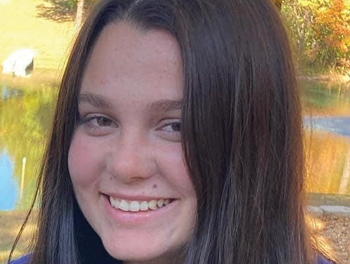
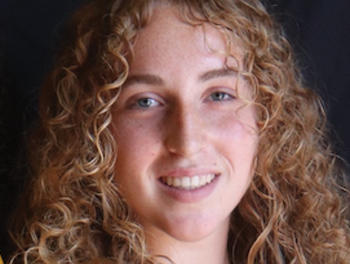
For this issue of Kappan, we asked our Educators Rising students: When you become a teacher, how do you intend to use artificial intelligence in the classroom? If you are not going to use it, explain why.

A powerful tool to expand boundaries
I intend to use artificial intelligence in my classroom as a tool to enhance creativity, encourage deeper thinking, and inspire ideas, as opposed to using it with the intention of AI doing my job or my students’ job. AI is a very powerful tool, one that if used properly can serve as a creative partner. I believe many see rising technology to be a shortcut for students. However, if used correctly, AI can be a service that assists in expanding the boundaries of their imagination and creativity.
Owen Elsasser
Freshman
Wayne State College
Wayne, Nebraska

Creativity comes from imagination
I would not use artificial intelligence inside of my classroom. I believe that creativity comes from the imagination. If that is compromised by using AI, then no child will ever be truly creative. They’ll know how to use prompts but not how to do things on their own.
Quentin Black
Senior
Maple Heights High School Maple Heights, Ohio
Risks of AI outweigh the benefits
I do not intend to use artificial intelligence. If students learn to rely more on AI for easy tasks rather than doing it themselves, I worry that they will stop being able to think critically. This will impact students in the long run. As they grow older, they will have new problems that AI can’t solve. If their norm is to use AI for everything, will they have the mental capacity to solve real-world problems? When they start working and realize that they can’t just use AI to solve all of their problems, will they be prepared? This will affect them, the people they work for, work with, and help. For example, if a medical student only uses Chat GPT on their homework and tests, will they be ready to do actual procedures when they get to the medical field? AI can also have false and biased information.
Here’s an example. An MIT student asked AI to make her headshot more “professional.” It gave her lighter skin and blue eyes. AI is biased because humans are biased. Not only that, but AI is being used to create fake news and false information. This could be harmful if we give students full access to AI.
Additionally, when AI is used to help a student write an essay, AI is essentially taking from other pieces of work and putting it into the student’s without any credit, making it plagiarism. While AI can also attempt to assist in identifying and preventing dishonest behaviors such as finding plagiarism in students’ work, the AI makes mistakes as well. The accuracy of these tools ranges from 33 to 81%, meaning if we attempted to use AI to find plagiarized student work, we could end up wrongly accusing a student. This could put their academic career at risk, which we cannot do.
And finally the environmental effect. Not only do the mining and production of metals used in AI hardware lead to soil erosion and pollution, but many of the electronics are not recycled properly, leading to severe electronic waste that adds to the already dangerous amount of pollution. AI uses massive amounts of electricity, which adds to the planet’s warming greenhouse gases. According to the International Energy Agency, a request made through ChatGPT consumes 10 times the electricity of a Google Search. The rise of AI could see data centers account for nearly 35% of the country’s energy use by 2026 (“AI Has an Environmental Problem,” 2024). That is not only absurd but incredibly dangerous. Additionally, AI also uses an insane amount of water for each question asked. AI-related infrastructure may soon consume six times more water than Denmark, a country of 6 million. That is a massive problem when a quarter of humanity already lacks access to clean water and sanitation. In total, the risks of AI outweigh the benefits.
Eliah Onkeles-Klein
Senior
Shaker Heights High School Shaker Heights, Ohio
This article appears in the Winter 2025 issue of Kappan, Vol. 107, No. 3-4.