In this week’s newsletter:
📌 Schools struggle to respond to state and federal mandates that may or may not take effect.
📌 New faces and roles at the Dallas Morning News, Associated Press, USA Today — and the New York Times.
📌 A White House conference on education and AI.
📌 “Why would I love a show about a bright, capable woman being exploited by capitalism to keep a broken system on life support?”
UNCERTAIN MANDATES
The big education story of the week
The big education story of the week is how schools across the country are dealing with new court rulings, federal and state regulations, and Trump administration decrees (EdSource, NPR, Washington Post, Chalkbeat Colorado, South Dakota Searchlight).
In California, schools are finding ways to let students opt-out of classes involving LGBTQ+ content. In Virginia and Colorado, schools are responding to a federal push against trans inclusive policies. Some of them are facing lawsuits and lost federal funds if they fail to comply — including South Dakota, which says it was already in compliance. In Texas and Arkansas, officials are trying to figure out whether to hang posters of the 10 Commandments in compliance with new state laws that are actively being litigated. (New York Times, Houston Chronicle, Arkansas Advocate)
The lack of certainty is key to keep in mind. The New York Times reminds readers that “there may not be much pressure” on districts to make immediate changes, but political science professor Shep Melnick observes that it’s difficult for journalists to predict which initiatives will be pursued. Selective investigations of school districts can have an enormous effect, and sometimes the “the investigation is the punishment.” He wrote about what’s happening in Education Next.
Other big K-12 stories of the week include the ideological debate over vaccine mandates, fears of ICE raids, and Los Angeles settles a lawsuit over COVID-related school closures.
BOOK BANS, CIVIL RIGHTS, & READING SCORES
Top education journalism of the week
How the Education Department is using civil rights laws to bring schools to heel provides a comprehensive overview of how the Trump administration is reshaping the tools of the Department of Education to meet its own goals on issues of race and gender. In particular, the story shows how Title IX is being used to limit trans inclusive policies. (Cory Turner / NPR)
3rd grade reading scores keep sliding. But not in these Michigan schools. examines what some schools are actually getting right — boosting reading scores through everything from phonics to more time outside. (Lily Altavena and Kristi Tanner / Detroit Free Press)
Alberta Backs Off on School Library Book Ban documents how the Edmonton school district removed so many books under a new provincial restriction that the government backtracked. It’s a reminder that top-down education regulations don’t always turn out as planned. (Vjosa Isai / New York Times)
Other education stories we liked this week include The gender gap in math widened in the pandemic. Schools are trying to make up lost ground (AP), There’s Only One True Bipartisan Issue Left (Politico), & Did a ‘32-year-old white guy from New Jersey’ skew a Delta homecoming queen election? (Mississippi Today).
Thanks for reading Alexander Russo’s The Grade, where we take a closer look at education news. Subscribe for free to receive new posts and support my work!
INSIDE AN ARIZONA MICROSCHOOL
CURRICULUM FLAWS & STUDENT HAPPINESS
As Harper’s contributor Chandler Fritz explains, private school choice looks a lot different from inside the classroom.
“This school where I was teaching had massive curriculum flaws,” says Fritz. “But the kids were genuinely happy.”
PEOPLE, EVENTS, STATS, & QUOTES
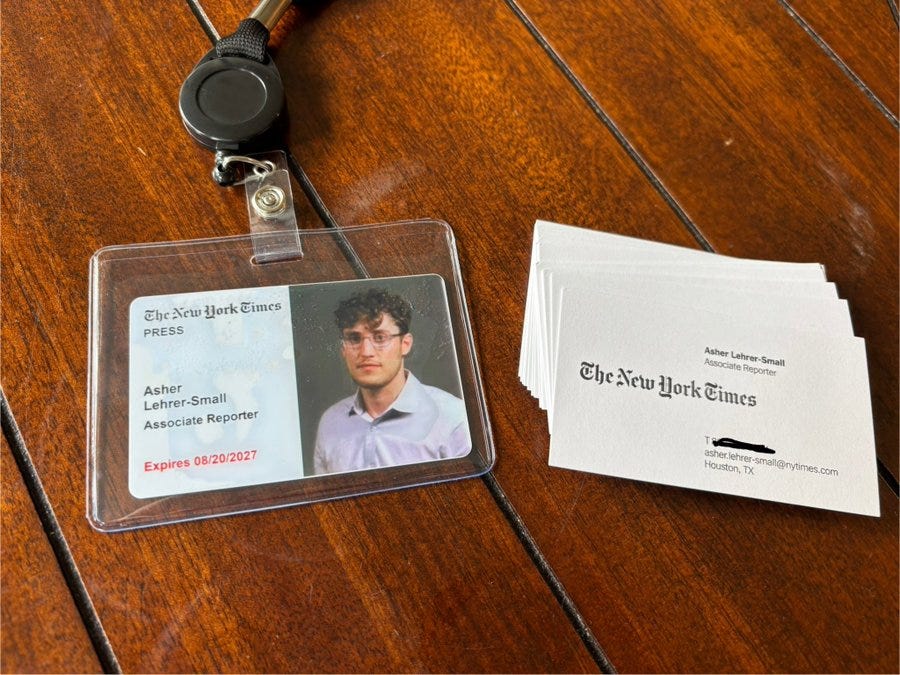
📰 Comings & goings: Ryan Nguyen is joining the Seattle Times Education Lab as the team’s engagement reporter. Makiya Seminera will be assisting on the AP education team’s early childhood coverage. USA Today higher ed reporter Zach Schermele is shifting into a new role as a Congressional reporter — no word yet on if or when he’ll be replaced. Social psychologist and author Jon Haidt is going to be contributing to the ever-expanding education page at Bari Weiss’s The Free Press (which is rumored to be on the verge of being bought for untold millions).
📰 Segments: NPR aired a Colorado Public Radio story on a family of San Luis Valley educators. WBUR’s On Point aired a segment on How to redesign schools for the AI age, featuring LPI’s Linda Darling-Hammond and Brookings’ Rebecca Winthrop. USAT extremism reporter Will Carless has a new documentary about online radicalization of young boys and how it affects their treatment of classmates and others.” There’s definitely a lack of meaningful coverage of the manosphere,” says Carless. “I think most parents would be horrified by what’s out there.”
📰 Jobs: The Houston Chronicle is looking for a senior data reporter who would work on education. Mississippi Today is looking for an experienced education editor to lead a new team. The Connecticut Mirror is looking for a K-12 education reporter.
📰 Events: The White House hosted a conference on education and AI. EWA held a webinar about How Major Federal Changes Will Affect the School Year, featuring Chalkbeat’s Erica Meltzer, EdWeek’s Mark Lieberman, and EdSource’s Emma Gallegos. OECD’s Education at a Glance is coming out on Tuesday. Next week’s ONA25 conference in New Orleans is focused on AI and climate but features a bunch of interesting panels like “Belonging Under Fire: Defending DEI and Belonging in Journalism.”
📰 Stats: Some 31 states and the District of Columbia now restrict students’ use of cell phones in schools. The vast majority of kids still attend traditional public schools but public school enrollment is declining — especially in places with reduced immigration and high costs of living. Private school choice now includes 1.3 million students — a 25% increase in one year. (Charter school enrollment is up, too.) Kids in the US are less likely to reach adulthood than foreign peers, but school gun violence is not a major factor.
📰 Quotes:
“The first task, as quickly as possible, is to separate the lunacy misdirection… from enduring news. Next, and even more important, is not to move on from stories that may fly by too fast to be grasped.”
“Their stories [] show the importance of understanding a community, and its needs and aspirations, when pushing students toward higher education.”
“What Jon [Haidt] is selling is fear… It’s not scientific.”
“I was objective in a dishonest way.”
📰 Corrections: “To its credit, the [Arizona Capitol] Times quickly retracted its original headline and issued a formal correction admitting ‘an inaccurate dollar amount’ in its first draft and eliminating the suggestion that the purchases were ‘approved.’”
KICKER
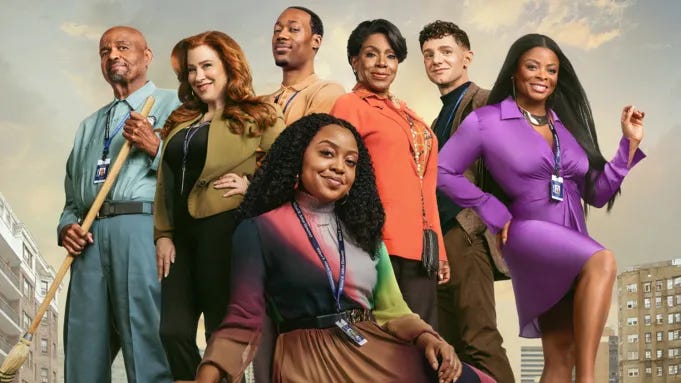
“Whoever told me I would love Abbott Elementary?” asks writer Patricia DeAnna.
The hit show’s new season is coming in October.
That’s all, folks. Thanks for reading!