In this week’s newsletter: Trump’s first 100 days. Bots and AI wreaking havoc at community colleges. Turmoil at Columbia? The sudden demise of the Houston Landing. A bracing new book that takes journalists to task for not questioning prolonged school closures more aggressively. Awards galore for education journalists.
Some items go back earlier than the past week (it’s been a while since the last Friday newsletter).
100 DAYS OF TRUMP
The big education story of the week
The big education story of the week is Trump’s first 100 days (which technically arrives Wednesday).
No doubt, it’s been a hectic time. Just this week we’ve had a new wave of Executive Orders (Chalkbeat, Politico, NPR, WashPost, WashPost, AP, BlackPressUSA) and court injunctions in three states blocking anti-DEI efforts (AP, NYT, EdWeek, WashPost, Politico, Chalkbeat, CNN, ABC, CALMatters).
Meanwhile, the US Supreme Court appears poised to require schools to allow parents to opt out of LGBTQ lessons (NYT, The 74, NPR, SCOTUSblog, Washington Post, PBS, NBC, The Hill).
But what of the first three months? Some outlets have attempted a comprehensive account including everything from bill signings to agency directives, EOs, memos, and lawsuits (NYT). Others focus on the Trump administration’s efforts to revamp the US Department of Education (K-12 Dive).
At least one left-leaning account suggests that all but one of Trump’s 18 education promises remain unmet (Meidas News). At least one trade news outlet compares Trump’s first 100 days to Project 2025 priorities (Inside Higher Ed). Efforts to document real-world effects — the most challenging approach — include potential impacts on far-off rural Oregon schools, federal funding, and the delivery of special education services (CNN, CalMatters, Stateline).
Other big education stories of the week include schools’ looming enrollment/budget crisis, the spread of school cell phone bans and private school voucher programs, and yet another book about prolonged school closings. Check @thegrade_ each day for the latest education news.
‘BOT’ STUDENTS DOING AI HOMEWORK
The best education journalism of the week
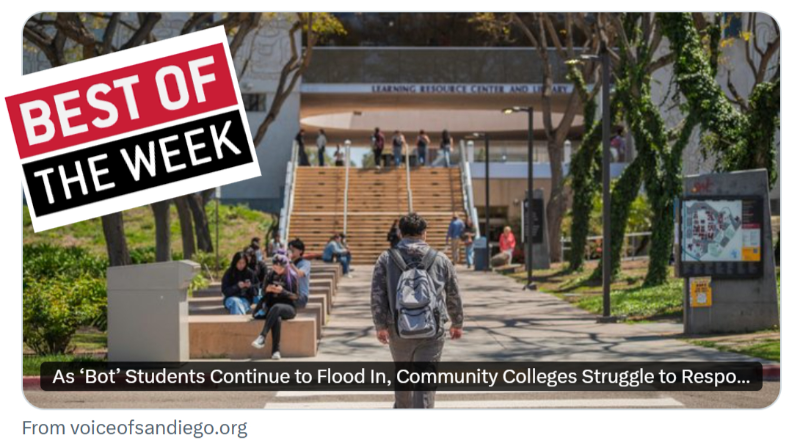
The best education journalism of the week is As ‘Bot’ Students Continue to Flood In, Community Colleges Struggle to Respond by Voice of San Diego’s Jakob McWhinney.
In this fascinating and disturbing piece — and an accompanying explainer — McWhinney explores in-depth how thieves steal community college students’ identities, creating “bot students” enrolled in large online classes to cash in on state and federal financial aid.
The LA Times and CalMatters explored these kinds of schemes in 2021. But McWhinney offers a bracing, step-by-step account. The phenomenon is exploding in California, he notes — an estimated one in four community college applicants there last year was a bot.
McWhinney’s pieces shine when he explores the toll that such schemes take on already struggling institutions. Bots bump real students from enrolling and disrupt any sense of community in the classroom. One college has been forced to require students to show up face-to-face to prove they’re real. “It’s really hard to create a sense of community and help students who are struggling when you’re spending the first couple of weeks trying to figure out who’s a bot.” It’s a fascinating bit of explanatory journalism that could be replicated virtually anywhere.
In an email to The Grade, McWhinney says he heard about the phenomenon in 2022 when he himself was a community college student. He credits CalMatters’ Adam Echelman for doing “really fantastic work” documenting the phenomenon and, given the strong reaction to the pieces, advises others, “If there’s an interesting story unfolding that you think is important and consequential, don’t be afraid to jump on it.”
Other education stories we liked include what California can learn from Texas (EdSource), an L.A.-area high school moving into an abandoned Sears after the wildfires (NYT), a look at the liberal arts college that Florida Gov. Ron DeSantis took over a couple of years ago (Chronicle of Higher Ed), Portland teachers missing more school than ever (Oregonian), and Mass. superintendents’ reflections on post-pandemic recovery efforts (Boston Globe).
AN OVER-ABUNDANCE OF CREDULITY
Our latest columns and commentary
Questions continue to come up about whether the prolonged pandemic school closings in blue states and districts were effective or necessary, and why they weren’t questioned earlier and more enthusiastically.
“How is it that the media worked, whether consciously or not, in conjunction with those in power in a certain way?” asks Zweig.
“Much of the reporting that I saw by education reporters started at a baseline of accepting a narrative that they were told, and then the reporting just kind of launched from there.”
Check out my initial interview and a more recent video podcast (above) about the reaction to the book and lessons for any future crisis.
For social media clips featuring interview highlights, go here. For an uncorrected AI transcript of the conversation, click here. If for any reason the video doesn’t appear or play correctly, click here.
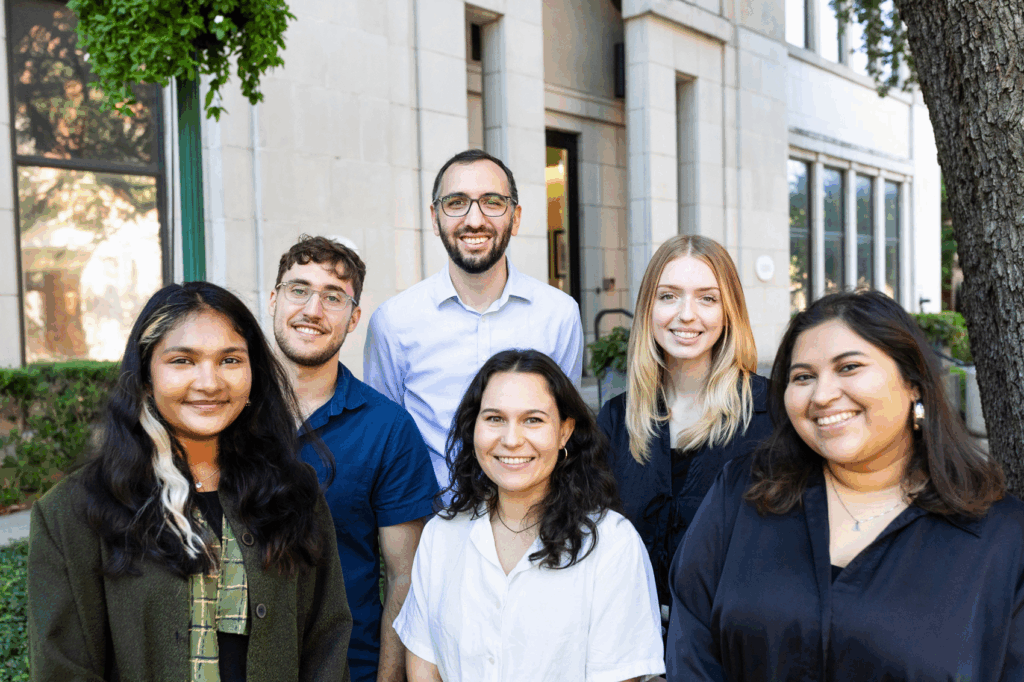
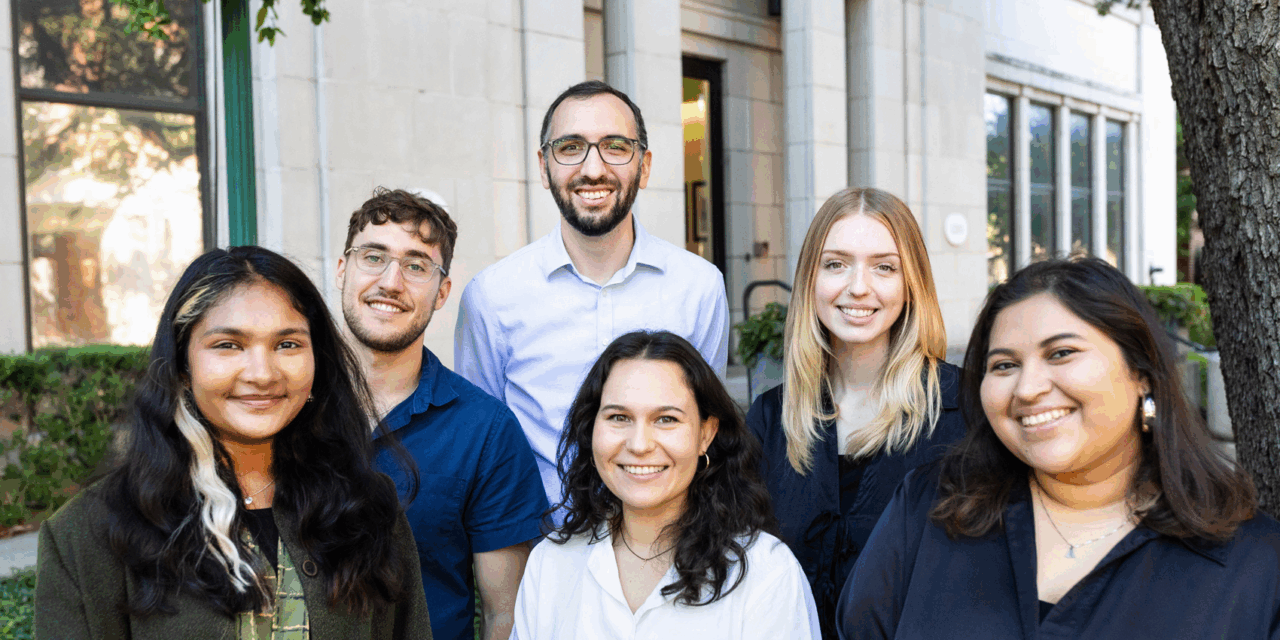
Above: Education journalists looking for jobs include Houston Landing folks like Angelica Perez, Asher Lehrer-Small, Miranda Dunlap, and Brooke Kushwaha. Hire them and/or contribute to the GoFundMe.
PEOPLE, JOBS, & EVENTS
Who’s going where and what’s happening
📰 Comings & goings: Columbia’s j-school announced the sudden dismissal of veteran editor Sewell Chan. Longtime contributing editor Karin Klein talked to folks who worked with Chan to try and figure out what happened. (Meanwhile, Columbia’s international affairs department cancelled a course on race and journalism. Journalist Karen Attiah says she’s going to teach the course anyway.) Chalkbeat NY is hiring.
📰 Segments: WUMN Milwaukee explored lessons from Miami, DC, and Chicago. WBUR’s On Point talk show went all in with its recent series Falling Behind: The Miseducation of America’s Boys. St. Louis Public Radio explored school cell phone bans that benefit from student input (School cellphone bans spread in Illinois and Missouri). WFYI public radio featured two moms on opposite sides of the charter school debate. Rick Kahlenberg talked about affirmative action with Ravi Gupta. Longtime journalist Paul Tough appeared on Fresh Air and the Plain English podcast talking about his recent ADHD story.
📰 Appearances: Education journalists making appearances at #AERA2025 include Jill Barshay, Eric Gorski, and Kevin Mahnken.
📰 Awards: Young journalists recognized as Livingston finalists include CT Mirror’s Jessika Harkay, Houston Landing’s Asher Lehrer-Small, the Milwaukee Journal Sentinel’s Cleo Krejci, and the LA Times’s Brittny Mejia. Education beat IRE winners and finalists include Susan El Khoury, Mark Hadler, Noah Brooks, Krista Ulberg, Emily Beck, Camille Phillips, Rebecca Redelmeier, Chris Quintana, and Kenny Jacoby.
📰 Books: Advance praise (and an early August publication date) for Slow Violence, Ranita Ray’s book about everyday racism in the classroom. She wrote about the lack of media coverage of this problem last April. Former WAMU education reporter Jenny Abamu has a new novel out whose main character is an editor working in a newsroom largely operated by AI bots.
📰 Pop culture: ‘Stranger Things’ star Sadie Sink is the lead in “John Proctor Is the Villain,” a new Broadway show about high schoolers grappling with hot potato issues. A new Amazon documentary, “Spy High,” looks back at 2010’s webcam scandal and current student monitoring technology.
THE KICKER
We saved the best for last.
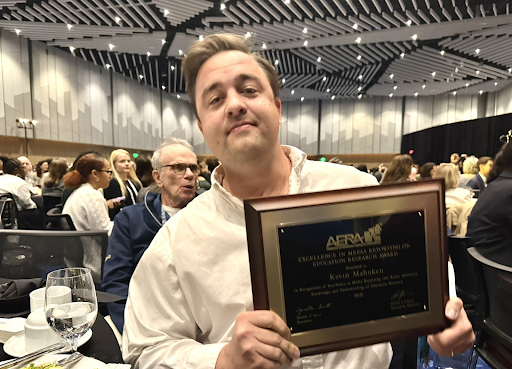
“I’m so grateful to the members of AERA for conferring this tremendous honor,” says The 74’s Kevin Mahnken (above). “And also for politely not bringing up the fact that I forgot my blazer back in Washington.”