A new way cover education in a time of heightened conflict
By Greg Toppo
Midway through my 15-year journey as USA TODAY’s national education writer, during one of its periodic rounds of buyouts, my editors asked a favor.
In addition to covering K-12 and higher education (our higher education reporter had taken a buyout), could I also, you know, cover demographics? The demographics reporter had taken a buyout, too.
I saw it for what it was: a non-negotiable request and a way to keep my job in a shrinking newsroom. So a few days a week I dove into this new beat.
What I learned has stuck with me.
I’d covered education and its battles nearly non-stop for more than a decade, but here was a new beat with a different vision of what constitutes a story.
Demographers have a very specific requirement for what qualifies as news: something is changing, often something big and sweeping, but hidden beneath the surface until someone looks.
New York is losing Baby Boomers, while Florida is gaining them; in Maine, the dying now outnumber the newborn; the nation’s white majority is inexorably becoming a minority.
Something is changing.
When I thought about the stories I’d long been filing as an education writer, I had to admit that, most of the time, my measure of news was this: Two people are fighting. Not much is changing, actually. It’s just … two people are fighting.
When I thought about the stories I’d long been filing as an education writer, I had to admit that, most of the time, my measure of news was this: Two people are fighting.
Don’t misunderstand: Fights are fun to cover, especially when the combatants are mighty, the problems are huge, and nobody knows the solution. This was exciting stuff.
Journalists like fights because they’re also easy to cover. They produce narratives that are pleasing to both readers and sources, our two biggest constituencies, and they allow us to step back and practice being impartial.
Also, awards come calling when there’s a fight. The first time my mother read about me in The New York Times was when my colleagues and I found evidence of cheating in D.C. public schools and were fighting to get an interview with then-Chancellor Michelle Rhee.
But I had to admit that the fights often took on a life of their own, separate from the ground reality:
Are charter schools the answer? Yes, except when they’re not – and while some are amazing, many are not.
Teachers’ unions may, as their critics say, be bad for kids, but many of our worst-performing schools (and districts and states) have no unionized teachers.
Even when I was straining to get go deeper and focus on learning, I had to admit that I was often doing little more than snapping pictures of the warring sides’ jerseys: Phonics or whole language? Calculators or no calculators? Homework or no homework?
In the years since I left USA Today, this dilemma has not gone away.
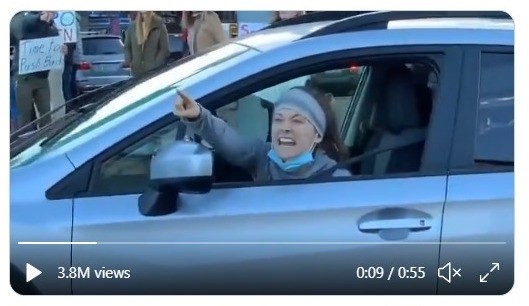
If anything, the pandemic has made it worse, since arguably the biggest education story of the past two years is, at its most basic, one big fight: Should public schools stay open or offer remote learning? Lower down on the card: mask mandates vs. no mask mandates, and mental health vs. safety. 1619 or 1776?
Journalists are caught in the middle, as teachers, policymakers and even experts re-evaluate, switch sides, and change their minds.
Readers are understandably struggling to figure out which end is up.
If anything, the pandemic has made it worse, since arguably the biggest education story of the past two years is, at its most basic, one big fight.
For years, the journalist and author Amanda Ripley has been trying to get us to “revive complexity in a time of false simplicity,” acknowledging that we shouldn’t rely so much on the tribalism that defines each side.
“We need to find ways to help our audiences leave their foxholes and consider new ideas,” she has written.
Ripley offers detailed plans for dealing with complexity and resolving “deep conflict” – plans that I won’t go into here. But I’ll offer a few modest ideas, all of which add up to this:
We should help readers appreciate the life of schools – what the pandemic, among other conflicts, has both given and taken away.
A few suggestions:
1.Focus on what we’ve lost.
It didn’t take much to report, but this dutiful dispatch by The Los Angeles Times lays out a stark change: California’s undergraduate enrollment has dropped by about 250,000 students during the pandemic, with community colleges seeing the worst of it.
2. Focus on what we’ve gained.
This coverage of a December literacy report from AL.com noted that more than half of Alabama elementary school teachers “are now trained in the science of reading,” with big increases in summer learning. But nearly one in four Alabama third-graders are not reading on grade level, and without a delay in new state retention guidelines, they all risk being held back.
Also, both of these pieces lead with research. Few education journalists, with the exception of folks like Chalkbeat’s Matt Barnum, take research as seriously as they should.
3. Focus on how people’s thinking has changed.
This Washington Post piece last March represents a promising model, looking at new ways that educators and policymakers are thinking about everything from attendance to funding.
4. Focus on how people’s work has changed.
One of the stories I wrote early in the pandemic that I liked most was a simple look at what school closures and other COVID-related disruptions in 2020 were doing to workaday education research, which often takes place behind the scenes in classrooms.
While it’s certainly important to the larger enterprise of how schools work, many districts decided it wasn’t “essential,” in the process locking researchers out of school buildings.
5. Press your sources to tell you how their concern changes things for kids.
We rely on advocates – as well as educators and parents – for ideas, insights, and bits of breaking news. But we should also challenge them to explain to us why it matters, and what their efforts do in the big picture. A few will be able to eloquently put their work into perspective. Most will not, since all that’s important is for their side to win.
We rely on advocates for ideas, insights, and bits of breaking news. But we should also challenge them to explain to us why it matters.
Right around the time when I started covering demographics for USA TODAY, I finished writing a book about games and learning.
I am happy to report that I found a promising alternate universe of educators, theorists, and video game designers who had long ago put aside their fights and – leveraging something as innocuous as play – had figured out new and exciting ways to help kids learn.
Improving education journalism isn’t as simple as swapping out fighting for playing – after all, many video games are all about the fighting, and virtually all games have winners and losers.
But the main reason so many people love video games has nothing to do with fighting. It‘s because they do one thing really, really well: minute by minute, hour by hour, they track what’s changed.
They’re satisfying because they show us where we began and where we are now.
Greg Toppo is a longtime education journalist and author most recently of Running With Robots. You can follow him on Twitter at @gtoppo.
Previously from The Grade
Back to school coverage has been unnecessarily alarmist — again
‘Squid Game’ school board coverage isn’t helping
Author Amanda Ripley on the lamentable rise of ‘conflict’ journalism
Negative COVID coverage and prolonged school shutdowns
‘Complicating the narratives’ in education journalism
ABOUT THE AUTHOR

Greg Toppo
Greg Toppo is a longtime education journalist and author most recently of Running With Robots . You can follow him on Twitter at @gtoppo.
![Best Education Journalism Of The Week [BOTW] 04/9-15/2017](https://kappanonline.org/wp-content/themes/Extra/images/post-format-thumb-text.svg)