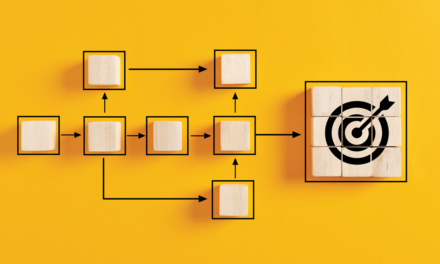
I am wondering what it will take to tip education into a more student-centered approach to learning. Malcolm Gladwell’s 2002 book The Tipping Point charged me up — change can happen! Gladwell described transformations that were epidemic in nature, both for good and bad. The good ones included the antismoking campaign, the proliferation of book clubs, and decreasing crime by fixing windows. The bad ones — well, we don’t need to talk about those.
At the time, I thought we needed an epidemic in education, something that would transform schools so they worked for young people, especially those who struggle in traditional school environments. I still believe this, but I’m not encouraged by what I see around me. Certainly, there are pockets of change (and I don’t mean five — and ten-cent change; I mean $100 bills, to stretch my pun), individual schools mostly, that have bravely made their environments hospitable to learning and learners, both adults and students. Does anyone have an example of a district that has done so? A state?
What can help education tip to student-centered learning?
When I visualize student-centered education, I see students pursuing their own interests and passions (curriculum-related, because what cannot be related to curriculum?), choosing how to learn — with others, online, independently, interviewing experts, experiencing and experimenting — and how to share their learning (through a presentation or demonstration, a play, a model, a letter to the editor, etc.). I see them going deeply into what they care about and, as they do so, naturally going broader. I see teachers as guides, working alongside students for learning. I see teachers as learners themselves, engaged in their own and their colleagues’ learning, as well as the learning of their students.
What stands in the way of this vision? It seems to me, having worked in policy myself, though briefly, that policy does. That quick answers to complicated issues, testing, for example, get in the way. I have long advocated for a minimal state role in testing, in which the state merely samples students and subjects on different years, just to get snapshots of performance. Districts do the same, and assessment happens locally and publicly (public exhibitions of learning).
Teacher evaluation threatens to stand in the way of this vision, aligned as it is with testing. As long as test scores define the effectiveness of teachers, teachers will pay attention to test scores, and student-centered learning will be hard to achieve. Even if evaluation systems include other measures of teacher effectiveness, such as observations and teacher portfolios, people will still look toward test scores for the simple indicator of a complex issue.
What can help education tip to student-centered learning? Strangely enough, I think the Common Core State Standards can play a part in this epidemic. If educators take them for more than face value and resist testing them in usual ways, the Core might be leverage an infection that reaches epidemic proportion.
What do you think? Am I mistaken in my view that student-centered schools are rare and districts and state educational systems even rarer? What barriers do you experience in terms of student-centered education? What hope do you have for student-centered learning? And, how much does student-centered learning really matter?