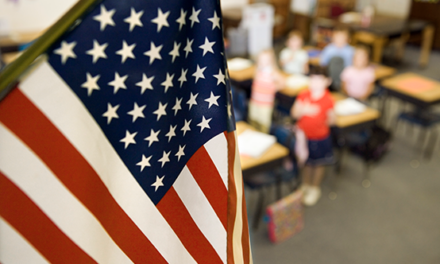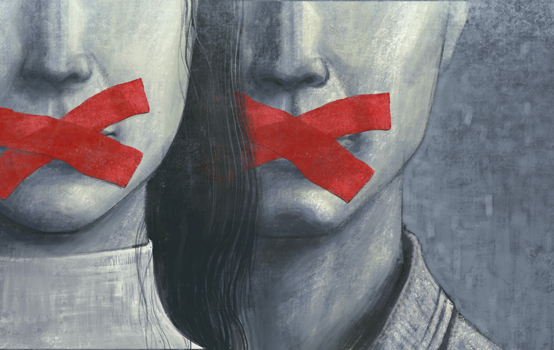
In the classroom, one could plausibly argue that public school teachers have even fewer free speech rights than their students. Of course, there are curricular guidelines establishing what teachers can and can’t teach. But the restrictions placed on teachers have become more severe in today’s anti-critical race theory era. Since 2021, 18 states have imposed restrictions on classroom discussions related to race, and teachers have lost their jobs merely for assigning a work of fiction deemed too controversial.
Do school personnel have more room to breathe — and speak — outside the classroom? Judging from two recent Supreme Court rulings, you’d think so. The Court held in Kennedy v. Bremerton School District (U.S. Sup. Ct., 2022) that not allowing a football coach to pray on the 50-yard line immediately following public school football games violated not only his religious free exercise rights but also his right of free speech under the First Amendment. And in Mahanoy Area School District v. B.L. (U.S. Sup. Ct., 2021), the Court held that a school district violated a student’s free speech rights when it disciplined her for engaging in profanity-laced speech on social media during her personal time off campus. Taken together, these cases suggest that teachers retain some freedom of speech on school grounds and that their freedom grows as they move from the classroom setting (see Kim 2021, 2022). But Kennedy is, at its core, a religious freedom case, and Mahanoy is a student rights case; their applicability to a wider spectrum of disputes involving teachers has, so far, been limited.
Limited precedent on teacher speech
Surprisingly, the U.S. Supreme Court hasn’t squarely addressed teachers’ free speech rights in more than half a century, since Pickering v. Board of Education (U.S. Sup. Ct., 1968). In that case, a school board dismissed an Illinois teacher for writing a letter to the local newspaper that criticized the district’s handling of proposals to raise new revenue for schools. The district argued that the dismissal was justified because the contents of the letter were false and interfered with “orderly school administration.” The Supreme Court ruled in favor of the teacher, finding that, on matters of “legitimate public concern,” free and open debate was vital, as was the ability of teachers to be able to speak out without fear of reprisal.
Two subsequent Supreme Court cases having little to do with teacher speech have been influential in recent teacher speech cases. In Hazelwood School District v. Kuhlmeier (U.S. Sup. Ct., 1988), student contributors to a school newspaper sued after school officials deleted portions of their article relating to teen pregnancy and divorce. The Court held that the school did not violate the First Amendment by exercising editorial control over student speech in “school-sponsored expressive activities” — which the public might perceive to bear the “imprimatur” of the school itself — so long as their actions are “reasonably related to legitimate pedagogical concerns.” And in Garcetti v. Ceballos (U.S. Sup. Ct., 2006), the Court upheld the dismissal of a deputy district attorney who had complained about inaccuracies in the affidavits of local law enforcement, stating that “when public employees make statements pursuant to their official duties, the employees are not speaking as citizens for First Amendment purposes.”
Among this trio of cases, Pickering is generally seen as the most protective of teacher free speech rights. Hazelwood and Garcetti, on the other hand, generally signal doom for teacher free speech because they frame their speech as “school-sponsored” or “official” speech. Under such a framing, teachers are acting as mouthpieces for the government, not individuals.
Recent cases: Sex and politics
Although they haven’t reached the U.S. Supreme Court, numerous cases on teacher speech recently have come up in district courts. Consistent with countless First Amendment cases of yore, the topics of human sexuality and politics have figured prominently.
In Kirby v. Yonkers School District (S.D.N.Y., 2011), a health education teacher led an “icebreaker” exercise in which middle school students were asked to draw the male reproductive system on the blackboard and label its parts, with the goal of making students feel more comfortable with the male anatomy. (What could possibly go wrong here?) The students proceeded with their renderings, whereupon Amanda, a female student, entered the classroom late, saw the drawings, and left, never to return. The situation from there followed a predictable path: irate dad; media coverage; teacher threatened with termination; teacher sues. The court reasoned that, under Hazelwood, the classroom activity was “school-sponsored” and that the school “had the power to seek to banish it from the classroom.”
In another case involving sex education, Smiley v. Jenner (S.D. Ind., 2023), the court also sided with the school district, this time relying on Garcetti. An elementary school teacher argued that a new Indiana law (HEA 1608, which went into effect this past July) prohibiting instruction on “human sexuality” in prekindergarten to 3rd grade violated her free speech rights as a teacher and should be struck down. The court disagreed, observing that, under Garcetti, if a public employee speaks pursuant to her official duties, that speech is, for constitutional purposes, “the government’s own speech” — not the teacher’s. This much is unremarkable. But the court went on to state that teacher speech falling outside the official curriculum — such as informal hallway conversations, the content of non-textbook classroom books, and messages on the teacher’s own bumper stickers or water bottles — were within the scope of the teacher’s responsibilities as an elementary school teacher and therefore not protected by the First Amendment. The opinion leaves little room for teachers to speak or behave in ways that don’t conform with the wishes of their superiors while at school — a far cry from Pickering.
Pickering isn’t totally dead, though. In Dodge v. Evergreen School District #114 (9th Cir. 2022), the Ninth Circuit Court of Appeals relied on Pickering in ruling on behalf of a teacher who was admonished for displaying (but not wearing) a Trump-style, Make America Great Again (MAGA) hat next to him during a faculty training on cultural sensitivity and racial bias. The court concluded that, while the teacher’s political expression was “quintessential” political speech that was “inherently controversial,” it did not create a “disruption of the kind that outweighs the speaker’s First Amendment rights.”
On the other hand, in Durstein v. Alexander (S.D. W. Va. 2022), the court determined a social studies and world history teacher’s First Amendment speech rights were not violated when she was fired over social media posts containing conservative and anti-Obama rhetoric and prejudice against Muslims. The court stated that, under Pickering, “the Board’s interest in the efficient operation of the workplace outweighed Plaintiff’s interest in free speech.” The court concluded that the teacher’s tweets “diminished the Board’s standing with the public” and were “antithetical to the Board’s mission to provide a safe and nondiscriminatory school environment.” Here, it’s hard not to detect a whiff of Hazelwood and Garcetti.
What’s needed?
We ought to be concerned when teachers are so restricted speech-wise, both inside and outside the classroom, that their individuality and unique contributions are erased. When we think of teachers as mere cogs in a government speech wheel, we do injustice to their role in schools and communities.
To keep the zone of teacher free speech from shrinking still further, two things might help.
First, we’re overdue for a refresh on the relationship between teacher and state. States (and judges) ought to be able to regulate and enforce what teachers teach, but they should grant teachers more autonomy to decide how they teach. Too much regulation of the “how” restricts valuable instruction and takes the joy out of teaching (see Bissell, 2023).
Second, we need to think of teachers as inhabiting not just one role, but many:
Teachers as effective curriculum stewards. To be sure, teachers must deliver the curriculum as outlined in state and local policies. We expect them to teach core curricular content and not to stray unduly from that task. But teachers need room to make that content stimulating, meaningful, and connected to their students.
Teachers as legal and civic role models. As I’ve written in the past (Kim, 2019), educators are “legal role models” for children. Teachers must treat students equally no matter what their background, and they must enforce equal treatment and respect among students themselves.
Teachers as community leaders. Teachers know what youth and families care about and what local factors impact their lives. It is backward for the law to give teachers less of a voice than other citizens to speak out on social and political issues.
School governance, legislators, and judges must recognize and appreciate the critical role educators play in schools, communities, and democracy. Only then will we begin to see teachers being given wider berth, and respect, in the law, classroom, and society.
References
Bissell, T. (2023). Teaching in the upside down: What anti-critical race theory laws tell us about the First Amendment. Stanford Law Review, 75, 247-248.
Kim, R. (2019). Elevating equity and justice: 10 U.S. Supreme Court cases every teacher should know. Heinemann.
Kim, R. (2021). Regulating student speech in the Snapchat era. Phi Delta Kappan, 102 (6), 62-63.
Kim, R. (2022). Prayer huddle. Phi Delta Kappan, 104 (2), 60-61.
This article appears in the December 2023/January 2024 issue of Kappan, Vol. 105, No. 4, p. 64-65.

ABOUT THE AUTHOR

Robert Kim
Robert Kim is the executive director of the Education Law Center, based in Newark, NJ. His most recent book is Education and the Law, 6th ed.