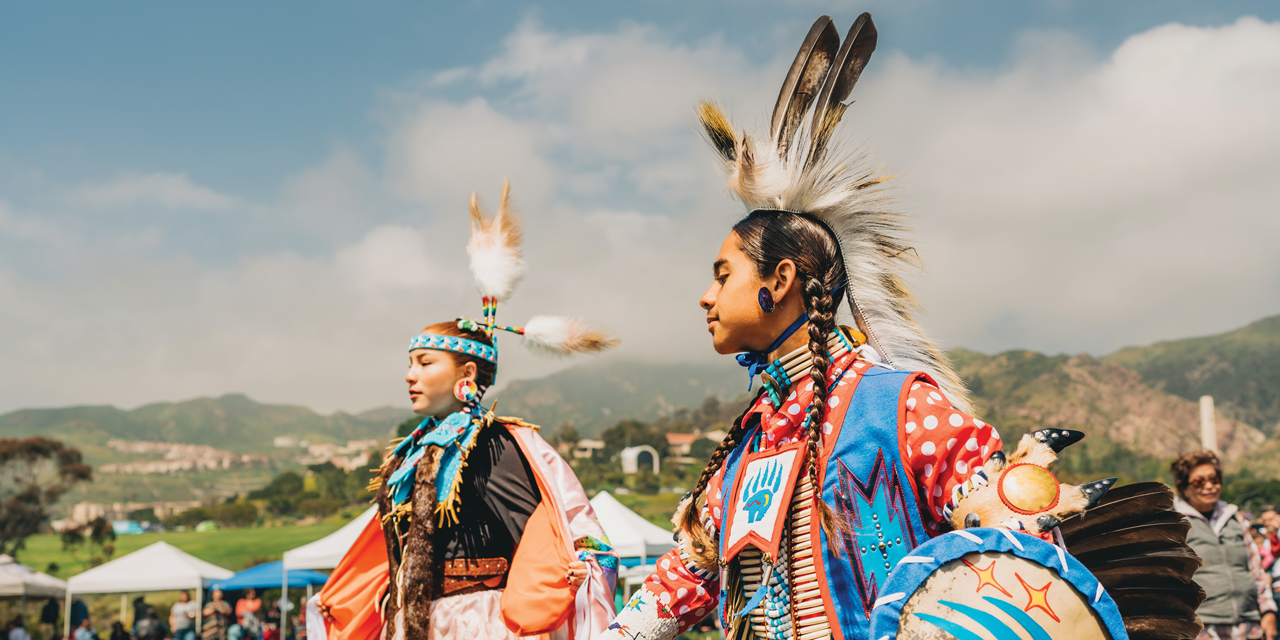
In October, President Joe Biden formally apologized for the federal government’s forcible removal, spanning much of the last two centuries, of hundreds of thousands of American Indian, Alaska Native, and Native Hawaiian children from their homes. The children were sent to abusive — and sometimes deadly — boarding schools, with the express purpose of stripping them of their language, culture, and religion. Biden’s belated apology is the culmination of the U.S. Department of the Interior’s Federal Indian Boarding School Initiative, a thorough study by the government intended to reckon with its shameful mistreatment of Indigenous students.
In the late 1960s, the federal government ended support for the boarding school program, but its vestiges remain: Today, Indigenous students and their families face formidable challenges ranging from serious health conditions to poverty to violence. At school, the majority of American Indian and Alaska Native students score below proficient in 4th-grade reading and 8th-grade math (Deaton, 2024); are underrepresented in advanced STEM classes; and are more likely than their peers to be subject to corporal punishment, school-based arrests and referrals to law enforcement, and confinement in carceral facilities (Office for Civil Rights, 2023).
School conditions for Indigenous students are abysmal. A 2016 investigation revealed major problems in school facilities funded by the Bureau of Indian Affairs and Bureau of Indian Education. Problems included structural defects and condemned buildings, asbestos and mold, inadequate ventilation, and fire safety and electrical hazards. The federal government’s administration of schools designated for American Indian children remains on high-risk status, due in part to a 33% staff vacancy rate that compromises its ability to support and oversee these schools (Office of Inspector General, 2022).
The extent of the barriers to educational opportunity for Indigenous children raises the question: What legal recourse do they have? The answer depends on who is responsible for their education and how those responsibilities have been defined under the law.
Educating Indigenous students: A unique federal role
The vast majority of the nearly half million American Indian and Alaska Native students attend traditional public schools, which are funded and controlled by state and local governments. However, about one in 10 attends schools that are supported or directly operated by the federal government.
The Indian Civilization Act of 1819, which led to the establishment of Indian boarding schools, also led to the creation of the Bureau of Indian Affairs (whose Office of Indian Education Programs was elevated to bureau status and renamed the Bureau of Indian Education, or BIE, in 2006). A division of the U.S. Department of the Interior, the BIE’s mission is to “provide quality education opportunities from early childhood through life in accordance with a tribe’s needs for cultural and economic well-being, in keeping with the wide diversity of Indian tribes and Alaska Native villages as distinct cultural and governmental entities.” Today, the BIE supports 183 elementary and secondary schools, located on 64 reservations in 23 states. Of these, 55 are directly operated by the BIE. The other 128 are tribally controlled, with support from the BIE.
The law surrounding the education of Indigenous students is unique, reflecting the “government-to-government relationship” between American Indian Tribes and Alaska Native villages and the federal government, as well as multiple sources of law, including the U.S. Constitution, U.S. Supreme Court decisions, treaties, and federal statutes and executive orders (see 25 C.F.R. §32.3).
A special moral responsibility
This labyrinth of laws crosses over from the strictly legal to a moral dimension. One court noted that the federal government’s legal responsibilities in this area arise out of a “trust relationship with Indian peoples,” a “moral obligation” reflecting a “historical and special legal relationship with American Indians,” and a “direct interest” in and responsibility for the “protection and preservation” of Indian tribes and the education of their children (See Meyers v. San Juan School District, D. Utah, 1995).
Title XI of the Education Amendments of 1978, as amended by the Native American Education Improvement Act of 2001, confers upon the federal government the “sole responsibility” for the operation and financial support of the BIE-funded school system. Congress has specified that children in BIE-funded schools be afforded educational opportunities “of the highest quality” that “equal or exceed those for all other students in the United States” (see 25 U.S.C. §§ 2000, 2001).
Given the federal government’s obvious failure to meet this educational standard, the paucity of legal efforts to hold it accountable is somewhat surprising. This, however, may be starting to change.
Litigation involving BIE schools
In 2017, nine current and former students at Havasupai Elementary School (HES), a BIE-operated school located on the Havasupai Reservation in Arizona, and the Native American Disability Law Center filed a lawsuit in federal court against the BIE and the Interior Department (see Stephen C. v. Bureau of Indian Education, Third Amended Complaint). Plaintiffs alleged that they and other students at the school were being denied educational opportunities guaranteed to them under federal law.
The deprivations plaintiffs described in their complaint are stark:
- HES students received no formal instruction in the content area other than math and English, including any culturally relevant or multilingual instruction mandated for BIE schools.
- The school was one of the lowest-performing in the country; few students achieved grade-level proficiency in reading, and in some years not a single student achieved proficiency in math.
- Students were denied access to textbooks or a school library; no extracurricular activities were offered.
- The staffing shortage was so severe that the school was frequently unable to operate and was staffed by temporary instructors who rotated through on two-week details.
- There was no system in place to ensure that students with disabilities received appropriate education or services; some students with disabilities placed in at-home instruction received no instruction at all save intermittent tutoring sessions.
The lawsuit illuminates the historical and complex trauma Indigenous students and their families experience — and the need for responsive and specialized instruction, related services, and accommodations. One plaintiff described how forced matriculation of previous generations of family members at boarding schools “adversely impacted the Havasupai community and contributed to present day adversity.”
In 2019, an Arizona district court issued a ruling in favor of the Stephen C. defendants on several claims. However, in 2022, the Ninth Circuit reversed that decision, upholding the validity of the plaintiffs’ claims and sending the case back to the district court for further proceedings (Stephen C. v. Bureau of Indian Education, 9th Cir., 2022). The parties reached a partial settlement in 2020 related to plaintiffs’ disability rights claims and another in 2023 related to basic education claims. Students who attended HES from 2011 to 2021 are entitled to compensatory education services.
Greater attention warranted
The Stephen C. case is significant in several respects, but chiefly because it has reinvigorated the quest to enforce the federal right to education for Native students (Bollig, 2024). The case also benefits the field of school finance advocacy at large by placing the issue of educational equity and adequacy back before the federal courts, something that has happened only rarely over the past half century (see Bollig, 2023; Kim, 2020).
The abuse of generations of Indigenous communities may never be fully redressed by the government. Fortunately, at least in the sphere of education, federal law offers a roadmap for reparative justice.
References
Bollig, B.K. (2023) Improving public schools: What advocates can learn from Indian education rights, Journal of Law and Education, 52 (2).
Bollig, B.K. (2024, Spring). Stephen C. v. Bureau of Indian Education: Reinvigorating the federal right to education for Indian children. The Federal Lawyer.
Deaton, J. (2024, April 18). NAEP data shed light on achievement and context for learning among American Indian and Alaska students. NAEP Plus: The Official Blog of the Nation’s Report Card.
Government Accountability Office. (2022). High-risk: Bureau of Indian Education has addressed some management weakness, but additional work is needed on others.
Kim, R. (2020). Under the Law: Gary B., Espinoza, and the fight for school funding. Phi Delta Kappan, 102 (1), 48-50.
Office for Civil Rights. (2023, November). A first look: Students’ access to educational opportunities in U.S. public schools. U.S. Department of Education.
Office of Inspector General. (2016, September). Condition of Indian school facilities (Report No C-EV-BIE-0023-2014). U.S. Department of the Interior.
This article appears in the December 2024 issue of Kappan, Vol. 106, No. 4, p. 52-53.

ABOUT THE AUTHOR

Robert Kim
Robert Kim is the executive director of the Education Law Center, based in Newark, NJ. His most recent book is Education and the Law, 6th ed.