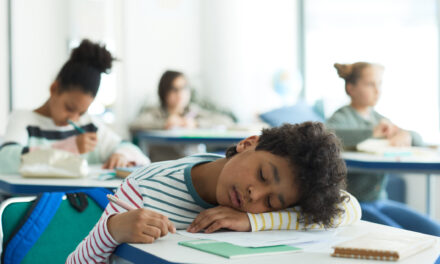
Q: I teach 3rd grade in a public school in New Jersey, and I’m trying to get the year off to the right start. I have struggled in the past to keep my cool. Staying calm is a goal that came up in my last evaluation cycle in 2019, but I think it might be even harder for me to reach that goal this year. I know it’s been an intense couple of years, and I also know it’s just the beginning of the year and we’re still establishing routines. Still, the kids are so much antsier than usual. For 3rd graders, they’re having a surprisingly tough time managing the basics, like staying in line, not touching each other, taking turns, getting started on simple tasks without needing to be redirected, cleaning up after themselves, transitioning to recess, dealing with the disappointment of not getting their way, etc. And my patience is shorter than usual as well. I’m simply not the same person I was before the pandemic, and my frenetic energy isn’t helping anything or anyone. I’m so easily triggered. I have been yelling a lot, and I am not very forgiving these days. Honestly, I feel angry all the time. How can I get myself into a better headspace and have the patience to be the grown-up in the room? I’m frustrated with myself, but I don’t know how to change. Maybe it’s just the way I am?
A: You have a great deal of self-awareness, and that’s going to help you turn this around. You can even draw on your own experience to help struggling students and approach them with more compassion. You know firsthand what it’s like to lose your cool when you desperately want to stay calm and collected. If you say to a child who makes a mistake, “I bet it felt awful to lose control,” they’re going to appreciate your authenticity.
You can’t talk yourself out of feeling aggravated, but you can minimize the odds that you’ll behave poorly.
It also sounds like you know your reactivity is contagious and isn’t eliciting the response you want from students. Plus, it doesn’t feel good. Take some time to reflect on why you want to change, and then set small, incremental goals. To increase the odds that you’ll reach them, write them down and post them in a place where you can see and read them daily. The goals could be things such as, “go two full hours without losing my temper,” or “set a timer and stay silent for two minutes when I’m about to make a comment or use a tone I’ll regret.”
Try to identify an “accountability partner,” a colleague or friend you know will be honest with you. This should be someone who wishes you well and understands what you hope to accomplish. Check in with them regularly. You can tell other trusted people in your life that this is something you’re working on, too. If it’s hard for you to be vulnerable with others, remember that everyone is working on something. As for changing your behavior, start paying attention to the signs in your body that indicate you’re about to lose your cool. Maybe your pulse starts to quicken or you have a tightness in your belly or chest. Maybe you find yourself talking faster or louder. You can’t talk yourself out of feeling aggravated, but you can minimize the odds that you’ll behave poorly. Here are a few additional strategies you can try.
- Come up with five items in a category, such as five places or people who make you feel happy or five things you feel grateful to have in your life. The idea is to interrupt the chain of reaction. Practice this repeatedly. Over time, you can train yourself to keep your emotions in check.
- Tell your students when you need to take a minute for yourself or take a couple deep breaths. You’ll be modeling the same behavior you want to see.
- Text a colleague when you need someone to step in so you can take a break. (Make that arrangement in advance and offer to do the same for them.) That could be a teacher who has a different schedule, or you might find that a staff development teacher, school counselor, specialist, or administrator would be happy to help you out on occasion.
Reflect on your progress regularly and reward yourself for improvement. Maybe you get yourself a special treat or give yourself permission to take a weekend nap. (Relatedly, fatigue makes it much harder to self-regulate emotions.) Remember, you’re going to make mistakes and progress is rarely a straight line. When you do lose your cool, apologize to your students and take time to assess what went wrong. Were you frustrated about an encounter you had earlier in the day with an administrator or a parent? Were you stressed because you spent the weekend traveling and fell behind on work? Did you ignore signs in your body that you were about to lose it? If you can figure out what got in your way, you’ll have an easier time setting yourself up for success in the future.
It’s been a difficult time for everyone, whether they’re a child or an adult. Plus, stress is additive. Try to be as patient with yourself as you hope to be with your students. If you continue to struggle, consider talking to a mental health professional. Understanding where the anxiety is coming from can go a long way toward helping you address it. To address your final point, even if this is the way you’re wired, you have the will and the capacity to change.
Click here for more Career Confidential
Have a question that you’d like Career Confidential to answer? Email contactphyllisfagell@gmail.com. All names and schools will remain confidential. No identifying information will be included in the published questions and answers.
ABOUT THE AUTHOR

Phyllis L. Fagell
Phyllis L. Fagell is the school counselor at Landon School in Washington, D.C., a therapist at the Chrysalis Group in Bethesda, Md., and the author of the Career Confidential blog. She is also the author of Middle School Matters and Middle School Superpowers, available at https://amzn.to/3Pw0pcu.