One of the nation’s most-quoted gun violence experts urges reporters to stop producing predictable, misleading, and too often unhelpful coverage.
By Alexander Russo
The school year has only just started, and we’ve already had one major school shooting incident at Georgia’s Apalachee High School.
The subsequent coverage has been abundant, but questions remain about the quality and focus.
How to cover school shootings is a question that The Grade has addressed many times in the past.
The following interview with Jaclyn Schildkraut, executive director of the Rockefeller Institute’s Regional Gun Violence Research Consortium, suggests that there’s still room for improvement.
Frequently quoted in the media, Schildkraut finds that the news coverage she sees is often predictable almost to the point of being scripted.
The coverage is also generally misleading, she says, tending to “only to focus on the most sensational and lethal events, which also are the rarest.”
But there are several ways to improve school shooting coverage, according to Schildkraut, such as adding context, avoiding speculation, and remembering not to make the shooter the focal point. She just completed a project with mass shooting survivors including a guide for how the media could better interact with them.
These are all great ideas. How helpful it would be if news outlets and journalists pushed back against the traditional ways of covering these horrible events.
The coverage Schildkraut sees tends “only to focus on the most sensational and lethal events, which also are the rarest.”
This interview was conducted via email and has been edited.
What’s your overall take on the quality of school shooting coverage you’ve been seeing?
Jaclyn Schildkraut: Coverage of those events is pretty typical at this point in respect to rolling from breaking news to PIO updates to other updates for a few days to no more coverage. Attention to these tragedies, particularly by the national media, tends to be pretty short-lived. Coverage of mass school shootings typically lasts up to a month, and even that length of time is quite rare. It usually is just a few days to a week before being replaced with a new focal story.
Is there anything different about the Apalachee shooting coverage you’ve seen?
JS: I think the police department and their public information officer did a better job of controlling the narrative by providing more updates, so there was some less speculation, but the typical comments we often hear (e.g., multiple shooters, the perpetrator was bullied, etc.) still were introduced early in the coverage, mainly by news anchors and reporters. These claims typically are refuted later on as investigations progress, but by reporting them so early, it sets the tone for how people come to understand the event.
What’s the main challenge of school shooting coverage?
JS: It tends only to focus on the most sensational and lethal events, which also are the rarest. This means the coverage makes it seem like events like what occurred in Georgia are the norm, rather than the exception. Schools are still among the safest places for students to be, especially in the context of gun violence, but this often isn’t conveyed in the coverage.
“The coverage makes it seem like events like what occurred in Georgia are the norm, rather than the exception.“
Is school shooting coverage that you see any different from coverage of mass shootings that take place in other locations?
JS: Mass shootings that take place in schools always tend to be more newsworthy than those tragedies that occur in other places because of the age of the victims. Children are young and especially vulnerable, which also makes them more newsworthy. So far as sustained as coverage of mass shootings is (and it typically is not very protracted), it often is longer for school-based attacks than others, save for some notable examples that usually are the result of especially high fatality counts (e.g., Las Vegas).
Whatever happened to the idea that newsrooms should avoid focusing on the shooter (and thus avoid encouraging more people to copy their actions)?
JS: Some outlets have gotten better about not naming shooters (i.e., following the No Notoriety recommended protocol), but others still do it gratuitously. I actually think the coverage today is better in this respect than it was five, 10, or 15 years ago. There is also the misnomer that No Notoriety means never naming the shooter. It does not. It means not gratuitously doing so or giving them prominent placement.
Are there any memorable pieces of journalism that capture the real problems of gun violence particularly well?
JS: There is not a specific story, per se, that jumps out at me about gun violence broadly, but I think that the Texas Tribune and ProPublica did a really good job with their coverage of the Uvalde school shooting. Even more than two years later, they are still covering many aspects of the aftermath. Their reporting has been culturally sensitive and sensitive to the victims, and their reporting has helped many of the families who lost loved ones get the accountability and answers they have been seeking since the shooting occurred.
“Coverage from the Texas Tribune and ProPublica has been culturally sensitive and sensitive to the victims.“
If school shootings are so rare, why not limit coverage of school shootings?
JS: I don’t think that is realistic, honestly. Although they are atypical in the context of our national crime picture, we know it is that which is atypical that tends to capture the most attention. So for the media, there is an incentive to cover it because it gets them news consumers, which typically translates into advertising revenue.
What’s it like, talking to so many journalists covering school shootings? What is the main thing you’re trying to convey to them?
JS: I view it as a part of my job as a public-facing researcher. So I approach the conversation as an opportunity to educate readers about facts and evidence surrounding the issue. The main thing I am trying to convey can vary based on the focus on the story, but I always try to convey context and evidence — what do we know about an issue or topic based on the evidence around it rather than what do people believe to be the case based on media reporting or the general public discourse. I hope people are seeking to engage in evidence-based conversations about school shootings, so I view it as my responsibility to provide the necessary evidence in order for them to do so.
How do journalists respond when you or others suggest that there are other ways/other things to cover than mass school shootings?
JS: They are typically receptive. I always try and include context to really frame out the problem we are discussing. Of course, just because we discuss something does not mean it makes it into the article or interview. I typically talk to reporters for 20-30 minutes, sometimes more, and maybe two to three sentences of that conversation make it into a story. I don’t have any input about what makes it into a story and what doesn’t, as these are often decisions made by the reporter and/or the editor, but it can be a bit disheartening to try and provide this context to promote an evidence-based discussion about the issue and how we can address it and then not have that be included.
“It can be a bit disheartening to try and provide this context … and then not have that be included.“
What’s one thing you want education reporters and editors to do differently when covering school shootings in 2024-25?
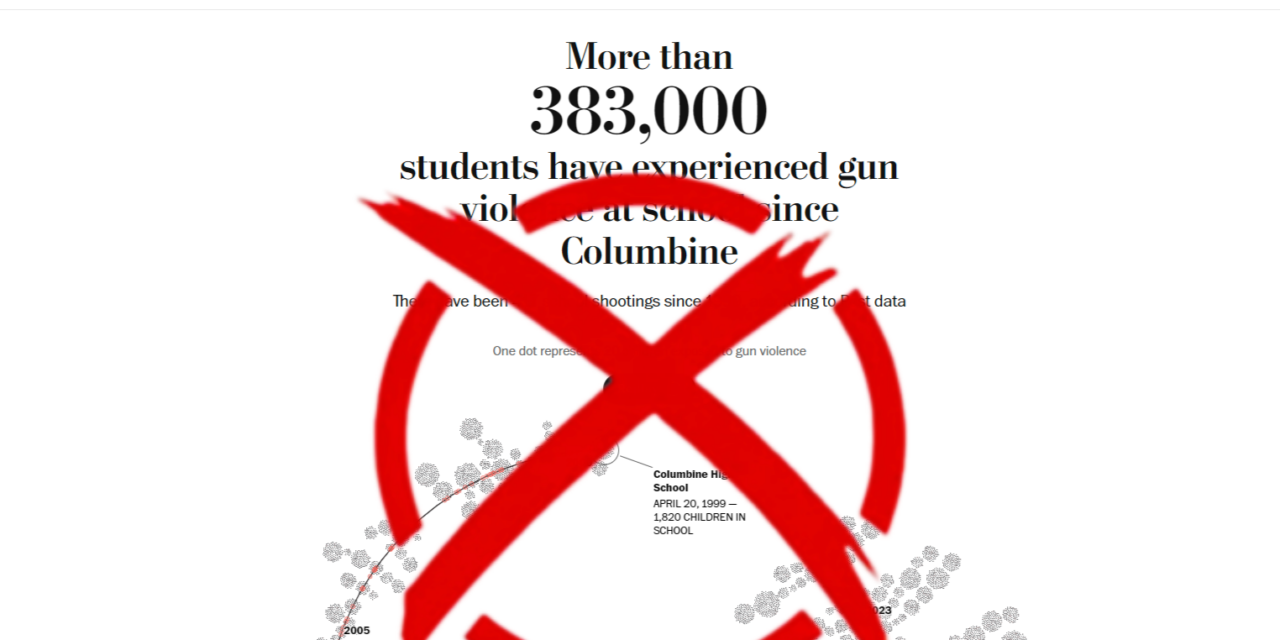
JS: I think it is really important to include more context. This is difficult, in part, because of a lack of credible data sources that include the needed information (e.g., the definition used by one widely cited source is really broad — they count a gun being brandished as a school shooting — so unless a reporter is going through and verifying/cleaning the data, they are giving overinflated statistics).
But even aside from the number of school shootings, we know that less than 2% of all youth homicides occur in schools, but the way these tragedies are covered makes them look like they are accounting instead for the 98%.
So I think it is really important to include context like this so that people understand that schools are still really safe places for students and staff to be. And that context also includes the types of school shootings being counted.
I saw stats circulating in the coverage of the Georgia shooting that said it was like the 45th “school shooting.” It might be the 45th time someone was shot on school grounds, but it wasn’t the 45th iteration this year of a premeditated mass shooting that occurred at a school — it was the second. That doesn’t make it any less tragic, but it does make it different in terms of how we think about prevention and response.
How would you recommend newsrooms mitigate coverage that might encourage school shooting threats and copycats?
JS: This is where I come back to No Notoriety, of which I am a big proponent. We know that many mass shooters are fame seekers. Research has shown us this, but also — perhaps more importantly — they are telling us that this is what they want. So denying them fame and notoriety in the media coverage is really important for two reasons.
First, it takes away the very reward they are seeking for harming a lot of people. Second and simultaneously, it removes the incentive for other like-minded individuals who are seeking similar rewards and outcomes.
No Notoriety does not mean to not cover the story, but to do so in a responsible way. The name doesn’t have to be repeated over and over; instead, refer to them as the perpetrator. Avoid prominent placement of their name and photo, unless they have yet to be taken into custody, in which case it should be shown everywhere as a matter of public safety. Elevate the stories of the victims, survivors, and heroes. Refocus the attention on who and what matters.
In a perfect world, what other aspects of youth gun violence would you want education reporters to spend more time on?
JS: We certainly want to help schools understand, from an evidence-based perspective, how best to be safe (for all threats and hazards, not just mass school shootings), but they should also know how to support all students in crisis, support social-emotional learning, understand the best pedagogical practices, and the like. As noted, however, youth gun violence is more likely to happen outside of the school than within it, so also discussing topics like firearm safety in the home, how to identify youth in crisis (who are more likely to engage in firearm suicide than a mass shooting), and community gun violence is critical to having a robust conversation about this issue.
Previously from The Grade
The case against focusing on school gun violence
‘If you need to cry, cry.’ 6 education reporters’ advice on covering school shootings
Warning signs in Uvalde
‘A gift’: John Woodrow Cox on covering school gun violence
School shootings aren’t crime stories, they’re public health stories
‘Incredibly dangerous’: How gun violence coverage focused on mass school shootings is misleading
Misleading coverage of school shootings