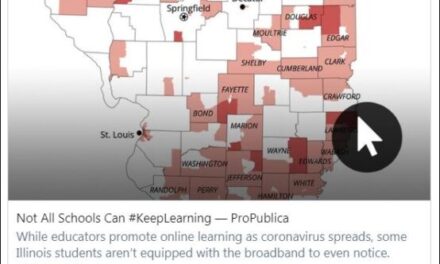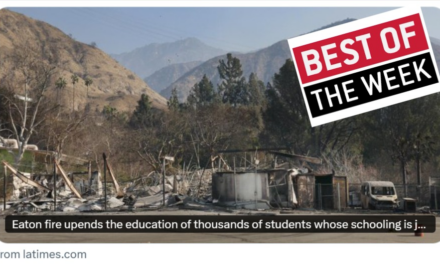
In this week’s newsletter: Pandemic recovery efforts and spending patterns continue to be uneven. School segregation hasn’t gone away — we just stopped paying as much attention. Why doesn’t education coverage have more impact, even where it’s relatively abundant? Two prominent journalists defend school culture wars coverage. And one reporter’s FOIA request shows how frustrating journalism can be.
UNEVEN EFFORTS
The big story of the week
The big education story of the week is just how uneven the academic recovery has been, despite all efforts — and billions in federal funding. With 20 percent set aside for learning loss, federal recovery funds have gone into important efforts such as enhanced tutoring and improved literacy instruction. But they’ve also gone into all sorts of other allowable but non-instructional purposes including athletic fields, loan maintenance, and operational support (The 74).
In the meantime, school funding debates and legal challenges over adequacy of services such as special education continue to move ahead in statehouses, courtrooms, and district hearing offices (AP, EdWeek, Washington Post, SF Chronicle, Providence Journal, Boston Globe).
Other big stories of the week:
📰 TEACHER EFFECTIVENESS: A new report from the Center on Reinventing Public Education shows that teaching quality declined during the pandemic and is struggling to recover, in part due to staff shortages (Washington Post, K-12 Dive). The study focuses on a piece of the pandemic picture we don’t usually see in education reporting: instructional quality.
📰 NO MORE LEGACY: Connecticut’s Wesleyan University announced it will end legacy admissions, partly in response to the Supreme Court’s decision striking down affirmative action in college admissions (New York Times, Boston Globe, CT Mirror). While eliminating the legacy preference helps even out the advantage — and is strongly supported by the public — getting rid of it is easier said than done — namely because there’s a financial benefit to universities that offer it (Washington Post).
📰 FIRST NORTHWESTERN, NOW STANFORD: The president of Stanford has resigned after a report found flaws in his research. The review of his work was sparked by a student journalist’s reporting in the Stanford Daily, which spanned 1,000 hours of interviews and research and looked into concerns raised about the ex-president’s work years back (New York Times, Washington Post, San Francisco Chronicle). The news follows the Daily Northwestern’s investigation into a culture of hazing and sexual abuse on the football team, leading to the ouster of the coach (NBC News).

SEGREGATION IN NJ
The best education journalism of the week
The best education story of the week is Gothamist’s Why these NJ schools are so diverse, while many are segregated by Karen Yi.
The in-depth piece focuses on Franklin Township, one of the most diverse school districts in the state, which has embraced creating affordable housing and supported a notably diverse student body, especially at the elementary school level.
But — in an ostensibly liberal state — Franklin Township is an outlier.
Broadcast on WNYC, the eight-minute piece also describes the tortuous process through which many other New Jersey localities offloaded their housing responsibilities and remained segregated.
The story is part of Segregated, a collaborative series focused on inequality in one of the most politically liberal states in the nation. It includes work from Gothamist and WNYC, NJ Spotlight News, Chalkbeat Newark, and several smaller newsrooms.
Segregation and integration haven’t been in the news as much as they were leading up to the pandemic, but racial inequality in schools hasn’t gone away.
Other great education coverage from the past week:
🏆 This online tutoring company says it offers expert one-on-one help. Students often get neither. (Chalkbeat)
🏆 How empathy can transform a student’s bad behavior where school suspensions fall short (Hechinger Report)
🏆 Mississippi made big test score gains. Here’s what to make of them. (Chalkbeat)
🏆 How CT’s college-readiness system leaves students of color behind (CT Mirror)
🏆 Children at Angola Prison Trapped in Extreme Heat in Louisiana (The Appeal)
🏆 Madison Park valedictorian is first in family to go to college — and to graduate high school (Boston Globe)
🏆 A ‘crisis’ of their own: Indiana school counselors detail overwhelming duties, pushing some out (Indiana Capital Chronicle)
SCHOOLS COVERAGE THAT CAN’T BE IGNORED
Our latest columns and commentary
When it was revealed last week that New York City Schools have been passing thousands of kids who haven’t completed their courses, it seemed hard to believe that the situation had been developing for so long without much media attention or a change of course from the DOE.
But, according to insider David Bloomfield, there’s more than enough NYC schools coverage being produced — it’s just that the coverage is so frequently ignored.
“Well-reported stories… are repeated seemingly endlessly,” writes Bloomfield. “But they’re not prompting nearly as much change or response as might be expected — or needed.”
According to Bloomfield, the answer is for news outlets and reporters to produce more thoughtful, context-rich, and better-sourced stories.
Take a look at his new piece and see what you think.
A WELL-TOLD COMEBACK STORY
Coverage of promising school innovations & signs of progress
💡 This profile of a gang member turned UC Berkeley graduate is gripping from the start, interweaving the subject’s journey with a background story about California’s recent work to create smoother college pathways for people behind bars (Los Angeles Times).
💡 This anecdote-filled story about one district’s rollout of a less punitive disciplinary policy clears up some of the usual fuzziness around “restorative justice” efforts and details how other districts might benefit and struggle under a similar approach (Hechinger Report/Washington Post).
💡 A narrow but revealing focus on one district’s efforts to maintain classroom-critical Chromebooks distinguishes this piece about a pilot program that’s paying students to work as tech repair specialists for their fellow classmates (Star Tribune).
💡 Thanks to good quote selection and a decision to foreground student voices, this short piece about a summer drumline program stands out (Philadelphia Inquirer).
Read more about the importance of covering promising innovations and preliminary successes.

Above: ProPublica’s Nicole Carr (left) and former Chalkbeat reporter Patrick Wall make the case that chaotic school board meetings in suburban school districts are a critically important education story.
PEOPLE, JOBS
Who’s going where and doing what
🔥 School board story: “The arrests and charges aren’t ‘the story,’” tweeted ProPublica’s Nicole Carr about her latest piece on school board meeting arrests, whose number and importance I questioned. “The sum of the unrest, discourse, its swift impact on public ed policy, state legislation and political shifts on so-called non-partisan school boards is the story.” Former Chalkbeat reporter Patrick Wall chimed in, too, noting that “the disruptions documented here are just the tip of the iceberg in terms of hostility faced by school boards and superintendents…These fights shape policy and what’s taught/discussed in schools.”
🔥 FOIA fiasco: Chalkbeat Colorado’s Erica Meltzer recently covered what happened when a researcher’s request for student data drew public opposition from Denver’s superintendent (eventually, the researcher was granted his request). In terms of how the case bears on press freedoms, Meltzer tells us via email: “Denver consistently charges more for public records than any other school district we cover — a practice that goes back years and across administrations. This does have the effect of deterring small news organizations like ours. The district is allowed under state law to recoup reasonable costs, but I often wonder why various neighboring districts are able to do the same research and legal review for much less money.”
🔥 Career moves: Niki Griswold is the newest member of the ever-growing Boston Globe Great Divide team. A former politics reporter, Griswold comes to the Globe from the Austin American-Statesman. Statesman alumna Megan Menchaca will now cover Houston ISD for the Houston Chronicle. EdSource veteran Carolyn Jones has now joined CalMatters as its K-12 education reporter. After spending three years building up CalMatters’ College Beat, Felicia Mello will now report on inequality for the outlet. San Francisco Chronicle columnist (and frequent education commenter) Heather Knight is leaving to be the New York Times San Francisco bureau chief. And Hannah Gross has joined NJ Spotlight News as its education and child welfare reporter.
🔥 Fellowships: Congrats to the new Poynter-Koch Media and Journalism fellows, including News & Observer higher ed reporter Korie Dean and Columbus Dispatch higher ed reporter Sheridan Hendrix.
🔥 Awards: Lots of ed outlets were named as finalists for the Institute for Nonprofit News awards, or INNYs. Congrats to The 74, EdSource, and the Hechinger Report, which were named for awards in visual journalism, breaking barriers, and explanatory journalism. Winners will be announced Aug. 23!
🔥 Job openings: We hear the NY Post is looking for an education reporter to replace Susan Edelman, who left a while back. WHYY in Philly is also hiring an education reporter. See previous editions of this newsletter for jobs that might still be open.

Above: In case you missed it earlier this month, check out Courtney Tanner’s series in the Salt Lake Tribune about how Ute students have been failed by Utah educators for decades.
APPEARANCES, EVENTS, & NEW RESOURCES
What’s happening and new research
⏰ Events: On July 25, ProPublica will hold a virtual panel discussion about “the unrest surrounding free speech, library book bans, transgender rights and teachings about race.” EWA will host a series of town halls with director Kathy Chow to hear directly from members.
⏰ ICYMI: At an event this week with fellows from the Center for Health Journalism, former NPR education reporter Anya Kamenetz spoke about the need for more children’s issues reporters, in addition to education reporters. And U.S. Education Secretary Miguel Cardona spoke with the Atlanta Journal-Constitution’s Maureen Downey about issues in K-12 and higher education.
⏰ Research: The Wall Street Journal looked at bills to increase teacher pay, finding that while many were proposed, few actually passed. Gothamist details a study looking at why teens in Brooklyn carry guns, finding that most say they do so because they fear dying. A new study points to lots of student benefits, including academic gains, when schools prioritize social-emotional learning.
⏰ Top beats: Earlier this year, the Institute for Nonprofit News polled organizations about their priorities in their 2023 Index survey, and K-12 education was one of the top beats newsrooms wanted to invest in more. Last year, only 28% of respondents said it was a beat they routinely covered.
⏰ New ventures & series: Chalkbeat and NPR’s Here and Now have forged a new partnership, with their first story by Mila Koumpilova about a new Chicago program to re-engage dropouts and disconnected youth.
THE KICKER
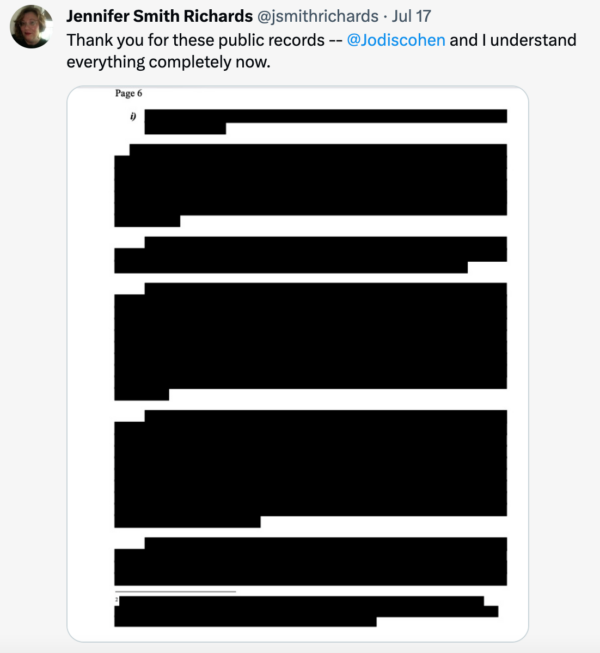
When you finally get that FOIA request back that you’ve been waiting months for!
That’s all, folks. Thanks for reading!
Reply to this email to send us questions, comments or tips. Know someone else who should be reading Best of the Week? Send them this link to sign up.
Using Feedly or FlipBoard or any other kind of news reader? You can subscribe to The Grade’s “feed” by plugging in this web address: http://www.kappanonline.org/category/the-grade/feed/.
Read more about The Grade here. You can read all the back issues of The Grade’s newsletter, Best of the Week, here.
By Alexander Russo with additional writing from Colleen Connolly and Will Callan.
ABOUT THE AUTHOR

The Grade
Launched in 2015, The Grade is a journalist-run effort to encourage high-quality coverage of K-12 education issues.