Veteran SF Chronicle education reporter Jill Tucker answers questions about her challenging experiences covering school closures — and how she hopes to do it differently this time around. The latest in our series on covering school closings.
By Alexander Russo
School closings, consolidations, phase-outs, “mergers.”
Whatever you call them, they’re often upsetting and controversial for everyone involved — including reporters.
That’s why The Grade is running a series of pieces on covering this difficult topic.
We started with Closings are coming. Cover them well, in which Ed Navigator’s Tim Daly recommends (among other things) that reporters explore how the school got to the point that it’s on the chopping block in the first place.
In last week’s column, ‘Make all the lemonade,’ the Chicago Sun-Times’ Lauren FitzPatrick wrote about being a rookie education reporter just as Chicago schools were implementing a mass 50-school closing program.
Next up is this new interview with the San Francisco Chronicle’s Jill Tucker, who’s covered Bay Area school closures for decades (and whom you may remember from a pandemic-era interview about reopening schools).
Tucker hates covering school closings, but she says she’s been at it too long to be bothered by all the yelling and emotion that they generate. And she understands how upsetting the experience is, having been through it herself.
“My school closed when I was in fourth grade, so I get it,” she told me in a recent phone call. “It was total upheaval. I survived. It was fine. I am nostalgic about both my elementary schools. In that sense, I can relate.”
This interview has been edited and condensed.
Why is a school closing one of your least favorite subjects to cover?
Jill Tucker: It is arguably one of the most emotional topics in public education. Schools are personal. Families feel a sense of belonging. They also feel ownership. In many cases, you have generations of people that have attended that school from the same family.
When we think back on our elementary schools, it’s formative and emotional and nostalgic. That’s where you make your friends. That’s where families become friends.
It’s such a core part of our lives, our families, and our youth. So trying to cover something rationally, fairly, objectively, accurately — when there’s so much emotion tied up in it — makes it incredibly difficult.
My school closed when I was in fourth grade, so I get it. I was moved to another school. My best friends went to different schools. It was total upheaval. I survived. It was fine. I am nostalgic about both my elementary schools. In that sense, I can relate.
It sounds like you’ve had to develop a very thick skin.
JT: I did, but I do not look forward to the yelling, the anger, and the threats that come with this particular topic. I try to think, “How do I cover this in a way that matters?” Sometimes you can’t do that as well as you want because you’re just covering what’s happening. It doesn’t matter what you write, you’re going to get hit hard on social media and email. The names that I’ve been called over school closure coverage…. There’s no winning. It’s too emotional.

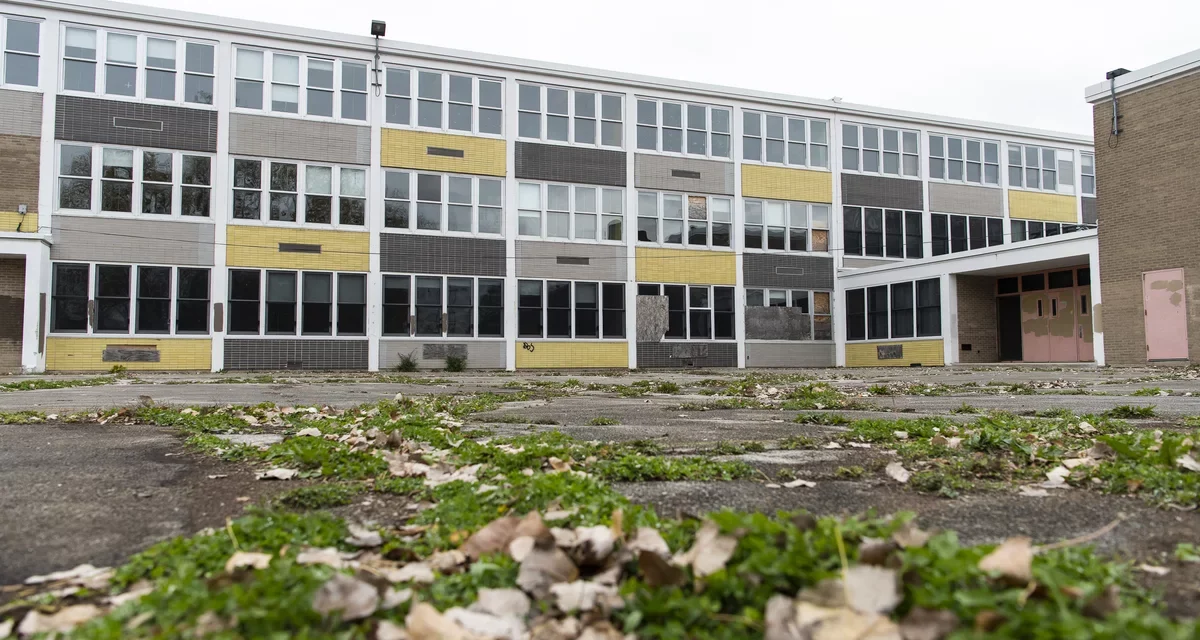
Above: Bay Area school districts once again face school closings.
What have you gotten wrong in covering school closures, and what have you gotten right?
JT: When I went in to cover those first school closings, I went in like I cover anything, asking, what are the issues? What are the facts? But the problem with that rational-minded approach is that you’re surrounded by anger and emotion. It’s very difficult to write these stories. No one’s listening to the rational.
You have to approach it with the same ethics and the same standards but also realizing that people are not rational. They don’t care that the closing might be the best thing for the district, the city, the school, or for the children. It doesn’t matter to them. It has to be acknowledged that it doesn’t matter. These schools are the center of the community.
So when the school board is out there, and people are talking about why they want to close the school, it’s so much more than a building. It’s important to consistently acknowledge that, while this decision is based on financial information or studies or research, the reality is that the people whom that is happening to don’t care. So you kind of have to weigh that in the coverage.
I don’t think I did that well enough. As journalists, it’s our instinct to say, “Look, I’m just going to provide the information, then people can do with it what they will.” And I think it’s just important to get at some of those stories about why that school is special. Why is that school important? What can the district or city do to mitigate that? They’re making this rational decision that is hurting people, so how do you address and look at this more broadly?
Tell us about a specific school closing decision you covered.
JT: One of the cases I remember was a school in Oakland they closed, and it was right on the highway. The school was not great. It was just inundated daily with pollution from the freeway. It was a terrible location for a school. It wasn’t a big school. For many reasons — health at the top of the list — the school should have been shut down. And it did not matter to the parents. I was so befuddled at why they were hanging on so desperately [to] this school.
I think I could have [gotten] at why people are holding on to this school. There are very loud people hanging on to the school and you’re thinking, “This isn’t functional. This isn’t logical.” You have to get to the root of why and what are the implications.
I’m working on some stories in anticipation of San Francisco and Oakland potentially moving into school closures or mergers, or at least having to grapple with it, and really taking a look at what are the benefits to these families, not just the district. They’re not looking at that. They’re just seeing what they’re losing.
The other thing I would say is I did not delve as deeply as I could have into the racial impact. Now, there’s state law for Oakland and another district specifically saying you can’t disproportionately affect a certain racial group when you close schools, which is basically making it increasingly impossible to close a school there. Other districts are looking at that and figuring they will likely have to comply as well. Obviously, you’re going to have a group affected by a closure. Do you close a school that is absolutely full because it’s white and try to get those people to go down to the school where it’s 98 Black kids and completely empty? That’s not going to work.
What did you do back then with the emotional intensity, and what would you hope to do now? You’ve got people yelling at each other, and you’re sitting there with your pad of paper.
JT: Having been doing this for 27 years, I’ve attended too many school board meetings to feel uncomfortable anymore with the yelling and the emotion.
You have some very loud people, whether they’re at the school board meetings or at press conferences, or just in general advocating for their schools. Most of the school community is going to come out to the school board meetings. The kids are going to be crying.
It is a little bit overwhelming. But it’s important to not just quote the loudest people. Get behind the scenes, and if you don’t speak the language, find some interpreters to get some of the people who are not screaming the loudest because it’s really easy just to quote the people at the podium.
The people that are most quotable are the ones who are loudest, but push beyond that to the second or third or fourth rows to get their real story: When did they move here? How many family members have gone there? That way you’re getting somebody that’s still emotional but not yelling.
It’s [also] important to describe what you’re seeing and hearing and feeling, using all your senses to describe what’s happening in these public settings so people can understand what this feels like. These situations can become very chaotic and potentially dangerous. Board members, if memory serves, in one case had to go hide and lock themselves in a room. This is the hardest thing to cover because it is so much emotion that can explode into bad situations — fistfights, threats, people going to board members’ houses.
I mean, we had a hunger strike in Oakland. From the outside you’re like, yes, it’s a big deal, but it’s not the end of the world. The reactions are disproportionate to what’s actually happening. Trying to explain that — trying to understand that and capture that a little bit [is important]. Because what happens is it divides the community. People are like, “We’re on a hunger strike,” and others are saying, “What the hell?’”
So, it helps to try to help people understand. People don’t realize that this is a business decision to a certain degree. But it’s not for the people who are affected. And that’s ultimately the story that you need to tell as well. It’s emotional. It’s a gut punch, it feels like an assault. But it’s also about why the neighborhood families are choosing not to go to those schools.
What do you recommend journalists do to prevent a closure story from becoming a “this group against that group” story, whether it’s the district versus the parents or the teachers union versus the district?
JT: In Oakland, the teachers’ union is very progressive, and there have been fights and contract battles and labor complaints over school closures, with the union saying they have a right to be involved in these decisions. It’s tough. It does become something of a war. You cover it from the perspective that the teachers union is one of many special interests involved and they are very loud, yes, but they are not the ones making the decision. They are one special interest group of many, and they have a voice obviously.
But it depends on your school district. It depends on how powerful the teachers’ union is, and whether it is more aligned with the school. It’s sometimes really easy to put the union front and center without looking at other folks who are affected by it. The business community may have a position, but they’re not necessarily coming to a school board meeting.
How do you avoid becoming inured to or overly skeptical about concerns that might be exaggerated or inaccurate? Closing opponents obviously feel powerless.
JT: I’m not sure closing opponents feel powerless. In Oakland, they were very powerful. They had the union on their side, hunger strikers, building takeovers, and in the end, elected officials who stopped the closures. Reporting on closures, again, requires the same ethics and professional standards as always. So there is no taking sides. It’s about finding stories that tell what’s happening, digging deep into the community.
What school closure stories aren’t being told? What gaps could other reporters fill? And what happened to the Oakland kids who went to the school near the freeway?
JT: The freeway school closed, but parents formed a charter school and reopened at that site, something a previous law made easier than now. That’s always a big concern with school closures: whether families will leave district schools, exacerbating the declining enrollment that is leading to closures in the first place. A lot of parents will threaten to leave, but that’s not always the case when it actually happens. I think it’s important to see how the district will place students whose schools have closed. Will they be at fully staffed schools? What services will be there? What makes that school better than the one closed? So many stories to tell with all this.
Previously from The Grade
‘Make all the lemonade’: Covering Chicago’s mass school closing (by Lauren FitzPatrick)
Closings are coming. Cover them well (by Tim Daly)
How the SF Chronicle’s Jill Tucker tackles the uncertainty & fear surrounding the COVID reopening debate
ABOUT THE AUTHOR
Alexander Russo
Alexander Russo is founder and editor of The Grade, an award-winning effort to help improve media coverage of education issues. He’s also a Spencer Education Journalism Fellowship winner and a book author. You can reach him at @alexanderrusso.
Visit their website at: https://the-grade.org/