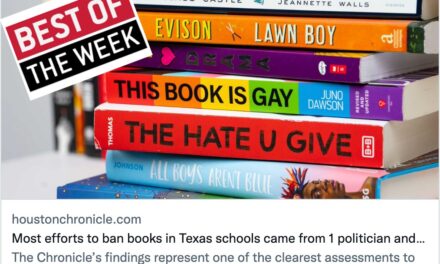
In this week’s newsletter: Some states are relaxing reading laws. Parents are being left in the dark about their children’s academic struggles. How to anticipate and cover looming school spending cuts. And a Philly teacher’s scathing critique of the popular TV show Abbott Elementary.
RECONSIDERING RETENTION
The big story of the week
The big story of the week is states revisiting reading instruction requirements — including third grade retention policies. As recently as last October, third grade retention laws seemed to be having a resurgence (EdWeek). And indeed concerns about reading remain high (Milwaukee Journal Sentinel).
However, Michigan is about to repeal its “read or flunk” law (Bridge Michigan, Detroit News, Michigan Advance, Michigan Radio). Meanwhile, Tennessee’s legislative leader wants to widen the criteria for retention (Chalkbeat TN). Some districts in Maryland are sticking with Lucy Calkins reading materials despite renewed concerns about their effectiveness (Baltimore Sun). And some states including California have not yet adopted universal screening for dyslexia (CalMatters).
Other big education stories:
📰 EARLY EDUCATION MISSTEPS: Several reports were released this week showing that not enough kids are getting the early intervention help they need, especially kids of color who in some cases face punishment instead (USA Today/Hechinger Report, EdSource, New York Daily News).
📰 SCHOOL CLOSINGS: As enrollment continues to decline in many places, districts are weighing the possibility of school closures. Districts in Utah and Washington are among those facing the tough choice (KUER, Seattle Times). Denver has already announced plans to close three schools (Chalkbeat CO).
📰 CHICAGO SHOWDOWN: The two candidates for Chicago’s next mayor are former schools head Paul Vallas and longtime teachers union activist Brandon Johnson. Having a candidate from their own ranks is a big win for the Chicago Teachers Union (Chicago Sun Times). Black and Latino voters will likely determine who wins the April 4 runoff (Politico). Vallas beat out many others including incumbent Lori Lightfoot by running as a tough-on-crime moderate (The 74).
📰 BACKLASH: Several states are implementing universal school voucher programs (Arkansas Democrat Gazette, Arkansas Online). A number of states are limiting government officials’ ability to close schools during future pandemics (Washington Post). Districts like Clayton (Ga.) are beefing up student discipline programs (AJC).
PARENTS LEFT IN THE DARK
The best education journalism of the week
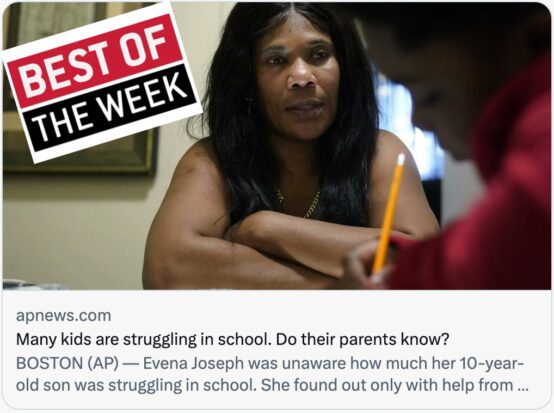
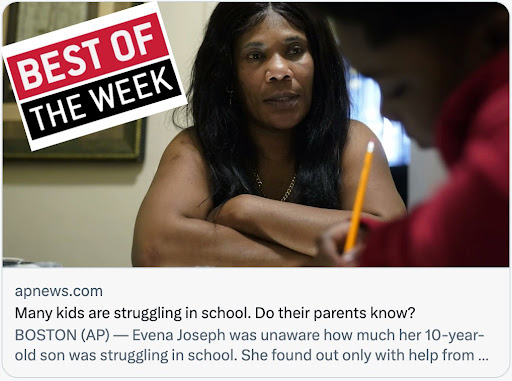
The best story of the week is the AP’s Many kids are struggling in school. Do their parents know?, a Bianca Vázquez Toness piece highlighting the chronic and woefully under-reported gap between student progress and parental awareness.
For a complicated set of reasons, parents who are unfamiliar with the education system are too often left in the dark when it comes to their children’s academic progress, writes Vázquez Toness. While national in scope, the story is told largely through the experiences of one child and his parent, a Haitian casino worker who eventually is offered an education advocate to help her negotiate the school bureaucracy — a promising-sounding idea that other districts might consider.
ICYMI: Check out Safe Place, a six-part WHYY Philadelphia series on community violence from last month. Education reporter Aubri Juhasz and others spent months looking at how violence impacts students and what schools are doing about it. It’s well worth your time.
BONUS:
🏆 An Illinois lifeline program for suicidal kids has become a bridge to nowhere for many (WBEZ)
🏆 Jaded with education, more Americans are skipping college (AP)
🏆 Tutoring help reaches few students despite nationwide push (Chalkbeat)
🏆 Three Va. school systems to offer AP African American class amid review (Washington Post)
🏆 ‘Slavery was wrong’ among things teachers can’t say anymore (Washington Post)
🏆 Special Ed Shouldn’t Be Separate (The Atlantic)
🏆 The “Uber-ification” of Teaching Will Destroy Public Education (Current Affairs)
LOOMING BUDGET MESS
Our latest columns and commentary
“The next two years will be messy ones for district finances,” including layoffs, school closings, and budget cuts, writes Georgetown’s Marguerite Roza in a new column.
But nobody should be caught by surprise, according to Roza, who details several ways for reporters (or anyone else) to track the numbers and anticipate the decisions.
TEENS AS FIRST RESPONDERS
Coverage of promising school innovations & signs of progress
💡 Teens are getting trained in “mental health first aid” in order to help peers who are struggling with mental illness (Washington Post).
💡 A partnership between a Colorado school district and the local District Attorney’s office diverts chronically absent students away from the justice system and back into the classroom (Colorado Sun).
💡 A Washington state program administered partly through school districts helps children and families who are homeless, but don’t qualify for federal public housing assistance (Hechinger Report).
💡 A San Jose school district has defied statewide struggles with California’s universal preschool rollout by keeping pre-K classrooms small, offering afterschool care, and converting empty elementary school classrooms into daycare (KQED, Feb. 28).

PEOPLE, JOBS
Who’s going where and doing what
Above: The next head of the Education Writers Association may not be all that different from the previous heads.
🔥 Education Writers Association: I’m pretty sure I know who’s going to be the next head of EWA, having heard the same name since January. And if what I’ve heard is right, then she won’t be all that different from her predecessors, Lisa Walker and Caroline Hendrie (pictured above).
🔥 Abbott Elementary: This may make some education reporters’ heads explode, but at least one semi-anonymous Philadelphia teacher says they hate the popular TV show, describing it as “an absolutely irresponsible misrepresentation of a system in crisis, “designed to mollify white liberals.”
🔥 New ed reporter to follow: KPCC/LAist isn’t the only Los Angeles-based public radio station that produces education coverage. Follow KCRW reporter Robin Estrin, who covers education and other topics, and check out her recent story about a successful effort to weaken criminalization policies in LAUSD. See the rest of the station’s education coverage here.
🔥 Awards: The New York Times’ Hannah Dreier won the March Sidney Award from the Sidney Hillman Foundation for her recent story on migrant children working dangerous jobs — often instead of being in school. “Finding these children was often as simple as going to a factory parking lot at midnight or at dawn to watch the shift change,” says Dreier in the accompanying interview.
🔥 Career moves: Chalkbeat’s Kalyn Belsha is back from parental leave! Send her tips, especially on tutoring and academic recovery. Detroit Free Press higher ed reporter David Jesse is moving on to cover college leadership for the Chronicle of Higher Education. And Chalkbeat’s Susan Gonzalez celebrated her seven-year journalism anniversary by sharing an excellent press pass photo. Congrats to all!
🔥 Impact: The federal government is investigating an Illinois school where students with disabilities were frequently arrested — all following a ProPublica and Chicago Tribune investigation into the issue. Kudos to reporters Jennifer Smith Richards and Jodi Cohen.
APPEARANCES, EVENTS, & NEW RESOURCES
What’s happening and new research
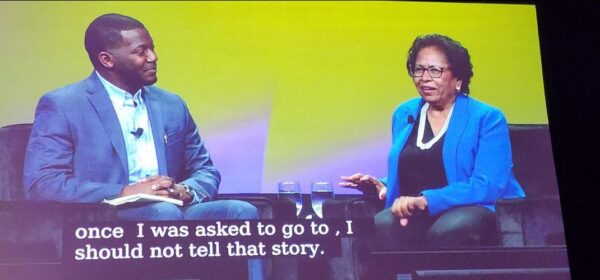
Above: The Atlantic’s Adam Harris speaking at SXSW EDU this week. (H/T @akilbello for the photo.)
⏰ SXSW EDU: Lots of ed reporters were at SXSW this week, including The Atlantic’s Adam Harris, who led a keynote interview with Ruth Simmons on higher education and American democracy, and Dallas Morning News Ed Lab editor Eva-Marie Ayala, who spoke about investing in education (live tweeted by former Ed Lab member Meghan Mangrum). The 74’s Greg Toppo was there, too, along with several members of the Hechinger Report team. Not surprisingly, we heard that APM Reports’ Emily Hanford attracted a crowd wherever she went.
⏰ REMEMBERING COVID: Next week is the third anniversary of the pandemic school shutdown and everything that followed. Two years ago, I wrote about the most memorable stories that had been produced during the harrowing and exhausting first 12 months. For the 2nd anniversary of COVID, a long list of education reporters reflected on their experiences. I’m curious about how (if?) this third anniversary will be remembered.
⏰ Appearances: Education reporters were all over the waves at WBUR recently. Last Friday, Tampa Bay Times education reporter Jeff Solocheck was on On Point talking about the politics and policies behind Ron DeSantis’s reshaping of Florida education. The Boston Globe’s Mandy McLaren was on The Common talking about how BPS is — or isn’t — supporting English language learners. Vox’s Rachel Cohen was on Here & Now to talk about the need for more after-school care. And WBUR education reporter Max Larkin was on Radio Boston discussing the fight over a Worcester charter school and what it could mean for the state.
⏰ Research & resources: Denise-Marie Ordway of The Journalist’s Resource is out with a roundup of research and reporting tips for journalists covering corporal punishment in schools. Chalkbeat analyzed data from eight states on teacher turnover, finding an increase in attrition — “not massive” but “meaningful.” Urban districts are among the “pockets of remarkable resilience” when it comes to math and reading test scores, according to NAEP. And a new report is out showing that nearly a quarter of parents didn’t tell schools or other people their child had COVID. It’s not a surprise if you’re a parent (or followed parent Twitter), but where were these stories during the pandemic?
⏰ Books: It looks like longtime education reporter Benjamin Herold’s book, “Disillusioned,” now has a January 2024 publication date. Washington Post education reporter Laura Meckler’s book “Dream Town” is coming out in August and is now available for pre-order.
THE KICKER
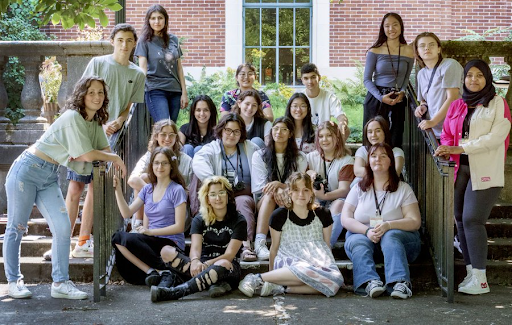
Future ed reporter alert! The Oregonian is launching a new project highlighting work by high school journalists (above) who will write about education and teen life. I can’t wait to see what they produce.
ABOUT THE AUTHORS

The Grade
Launched in 2015, The Grade is a journalist-run effort to encourage high-quality coverage of K-12 education issues.

Alexander Russo
Alexander Russo is founder and editor of The Grade, an award-winning effort to help improve media coverage of education issues. He’s also a Spencer Education Journalism Fellowship winner and a book author. You can reach him at @alexanderrusso.
Visit their website at: https://the-grade.org/