7 obstacles to much-needed changes, according to journalists and observers
By Alexander Russo
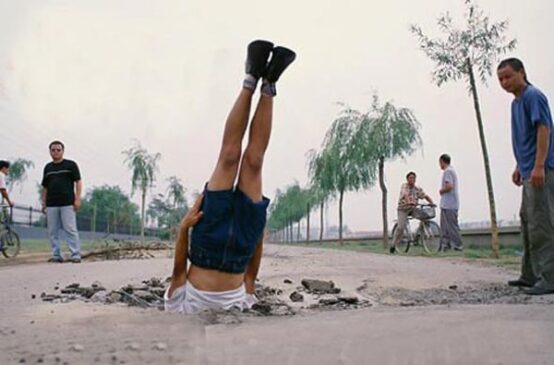
When you see something that’s broken — or at the very least stuck — your first instinct might be to point that out.
But experience suggests that it doesn’t serve much purpose to point out the obvious.
Everybody knows something’s wrong — and if they don’t, pointing out the problem isn’t going to persuade them to do anything.
The real trick is to figure out how things ended up the way they are. What’s standing in the way of doing things in new ways that might be improvements?
Figure out why and you stand a chance of prompting actual change.
This insight comes to mind when reading two recent Hewlett Foundation-funded reports about education journalism produced by Calvin University researcher Jesse Holcomb and others.
The first report, Keeping up with the ed beat, surveys parents and finds a troubling mismatch between the information parents say that they want and the news that they say they’re being served.
The second report, Education news in the mirror, is an examination of 1,500 news stories in 20 major markets showing that traditional news outlets over-emphasize breaking news and fail to address racism and solutions journalism the way specialized community outlets often do.
For me, these reports are just the latest reminder that the education beat — like journalism writ large — hasn’t yet made long-discussed changes in the ways stories are assigned, framed, and reported; the people who write them; and the people who are featured in them.
Despite pockets of progress and near-constant talk about doing things differently, too much education coverage still fits the traditional practice, centered on institutions and elites, benefitting the current system of education journalists and a subset of readers and powerful stakeholders.
Too much education journalism plays on fears and stereotypes, frightening readers as much as informing them.
To me, the beat seems broken. At very least, it’s stuck.
But what’s standing in the way? Why has progress been so slow and isolated? To accelerate change, we need to understand where the obstacles are.
To accelerate change, we need to understand where the obstacles are.
While few education journalists would publicly agree with the notion that education journalism is in bad shape. there is broad agreement that more needs to be done than has yet been accomplished.
Asked what was standing in the way of greater changes, some journalists and observers cited familiar and generic issues: the necessities of daily production cycles, dwindling resources, the lack of adequate staffing, high turnover, and a prize culture that rewards investigative work and long features.
Several also highlighted journalism’s longstanding habit of focusing on conflicts and breaking news, and the persistent racial and educational mismatch between the people who are writing the stories and the communities they are covering — combined with a lack of bilingual reporters and resources for translation.
“Does the white-dominated field of education reporters need to do a better job of listening to and connecting with Black and Hispanic parents to find out what their information needs are?” asked one white education reporter who didn’t want to be named. “Absolutely.”
Others named obstacles that are more particular to education journalism, identifying ways reporters and education teams decide what’s worth covering, how they think about themselves, and how they approach the work. These obstacles could theoretically be addressed without requiring systemic changes to journalism as a whole. At very least, they need to be better understood.
“Does the white-dominated field of education reporters need to do a better job of listening to and connecting with Black and Hispanic parents Absolutely.”
1: INSUFFICIENT ATTENTION TO PARENTS’ NEEDS
“I think what that [Calvin University] study really speaks to is the need for hyperlocal journalism,” says former EdWeek editor Liana Heitin Loewus, who now oversees U.S. News & World Report’s education advice coverage. There’s an information vacuum that advantages parents who have work-from-home jobs and access to informal networks and “leaves a lot of parents out.”
Especially during the pandemic, “parents have had trouble getting in-the-moment, updated information from news sources.”
2: A FOCUS ON “MACRO” BUDGET AND POLICY ISSUES
Education journalists “write about the macro things” like budgets, policies, and issues, says parent and author Alina Adams, who started the popular newsletter NYC School Secrets because she was flabbergasted by the difficulty of finding the parent-focused information she wanted.
Parents “want to know ‘how’s this going to affect my child?’” But that’s not what most local journalism usually does, according to Adams.
3: AMBIVALENCE ABOUT SERVICE JOURNALISM & ENGAGEMENT
Explainers and news you can use (aka “service” journalism) don’t appeal to most journalists or generate enormous praise. And engagement is notoriously hard work for reporters who are already trying to prove themselves on a low-status beat.
One education journalist I spoke with described the work of answering parents’ questions and concerns as more the job of the school or district than a news reporter. “That’s not why I got into journalism,” she said.
No surprise, then, that we haven’t seen a widespread adoption of service or engagement strategies, even when there are enough reporters.
“That’s not why I got into journalism.”
4. UNDER-USE OF INFORMAL NEWS SOURCES
Parents of color are clamoring for useful information “yet [they] still feel increasingly uninformed about what’s going on in their children’s schools,” wrote Nieman Lab’s Laura Hazard Owen in a writeup of one of the two new studies.
In part, that’s because they don’t have equal access to the group chats, Facebook groups, and spreadsheets that some parents develop and share informally.
Hazard Owen tweeted that journalists “have got to get stuff out of the listservs… and into people’s hands.”
5. FEARS OF LOOKING FOOLISH
Journalists’ fears of violating “some sort of norm of a very twisted understanding of objectivity” is one of the main obstacles to more inclusive and diverse news coverage, according to author and researcher Nikki Usher, whose latest book focuses on local newspapers’ default focus on white suburban readers.
Journalists “have something of a bias toward ‘negative’ news,” says Matthew Kauffman, a former Hartford Courant reporter who until recently worked with the Solutions Journalism Network.
“We’re comfortable declaring something a failure, but not comfortable declaring something a success.”
Related: Making education journalism more accessible and inclusive
6. UNCONSCIOUS BIAS
“I see lots of news articles on the mayor and the future of gifted-and-talented education, school lotteries, etc.,” former Spencer education journalism fellow and New York City parent S. Mitra Kalita told me via email.
But few of them are directly helpful to a parent like her with, say, a 5th grader who has to choose a middle school using a complicated application system. “I have not read a single mainstream news article helping me navigate this process,” she wrote at the time.
Describing education journalism as “opaque,” Kalita got the information she needed only after reading an article on Medium, skimming a parent newsletter — and publishing a story of her own.
“Perhaps there’s incentive to NOT share or even the playing field,” Kalita told me, describing a mindset that pervades school decisions and white-dominated newsrooms that “do not foster the inclusive, collaborative sharing of information that is needed to get a kid successfully through school.”
Related: Fear, complicity, and guilt get in the way of covering school segregation
“Perhaps there’s incentive to NOT share or even the playing field.”
7. DISCOMFORT & VULNERABILITY
At heart, the strongest obstacle to changing news organizations’ tendency to focus on problems may be that doing anything differently is often uncomfortable and awkward.
“Change is hard,” said former Seattle Times education editor Linda Shaw, now with the Solutions Journalism Network.
There are plenty of education journalists who want to do the best job they can for the audience they’re serving, Shaw says. But “change takes time, it takes energy, and it’s a little risky.”
Doing something new like deprioritizing conflict makes journalists “vulnerable to readers and peers who have come to expect something different.”
“Journalism is broken,” notes The Objective. “Let’s reimagine it.”
Some education journalists see the glass as half full, pointing to innovations and experiments popping up here and there.
“Education journalism is changing and adapting” despite systemic issues unrelated to the beat, AL.com education editor Ruth Serven Smith told me via Twitter. “There are a ton of journalists engaging with readers in creative and evolving ways, and their work reflects that.”
However, other journalists take a very different view, at least when it comes to the industry write large.
“Journalism is broken,” notes The Objective, a nonprofit newsroom aimed at holding journalism accountable. “Let’s reimagine it.”
And at least a few journalists aren’t at all confident that existing news organizations can produce dramatically different coverage.
“I don’t expect to see meaningful, sustainable change in journalism in respect to either staffing or how we produce journalism and for whom,” says Carla Murphy, referring to unsuccessful efforts at newsroom diversification in the industry and inadequate attention to the serving the public who do not pay for journalism. The lack of progress is, according to Murphy, “leading more people away from trying to reform these institutions towards simply burning them down.”
For myself, I retain hope that existing education news outlets and teams can tackle some new forms of reporting.
However, I’m desperate for faster, deeper change.
Related from The Grade
People are fighting. Is that news? (Greg Toppo)
Why education reporters need antibias training (Issac J. Bailey)
Rethinking K-12 education coverage for the post-pandemic era (Jenny Anderson)
Diversity in education journalism 2021
A star education reporter explains why she left journalism (Jenny Abamu)
ABOUT THE AUTHOR

Alexander Russo
Alexander Russo is founder and editor of The Grade, an award-winning effort to help improve media coverage of education issues. He’s also a Spencer Education Journalism Fellowship winner and a book author. You can reach him at @alexanderrusso.
Visit their website at: https://the-grade.org/