In this week’s newsletter: NAEP history and civics scores plunge. Biden attacks Republican book bans. Oakland teachers are out on strike — again. A shift to the “science of reading” in one Wisconsin school district. A reporter reflects on her personal connection to immigrant child labor. And Chalkbeat’s top editor gets a new job.
DISMAL NAEP
The big story of the week
The big story of the week is troubling NAEP results in history and civics scores — echoing disappointing results in reading and math from a few months back.
There’s not much unanimity when it comes to explaining the scores. (Sensing a political opportunity, the Biden administration appeared to try and link the results to recent book bans.) But nearly everyone agrees that the scores are concerning — especially given how widespread they are among different groups of kids (Chalkbeat, PBS NewsHour, The 74, WSJ, NYT, Washington Post, LAist, USA Today, AP, NPR, EdWeek).
One tiny bit of good news related to NAEP that came out this week: CNN reports that English Learners were one of the few groups that did relatively well on reading test results that came out in the fall.
Other big education stories of the week:
📰 OAKLAND SCHOOL SHUTDOWN: About 3,000 teachers walked off the job in Oakland yesterday protesting poor working conditions and wages and leaving about 34,000 students out of school and their parents frustrated (KQED, New York Times, Mercury News, San Francisco Chronicle, Oaklandside). While Oakland teachers receive among the lowest wages in the state, the Chronicle’s Jill Tucker warns reporters not to forget to include health and retiree benefits when making comparisons across districts. For ongoing Oakland school shutdown coverage, follow reporters Elissa Miolene, Ida Mojadad, Jill Tucker, and Ashley McBride.
📰 FLINT BACKPACK BAN: The school district in Flint, Michigan, has banned students from carrying backpacks — even clear ones — due to school shooting concerns (NBC News, NPR). This seems like a small but telling overreaction to me, and I can’t help but blame excessive media coverage of school violence for having played a role. At least one person thinks the directive is a fear-driven response to racism. I’m inclined to agree.

READING SHIFT
The best education journalism of the week
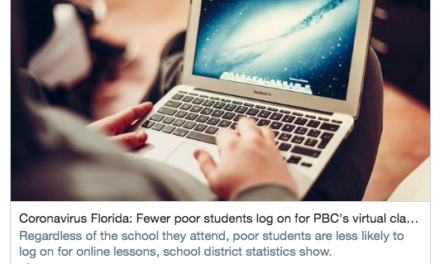
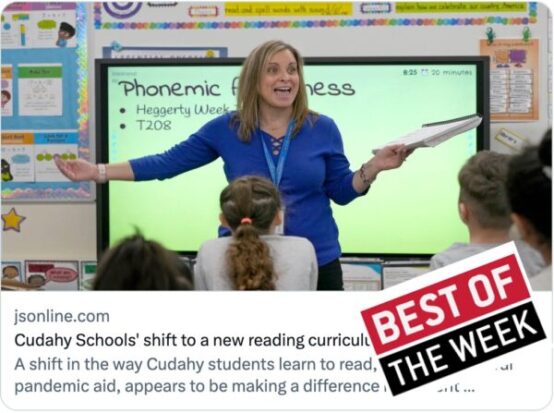
The best education journalism of the week is the Milwaukee Journal Sentinel’s Cudahy Schools’ shift to a new reading curriculum looks like it’s paying off (above).
Penned by former longtime education reporter Alan Borsuk, the piece focuses on a suburban district south of Milwaukee and tells what’s becoming a familiar story of educators becoming unsatisfied with students’ reading skills and trying something new (with help from federal COVID funding).
There’s nothing particularly flashy about the piece, but it tells an important story and hits all the important bases. Along with classroom details — a big challenge for any education coverage these days — there’s a veteran first grade teacher who’s trying to do things differently, a district that’s trying to press forward without the benefit (or hindrance) of state mandates, and a go-slow approach to build support and capacity rather than rushing in.
There’s lots we still don’t know, and the district is one of only a few in the area that have revamped their literacy instruction. But we have more to look forward to because the piece — technically a column — is the first of three in a new series.
BONUS
🏆 Veteran teachers: Why some stay in tough classrooms (CalMatters)
🏆 Schools ended universal free lunch. Now meal debt is soaring (NPR via Harvest Media)
🏆 VA parents, teachers share worries after school shootings (Richmond Times-Dispatch)
🏆 Clarence Thomas Had a Child in Private School. Harlan Crow Paid the Tuition. (ProPublica)
🏆 NYC Schools Handcuff and Haul Away Kids in Emotional Crisis (The City/ProPublica)
🏆 The Mind-Expanding Value of Arts Education (New York Times)
CHILD LABOR
Our latest columns and commentary
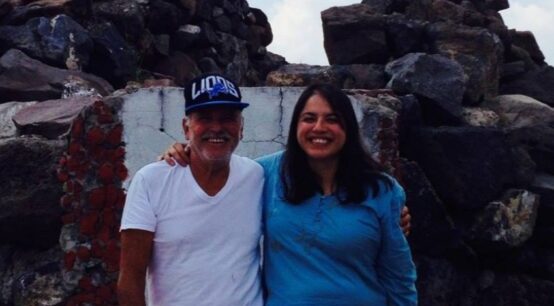
Above: ProPublica reporter Melissa Sanchez (right) and her father.
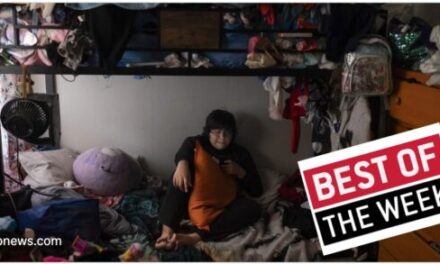
Teenagers working in factories. Elementary school students working overnight McDonald’s shifts.
Child labor has been in the news a lot lately — with more likely to come.
But what’s it like for a journalist writing about teenage factory workers when there’s a deep personal connection?
“If it wasn’t for child labor, I don’t know if I’d be here,” writes ProPublica’s Melissa Sanchez, whose immigrant dad worked at a recycling center as a teen.
Reporting on teenagers who are now doing these kinds of jobs in record numbers, Sanchez finds that “the teens are often too tired to learn much in school. But they don’t see themselves as victims.”
TEACHER PIPELINE
Coverage of promising school innovations & signs of progress
💡 College credits and tuition reimbursement incentivize high school students in rural Montana to fill teaching vacancies in their local districts (PBS NewsHour). PBS also reported this week on efforts to help struggling students at HBCUs graduate.
💡 A West Philly high school has made its internship program part of the 11th grade curriculum, giving more students a chance to test out careers and explore their interests before applying to college (Billy Penn).
💡 A middle school principal in Louisiana uses TikTok to attract prospective hires and communicate rules and expectations to his students (The 74).
💡 It’s not yet peer-reviewed and only has a year of evidence so far, but a study out of the University of Chicago showed that students receiving a blend of in-person and computer-based tutoring during the school day saw nearly the same math gains as students who got purely human instruction — and at lower the cost (Hechinger Report).
Read more about the importance of covering promising innovations and preliminary successes.
PEOPLE, JOBS
Who’s going where and doing what
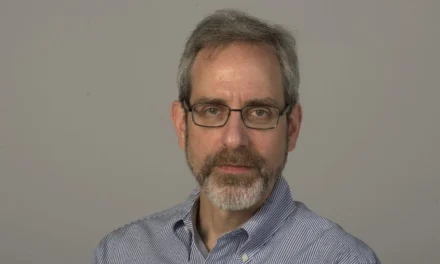
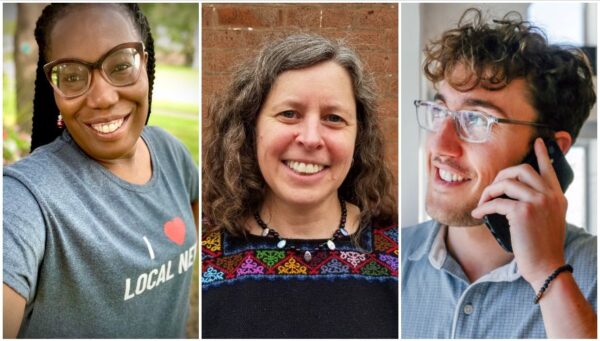
Above, left to right: New Detroit Free Press top editor Nicole Avery Nichols, O’Brien fellow Linda Lutton, and The 74’s Asher Lehrer-Small.
🔥 Chalkbeat shakeup: Chalkbeat Editor-in-Chief Nicole Avery Nichols has been named the new editor-in-chief of the Detroit Free Press, becoming the first Black woman with the top job at the paper. Chalkbeat founder Elizabeth Green described Avery Nichols as a generous leader who “helped us find the strength to do the work that was called of us, with joy and with love.” National editor Sarah Darville has been named interim EIC.
🔥 Fellowships: Former all-star WBEZ Chicago education reporter Linda Lutton is part of the new cohort of the O’Brien Fellowship in Public Service Journalism, following in the footsteps of another superstar: education reporter Sarah Carr. “A tenet of good journalism is hearing from the humans who have the most at stake in any given news issue,” reflected The 74’s Asher Lehrer-Small about his yearlong Poynter-Koch fellowship. “For education reporting, that’s the students themselves.”
🔥 RIP: Tributes poured in for Catalyst Chicago founder Linda Lenz, who passed away this week, including from longtime journalist Maureen Kelleher, EWA Assistant Director Lori Crouch, and Chalkbeat’s Kalyn Belsha. In a Chicago Sun-Times obituary that noted Catalyst’s role as a model for local education news sites, WBEZ’s Sarah Karp noted how Lenz featured “the interests of students with a focus on the nitty-gritty.”
🔥 More career moves: WBHM’s Kyra Miles is heading north to cover early education for Minnesota Public Radio. WPRI Providence’s Steph Machado is heading to the Boston Globe to cover Rhode Island. (Just last week we published a Q&A with her about her stellar investigative ed stories.)
🔥 Awards: Congrats to Lansing State Journal’s Krystal Nurse and NPR’s Elissa Nadworny on being named Livingston Award finalists. Nurse has written about abuses at Native American state boarding schools. Nadworny has written about the challenges of getting a bachelor’s degree in prison. Former Philadelphia Public Schools Notebook reporter Erika Owens has received a Knight Fellowship for the fall. Chalkbeat’s Lori Higgins and the Boston Globe’s Melissa Taboada have been selected for ProPublica’s Investigative Editor Training program.
🔥 Leadership: In a statement posted online, new EWA head Kathy Chow describes a vision for the education journalism organization that includes expanded programming and a focus on the principles of diversity, equity, and inclusion. But there are few details provided and Chow has so far declined interview requests.
APPEARANCES, EVENTS, & NEW RESOURCES
What’s happening and new research
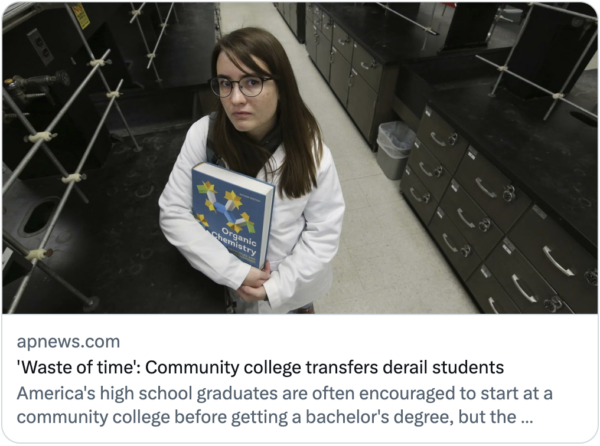
Above: This new story on community college transfers derailing students is part of Saving the College Dream, a new collaboration including AL.com, AP, the Christian Science Monitor, Dallas Morning News, the Hechinger Report, the Post and Courier, and the Seattle Times.
⏰ ICYMI: The Washington Post’s John Woodrow Cox and Steven Rich held a Q&A with readers on Wednesday about what they learned from covering school shootings. You can read the transcript here. EdSource hosted a roundtable last week on how schools can keep teachers from quitting. Watch it here. Yesterday, Atlanta Journal-Constitution education reporter Josh Reyes spoke with experts about what options exist for Atlanta’s newest high school grads.
⏰ Impact: After ProPublica and InvestigateTV published a story showing children risking their lives to crawl under immobile trains to get to school, regulators have talked to companies, lawmakers are demanding consequences, and one train company CEO called a mayor to work out a fix. In Colorado, six news outlets are suing Denver Public Schools to gain access to a recording of a meeting about school safety. We applaud the collaboration and effort!
⏰ Research & reports: Education Week’s Sarah Schwartz outlines the latest developments in reading retention policy and research, including research showing that retention alone isn’t enough. New research using a Boston admissions lottery shows that students who attend preschool at 4 years old are significantly more likely to go to college. And, in case you missed it, a report in The Lion shows that “for every one student who left the public system for a private school (in the pandemic), nearly two switched to homeschooling.”
⏰ Media research & criticism: A new report from the Center for Local Media shows that over 70% of local journalists are experiencing burnout and considering quitting their jobs. The Washington Post’s Valerie Strauss highlighted News Literacy Project recommendations for newsrooms to diversify staff “and for journalists to make a genuine effort to understand and appreciate the distinct needs of different audiences.”
THE KICKER
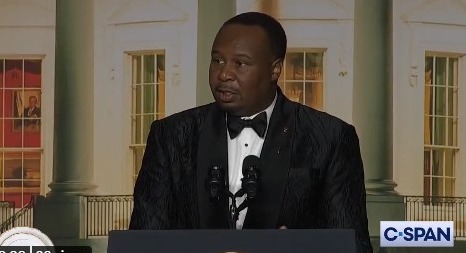
“People can’t afford rent. People can’t afford food. They can’t afford an education. They damn sure can’t afford to pay for the truth.”
– Comedian Roy Wood Jr.’s scathing critique of paywalled journalism at the White House correspondents’ dinner last weekend.
ABOUT THE AUTHOR
Alexander Russo
Alexander Russo is founder and editor of The Grade, an award-winning effort to help improve media coverage of education issues. He’s also a Spencer Education Journalism Fellowship winner and a book author. You can reach him at @alexanderrusso.
Visit their website at: https://the-grade.org/