📌 Welcome back! Since we were off last week, some stories go back to Nov. 22. 📌
In this week’s newsletter: The U.S. falls behind in latest international math test scores. Massachusetts parents sue balanced literacy providers. Discovering the hidden lives of homeless students. How to cover communities that aren’t your own. And a New York City education reporter describes the highs and lows of interacting with the public.
U.S. SLIDES IN MATH
The big education story of the week
The big education story of the week is the steep drop in U.S. scores on the international math and science test known as TIMSS. The test was administered to 4th and 8th graders in 64 countries.
The last time the test was administered in 2019, U.S. student scores were already declining slightly — but they took a big downward turn in the most recent test (Chalkbeat, New York Times, Education Week, Fox News).
U.S. rankings slid overall, with scores as low or lower than they were when the test was first administered in 1995 (Wall Street Journal). Another disappointment is the growth of the gender gap in favor of boys in many countries, which had been narrowing in recent years (Chalkbeat).
More than a dozen other countries saw scores improve (Guardian, The 74). And some U.S. districts significantly outperform expectations in 8th grade math (The 74). Pandemic school closures were almost certainly a factor, though nobody knows exactly how much. (For more on the pandemic effect, watch out for a forthcoming analysis from the University of Arkansas.)
Not everyone thinks the scores merit attention. “People, it’s one data point!” cautioned veteran education researcher Tom Loveless. The Associated Press, Washington Post, and NPR seem to agree — none of them have covered it so far.
Other big education stories of the week include Massachusetts parents suing Lucy Calkins and others, the U.S. Department of Ed calling on states and schools to adopt cell phone policies, and schools preparing for possible immigration raids during the next Trump presidency. Check out @thegrade_ for each day’s most important education news.
HOMELESS & HIDING
The best education journalism of the week
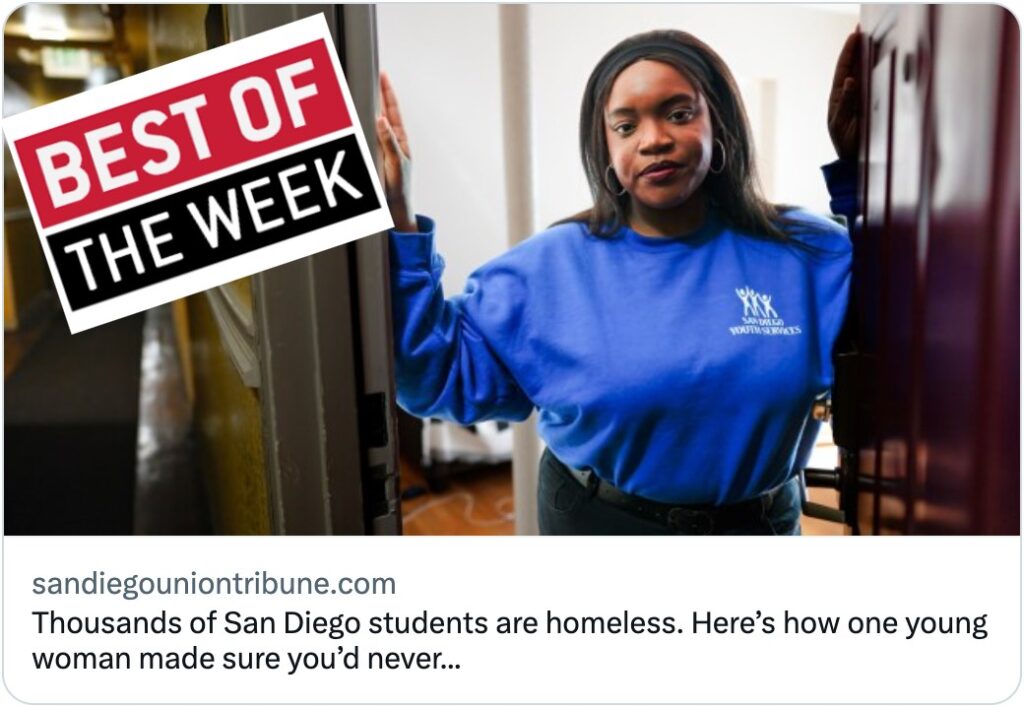
The best education journalism of the week is Thousands of San Diego students are homeless. Here’s how one young woman made sure you’d never notice her by the San Diego Union-Tribune’s homelessness reporter, Blake Nelson. He offers readers a detailed look into the difficult day-to-day lives of homeless students, turning a news story into one that reads like the best non-fiction.
Affecting nearly 18,000 students, homelessness in San Diego is so bad that one school specializes in serving unhoused families and trains district educators how to identify and care for families at risk of homelessness.
Ostensibly about a November march against homelessness, Nelson’s story profiles three young people who attended local schools while trying to conceal their status from classmates and teachers — a strategy that both humanizes the homeless students and helps readers understand the scope of the problem.
The piece’s greatest strength lies in its telling details: one student has a recurring nightmare of being locked out of her low-rent apartment by a new tenant. In school, she deflects questions about where she lives, but can’t afford the $45 admission to school dance. Nelson notes, “That’s, like, nine 7/11 pizzas!” Another likens her family’s fight to squeeze into “random rooms” each night to living through an avalanche.
“When you say ‘homeless,’ I think the average person thinks of the dude on the street corner yelling at cars,” Nelson told us via phone. “But there’s this whole other population that, for a whole bunch of reasons, is totally invisible … I’m realizing I need to do more work in trying to find people who are not visible.”
Kudos to Nelson for taking what could have been a routine assignment and making it into a resonant and memorable piece.
Other education stories we like includes a Wisconsin state college taking a different approach to falling enrollment (Milwaukee Journal Sentinel), chronic absenteeism among Native American students — and how to address it (AP and ICT), colleges slashing majors for rural students (Hechinger Report), and more high schoolers taking college courses (Signal Cleveland and The 74).
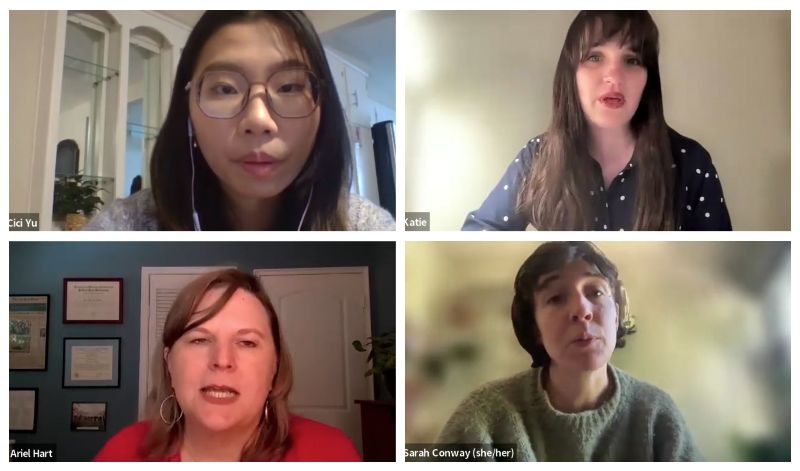
Above, clockwise from top left: IRE panelists Cici Yu (WBUR), Katie Licari (AfroLA), Sarah Conway (City Bureau), and Ariel Hart (Atlanta Journal-Constitution).
COVERING COMMUNITIES THAT AREN’T YOUR OWN
Our latest columns and commentary
Overwhelmingly white, college-educated, and liberal, journalists have long struggled to cover communities that are not their own. The surprise results of the 2024 elections are a stark reminder of the challenge. Good thing then that the journalists who led a panel at a recent IRE conference (above) have shared five essential tips for reporting on communities that are not your own.
In case you missed it, we also published a Thanksgiving-themed appreciation for education journalism — traditional and otherwise. There’s so much talent and excellence out there, and I’m hoping that the field can find effective ways to appeal to folks who don’t read the news — and to compete with non-traditional information sources who are currently eating our lunch. Only 19% of Americans often follow news about schools, according to Pew — and only 30% of parents of school-age children.
Coming up: There are three education-related stories in the just-published 2024 Bloomberg Jealousy List, which is the inspiration for The Grade’s forthcoming list of most memorable education stories of 2024. Take a peek at last year’s seven most memorable stories while you’re waiting.
BONUS: You’re all invited to fill out this five-question survey on hot education topics, post-election coverage adjustments, best stories of the year, and 2025 media predictions. I’d love to know what you think and are doing.
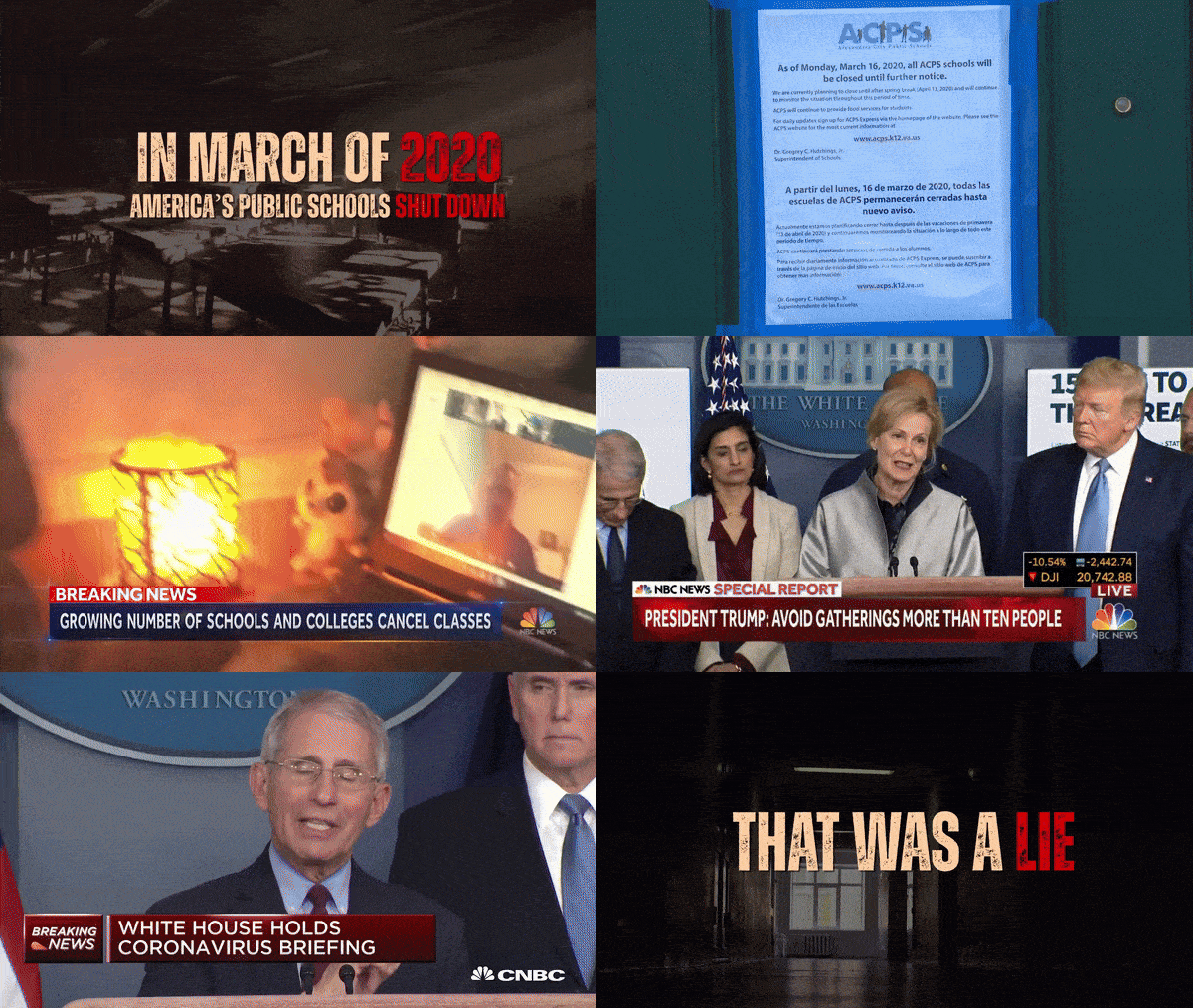
Above: As we approach the fifth anniversary of the pandemic, a new documentary dives into the high cost of prolonged school closures. Catch the debut at a USC conference on censorship in the sciences.
PEOPLE, JOBS, & EVENTS
Who’s going where and what’s happening
📰 The Hanford Effect: The first parent lawsuit filed against Lucy Calkins and others is yet another example of the influence of the work of Emily Hanford and others, including the Globe’s Mandy McLaren. Can you remember a time when education journalism has had such a sweeping and immediate real-world impact?
📰 Kudos: All hail Louisville Public Media’s Sylvia Goodman for noting in her recent school choice story that “despite the outcome … pressure for vouchers is likely to continue.” Kudos also to the Denver Public Schools PIO who noted that the AP’s story on schools preparing for mass deportations during the Trump administration is “so speculative that we would prefer not to comment.” And lastly, congrats to Chalkbeat, which is 10 years old this year (or was it last year?) and churning out some great national education coverage lately!
📰 Sound-off:
- “Please, reporters, report on what is happening, not what you think might happen if something else happens,” says longtime education writer Karin Chenoweth. Wise words.
- “Conflict entrepreneurs, people who inflame and incite division and contempt for their own purposes, only thrive if we let them,” says Amanda Ripley in the Washington Post. Mindless coverage is “literally giving them what they want.”
- Education coverage is “captured by orthodoxy on the left, right, and center,” writes thought-provoking Substacker Freddie deBoer.
- “Thank you to the viewer who stopped this morning on the Upper West Side before my live hit to tell me you enjoy my coverage of schools,” says NY1’s Jillian Jorgensen, who moments later was “heckled as ‘crooked media.’”
📰 Research: Religious schools have the highest parent satisfaction rate and traditional public schools the lowest, according to a recent 50CAN report. After Massachusetts scrapped its graduation test requirement last month, only seven states now have high school exit exams. A new research paper shows that misinformation on social media evokes more anger and outrage than happy or sad feelings — and users were more motivated to reshare the outrage content without reading it first.
📰 Events: Dual enrollment is booming, and the Hechinger Report’s Jill Barshay, among others, spoke about how to cover it for an EWA webinar this week. Next week, catch a post-election roundtable for reporters and editors, also from EWA. Sure hope they’re going to talk about the election’s implications for education journalism, too.
THE KICKER
We saved the best for last

“I haven’t been this excited about a Tweet in a long time,” says KUOW Seattle education reporter Sami West.
That’s all, folks. Thanks for reading!
Reply to this email to send us questions, comments or tips. Know someone else who should be reading Best of the Week? Send them this link to sign up.
Using Feedly or FlipBoard or any other kind of news reader? You can subscribe to The Grade’s “feed” by plugging in this web address: http://www.kappanonline.org/category/the-grade/feed/.
Read more about The Grade here. You can read all the back issues of The Grade’s newsletter, Best of the Week, here.
By Alexander Russo with additional writing from Colleen Connolly.