In this week’s newsletter: LAUSD leads the nation with a district-wide cell phone ban. A retired school teacher was the driving force behind Juneteenth. Special education is skyrocketing. So is public funding for private schools. Boston-based The Emancipator leads the effort to cover the 50th anniversary of Boston “busing crisis.” A former investigative reporter reconsiders problem-oriented journalism. The Baltimore Banner expands its education team. And why one ed reporter keeps up on “goats-in-school” news.
LAUSD CELL PHONE CRACKDOWN
The big story of the week
The big education story of the week is the just-announced cell phone and social media ban in Los Angeles schools — the largest district to implement such a ban in recent years (Wall Street Journal, USA Today, Axios, LA Times, LA Daily News, LAist).
Like many districts, LAUSD has tried a variety of ways of limiting cell phone use in schools in the past. The new ban, which will go into effect in 2025, will prohibit cell phone and social media use throughout the entire school day. The district is considering using pouches to lock phones away, a popular choice in some schools, at least among faculty and staff (Time).
Despite the fact that more than three-quarters of public schools already ban phone use during class, teachers say it is increasingly difficult to enforce, leading to statewide legislative efforts to make the bans more comprehensive (Stateline). So far, Ohio, Indiana, and Florida have enacted statewide bans. California Gov. Gavin Newsom has also called for a statewide school cell phone ban (New York Times, Washington Post). New York Gov. Kathy Hochul is considering one as well (WNYC).
While the approach has its doubters, systemwide cell phone bans have emerged as an increasingly popular strategy. The big question for journalists is how to cover them without being too skeptical — or too enthusiastic.
Other big education stories of the week include schools closing due to extreme heat, surging use of state vouchers, and more district budget problems. Check out @thegrade_ for daily headlines!

BUSING 50 YEARS LATER
The best education journalism of the week
The best education journalism of the week is Boston news outlets’ admirable commemoration of the 50th anniversary of the city’s failed school integration effort — and in some cases to reconsider the dominant narrative about it (The Emancipator, Boston Globe, WBUR, GBH).
Among the standout stories is WBUR reporter Max Larkin’s piece about one renowned school that was successfully integrated but has now reverted back to racial segregation. The Boston Globe’s Ivy Scott contributes a valuable story reminding readers that Black parents in Boston were calling for better local schools, not busing (or even necessarily integration).
Best of all is the series of first-person pieces and essays produced by The Emancipator, which bring the experience and effects of busing to a personal level that can otherwise get lost. In The buses we rode every September, former BPS student Leola Hampton reflects on being “carelessly thrust into an egregiously violent environment.” Civil rights scholar Jeanne Theoharis questions the conventional framing of the story, which downplays Black activists’ efforts and highlights white parents’ concerns about “forced busing.”
Other education stories we liked this week: a record number of kids are in special education (Wall Street Journal), a tale of two community schools (Rochester Beacon), the hundreds of high schools denying an education to older immigrant students (The 74), the explosion of school voucher use in Ohio (The Ohio Newsroom), and a look inside the microschools movement (New York Times).
THE PRIVILEGE OF PESSIMISM
Our latest columns and commentary
This week’s new offering from us is an essay from former Hartford Courant investigative reporter Matthew Kauffman in which he describes how he realized that his problem-focused approach to investigative journalism limited his effectiveness — and was born in part by his own personal privilege.
Kauffman isn’t alone in making this observation. Pessimism is “the feeling held most easily by those whose lives would still be functional, and maybe even satisfactory, if nothing changed,” write Robert Samuels and Toluse Olorunnipa in the Washington Post. “And it is the feeling so often rejected by those who have the least.”
In the spirit of journalists honoring progress and possibility, some of the good news stories we saw this week include Brooklyn school integration efforts (New York Times), a student who graduated despite enormous challenges (New Haven Independent), successful efforts to re-engage students and help them graduate (Baltimore Banner), and rising reading scores in Chicago (WBEZ).
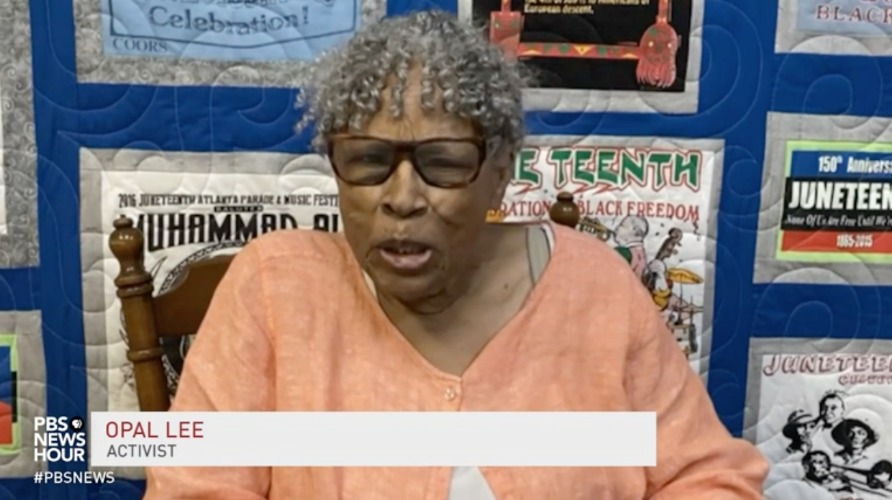
Above: The 96-year-old activist and retired Texas teacher Opal Lee was largely responsible for Juneteenth becoming a holiday. “We should be able to teach the good, the bad, the ugly, so it doesn’t happen again,” she said on PBS NewsHour.
PEOPLE, JOBS, & EVENTS
Who’s going where and what’s happening
📰 Job moves: The Baltimore Banner is expanding its education team to four reporters and launching The Education Hub, which will focus on early childhood to college. One new hire is Maya Lora, who will cover early childhood education. Eesha Pendharkar is joining the Maine Morning Star to cover education. The Houston Chronicle is hiring a K-12 reporter to cover Houston ISD with a focus on how the state takeover is impacting student achievement. EdWeek is looking for a new reporter to cover teachers and the teaching profession.
📰 Appearances & segments: NBC’s Mike Hixenbaugh is everywhere, and this week he was on PBS NewsHour talking about his book. Chalkbeat New York bureau chief Amy Zimmer discussed the confusing patchwork of rules about phones in schools in New York City. NPR’s Morning Edition featured Colorado Public Radio’s Jenny Brundin, who unearthed a secret recording about one school board’s recall efforts. The Houston Chronicle’s Megan Menchaca was on Houston Public Media to share the latest details about the year-old HISD takeover.
📰 Events: #IRE24 is happening now! Catch the second of EWA’s two events on the biggest issues to cover in education right now. Their first event yesterday was about what kinds of records requests to make on the education beat, featuring Business Insider’s Matt Drange. See the full schedule here. And The Daily Memphian’s Laura Testinomoderated a school board forum alongside Chalkbeat Tennessee, which paired with a new voter guide.
📰 Research: Some results from CDC’s latest Youth Risk Behavior Surveys are out, with a range of findings, from increased sadness in Boston to an increase in teens witnessing community violence in Indiana (Boston Globe, WNIN, EdNC). More than 6 million children attended a school last year where at least one shooting happened in the vicinity (Chalkbeat/The Trace).
THE KICKER

“The best part of having Google alerts for suspension and expulsion as part of my book research on student punishment is staying up on goats-in-school news.” – former NBC News education reporter Erin Einhorn
That’s all, folks. Thanks for reading!
Reply to this email to send us questions, comments or tips. Know someone else who should be reading Best of the Week? Send them this link to sign up.
Using Feedly or FlipBoard or any other kind of news reader? You can subscribe to The Grade’s “feed” by plugging in this web address: http://www.kappanonline.org/category/the-grade/feed/.
Read more about The Grade here. You can read all the back issues of The Grade’s newsletter, Best of the Week, here.
By Alexander Russo with additional writing from Colleen Connolly.