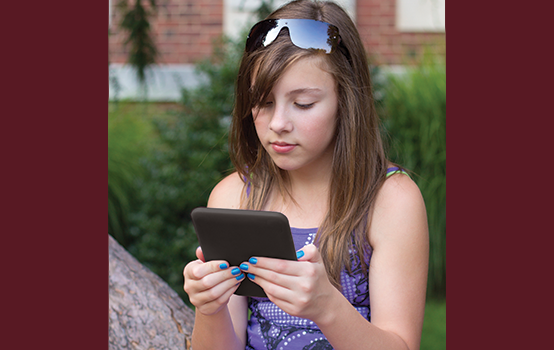
If you ask a typical 9th grader about reading, you’ll get a range of responses, but two trends will likely emerge: resignation and regret. If the student feels resigned, you’ll hear, “No way, I don’t read much,” or “I haven’t finished a book in years.” Reading will be characterized as “boring,” particularly in comparison to phones and video games, Instagram, and Snapchat. The student will sometimes tell stories of fake reading or of getting by in classroom discussions by mimicking peers.
If you keep listening, feelings of resignation will turn into regret. You’ll hear, “I wish I read more,” or “It’s too hard for me.” The student may smile when sharing her favorite book as a child but then quickly look away. After some silence, she may remember that she used to be a reader and wonder why that changed. Then, the “shoulds” will take over: “I know I should read more,” and “I should find more time to read.”
A few years ago, after more than a decade teaching English, I began asking students about their reading lives. After doing more than 100 informal interviews, I made a big decision. Instead of cajoling my 9th graders unsuccessfully to read great books like Night and Things Fall Apart, I launched an independent reading program as part of my curriculum. Influenced by reading gurus Nancie Atwell, Donalyn Miller, and Kelly Gallagher, and invigorated by an article in The New York Times, I built a fledgling classroom library of 500 titles and encouraged students to read books they liked, in addition to the books I required them to read.
You’ve accessed your three free articles for this month.
If you are a PDK member, login to read more.
If you are not a PDK member, join for full access, in addition to other benefits. Complete our membership form to join.
Forgot your password? Visit the Member Portal to reset your password.
Having trouble? Contact our member services team at memberservices@pdkintl.org or 800-766-1156.