Ideologies are the air we breathe, invisible until named. Angelina Castagno’s edited book, The Price of Nice: How Good Intentions Maintain Educational Inequality, gives name to socialized niceness, a common and particularly problematic ideology with real implications for classrooms, students, and communities.
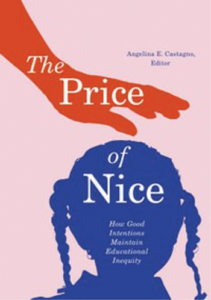 The chapters in The Price of Nice can be read sequentially or out of order, providing readers with a clear understanding of what niceness is and how it actively works against educational justice in K-16 settings. Using stories, data, and theory, the contributing authors demonstrate how niceness demands that we avoid topics that cause discomfort, such as bias, racism, and ableism. Instead, we smile and agree to keep the peace, prioritizing amenability over criticality and justice. Chapters provide concrete examples of how niceness causes harm and how it permeates individuals, schools, and society in insidious ways. Niceness also promotes “color-blindness,” which erases many students’ lived experiences and identities and upholds whiteness.
As white women, we have been socialized into viewing niceness as a positive and desirable trait. However, Castagno’s book helps us recognize that niceness is a set of behaviors and language that is detrimental to justice, allowing “nice folks” to opt out of doing the hard work of disrupting inequities by prioritizing comfort at all costs. This book shines a light on this “invisible” and detrimental ideology, calling to action those dedicated to dismantling white supremacy.
You’ve accessed your three free articles for this month.
If you are a PDK member, login to read more.
If you are not a PDK member, join for full access, in addition to other benefits. Complete our membership form to join.
Forgot your password? Visit the Member Portal to reset your password.
Having trouble? Contact our member services team at memberservices@pdkintl.org or 800-766-1156.