New funds require state, district, and school leaders to make plans in a time of constant change.
Most writers have habits or rituals that help them get into the right headspace for the task at hand. For me, it starts with investigating the “big issues” that education leaders, teachers, and students are dealing with at that particular moment in time. Before March 2020, this was relatively easy because there were always new and interesting things happening in public education, especially if you talked to people outside Washington, D.C.
The COVID pandemic, however, has changed all that. For 19 months, one big issue in education has eclipsed all others, and no matter how hard educators, parents, and (some) lawmakers are trying to mitigate the impact of the virus on student learning, the challenges just keep coming. Early in the summer, many of us felt some semblance of normalcy was on the horizon. There was still plenty of work to do (unfinished learning and mental health concerns have and will continue to wreak havoc on many communities), but people were getting vaccinated and the infection numbers were dropping. And then there was the money.
An influx of dollars
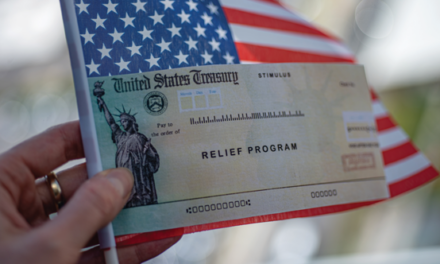
In America, we like to believe that money can solve almost any problem, and with that philosophy in mind, Congress has provided states and districts with three different chunks of stimulus funding. (Gentle reader: Prepare yourself now for a barrage of ridiculous acronyms and eye-popping amounts of money.) In 2020, the Elementary and Secondary School Emergency Relief Fund (ESSER) provided states and districts with $13.2 billion to support remote learning, the basic needs of students and families, and the safe reopening of school buildings. The Coronavirus Response and Relief Supplemental Appropriations Act, signed into law just after Christmas, provided an additional $54.3 billion for the Elementary and Secondary School Emergency Relief Fund (ESSER II Fund). Then, in 2021, the American Rescue Plan (ARP) provided $122 billion to support states in their efforts to address the broad and complex effects of the pandemic on their schools and communities. The math on this one is easy, but it can also boggle the mind: Since the start of the pandemic, Congress has allocated just under $190 billion to support K-12 education.
For schools to complain in the face of such riches may seem nonsensical, but if you really think about it, it’s not that hard to understand. State and local leaders are trying to manage and plan for a landscape that is constantly and unpredictably changing. They are well aware of what buckets of money can do to support their schools, but to develop a game plan, they need at least a few basic things to remain constant. And with the rise of the Delta variant in midsummer, the hope for a predictable reopening evaporated, making plans even more complicated.
State and local leaders are well aware of what buckets of money can do to support their schools, but to develop a game plan, they need at least a few basic things to remain constant.
Remember, states don’t just get the money that’s been allocated. To access the last and biggest bucket of money (ARP funds), states were required to submit a detailed ARP plan, the requirements of which were laid out in a rather complicated template developed by the U.S. Department of Education.
In addition to questions about using and maximizing ARP ESSER funds, the template asked states to address these major issues:
- The needs of underserved students.
- The mental health and well-being of students, teachers, and staff.
- The safe reopening and operation of schools.
- Supporting the educator workforce.
- Monitoring and measuring progress.
Plans and promises
The template for the plans was issued on April 17 with a June 7 deadline; however, that deadline came with a caveat. States could either submit a full ARP ESSER plan or buy a little more time by addressing key areas immediately and setting a target date for submission of the full plan. Two months is a pretty quick turnaround to develop an extensive plan, especially for states that are already swamped with work and facing constantly changing circumstances, but if you consider the amount of money at play, the desire for advance planning is understandable.
Those state plans, 45 of which were submitted to the department as of August 5, provide outsiders with a glimpse of what executive-level decision making looks like within a state education agency that has little or no idea what to expect in the months and years ahead. State capacity almost certainly played a role in how effectively these plans were developed and how thoughtful the responses are, but that is nothing new (we saw the same dynamic play out with the Obama-era Race to the Top grants). In some cases, states even played to type. New Hampshire’s plan was modest and to-the-point, with an emphasis on local control, while New Jersey’s was dense, ambitious, and little hectic.
Looming large in all of these plans was the issue of lost academic time and its effects on student achievement. Some states chose to rebrand this issue, referring not to “learning loss” but to “unfinished learning” — the idea being that all is not lost for students whose academic progress suffered as a result of COVID-19. Their achievement story has not ended; it simply remains an unfinished work in progress. This kind of detail may seem silly in the face of so much loss, but I found it to be both encouraging and comforting. After all, nobody wants to see their students or their children portrayed as a lost cause. The onus is now on state and local leaders to make sure their words are not just fluff.
The template also asked states to address both their concerns and action steps related to the “academic, social, emotional, and mental health needs” of students. Some states took the additional step of identifying the steps they were taking to address the mental health and wellness needs of educators and staff. The frequent use of the words trauma and mental health crisis in these plans echoes what most of us already know: Unfinished learning is just one aspect of what a school community needs to focus on to bounce back from the pandemic.
More funds, more questions
As if the stress of responsibly planning for and spending millions of federal dollars is not enough to keep state and local leaders occupied, Congress actually did its job and passed a bipartisan (what?!) infrastructure bill that would provide another large bucket of money for new school construction and upgrades to existing buildings. Since advocates have been fighting for years to get Congress to address dire school construction and infrastructure needs, this kind of funding is long overdue. The massive infrastructure package, which includes money for high-speed internet, lead and asbestos mediation, electric school buses, and HVAC upgrades, allows President Joe Biden to check the box on one of his most prominent campaign pledges, and if school systems use this money wisely — by, for example, making their buildings greener — the positive effects of their actions could go far beyond academic achievement. (For more on green schools, see my March 2021 column.)
The precipice education leaders find themselves on right now may be gilded in gold, but money doesn’t make their job any easier. As the Bible reminds us (and I am paraphrasing) “to whom much is given, much will be required.” States and districts may have the resources to be bold and innovative in their efforts to recover from the impact of the pandemic, but they are (or should be) cognizant of two other factors. First, their actions will be heavily scrutinized because expectations have never been higher; and second, the generous funding stream they have now will soon dry up. The success and long-term sustainability of their actions will ultimately depend on how well they plan for the past, present, and future of those they are responsible for.
This article appears in the October 2021 issue of Kappan, Vol, 103, No. 2.

ABOUT THE AUTHOR

Maria Ferguson
Maria Ferguson is an education policy researcher, thought leader, and consultant based in Washington, DC.