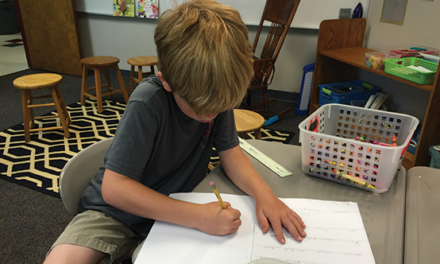
Schools that successfully educate low-income children pay attention to research, provide good supports for educators, and incorporate both high academic standards and sensible accountability.
For most of its history, the United States has relied on public schools to solve difficult social problems. In the 19th century, the country was a leader in providing universal primary schooling. During the first three-quarters of the 20th century, schools successfully taught generations of students the basic reading and mathematical skills they needed to fill the many assembly line and back office clerical jobs that the economy was producing (Goldin & Katz, 2008). Can the nation’s schools meet today’s challenge of providing all students with the skills they will need to thrive in the rapidly changing economy and society of the 21st century?
This remains to be seen. As we explained in last month’s Kappan, the growing achievement and educational attainment gaps between children from low- and higher-income families threaten the nation’s future. A large percentage of children, overwhelmingly from low-income families, end their formal schooling without the skills to earn a decent living in a rapidly changing economy shaped by technological advances and globalization (OECD, 2013). The American Dream of upward socioeconomic mobility is now beyond the reach of many low-income children. This is particularly distressing, since a shared belief in upward mobility has always been the glue that holds our diverse, pluralist democracy together.
It will be extraordinarily difficult to reverse the striking growth in inequality in educational outcomes in the United States. High-income parents, most of whom have college degrees, can invest in their children’s education by choosing where to live and which schools their children will attend and by using their financial resources and knowledge to help their children acquire skills and knowledge beyond what is taught in school. In contrast, low-income parents, most of whom have no postsecondary education, lack the resources to provide similar support for their children’s education. Inequality is evident early: Low-income children lag well behind children from higher-income families by the time they enter kindergarten. Differences between schools serving high- and low-income children reinforce the trend toward greater inequality.
As we explain in the second part of our recent book, Restoring Opportunity: The Crisis of Inequality and the Challenge for American Education (Harvard Education Press and the Russell Sage Foundation, 2014), the federal government and state governments have responded to this problem over the past several decades with a succession of policies, including increased funding for schools serving low-income children, test-based accountability, and support for charter schools. While the track records of these policies vary from state to state, none has been successful in providing most low-income American children with the skills and knowledge they will need to thrive in our changing society. This is mainly because these strategies have failed to focus on the difficult tasks of improving instruction in high-poverty schools and offering students the coordinated learning experiences they need to master critical skills.
Building on strengths
It is easy to dwell on the characteristics of American education that make constructive change difficult. However, there are also strengths to build on. Of particular importance are educational interventions, conducted at considerable scale, that have been shown in rigorous evaluations to develop the skills of low-income children. In Restoring Opportunity, we feature three such programs — the Boston preK program, the campuses of the University of Chicago charter school, and New York City’s small schools of choice. (Three six-minute videos describing these programs are available at www.restoringopportunity.com.) These innovative and quite durable programs prove that we can improve the education of low-income children.
Of particular importance are educational interventions, conducted at considerable scale, that have been shown in rigorous evaluations to develop the skills of low-income children.
Unfortunately, these programs are the exceptions. However, they highlight key issues that need to be addressed if we are to improve the education of low-income children on a wider scale. All of them take advantage of advances in research knowledge about the active ingredients of good preK, elementary, or high school education. All provide important school supports for teachers and school leaders. All incorporate sensible systems of accountability. And finally, all incorporate high academic standards, like those in the Common Core State Standards. As we argue in Restoring Opportunity, these elements together constitute the building blocks for bringing about genuine improvement in the life chances of low-income children.
Many of these elements were apparent in the prekindergarten classroom we visited in America’s first free public elementary school — Mather Elementary School in Boston’s Dorchester neighborhood. As we entered the classroom, Karla Settles, a young African-American teacher, was finishing reading The Little Red Hen Makes a Pizza to the 27 African-American and Hispanic children sitting on a rug in her classroom.
The book introduces students to new words related to food and describes concepts relevant to mathematical thinking, such as the circle formed by flattening a ball of Play-Doh. The children then move to activity centers scattered around the room, where they use rolling pins to roll out Play-Doh into the shape of the pizza pans and cover the mixture with plastic vegetables, or paint pictures of pizzas loaded with the vegetables they have just learned about. As they work, Settles and her teacher’s aide move from group to group, asking questions to help students understand the steps in making pizza and the meanings of new words in the story. Absorbed in their learning play, the children hardly notice that we are in the room.
The Little Red Hen Makes a Pizza is part of the curriculum prescribed by the Boston Public Schools (BPS) Department of Early Childhood Education, which combines preschool math and literacy curricula shown by rigorous evaluation studies to be effective in enhancing the skills of four-year-olds. The department supports its teachers by providing extensive professional development and coaching on the proper implementation of the curriculum and the classroom management skills needed to keep four-year-olds productively and happily engaged. For Karla Settles and her fellow preschool teachers, accountability is derived from an expectation that BPS schools with preK programs will obtain and retain accreditation from the National Association for the Education of Young Children.
In various ways, all three of the school-based initiatives featured in Restoring Opportunity interweave elements of research, supports, accountability, and high academic standards.
Advances in knowledge
Recent research by behavioral and social scientists has increased our understanding of the nature of children’s and adolescents’ cognitive and socioemotional development, effective ways to enhance literacy and numeracy skills, and the design of effective professional development. For example, the designers of the Boston preK program took advantage of lessons learned from evaluations of a growing number of preschool curricula funded by federal government agencies and private foundations.
The leaders of the charter management organization (CMO) that supports the University of Chicago Charter School campuses knew the research that shows that a lack of vocabulary and background knowledge means many low-income students are unable to understand texts in core subjects such as science and social studies. The CMO therefore chose curricula and pedagogical strategies aimed at building children’s knowledge and vocabulary from the start of kindergarten. Like their colleagues in Boston, the leaders of these charter schools were also familiar with research showing that effective professional development is a process — not an event — that focuses on methods for teaching particular skills, holds that observing effective instruction should be part of the learning process and that observing effective instruction and receiving detailed feedback on the strengths and weaknesses of their own teaching is important for novices.
The innovators who developed principles for New York City’s new small high schools incorporated into their call for proposals from groups interested in launching new schools their knowledge of adolescent development and the skills that young people need. For example, they required every small school of choice to have community partners because they understood that adolescents need exposure to a variety of role models and opportunities to do real-world work.
In preparing 9th graders for the demands of high school, the faculties of the small high schools in New York that we describe know that the skills needed for science literacy are different from those needed for literacy in social studies. Developing students’ literacy skills is a critical element of the work of all faculty members, not just English teachers. These faculties also know the research on “summer melt” — the phenomenon in which many low-income students graduate from high school intending to enroll in college the next fall but don’t follow through because of the complex financial aid application process and fear of the unknown (Castleman, Arnold, & Wartman, 2012; Castleman & Page, 2013). Mindful of this issue, the schools have put in place strategies to support recent graduates during their transition to college.
Supports and support organizations
Preparing large numbers of low-income children to meet demanding academic standards is an extremely difficult challenge. Most schools serving low-income students lack the human resources and knowledge to do this work successfully without strong supports. Among the supports they need are technical expertise and resources for developing curricula, planning and implementing effective professional development, dealing with emotionally troubled children, and learning to use student assessment results to guide instructional improvement. The schools participating in the effective interventions we highlight had consistent access to strong school supports. In one case, they came from the district’s Department of Early Childhood Education; in a second, from a charter management organization; in a third, from nonprofit organizations that New York City schools contracted for services.
Providing high-quality education on a consistent, long-term basis to low-income children requires institutions that consistently offer supports of the same high quality as those afforded to the schools participating in the effective programs described in our book. The U.S. has yet to develop institutions that do this effectively. In a promising recent trend, however, a growing number of innovative organizations are supporting public schools. Some, like the New York Leadership Academy and New Leaders, prepare principals to create schools that are effective learning communities for both teachers and students. Others, like Teach for America and the Boston Teacher Residency program, recruit academically talented college graduates and support their work in high-poverty schools. Still others, like New Visions for Public Schools, the Urban Assembly, and many charter management organizations, recruit leadership teams to start new schools and provide them with ongoing support. And then there are the comprehensive school reform design organizations such as Success for All and America’s Choice, which offer detailed guidance and tools to large numbers of high-poverty schools. The challenge is to devise organizational structures that give high-poverty schools the resources, knowledge, and freedom to choose the collection of supports they need.
Accountability
Over the last 20 years, we have come to almost universally accept that we should judge schools by their effectiveness in educating students. A well-designed accountability system encourages administrators to use resources in new ways and school faculties to work together to develop the skills of every student. All of the schools we focus on face accountability pressures. All need to demonstrate students’ progress in mastering cognitive skills. However, teachers and school leaders experience a more immediate and more important type of accountability: a responsibility to their colleagues for educating every student.
As evidence mounts that No Child Left Behind has not lived up to its promise, the extraordinary difficulty of designing accountability systems that acknowledge the intense challenges of educating high concentrations of low-income children is becoming increasingly evident. We will have much to learn from states that received NCLB waivers and put in place alternative accountability systems. In this context, remember that schools should be judged by their effectiveness in educating the students they serve rather than by how well they adhere to rules about using resources. To assess the promise of specific accountability systems, we must look at the extent to which they provide incentives for skilled teachers to work together in high-poverty schools.
Common Core State Standards
The Common Core outlines the skills in English language arts and mathematics that American students are expected to master at each grade level from kindergarten through 12th grade. As of this writing, 45 states and the District of Columbia have adopted these standards, which set goals that considerably exceed the current achievement levels of most American students, especially those from low-income families.
The Common Core is an important step in preparing American students to thrive in a rapidly changing economy and society. Carefully designed to reflect the latest research, the Core offers teachers and school leaders an essential support: clarity about the conceptual and procedural skills children should be expected to master in each grade. The assessments being developed by two consortia of states to measure student mastery of these standards will provide another critical support: detailed information for teachers about student skills and knowledge. These are remarkable accomplishments reflecting a level of rigor and a degree of cooperation among states that few observers of American education would have thought possible 30 years ago.
We must avoid letting high-stakes accountability interfere with the difficult work of providing educators in high-poverty schools with the support they will need to help their students meet the Common Core.
Of course, common standards and high-quality assessments alone won’t produce better teaching nor improve student learning. Indeed, the Common Core is only one of the first steps down a long path leading to better education for all American children. However, clarity about what should be expected of students at each grade level paves the way for improvements in teacher training programs and on-the-job professional development. Moreover, the introduction of the standards and assessments should increase demand for curricula aligned with their content. Better teacher preparation and better curricula are essential elements for improving teaching and learning.
Support for the Common Core is widespread but fragile. Initial results of student assessments aligned with the Common Core indicate that a great many students, especially those from low-income families, are falling short of meeting the new standards. It is crucial, however, to avoid letting high-stakes accountability interfere with the difficult work of providing educators in high-poverty schools with the support they will need to help their students meet the Common Core. Holding teachers and schools accountable will improve the education of low-income children only if consistent, strong supports are in place. In other words, strong supports and well-designed accountability must go hand in hand.
Moreover, accountability aimed at improving education in high-poverty schools must encourage, rather than undermine, successful initiatives that improve the life chances of low-income children, such as those we describe in Restoring Opportunity.
Meeting the challenge
Relying on the heroic efforts of charismatic leaders who create schools that “beat the odds” will not solve the nation’s most pressing educational problems. Such leaders produce results by devoting vast amounts of time to recruiting teachers who share their vision and are willing to work very long hours creating curricula, offering extra instruction, and providing emotional support to students from troubled homes. The efforts of such educators are laudable and the subject of many heartwarming stories in the media. All too often, however, the successes of such schools are short-lived, as leaders move on and teachers burn out (Harris, 2007). To meet the educational needs of low-income students, we need to create the conditions that allow dedicated, talented educators to work together effectively on a sustained basis.
Recent studies have shown that the reason for high staff turnover in high-poverty schools is not that teachers are reluctant to teach students from low-income families or students of color. Rather, teachers leave high-poverty schools primarily because of unsatisfactory working conditions. These schools often lack the components needed for success: strong leadership, a culture of collaboration and shared responsibility, and resources (Johnson, Kraft, & Papay, 2012). While strong school supports can’t guarantee that high-poverty schools will succeed in creating the social conditions required to attract and retain strong teachers, they are a necessary element. These supports allow schools to become a place where talented, committed educators want to work, where learning from one another is a daily part of the job, where adults have the tools they need to serve children appropriately, and where they have a variety of opportunities to share leadership tasks.
Finally, a note about the implications of our research for school funding: Ample evidence shows that simply spending more money won’t produce better education. Indeed, many schools and districts could use their resources much more effectively. However, in many schools serving large numbers of disadvantaged children, implementing the effective strategies we describe in Restoring Opportunity will, in fact, cost more money. These expenditures, appropriately targeted and carefully assessed, represent an essential investment in the nation’s future.
What can schools accomplish? The answer depends on the nation’s commitment to a broad and comprehensive definition of education, its recognition of the immense challenges facing high-poverty schools, and its willingness to find ways to provide the consistently strong school supports and well-designed accountability necessary for lasting success.
References
Castleman, B.L., Arnold, K.D., & Wartman, L.K. (2012). Stemming the tide of summer melt: An experimental study of the effects of post high school summer intervention on college enrollment. Journal of Research on Educational Effectiveness, 5 (1), 1-17.
Castleman, B.L. & Page, L.C. (2013). A trickle or a torrent? Understanding the extent of summer “melt” among college-intending high school graduates. Social Science Quarterly, 95 (1), 202-220.
Goldin, C.D. & Katz, L.F. (2008). The race between education and technology. Cambridge, MA: Belknap Press of Harvard University Press.
Harris, D.N. (2007). High-flying schools, student disadvantage, and the logic of NCLB. American Journal of Education, 113 (3), 367-394.
Johnson, S.M., Kraft, M.A., & Papay, J.P. (2012). How context matters in high-need schools: The effects of teachers’ working conditions on their professional satisfaction and their students’ achievement. Teachers College Record, 114 (10), 1-39.
Organization for Economic Cooperation and Development (OECD). (2013). OECD skills outlook 2013: First results from the survey of adult skills. http://skills.oecd.org/OECD_Skills_Outlook_2013.pdf
Citation: Duncan, G.J. & Murnane, R.J. (2014). Meeting the educational challenges of income inequality. Phi Delta Kappan, 95 (7), 50-54.
ABOUT THE AUTHORS

Greg J. Duncan
GREG J. DUNCAN is distinguished professor in the School of Education at the University of California, Irvine.
Richard J. Murnane
RICHARD J. MURNANE is Thompson Professor of Education and Society at the Harvard Graduate School of Education, Cambridge, Mass.