The COVID-19 crisis has officially entered its third year, and the education sector is battle weary. In Washington, D.C., and beyond, Americans are tired of everything education. So much so that, at this point, the list of grievances is too long to detail. The Washington Post is my hometown newspaper, and I can’t recall another time when education stories were so prevalent. Between local school system dramas and national issues, such as mask mandates and teacher strikes, the view from Washington is remarkably like the rest of America.
We would all like to believe that in our darkest hours, someone or something will provide us with just enough light to find our way. Unfortunately, that light remains faint for most communities struggling with the challenges of COVID-19. National leaders, such as Secretary of Education Miguel Cardona, have tried to keep the narrative warm and sympathetic but positive. After all, in a highly federalized system, the education secretary can always rely on empathy — that’s the one thing politics usually can’t screw up (a lesson that was clearly lost on Betsy DeVos). But if anyone is waiting for a strong, visionary U.S. Department of Education to take control of things and lead the way, they will likely wait in vain. At the height of the omicron surge in early January, when communities across the country were engaged in pitched battles over in-person learning, mask mandates, and learning loss, Cardona was interviewed on National Public Radio about the chaos and confusion in the nation’s schools (Chang, 2022). Cardona tried valiantly, but all he could really offer was a few examples of states that he felt were managing the situation well. He clearly understands that his role in all this is and must remain limited. One instance of federal overstep in this climate could be disastrous for him, the administration, and public schools.
The limited federal response
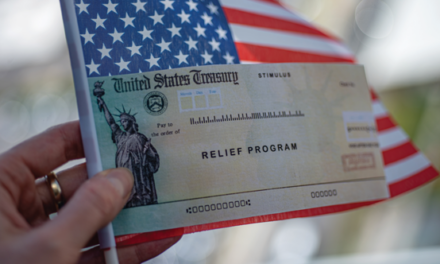
In the secretary’s defense, it’s hard to imagine a visionary federal role in education while COVID is still sucking the air out of everything. Yes, Washington has managed to get a few things done. For one thing, Congress has allocated money: billions of dollars to help states and school districts deal with the impact of the pandemic. For another, the Department of Education has provided guidance on creating and maintaining safe school environments. But a legitimate recovery plan or road map for the future of education has yet to emerge from the administration.
Traditionally, the federal role in education has centered on accountability and equity, and if an administration’s vision leans toward boldness, it tends to do so within those parameters. Again, Cardona has to be careful here. As a former educator, he knows that states and school districts are dealing with an unprecedented set of circumstances. Even if his instincts lean toward greater accountability and more equity requirements for all that money, he has to allow state and local leaders a wide berth so they can manage the constantly changing landscape.
An entire generation of students and a nation of local schools need everything we have to offer.
Advocacy groups and lawmakers, however, have urged the Department of Education (DOE) to carefully monitor how states and districts are spending their billions of dollars in federal aid. To show that the DOE is making some efforts to do so, Deputy Secretary Cindy Martin, speaking at a congressional hearing in the fall, pointed to monitoring and oversight requirements as well as a feature of the department’s website that tracks spending (Arundel, 2021; Ujifusa, 2021). The American Recovery Plan Act also included “maintenance of equity” provisions that aim to “help ensure that schools and [districts] serving large proportions of historically underserved groups of students . . . receive an equitable share of state and local funds as the nation continues to respond to the COVID-19 pandemic’s impact.” The “MoEquity” provision (as it is sometimes referred to) aims to ensure that if state or local budgets are cut, the schools and districts that serve a larger share of students from low-income backgrounds “do not experience a disproportionate share of such cuts in fiscal years (FYs) 2022 and 2023, and that the highest poverty [districts] do not receive a decrease in State funding below their FY 2019 level” (Office of Elementary and Secondary Education, 2021). Even in the best of times, the schools and communities that serve these students are underfunded and more reliant on state funding, and the provisions provide some additional protection.
State-level boldness
Since the U.S. Department of Education’s ability to boldly lead the nation’s schools out of this pandemic has been limited to money, guidance, and empathy, it makes sense that others would step in to fill the void. That is where Virginia Gov. Glenn Youngkin (R) enters the story. Last month, I wrote about Youngkin’s surprise victory and how much of it was owed to his acumen regarding parent-voters and their concerns about critical race theory, mask mandates, and school closures. Youngkin made education a major election issue, and his brand of parent-led activism apparently carried him to victory. Only days after being sworn into office, he again led with education by issuing three executive orders focused on the schools. Each order is brief and to the point and clearly meant to show that Youngkin is a bold leader who honors his campaign promises.
The first order takes aim at so-called “political indoctrination” in Virginia classrooms. By calling for an end to policies that promote “inherently divisive concepts,” Youngkin essentially forbids the teaching of controversial topics like critical race theory, a concept that continues to spark anger and controversy even though most people aren’t sure what it is or why they’re angry about it. The second gives parents the power to determine whether their children wear masks in schools (reversing previous state orders that required all schoolchildren to mask up). Ironically, at the same time Youngkin issued this order, the Centers for Disease Control and Prevention released new guidelines recommending that all individuals, even those who are vaccinated and boosted, wear either N95 or KN95 masks. And the third order calls for an investigation related to a sexual assault case in a Virginia high school.
An ongoing tug-of-war
The conflicting messages about mask-wearing are a perfect example of the constant tug-of-war between federal and state leaders over how to run schools. Because all three of Youngkin’s education-related executive orders touch on controversial issues, there was bound to be plenty of pushback, but the mask-wearing order in particular seems to have drawn additional combatants at the local level into the fray. A number of superintendents quickly announced they will fight the order, and parents across the state are legally challenging the governor, but Youngkin seems unconcerned. The new governor’s confidence that his bets on education will again pay off for him is almost unsettling.
After everything the education sector has been through with COVID, part of me thinks the dark and terrible time will end just as poet T.S. Eliot predicted (about the world, not COVID) in his poem, “The Hollow Men”: “not with a bang, but a whimper.” As I write this in mid-January, the omicron variant has begun its retreat, and daily case numbers (the most hated data point of the 21st century, as far as I’m concerned) are dropping in many cities. According to many experts, we are now entering the recovery and rebuilding stage. While that may sound peaceful, for educators and state and local leaders, there will be no rest. An entire generation of students and a nation of local schools need everything we have to offer. More than anything, though, they need bold and innovative leaders who will put students’ needs above all else, including politics.
References
Arundel, K. (2021). Lawmakers urge fiscal accountability of K-12 ESSER funds. K-12 Dive.
Chang, A. (2022, January 5). U.S. Secretary of Education Miguel Cardona discusses the push to keep schools open. All Things Considered. NPR.
Office of Elementary and Secondary Education (2021). Frequently asked questions: American Rescue Plan Elementary and Secondary School Emergency Relief (ESSER) program: Maintenance of equity requirements. U.S. Department of Education.
Ujifusa, A. (2021, November 19). The political spotlight on schools’ COVID relief money isn’t going away. Education Week.
This article appears in the March 2022 issue of Kappan, Vol. 103, No. 6, pp. 60-61.

ABOUT THE AUTHOR

Maria Ferguson
Maria Ferguson is an education policy researcher, thought leader, and consultant based in Washington, DC.