It’s a challenging story. But journalists have found a variety of smart ways to get at it.
By Alexander Russo
The obstacles journalists face trying to cover school reopenings are many.
“How many times can you write the same story?” asked US News education reporter Lauren Camera – a sentiment several education journalists expressed in recent interviews.
Yet reporters have been finding interesting and useful ways to cover the story, working around the obstacles and turning challenges into opportunities.
Here are some ideas I heard from journalists working on the story, along with my own thoughts, divided into do’s and don’ts:
DO: CAVEAT THE DATA
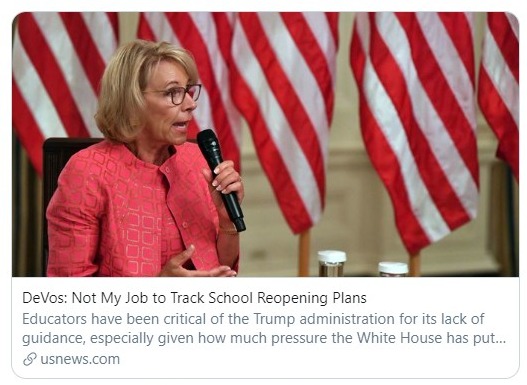
The imperfections of the data shouldn’t get in the way of writing the story, according to Camera and others, though it requires careful wording. “This is the only comprehensive data that we have,” Camera says, referring to nongovernmental efforts from AASA and others. “You just have to give all the caveats.” In August, Camera wrote about the wide variation in school reopening thresholds (below). More recently, she wrote about the federal education department’s refusal to compile COVID case data for the nation’s schools, much less reopening plans.
At the Atlanta Journal Constitution, one effective strategy has been to address the data and transparency problems directly. “We have written stories about the lack of uniform data of school COVID-19 counts,” AJC education editor Janel Davis said in a recent phone interview, citing a recent example. “We told our readers that the state education department does not collect this data and the state health department does not report it out.” Putting their frustration into words has helped, Davis says. “Readers appreciate they’re not the only ones struggling with this same situation.”
DON’T: CHASE CASE NUMBERS
While tempting to cover, covering COVID-19 case reports and dashboard updates may not provide a lot of value to readers.
“Everybody’s going to be reporting on the case numbers, so the question is whether that’s the best use of our time,” WBEZ education editor Kate Grossman told me the other day, noting that there are 600 schools in Chicago not counting private ones. “You could spend your whole life reporting every case, but I’m not sure how that advances the public understanding.”
In addition, Harvard University public health professor Joseph Allen recently pointed out that COVID-19 dashboards themselves may be misleading because they focus so narrowly on cases of infection. “Policy choices should not focus on just one outcome,” according to Allen.
DO: CONDUCT YOUR OWN RESEARCH
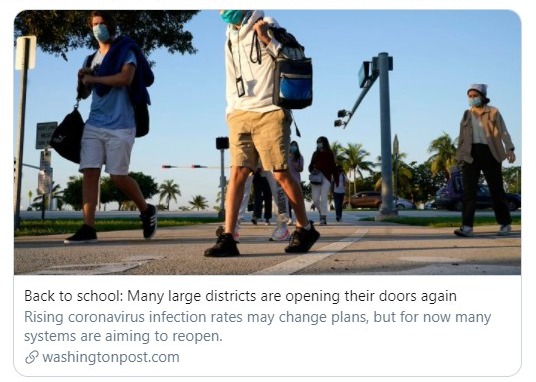
If the data’s not out there and you have the time, you can always do the research yourself. That’s what the Washington Post did most recently, surveying 50 districts to find out their reopening plans and COVID experiences. The result was an update on reopenings (below) that provided valuable new information not available anywhere else.
DON’T: TRY TO COVER ALL THE ‘LITTLE’ STORIES
WBEZ’s Grossman and other journalists have also had to come to terms with letting smaller stories go, especially if they’re already being covered by someone else. “Every day there’s something going on – a school district switching to hybrid and or back,” says Grossman. “People want to know about it. But we don’t want to spend the whole fall chasing everything. So we try and do as much as we can to stay on top of the big stories, and we let some of the little ones go.”
This is a strategy that other editors have implemented. “We’re trying to figure out what are the key issues and where can we make an impact that other outlets aren’t looking at,” says WBUR education editor Kathleen McNerney, who lists mental health and early childhood education and childcare as priorities, along with the broader issue of equity. “It’s tough. We have to say no to a lot of good stories.”
DO: GO FOR THE BIGGER PICTURE
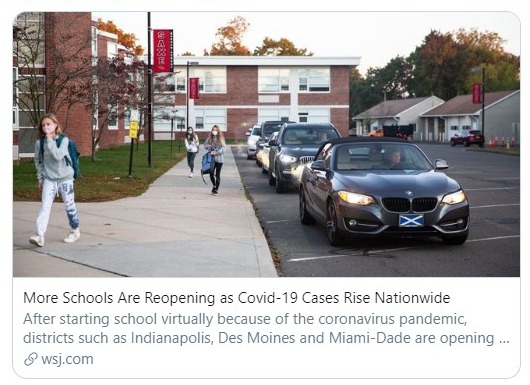
If you and your readers are getting tired of anecdotal coverage, it might be time to try a roundup or a big think piece, says the Wall Street Journal’s Chastity Pratt. “Grinding it out, doing roundups, and then giving national looks: That tends to be the natural progression,” says Pratt, who recently edited a piece about districts moving toward in-person instruction (below). “You have to do the daily story about the numbers, but then you have to tell people what it means.”
AZ Republic reporter Lily Altavena makes that same effort. “I think the story that’s best serving the community is a broader one,” says Altavena. “Are schools going to close again? What do the cases mean? Really trying to put things in context is my goal.” In August, Altavena bylined a piece noting that the loudest calls to reopen were coming from the Phoenix suburbs, rather than areas that educate larger numbers of vulnerable students that had the greatest need.
DON’T: DUPLICATE EFFORTS
When Chalkbeat Chicago started posting various suburban schools’ fall learning plans, WBEZ editor Grossman thought about trying to produce their own version before realizing that doing so wasn’t necessary. “We asked ourselves, ‘Why don’t we just link to Chalkbeat?’ If they’re already doing it, I’d rather have my team do something else.”
Of course, it’s important to be confident of the work you’re sharing with your readers, or to warn them that you haven’t independently verified the information that they provide. It’s equally essential to credit outside sources by name and provide a link.
DO: PROFILE THE KEY PLAYERS
When the data are iffy and the situation is fluid, you can advance reader understanding by profiling key players. That’s what several outlets have done with Brown University economist Emily Oster, one of the people behind the crowdsourced initiative to document COVID cases in schools and to present them carefully. NPR, Bloomberg, Forbes, and several other outlets have used this approach.
Other appealing figures in the school reopening drama might include district or union leaders who have had to make particularly difficult or unpopular decisions, a teacher or parent advocate who’s had a change of heart, or an elected official or candidate who’s been especially active.
DON’T: GO IT ALONE
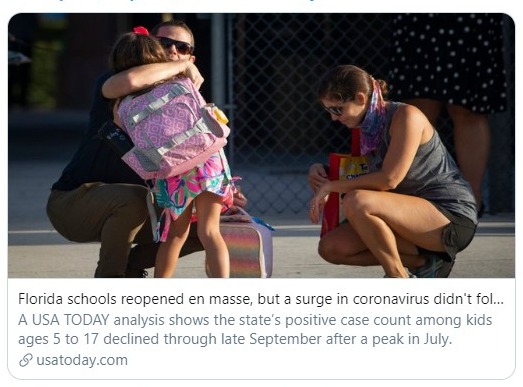
Some of the most successful efforts at covering the reopening story have involved reporters from other beats who have been called in to help in various ways. USA Today’s investigative team has done some great work focused on Florida’s reopening experience (below). Several outlets have invited health care reporters to write stories, either on their own or co-bylined with education reporters. Even the mighty New York Times has called in talented journalists who don’t normally cover education, from the health desk to the newsletter team.
Before the pandemic, there had essentially been two different teams of journalists covering education, with two different editors according to the Atlanta Journal Constitution’s Janel Davis, who edits state education issues and higher education. But when COVID hit, “we realized that we needed to work more comprehensively, so we started to put all of our people together.” The two groups started meeting every other Friday, sharing tips and ideas for both keeping on top of the news and longer features. “It’s been really good,” Davis said. “The stories that come out of those meetings are always the better ones.”
DO: DIVE DEEP
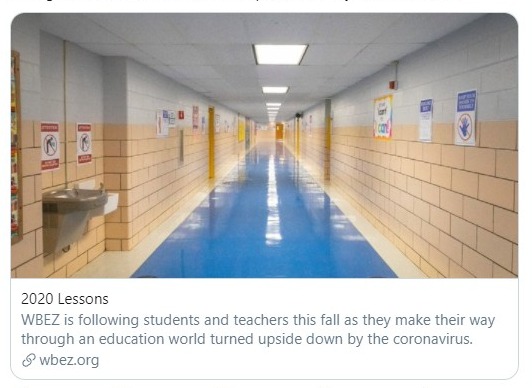
Another successful approach is to go deep. That’s what WBEZ’s education team is trying to do this fall, according to Grossman.
After a hectic and productive spring and summer covering the main topics, “we wanted to dig into them.” This fall, each team member is focusing on individuals or a neighborhood, rather than individual anecdotes. Most of this reporting is part of a series called 2020 Lessons (below). “Instead of doing a piece or a quick hit showing one family and their struggles,” she says, “we have, for example, a reporter watching over several months in the life of one 2nd-grade teacher. I’m hoping in the end that’s a more valuable experience for readers.”
DO: GIVE READERS THE JUICY BACKSTORY
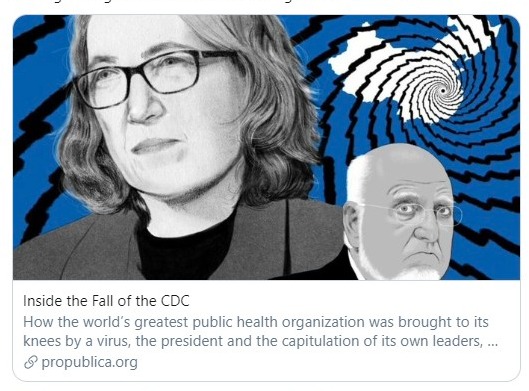
Now that things are slowing down somewhat, it might be a great time to tell your readers what really happened at key moments over the past eight months. For example, ProPublica recently ran a story (below) about the infighting between the CDC and Department of Health and Human Services that led to conflicting school reopening guidance over the summer. What other moments might be worth retelling in depth, with backstage details that have not yet been told?
DON’T: LOSE TRACK OF THE DISENGAGED KIDS
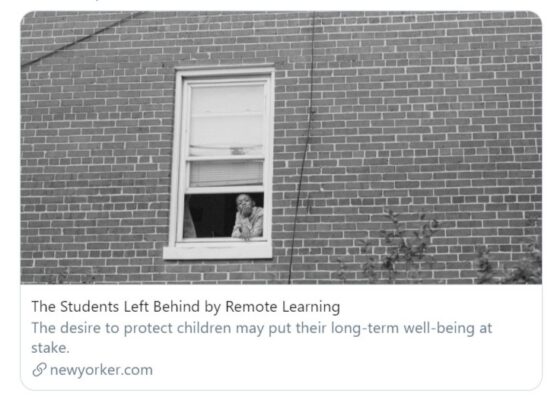
There’s arguably no storyline that’s more important to capture than the experiences of vulnerable kids who have become disengaged from their schools — and perhaps no other story that’s been so underreported. “These are the hardest and most important stories to find and contextualize,” WBUR’s McNerney told me in a recent phone call.
Finding ways to get them into your stories is a major challenge, according to McNerney. These kids aren’t necessarily logging on to remote learning or responding promptly to emails or texts. They may not have internet access. They may not feel safe in their homes. They may be at work. And not every reporter is comfortable doing the extensive field reporting that may be needed.
“I think it’s clear that to do this work, especially in a city of such economic disparities like Boston, you have to be a part of the community,” says McNerney. “I think we’re all struggling with how to be a part of the community, be in the community, keep everyone safe.”
To balance these priorities, McNerney generally lets reporters volunteer to do field reporting, emphasizes the need to take protective measures, and reminds her team to take time off and take care of their own mental health needs. Reporting on vulnerable and disengaged students “is a huge public service, but we cannot do this at the risk of our own physical and mental well-being.”
Previous coverage:
What makes school reopening so challenging to cover?
Breaking free from the hamster wheel of daily news coverage
ABOUT THE AUTHOR
Alexander Russo
Alexander Russo is founder and editor of The Grade, an award-winning effort to help improve media coverage of education issues. He’s also a Spencer Education Journalism Fellowship winner and a book author. You can reach him at @alexanderrusso.
Visit their website at: https://the-grade.org/