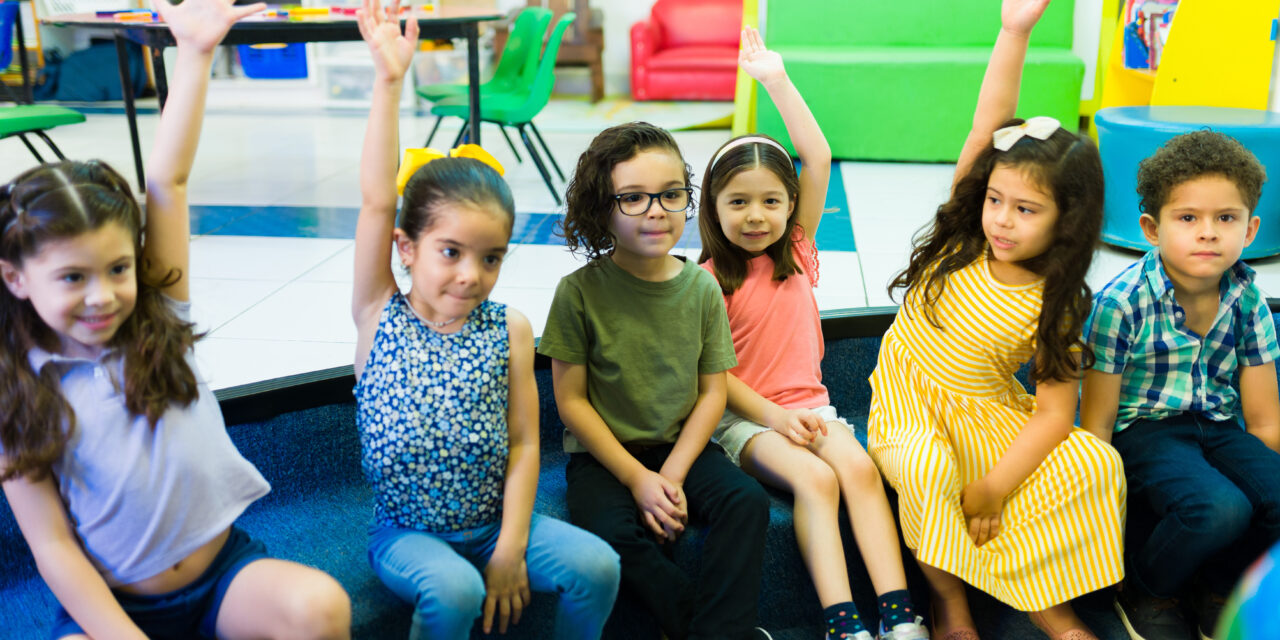
Q: I work with elementary-aged students who are excited to participate in class. I love their enthusiasm and don’t want to quash it. Unfortunately, students get upset when they aren’t called on to share. How can I support students who don’t have an immediate opportunity to share when they aren’t called on first? How can I help them work through their disappointment so they know they will have other opportunities?
- Signed, A concerned elementary educator
A: First, let me commend you for your dedication to fostering enthusiasm and engagement among your elementary students. It’s a remarkable trait that enhances the learning environment and builds a sense of community in the classroom. However, as you’ve pointed out, managing this enthusiasm, especially when students feel disappointed about not being called on, is a common concern in education.
Elementary-aged students are naturally eager to share their thoughts and ideas. They may feel overlooked or undervalued when they raise their hands and are not called on. Understanding this emotional response is crucial. Children at this age are developing their social and emotional skills and often seek adult validation. When they don’t receive the attention they crave, they can feel let down or even rejected.
Here are several actionable strategies to help manage students’ excitement while ensuring that all voices are heard, and that disappointment is minimized:
Establish clear sharing guidelines
Create a structured environment where students understand how sharing works. For example, you might implement a “talking stick” system or a rotating schedule allowing every student to share. This way, students know they will have the opportunity to speak, reducing the anxiety of not being called on immediately. Students appreciate predictable structures that are fairly supported. Make sure to explain, demonstrate, and reinforced regularly. You can learn about other supportive ideas here.
Use small group discussions
Incorporate small group or partner discussions before sharing with the whole class. This approach allows students to express their thoughts in a more intimate setting, which alleviates the pressure of speaking in front of everyone. After small group discussions, you can invite a few students to share highlights, ensuring that various voices are heard. This strategy works for students of all ages. Plus, small group discussions ensure that all students get an opportunity to manage the cognitive load rather than disproportionately allowing the same students to dominate sharing opportunities.
Implement a “parking lot” for ideas
Create a “parking lot” poster in your classroom where students can write down their thoughts or questions to share later. This method acknowledges their desire to participate while providing a visual reminder that their ideas are valued and will be revisited. Schedule regular times to review the parking lot, ensuring that students see their contributions acknowledged. You can also use a suggestion box where students see their suggestions considered or used in their learning spaces. Remember to make this a routine, as they can feel disappointed if you ignore the parking lot. Every idea should be shared and discussed.
Teach emotional regulation
Incorporate social-emotional learning into your curriculum. Discuss the emotions students experience when they aren’t called on to teach them how to manage their feelings. Activities such as role-playing, journaling, or even simple breathing exercises can help them learn to cope with these feelings. Remind them that it’s normal to feel disappointed and that everyone experiences it at some point. We also need to work on the vocabulary of different emotions so that students know how to express their feelings to help them regulate themselves.
Celebrate contributions in different ways
Not every student needs to speak out loud to contribute meaningfully. Consider alternative methods for participation, such as written reflections, art projects, or group presentations. Provide various avenues for students to express themselves, ensuring that those who may not be comfortable speaking in front of the class still feel included and valued. Spend time getting to know your students so you can take what you learn and use the information to ensure that students contribute in various ways. Be creative and allow students to help you brainstorm different opportunities.
Communicate the importance of listening
Encourage students to practice active listening when their peers are speaking. Discuss the value of learning from one another and how listening is as critical as sharing. This can help students appreciate their classmates’ contributions and reduce their focus on being called upon. Make sure to do think-alouds while you model listening and explicitly teach how to be a good listener. Students likely have a good idea of some ways to do this but will need support with practice.
Provide regular feedback
After discussions, take time to provide feedback to the class about the insights shared. Highlight specific contributions and express appreciation for the students’ enthusiasm. This reinforces the idea that their thoughts are valued and that there will be future opportunities for sharing. Making anchor charts with feedback or insights can also be fun so the students can revisit what they have. You also can use sentence strips or thought bubbles and make a bulletin board with them.
Model patience and understanding
As an educator, your demeanor sets the tone for the classroom — model patience and understanding when students express disappointment. Share your experiences with not being called on or waiting for a turn. This helps normalize their feelings and shows them that it’s a part of learning and growing. This is something that I always practice; I even have “practice patience” tattooed on my arm. As the adults in the room, we must do our best to demonstrate what we want to see. Remember, of course, we’re all human, and when we make a mistake, we must apologize promptly and explain how to handle the lack of patience.
Create a culture of appreciation
Promote a classroom culture where students appreciate each other’s contributions. Encourage them to applaud, give a thumbs up, or use positive affirmations when a peer shares something. This builds a supportive environment where students feel uplifted, regardless of whether they are the ones speaking.
Ultimately, the key to addressing your students’ disappointment is fostering an environment where every voice is valued and heard appropriately. By implementing these strategies, you can help students navigate their feelings, understand the importance of patience, and remain engaged in learning. Your commitment to their emotional and academic growth will enhance their learning experience and contribute to their development as empathetic individuals. I can’t wait to hear how it all works!
Do you have a question that you’d like Career Confidential to answer? Email ssackstein@educatorsrising.org. All names and schools will remain confidential. No identifying information will be included in the published questions and answers.
ABOUT THE AUTHOR

Starr Sackstein
Starr Sackstein is the Massachusetts state coordinator for PDK’s Educators Rising program, COO of Mastery Portfolio, an education consultant, instructional coach, and author. She was a high school English and journalism teacher and school district curriculum leader. She is the author of more than 15 educational books, including Hacking Assessment (Times 10, 2015), Making an Impact Outside of the Classroom (Routledge, 2024), and Actionable Assessment (Routledge, 2026).
Visit their website at: https://www.mssackstein.com/