From the most famous among us to those known only to their local readers, journalists are shaped by their own classroom experiences.
By Colleen Connolly
Way back in April, onetime education reporter Jessica Huseman shared a personal story about a devastating experience she had in elementary school:
“My fourth-grade math teacher told me I wasn’t good at math and moved me to a desk by myself becausec I was ‘distracting others,’” she began.
Though she eventually overcame the experience and now teaches data journalism at NYU, that teacher’s behavior had long-term ramifications for Huseman, and it struck a nerve with many others.
Curious about other education journalists’ classroom experiences, we asked several to share their memories, good or bad.
Some declined, not wanting to share these experiences publicly. But others told us about working for high school newspapers, enduring toxic school cultures, and — in one case — getting expelled.
AN ENCOURAGING ART TEACHER
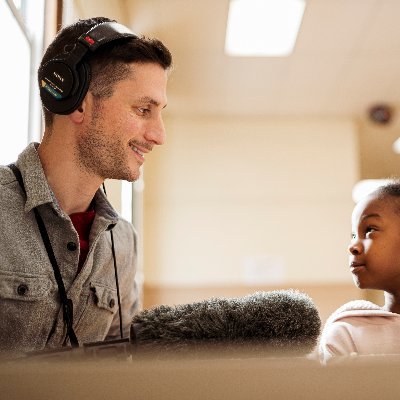
A teacher in high school, Mr. Sharp, would let me sneak down the hall during homeroom my senior year to work on the school newspaper for an extra few minutes. Sharp was incredibly kind and supportive of me and we talked about current affairs a lot. I kept in touch with him after school. We’d often meet when I was visiting home.
We’re still in touch and five years ago, he sold me an old camera before I started my job at St. Louis Public Radio. (Sharp, an art teacher, also made my fiancée and my wedding bands!) He’s also quick with a kind, supportive word over email or the phone. That always kept me going.
So he didn’t exactly teach me how to be a journalist, but his support for four years of high school and the 15 since certainly shaped who I became!
Ryan P. Delaney, St. Louis Public Radio
STUNNINGLY BAD EXPERIENCES AS A STUDENT — AND PARENT
Elementary school was great, but my high school experience was dreadful (so much so that I made a habit of skipping classes, and no, I never got caught because no one at school cared whether I was in class or not).
I saw marginalized kids get bullied, and administrators and teachers turn the other way. The only kids who mattered were those who brought glory to the grown-ups, giving the grown-ups bragging rights in the greater community. I saw the kids who mattered (the athletes) get so many breaks, so many second chances, so much glory.
Meanwhile, the kids who really needed the grown-ups’ help were invisible.
Sadly, that’s what I found at my children’s elementary school 15 years later. It was stunning. And that finding propelled me to start asking questions and writing about the answers.
Trisha Powell Crain, AL.com
A “BAD KID” WITH A SOFT SPOT FOR OTHER “BAD KIDS”
 I got expelled from school when I was 15. The final straw was I got so drunk at school that an ambulance took me to the hospital with alcohol poisoning. I would’ve expelled me, too!
I have a soft spot for “bad kids” because most of them aren’t really bad. They’re probably just dealing with home issues and reacting poorly. Looking back, maybe it could’ve been avoided if they had something like the ‘Handle with Care’ model that they have in Florida.
I’d never thought about it, but it’s probably affected my reporting. I can’t believe it took me until today to realize why I’m subconsciously attracted to certain stories.
Anonymous education reporter
FORCED TO TAKE MATH COURSES INSTEAD OF LEARNING FINANCIAL LITERACY
 I grew up not having a lot of money and knew that I needed to learn how to manage it when I did start earning a paycheck. I petitioned both at my Massachusetts public high school and my private university to take accounting and a personal finance course, respectively.
In high school, I was forced into advanced geometry and trig despite my efforts to drop the classes and take accounting (which was called “dumb math” by some). In college, I was told I couldn’t take the personal finance course because I wasn’t an economics major.
This is why we have credit and debt and financial anxiety problems in the U.S. I will write about financial literacy and support stories about financial literacy any chance I get.
Jenn Smith, Seattle Times Education Lab
A STIFLING FRESHMAN YEAR ENGLISH COURSE
 Freshman year of high school I was assigned Mr. Campell for English class. He was a computer science teacher, so I was a bit confused. Every day he would come into class a few seconds before the bell rang and then immediately ask us to take out our textbook and read the next section, answer the questions at the end, and then turn them in at the end of class. He would then grade papers at his desk quietly for the remainder of class, and tell students to be quiet if we started talking. The classroom was also tiny, windowless, and had 25 freshman packed in.
This went on all year. My mom knew English was my favorite subject in school, and tried unsuccessfully to get me into another class. Unmotivated, I got a C in the class.
Jacqueline Rabe Thomas, CT Mirror
A CAREER-SETTING STUDENT NEWSPAPER EXPERIENCE
 For high school, I attended an independent school on the outskirts of Cleveland, Ohio, where I wrote for the school newspaper, The Affirmative No. On Martin Luther King Jr. Day, 2012, throngs of students walked through colonial columns on their way to lunch, where they were greeted with piles of fried chicken and waffles. A debate about the menu broke out and turned quickly into an emotional conversation about racism at our high school.
At 16 years old, I interrupted the discussion in my Gender, Culture, and Power class only to ask permission to take notes and record the discussion. The result was a 2,000-word feature, cowritten with a classmate, on the school’s complex racial landscape, touching on interpersonal racism, segregation, and class disparities. The article was in many ways a precursor to the kind of journalism I find valuable now.
Ally Markovich, Berkeleyside
 Covering education is one of the most universally personal beats for journalists. We’ve all been to school and have had formative experiences there, for better or worse.
Sometimes bad experiences in school propel journalists to do great things in their professional lives. Take Nikole Hannah-Jones, who recently revealed her origin story in an interview with NPR’s David Folkenflik:
“In high school, I complained to one of the only Black male teachers I ever had that our high school newspaper never seemed to write about kids like me,” Hannah-Jones told Folkenflik. “Almost all of the Black kids were bused into a school that didn’t really feel like ours. And he suggested I should write that story myself or don’t complain to him anymore — that I needed to join the newspaper staff. So I did.”
The rest is history.
ABOUT THE AUTHOR

Colleen Connolly
Colleen Connolly is a freelance journalist who covers New England for The Grade. Her work has also appeared in the Columbia Journalism Review, The Guardian, The New Republic, Smithsonian magazine, and the Chicago Tribune. You can follow her on Twitter @colleenmconn or find out more on her website: https://colleenmaryconnolly.com/.