Recall efforts, challenges, and incumbent defeats might not be nearly as ubiquitous — or consequential — as we’ve been led to believe, according to a national expert.
By Alexander Russo
Over the past year or so, I and others have been making abundant use of information provided by Ballotpedia, a national nonprofit organization which describes itself as “the online encyclopedia of American politics.”
Ballotpedia’s school board elections coverage includes a weekly newsletter, a podcast (on which I have been a guest), and timely reports, many of them with interesting findings.
From Ballotpedia, I’ve learned:
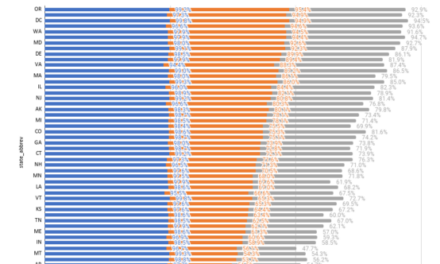
📌 The percentage of uncontested school board election races is much higher than it might seem.
📌 The percentage of recall efforts that reach the ballot and succeed at the ballot box is relatively small.
📌 When last measured, the percentage of successful school board challengers who are opposed to race, gender, and COVID mitigation efforts was only about a third.
Recall efforts, challenges, and highly polarized school board conflicts are sexy, high-conflict stories to tell — education’s version of political horse race coverage. But they may be much less common than is depicted in the media. And, according to Ballotpedia head Leslie Graves, the outcomes of these contests might not be all that consequential either.
“There is reason to believe that school boards have very little impact on what actually happens in a school district,” Graves told me in a recent interview.
There is reason to believe that school boards have very little impact on what actually happens in a school district.
The following interview has been edited and condensed.
AR: How did Ballotpedia get into covering school board elections in the first place?
LG: We originally covered school board recalls and school board elections in the country’s top 200 school districts. We covered them from what I will now refer to as an election-centric approach.
AR: My sense is that there’s exaggeration about the size and extent of the contested school board phenomena. What’s the reality?
LG: We have data from a few states. In South Dakota, for example, there were many uncontested school board races. The incumbent ran but nobody else ran against them. We are going to be able to empirically answer your question after the November 2023 elections in a way we never have before. We’re covering all school board elections in 10 states this year — about 1,000 seats, and we’ll be able to report exactly what happened.
AR: What’s your sense of how well or how poorly the news media is doing at covering school board elections these days?
LG: When we look at a state legislative election — say the Democratic Party has taken over this chamber or the Republican Party has — then, like clockwork, certain activities will ensue. Fracking will be banned, or it will be unbanned, or whatever. By and large, it’s pretty predictable.
But when we look at school board elections, the impact hasn’t been as predictable. If you go back a few years, we, like everybody else, noticed there was a heightened interest in school board elections. They seemed very consequential, but we had our doubts about whether they actually were.
This began when we started covering the country’s top 200 school board elections. This person would lose, or this person would win, but not a lot would happen as a result. The only races that seemed even a little bit consequential were in very large school districts like the Los Angeles Unified School District, where there would typically be a pro-charter faction and an anti-charter faction. But by and large in the other districts, that was not the case.
The only races that seemed even a little bit consequential were in very large school districts like the Los Angeles Unified School District.
We had our doubts about the impact of school board elections, but we maintained our neutrality about what that all meant. However, I would say mainstream education journalists maybe did not have the same degree of skepticism about whether those elections matter. Because everybody seemed to think that they really mattered an awful heck of a lot, right?
AR: Seemed like that.
LG: I think the jury’s still out. If one person gets elected that runs counter to the prevailing ethos on the school board, it’s likely not going to make a difference. But in some school districts, conservatives who are in a new majority did get elected, so that would seem pretty consequential. One of the really interesting under-covered stories is what happens with that majority. What can they do? What are they doing, and how many such majorities exist? I would like to know the answer to that. Because that would start to answer the question about just what difference who gets elected does make.
I would say mainstream education journalists maybe did not have the same degree of skepticism.
AR: So, you’re not seeing the real-world consequences of these school board election races in terms of policies or practices or school operations?
LG: I’m not saying it doesn’t exist, but I am not seeing it reported on. I’m a geek about data, and I’d like to see information along these lines (this is hypothetical): “There are eight [new] conservative governing majorities in South Carolina school boards, and they’ve had a governing majority for over a year. Here are the policies they enacted.” I haven’t seen a list like that, but that’s what I’m curious about. We’ve seen a lot of stories about book banning in Florida. What, if anything else, are they doing? There may be other things a school board governing majority is doing that are arguably more consequential, but we’re not seeing other things being written about, so we don’t necessarily know what’s going on.
AR: It’s an absence of data, not an existence of data issue. Is that correct?
LG: I see two points there. One is a lack of data. But because I’m so focused on this, there is reason to believe that school boards have very little impact on what actually happens in a school district.
Mike Schmoker’s recent book, “Results Now,” makes a case for a condition he refers to as “curricular anarchy.” His perspective is that in many school districts in the United States, there’s often little curriculum guiding the transmission of information. As I see is the case with other education reformers and reform ideas, when he talks that way, he doesn’t seem to think the next action should therefore be, “Let’s explain that to school boards and maybe they’ll do something about that.” That’s what I find interesting — that big reform ideas like this often don’t seem to have a big component of “get the school boards on your side for that reform” as part of their pathway to success.
Big reform ideas often don’t seem to have a big component of “get the school boards on your side for that reform” as part of their pathway to success.
AR: What happens when reporters call you for information about school board results or trends? What’s the reaction that you get?
LG: We provide the facts as we have them, and reporters tell us it’s beneficial. That said, there’s a treasure trove of research and reporting that could be done on this that would be so illuminating.
AR: There’s story after story about recalls and takeovers. There’s a presumption of political if not practical significance in all these stories. And yet, you’re telling me that the claim is untested.
LG: It is untested, and we covered these elections, and we talked about them. When we observed there were about three times more [recall] school board elections going on than normal, we issued a press release about it because we think that’s interesting.
AR: Are journalists reaching out to you, and what do you think would happen if you told them what you’re telling me now, which seems like a little bit of a bombshell?
LG: We do get contacted by reporters, and we love it when they reach out. We actually have a specific help desk for education reporters. We also have information to share with them about what we call the high-conflict elections. When one of our staff school board subject matter experts talks to a reporter, it’s often because the reporter comes to us in the middle of their story and they’re writing a story about conflicts. The data we’re gathering about whether school board elections are consequential is newer to us.
We listened to Emily Hanford on “Sold a Story” and wondered, “what role do nice people from a community play in making education better?” None of this narrative around “Sold a Story” seems to go through a school board, one way or the other. It goes through state legislatures. It goes through superintendents [who are often appointed by school boards], it goes through elementary teachers, but nobody seems to think that the school board members really need to be in that conversation.
It appears the big decisions and conversations are not occurring in school board meetings. So, I would like to start talking to reporters about that, but we are very much in a learning phase on this ourselves.
AR: Are there journalists doing a good and conscientious job of covering the facts as you know them? Are there outlets or reporters who are exaggerating, intentionally or otherwise?
LG: If you look at the entire inventory of articles some of these brilliant education reporters have written, going back five years, it’s unlikely you’ll find an article addressing questions or providing data about the impact of school boards. Why is that? It’s not because education journalists are missing the story. When dedicated education reporters haven’t gone into the weeds to cover it, there’s probably a reason for that.
AR: And you think the reason is what?
LG: There’s a need for a database of facts to dig into the question of whether school boards have historically exercised all that much of a leadership role in improving outcomes in their district. We’re building that database.
AR: You’ve reported the ubiquity of non-contested races. But I don’t see those stories getting picked up.
LG: I agree with you, and I understand why that would happen. The current, overarching political narrative in the United States is what Thomas Hobbes might have referred to as “the war of all against all.” We used to experience that mentality in presidential contests, or maybe in some Senate, House, or gubernatorial races. Now that sentiment is in every neighborhood and backyard, and that’s a pretty irresistible story.
AR: But what if it’s not true?
LG: The “all against all” mindset does seem to have become prevalent in some school districts. It might be less than 1%, but it’s there. My theory on why it hasn’t taken hold in more school districts is because we’re so focused on that antagonism nationally right now, on so many different issues.
Previously from The Grade
The school ‘red wave’ that didn’t happen
How school board protest coverage over-emphasizes violence and ideology (Matt Welch 2021)
‘Squid Game’ school board coverage isn’t helping (2021)
ABOUT THE AUTHOR

Alexander Russo
Alexander Russo is founder and editor of The Grade, an award-winning effort to help improve media coverage of education issues. He’s also a Spencer Education Journalism Fellowship winner and a book author. You can reach him at @alexanderrusso.
Visit their website at: https://the-grade.org/