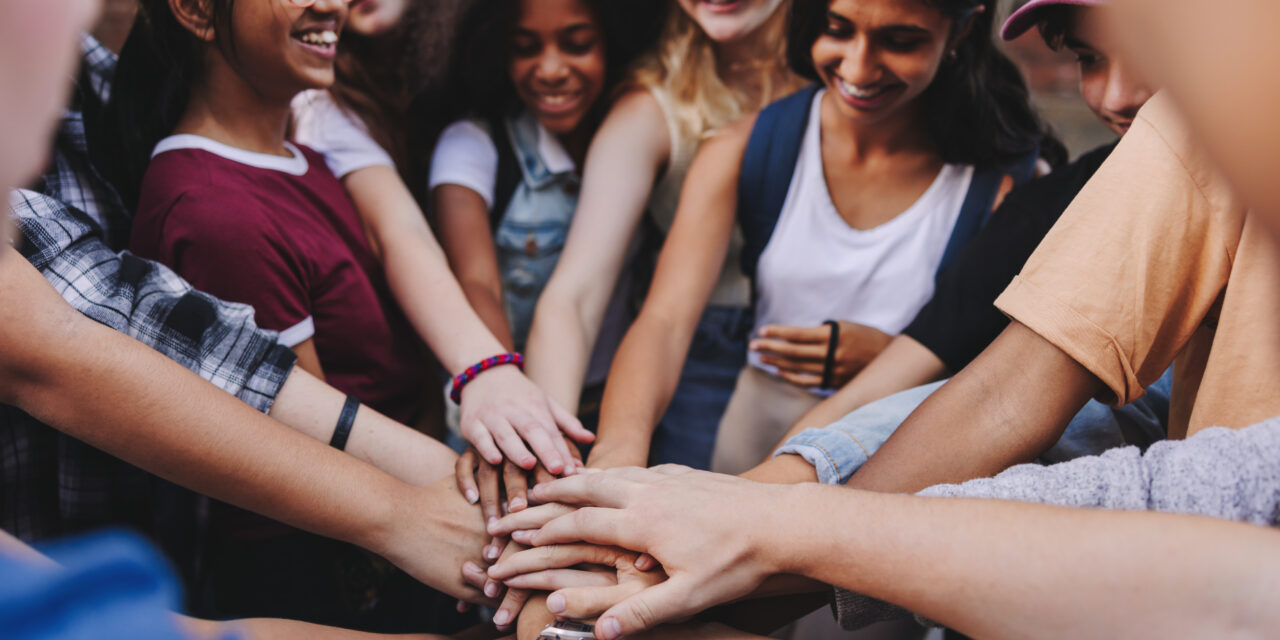
To be prepared for life beyond school, students need opportunities to learn how to act for the betterment of the community and the world.
At a Glance (Click to reveal)
- In a democratic society, people need to be able to work collaboratively with a shared purpose in mind.
- Current schooling too often fails to give students opportunities to practice the skills they will need to solve the challenges in today’s world.
- Project-based learning, civic engagement initiatives, and promotion of ethical values can prepare youth for meaningful social action.
- Implementing programs that engage students in real-world problems can inspire a new generation of changemakers.
- It’s time for educational reform that embraces inclusion, personal growth, and real-world problem solving to equip students as active, informed citizens.
Throughout my 25-year journey as an educator, I have come to see that school is about far more than academic preparation. Instead, it builds in our students a foundation of belonging, community, and shared purpose. Both in and out of the classroom, my students’ resilience and creativity have inspired me — and it is through them that I have learned that authentic collaboration is not just a strategy but a catalytic force. Many times, I have witnessed how fostering connection elevates students, schools, and society.
Early in my career, I saw the value of connection in action when I was unexpectedly asked to fill in for an absent physical education instructor. With no lesson plans or guidance, I had to improvise, so I led a group of about 20 kindergartners outside for a series of cooperative games. Among the activities was a race — with a twist. I lined up the children at the starting line and explained that the only way to win was if everyone crossed the finish line simultaneously.
The first attempt was chaotic. Some children sprinted ahead, while others lagged behind. When I reminded them that winning meant crossing together, they looked puzzled. I invited them to suggest strategies for achieving the goal. One student held hands with another, urging others to do the same. Before long, the entire group was connected, moving purposefully in unison. This time, when they crossed the finish line together, their joy was unmistakable — not as a celebration of individual achievement, but of shared success.
The race was a metaphor for collective responsibility and the essence of democracy (Parker, 2002). It was perhaps my first effort to teach ideas illustrated by the African proverb: “If you want to go fast, go alone. If you want to go far, go together.”
Planting seeds to grow our collective good
This experience planted a seed that has continued to grow in my teaching practice. As a civics teacher, I often introduce students to the Zulu concept of ubuntu, which means, “I am because we are.” This idea aligns seamlessly with the U.S. motto, e pluribus unum — “out of many, one.” Both ideas highlight the value of interdependence and mutual support.
Through discussion and applied action-research projects, I invite students to explore how a shared commitment and mutual respect can strengthen the social fabric and foster not only informed and empowered citizens but compassionate ones as well (Berkowitz & Bier, 2005). My goal has always been to convey to students that citizenship is about making one’s community work better.
More recently, in my role as a school leader, I put this concept to the test during a restorative justice discussion with a group of young men and their parents. The students had been using hurtful language on campus. Instead of simply punishing them, I invited them and their families to brainstorm how they could contribute positively to the school community. The resulting conversation was both sincere and hopeful. By reframing their actions and voices, the students began to show themselves as active participants in building a stronger, more inclusive school campus.
For young people to develop a democratic ethic, they must first experience a sense of belonging — an affinity for something larger than themselves that gives their lives meaning.
This commitment to fostering civic virtue and moral consciousness can be tricky, but I believe it is more urgent than ever. As philosopher Michael Sandel (2020) reminds us, prioritizing individual desires over communal welfare can hinder societal progress. His call to nurture a “shared habit of the heart” aligns with John Goodlad’s assertion that democracy cannot flourish in moral neutrality (Goodlad, Soder, & McDaniel, 2008). He argued that for young people to develop a democratic ethic, they must first experience a sense of belonging — an affinity for something larger than themselves that gives their lives meaning.
But where do students learn this? Is it the responsibility of families, religious institutions, or the media? The question of which values and virtues are appropriate to teach in public schools is fraught. Yet, as Supreme Court Justice Thurgood Marshall eloquently stated during his landmark argument in Cooper v. Aaron (1958), “Education is not the teaching of the three R’s. Education is the teaching of the overall citizenship, to learn to live together with fellow citizens.”
Navigating the complex challenges of today’s world
We are living in a fast-paced, technology-driven world, where connections often are virtual and feel detached, yet the need for real belonging remains deeply human. In a 2017 essay in The Atlantic, writer Megan Garber observed, “It used to be that people were born as part of a community and had to find their place as individuals. Now people are born as individuals and must find their community.” Sadly, today’s world makes fostering this sense of belonging increasingly difficult. Existing in a digital age amplifies isolation, exacerbating issues such as political fragmentation and social estrangement (Putnam, 2001).
Societal issues, such as high rates of gun-related deaths and a rising mental health crisis, underscore the urgency for schools to address these challenges. Economic inequality and barriers to health care further complicate matters. Housing affordability remains a pressing concern. Schools cannot ignore these realities. Students who are hungry, homeless, or deprived of health care cannot focus on learning (Maslow, 1943). Nobel laureate Joseph Stiglitz (2012) cautioned that widening disparities erode the foundation of a healthy and cohesive society — a warning schools must take seriously. Education has a critical role to play in equipping students with the tools to recognize and address systemic challenges that affect both individuals and communities.
For too long, our educational system has relied on outdated rote instructional techniques and rigid assessment strategies. Standardized tests and questionable grading protocols reduce students to mere data points, failing to honor their unique talents and potential (Ravitch, 2011). Addressing societal inequities begins with liberating schools, teachers, and students — not only from narrow, misguided ideologies but from entrenched systems that perpetuate inequality, exclusion, and marginalization. Only then can we create learning spaces where young people feel empowered to contribute and thrive.
Designing education for meaningful engagement
To prepare students for the future, we must embrace more holistic learning practices that support their intellectual, social, and emotional readiness. Deep inquiry, project-based learning, competency-based portfolios, and real-time demonstrations of mastery provide authentic measures of student growth. By implementing these innovative strategies, we can create meaningful, relevant experiences that directly address the pervasive issues our youth experience, combating apathy and alienation while fostering engagement, emotional well-being, and student voice and agency.
Engaging students in meaningful, personally relevant experiences opens our ability to effectively address critical issues like mental health, absenteeism, and dropout rates (Allensworth et al., 2018). By exploring their interests, young people forge a deeper, more intrinsic connection to learning.
The dedicated athlete perfecting their form and the teenager learning to restore cars with a family member often demonstrate perseverance, collaboration, and self-discipline — qualities that foster a strong sense of identity and purpose. Similarly, a student disenchanted with traditional curricula can thrive when they have the opportunity to work on projects related to their passions, such as environmental sustainability or the development of musical traditions and culture. Ultimately, when we align education with students’ personal interests, they not only acquire essential skills but also become better equipped to navigate their futures with confidence.
Education requires more than mere reform. We need models where students actively engage with societal issues and voice their opinions.
As Kenneth Robinson (2016) shared, “Education is not a one-size-fits-all system; it demands transformation to meet the needs of every learner.” Education requires more than mere reform. We need models where students actively engage with societal issues and voice their opinions. Schools must foster empathy and critical thinking to prepare students for the complex ethical debates that will define our future (Nussbaum, 2016). Interconnected issues — such as immigration, technological disruption, global health crises, and resource scarcity — demand that today’s students are equipped for meaningful action.
Igniting student-led social change
Despite these daunting challenges, the spirit of hope is embodied in young people who lead social activism. History shows that younger citizens are often at the forefront of social change, passionately advocating for issues like gun control, climate action, and human rights. Their eagerness for change inspires organizations dedicated to equipping students with the tools needed to advocate effectively.
For instance, Fridays for Future is a youth-driven climate movement that seeks to hold governments and industries accountable for climate action while amplifying the voices of marginalized communities (Rashid, 2023). Another example, Generation Citizen, a nonprofit based in New York City, empowers young people to address pressing issues such as racial injustice, income inequality, and the climate crisis. Similarly, One Stone in Idaho, through their Lab 51 school, exemplifies how learning environments can advance student-led initiatives that tackle societal challenges.
Innovative schools like The Met in Providence, Rhode Island, and Bostonia Global in Southern California exemplify the power of personalized student-centered learning environments. By emphasizing interest-based internships, these schools empower students to explore various vocations and engage with community mentors, preparing them to be active, empathetic citizens. Additionally, the Center for Advanced Professional Studies, better known as CAPS, is a far-reaching initiative focused on states like Iowa, Kansas, and Missouri, which collaborates with local businesses to provide work-based experiences that foster practical skills and personal competencies beyond what standardized tests can measure.
Education Reimagined, a coalition of educators and innovators working within and beyond the current system, recognizes that learning takes place not only in classrooms but also in homes, workplaces, and community-based agencies. Micro-middle school Embark Education in Denver, Colorado, embodies this philosophy by situating its school inside a local coffee shop and bicycle repair facility. In this unique environment, students learn by doing, through entrepreneurial projects and community collaborations.
To embrace a transformative educational future, we must expand these successful models.
Shaping a future of inclusive and equitable education
While these pioneering models remain exceptions, they present a compelling vision for what education can become: a holistic, connected experience that empowers students to tackle real-world challenges. Establishing a more personalized, democratic, and just educational design as the new standard is essential. This reform must recognize the interconnectedness of our global issues and actively promote student participation in finding solutions.
As political polarization escalates globally and democratic values face threats in countries such as Hungary, Brazil, and even the U.S., schools play a crucial role in modeling practices that teach students to critically analyze the forces shaping their lives. Polarization exacerbates groupthink, reduces tolerance for differing perspectives, and undermines informed decision-making processes (Sunstein, 2018). The mechanisms of cultural cognition, in which individuals align their beliefs with group identity rather than evidence-based reasoning, further illustrate the need for promoting independent thought and fostering connections across differing perspectives.
Education must transcend mere workforce preparation. It must cultivate informed, engaged individuals capable of contributing to a just and equitable world,
According to the National Council for the Social Studies (2021), “when students engage with controversial issues in a structured, respectful environment, they not only develop critical thinking skills but also cultivate the capacity for civil discourse across ideological divides” (p. 3). Again, it is vital to teach students how to engage in reasoned discussions that transcend philosophical differences.
What we can — and must — do today
The stakes are too high for inaction. Our interconnected political, economic, environmental, and social systems demand that we educate and equip citizens with the skills to navigate complexity and challenge misinformation. Education must transcend mere workforce preparation. It must cultivate informed, engaged individuals capable of contributing to a just and equitable world, countering the effects of polarization with empathy and active civic participation.
These are six concrete steps we can take.
Integrate civic education and social justice
Give students a foundation in their learning about democracy, power, and inequality. Incorporating civic education into the curriculum fosters informed citizens who understand their role in democracy. Schools should teach students about the interconnectedness of local and global issues, empowering them to critically analyze systems of power and engage in collective action (Westheimer & Kahne, 2004). The Youth Civil Rights Academy in Michigan (https://youthcivilrights.org) offers useful resources to help build students’ skills and knowledge in this area.
Create inclusive and safe learning environments
Foster a supportive atmosphere with zero tolerance for discrimination. A safe and inclusive environment is essential for all students. Schools must actively promote respect and acceptance, ensuring all students, including marginalized students, feel valued. Involving students in school governance enhances their sense of agency and belonging (Nieto & Bode, 2018; U.S. Department of Education, 2023).
Support comprehensive wellness initiatives
Implement wellness programs that include mental health and social-emotional learning. Given the rising challenges related to student well-being, schools must prioritize comprehensive wellness initiatives. This includes access to counselors, mental health resources, and social-emotional learning (SEL) programs. By promoting emotional intelligence and resilience, schools create a supportive environment that fosters students’ overall well-being and success, both in and out of the classroom (Durlak et al., 2011). The Collaborative for Academic, Social, and Emotional Learning (CASEL, www.casel.org) offers valuable information about why and how schools should integrate SEL into their instruction.
Embed real-world problem solving
Incorporate hands-on, community-based projects. Real-world problem solving should be a key component of education. By engaging students in community projects, schools connect theoretical knowledge to practical application, fostering critical thinking, civic responsibility, and empathy (Barell, 2018; Billig, 2000).
Foster collaboration and shared best practices
Encourage partnerships among schools and organizations. Collaboration is vital for driving educational reform. Schools should seek partnerships to share resources and best practices, fostering innovation and continuous improvement in meeting students’ needs (Hargreaves & Fullan, 2012; Senge, et al., 2012).
Hold political leaders accountable for educational reform
Demand equitable funding and policies prioritizing student agency. Educational reform hinges on holding policy makers accountable and ensuring adequate resources and policies that empower students to engage in their education (American Institutes for Research, 2021; National Education Association, 2020).
A new education for today’s world
In reimagining education, we must harness the collective strength of our communities. By empowering students to embrace their roles as changemakers, we can ensure that every voice is heard, valued, and nurtured — creating a brighter future for all. Together, we can positively disrupt the status quo, ensuring that every student feels empowered to make a meaningful impact. As Yara Shahidi, a young actress and activist known for her advocacy in education and social justice, insightfully points out, the future is not a passive occurrence — it is something we actively shape through creative action. In her TED Talk, she reminds us that “curiosity is the catalyst for discovery, for innovation, and for change,” emphasizing the importance of engaging with the world around us to build a better tomorrow (Shahidi, 2021).
This vision of education is one where each student’s unique talent and potential are uncovered, celebrated, and nurtured. Like a team of kindergartners racing with and not against one another, we can achieve something far greater when we commit to a common purpose that unites us in cooperation and collaboration. Only then can we go far together and build a stronger society for all.
References
Allensworth, E.M., Farrington, C.A., Gordon, M.F., Johnson, D.W., Klein, K., McDaniel, B., & Nagaoka, J. (2018). Supporting social-emotional learning in schools: Insights from Chicago public schools. UChicago Consortium on School Research.
American Institutes for Research. (2021, March 15). School funding evaluation focuses on equity for students—and taxpayers.
Barell, J.F. (2018). Problem-based learning: An inquiry approach (2nd ed.). Corwin Press.
Berkowitz, M.W. & Bier, M.C. (2005). Character education: Parents as partners. Educational Leadership, 63 (1), 64-69.
Billig, S.H. (2000, August). The effects of service learning. The School Administrator.
Cooper v. Aaron, 358 U.S. 1 (1958).
Durlak, J.A., Weissberg, R.P., Dymnicki, A.B., Taylor, R.D., & Schellinger, K.B. (2011). The impact of enhancing students’ social and emotional learning: A meta-analysis of school-based universal interventions. Child Development, 82 (1), 405-432.
Garber, M. (2017, July 3). What does “community” mean? The Atlantic.
Goodlad, J.I., Soder, R., & McDaniel, B. (2008). Education and the making of a democratic people. Paradigm Publishers.
Hargreaves, A. & Fullan, M. (2012). Professional capital: Transforming teaching in every school. Teachers College Press.
Maslow, A.H. (1943). A theory of human motivation. Psychological Review, 50 (4), 370-396.
National Council for the Social Studies. (2021). Teaching controversial issues in a time of polarization. Social Education, 82 (5), 324-331.
National Education Association. (2020). 2020 NEA policy playbook.
Nieto, S. & Bode, P. (2018). Affirming diversity: The sociopolitical context of multicultural education (7th ed.). Pearson.
Nussbaum, M. (2016). Not for profit: Why democracy needs the humanities. Princeton University Press.
Parker, W.C. (2002). Teaching democracy: Unity and diversity in public life. Teachers College Press.
Putnam, R.D. (2001). Bowling alone: The collapse and revival of American community. Simon & Schuster.
Rashid, S. (2023). Rising up: How youth are leading the charge for climate justice. United Nations Development Programme.
Ravitch, D. (2011). The death and life of the great American school system: How testing and choice are undermining education. Basic Books.
Robinson, K. (2016). Creative schools: The grassroots revolution that’s transforming education. Viking.
Sandel, M.J. (2020). The tyranny of merit: What’s become of the common good? Farrar, Straus and Giroux.
Senge, P.M., Cambron-McCabe, N., Lucas, T., Smith, B., & Dutton, J. (2012). Schools that learn: A fifth discipline fieldbook for educators, parents, and everyone who cares about education (Updated and revised). Doubleday.
Shahidi, Y. (2021, May). Let curiosity lead [Video]. TED. https://www.ted.com/talks/yara_shahidi_let_curiosity_lead
Stiglitz, J.E. (2013). The price of inequality: How today’s divided society endangers our future. W.W. Norton & Company.
Sunstein, C.R. (2018). #Republic: Divided democracy in the age of social media. Princeton University Press.
U.S. Department of Education. (2023, March). Guiding principles for creating safe, inclusive, supportive, and fair school climates.
Westheimer, J. and Kahne, J. (2004). What kind of citizen? The politics of educating for democracy. American Educational Research Journal, 41 (2), 237-269.
This article appears in the Spring 2025 issue of Kappan, Vol. 106, No. 5-6, pp. 15-19.

ABOUT THE AUTHOR

Joe Greenberg
Joe Greenberg is a collaborative teacher, leader, and researcher with more than 25 years of experience championing progressive education, as well as advocating for student voice in all educational pursuits.