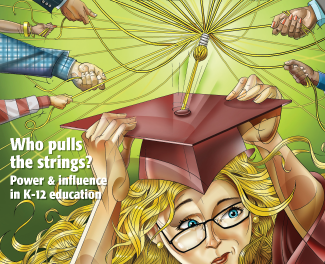
Since the Every Student Succeeds Act (ESSA) was passed in December 2015, policy debates about the law have focused not so much on what it is, but what it isn’t, not what it achieves but what it undoes. As Sen. Lamar Alexander (R-TN) remarked in early 2016, ESSA reins in the federal government’s power to influence education at the state and local levels, “revers[ing] the trend toward what had become, in effect, a national school board” under No Child Left Behind (NCLB). “The new law,” he went on, “ends the highly qualified teacher definition and requirements, teacher evaluation mandates, federal school turnaround models, federal test-based accountability and adequate yearly progress.”
Likewise, speaking shortly before ESSA’s final passage, Sen. Patty Murray (D-WA) — the law’s coauthor, with Alexander — described it as, first and foremost, an effort to dismantle NCLB’s most unpopular provisions, calling it a “bipartisan bill to reduce reliance on high-stakes testing.” To be fair, she also noted that it “invest[s] in improving and expanding access to preschool programs.” But as to what else the new law accomplishes, in a positive sense, for K-12 education, she was evasive, promising only that it will “ensure all students have access to a quality education, and so much more.”
Three and a half years later, it remains difficult to see in ESSA anything like a coherent, guiding vision for the federal government’s investments in education. The law’s passage stands out as a successful political compromise, but — other than recommitting itself (weakly) to NCLB-style testing and accountability — ESSA articulates no new set of guiding principles for school improvement.
You’ve accessed your three free articles for this month.
If you are a PDK member, login to read more.
If you are not a PDK member, join for full access, in addition to other benefits. Complete our membership form to join.
Forgot your password? Visit the Member Portal to reset your password.
Having trouble? Contact our member services team at memberservices@pdkintl.org or 800-766-1156.