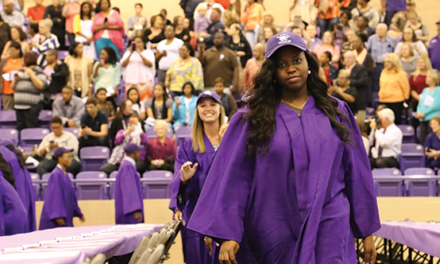
In the United States, over the last two decades, young adults of color (ages 18-24) have become increasingly likely to enroll in college. Between 2000 and 2018, for example, the enrollment rate among Black students rose from 31% to 37%, and for Latinx students it climbed even more steeply, from 22% to 36% (Hussar et al., 2020). Still, though, Black and Latinx college enrollments continue to lag behind the national average — during that same period, the enrollment rate for the overall student population rose from 35% to 41%.
If you consider not only students’ race and ethnicity but also their gender, then even more troubling disparities appear. In 2018, the college-going rate was 41% for 18- to 24-year-old Black women and 40% for Latinas — right around the national average — but the rate was just 33% for Black men and 32% for Latinos, compared to 38% for men overall (Hussar et al., 2020).
Even more important, of course, are college completion rates, and here, too, the data are alarming. In 2019, 40% of Black and 31% of Latinx 25- to 29-year-olds held an associate’s degree or higher, compared to the overall rate of 49%. And the gap was even wider for those with at least a bachelor’s degree: 29% of those who are Black and 21% of those who are Latinx, compared to the overall rate of 39%.
When debating how best to support the college aspirations of students of color — and to achieve parity in college enrollment and completion rates — education reformers typically zero in on efforts to improve teacher quality. After all, they point out, research shows that classroom instruction has a greater influence on student outcomes than anything else that goes on inside the school building.
However, school counselors and school psychologists can and often do have a powerful influence on student outcomes as well. Not to take anything away from efforts to improve teacher quality, but if we aim to help greater numbers of Black and Latinx students achieve their goals of enrolling and persisting in college, then our schools and districts must do more to tap into the unique skills that counselors and psychologists bring to their work. As we argue below, they have a major role to play in helping these students reach their potential.
What kinds of support matter?
The obstacles that often prevent Black and Latinx students from realizing their college aspirations are well-known. Countless studies have shed light on, for example, school funding disparities and their effects on students of color, racial bias in the classroom, tracking in schools, the rising costs of college attendance, family responsibilities, and more (Carey, 2019; Manzano-Sanchez, Matarrita-Cascante, & Outley, 2019). Less widely known, however, are the many recent studies on the factors that promote college-going for these students.
When Black and Latinx students do succeed in steering a course to and through college, it might be tempting to attribute their success to individual qualities, such as intelligence, perseverance, and ambition. However, what really stands out from the research are the key roles played by the adults in their lives, particularly families and educators, including not only teachers but also school counselors and psychologists.
Family support
Maria Luz Berbery and Karen O’Brien (2018) conducted a study designed to learn what contributes to college-going self-efficacy among Latinx high schoolers — that is, what influences them to take concrete steps (such as visiting colleges, filling out applications, and seeking information about financial aid) to pursue their college aspirations? Not surprisingly, the students who were most likely to take real steps toward college were those who had both a high grade point average (GPA) and a high level of family support for going to college. More surprising, perhaps, was that if students didn’t have much support from their parents and other relatives, then their GPA didn’t matter. They might be excellent students, but without encouragement from their family, they weren’t likely to follow through on their aspirations.
In an ethnographic study of two households, Roderick Carey (2016) closely examined the ways in which family members influenced a Black boy and Latinx boy to go to college. Beginning when the boys were very young, the families strongly and consistently emphasized the financial and professional value of college and their ability to succeed there. Other family members had attended college, the boys noted, and they were expected to attend, too. In short, Carey found that “college-going familial capital” — or the whole collection of knowledge, beliefs, expectations, and supports that exist within families where college-going is the norm — functioned in much the same way for Black and Latinx boys as it does for students from other backgrounds.
Similarly, in a recent study of Latinx high school students, Harold Manzano-Sanchez and colleagues (2019) found that even in households where parents and other relatives had not themselves gone to college, those family members, both immediate and extended, played key roles in supporting college-going aspirations. In focus group interviews, students described benefiting not only from their families’ steady encouragement to pursue college but also from seeing firsthand the challenges their parents encountered in life working in low-wage jobs because they had not had the opportunity to obtain an advanced education.
Educator support
In recent studies of the ways in which educators promote college-going among Black and Latinx students, researchers found that students are as likely to cite the support they receive from school staff as the support they get from teachers.
For example, Amy Cook and colleagues (2018) surveyed 133 Black, Latinx, and biracial college students on their experiences with high school counselors, asking specifically about the ways in which they helped with academics and college readiness. Students identified a number of challenges (e.g., limited support from educators, discrimination, and a lack of encouragement from some teachers and school staff), but many also highlighted the support and encouragement they received from caring educators, pointing specifically to activities organized by counselors, such as college visits and fairs, assistance with college and financial aid applications, research about particular colleges, and entrance exam preparation. Participants also described the individual support they received from their counselors, as well as group support from workshops, as beneficial. Overall, the researchers found that school counselors played an important role in helping these students plan for and enroll in college.
Similarly, one of us (Desireé Vega, 2016) conducted a qualitative study of 10 first-generation Latinx college students and their decisions to enroll and persist in college. The students highlighted the support they received from school personnel, including teachers and psychologists who seemed to care about them and school counselors who helped them see that college attendance was possible. In particular, they credited the counselors who began discussing college applications as early as their freshman year, and who continued throughout high school to steer them toward college and through the admissions process. Here, too, when a group of high-achieving Latinx students were asked about the factors that helped them plan for and enroll in college, counselors and psychologists received a significant amount of credit.
Bringing counselors and psychologists to the table
A wealth of research suggests that when schools, families, and communities see each other as partners in the work of preparing young people for life after high school, students tend to have greater success (Bryan, 2005; Bryan & Henry, 2012). And yet, where such partnerships exist, school counselors and psychologists tend to be excluded from leadership roles.
In no small part, that’s due to the economic realities of public education today. Not only are school counselors and psychologists in short supply in most of the country, but thanks to staff shortages in other areas, they are often assigned to perform narrowly focused (and professionally inappropriate) tasks — such as enforcing student discipline and proctoring tests — that limit their ability to provide comprehensive counseling services and take on school leadership roles. Nationwide, the number of students per school psychologist is much higher than the recommended limit of 500-700 to 1; currently, the ratio is almost 1,400 to 1 (Walcott & Hyson, 2018). Similarly, while the ratio of students per school counselor has improved in recent years, it nonetheless stands at 430 to 1, far exceeding the recommended ratio of 250 to 1 (American School Counselor Association [ASCA], 2020).
Even so, the work of counselors and psychologists gives them unique insights into the home-school relationship. When helping with the logistics of college planning, and when addressing the personal and interpersonal conflicts that the college planning process often triggers, they can’t help but learn about students’ academic goals, their classroom experiences, and their family circumstances. Nobody is better positioned to see whether students are receiving consistent messages from their parents and teachers, and nobody has a clearer view of the systemic barriers they must overcome to enroll in and succeed at college (ASCA, 2012; National Association of School Psychologists [NASP], 2010; Simcox, Nuijens, & Lee, 2006; Staton & Gilligan, 2003; Vega et al., 2016).
Given their expertise, school counselors and psychologists can and should take the lead in bringing educators and family members together around a shared strategy for helping all students pursue a postsecondary education (ChenHayes, Ockerman, & Mason, 2014). But they cannot do so unless all of the school’s stakeholders — especially administrators, who typically have the authority to define counselors and psychologists’ scope of work (Dahir et al., 2010) — understand their distinct roles. One helpful place to start is by sharing the field’s current models of professional practice (e.g., ASCA National Model, NASP Practice Model), which call upon schools to stop assigning counselors and psychologists to take on assessment-related and other non-counseling duties, allowing them instead to focus on the services they’re trained to provide.
Assessing needs and barriers
If they are allowed to expand their scope of work, then what can school counselors and psychologists do to better support Black and Latinx students in planning for college? First and foremost, they can develop and administer a needs assessment, focusing on college-readiness skills and knowledge (such as self-efficacy, study skills, and time management; National Office of School Counselor Advocacy, 2010), with particular attention to any systemic barriers those students might face within the school, related to both their racial and ethnic identity and their gender (Hussar et al., 2020).
At the same time, counselors and psychologists should monitor existing school data to identify any patterns that suggest unfair treatment of specific groups of students. Given that Black and Latinx students tend to be overrepresented in special education and underrepresented in gifted education (Ford, 2013; Robinson et al., 2014), to be suspended and expelled at disproportionate rates (Losen & Skiba, 2010), to drop out of school at high rates (Garrett, Anthrop-González, & Velez, 2010), and to enroll in college at low rates (Hussar et al., 2020), such indicators always deserve careful attention.
If assessments do show troubling disparities, then counselors and psychologists should play a lead role in designing interventions to address biased beliefs and practices (Savitz-Romer & Bouffard, 2012). If, for example, the data show that a school has disciplined Black students at disproportionate rates, then it might make good sense to help teachers develop culturally responsive pedagogies or to help administrators implement a restorative justice model.
Building a college-going culture
If assessments show that Black and Latinx students have weak college-readiness skills and knowledge, then counselors and psychologists should also play a lead role in building a stronger college-going culture within their school (Hines et al., 2019) by, for example, creating a college awareness program for new high school students, helping individual students to work out a college planning and application schedule, and, if possible, establishing relationships with their family members and engaging them in discussions about college visits, financial aid, college transition programs for students of color, and other details (Bryan, 2005; Bryan & Henry, 2012; Chen-Hayes, Ockerman, & Mason, 2014).
Finally, school counselors and psychologists can take the lead also in identifying and reaching out to local community stakeholders who can help promote college readiness by sponsoring events, support networks, and other resources (Bergerson, 2009; Hines & Holcomb-McCoy, 2013). For example, Black and Latinx college graduates can be invited to share their experiences with students, colleges and universities can be enticed to offer dual enrollment and early college experiences, and businesses can be persuaded to offer scholarships for first-generation Black and Latinx college students.
In short, school counselors and psychologists have great potential to intervene on behalf of Black and Latinx students, to help them make concrete plans for post-secondary education, and to secure resources that will help them make a smooth transition to college and earn degrees at the same rate as their white counterparts. As recent research suggests, Black and Latinx students who enroll and succeed in college tend to credit the support they received from not just their teachers and families but also counselors and psychologists, who provided them with important information about college, helped them schedule campus visits, and guided them through the application process, as well as advocating for them within the school and serving as a bridge between the school and their parents and other relatives. All too often, school leaders have overlooked these contributions, failing to see the many ways in which these staff members can build a stronger college-going culture. But if they aim to steer greater numbers of Black and Latinx students to and through college, then they must do more to utilize the specialized skills their school counselors and psychologists hold.
References
American School Counselor Association (ASCA). (2012). The ASCA national model: A framework for school counseling programs (3rd ed.). Alexandria, VA: Author.
American School Counselor Association (ASCA). (2020). ASCA releases updated student-to-school-counselor ratio. Alexandria, VA: Author.
Berbery, M.L. & O’Brien, K.M. (2018). Going to college? Latina/Latino high school students’ college-going self-efficacy and educational goals. Journal of Career Assessment, 26 (2), 377-392.
Bergerson, A.A. (2009). College choice and access to college: Moving policy, research, and practice to the 21st century. ASHE Higher Education Report, 35 (4), 1-141.
Bryan, J. (2005). Fostering educational resilience and achievement in urban schools through school-family-community partnerships. Professional School Counseling, 8 (3), 219-227.
Bryan, J. & Henry, L. (2012). A model for building school-family-community partnerships: Principles and process. Journal of Counseling and Development, 90 (4), 408-420.
Carey, R.L. (2016). “Keep that in mind. . . You’re gonna go to college”: Family influence on the college going processes of Black and Latino high school boys. The Urban Review, 48 (5), 718-742.
Carey, R.L. (2019). Am I smart enough? Will I make friends? And can I even afford it? Exploring the college-going dilemmas of Black and Latino adolescent boys. American Journal of Education, 125 (3), 381-415.
Chen-Hayes, S.F., Ockerman, M.S., & Mason, E.M. (2014). 101 solutions for school counselors and leaders in changing times. Thousand Oaks, CA: Corwin Press.
Cook, A.L., Hayden, L.A., Tyrrell, R., & McCann, A.G. (2018). “Doing everything on my own”: Examining African American, Latina/o, and biracial students’ experiences with school counselors in promoting academic and college readiness. Urban Education, 1-31.
Dahir, C.A., Burnham, J.J., Stone, C.B., & Cobb, N. (2010). Principals as partners: Counselors as collaborators. NASSP Bulletin, 94 (4), 286-305.
Ford, D.Y. (2013). Recruiting and retaining culturally different students in gifted education. Waco, TX: Prufrock Press.
Garrett, T., Anthrop-González, R., & Velez, W. (2010). Examining the success factors of high achieving Puerto Rican male high-school students. Roeper Review, 32 (2), 106-115.
Hines, E.M., Vega, D., Mayes, R., Harris, P.C., & Mack, M. (2019). School counselors and school psychologists as collaborators of college and career readiness for students in urban school settings. Journal for Multicultural Education, 13 (3), 190-202.
Hines, E.M. & Holcomb-McCoy, C.C. (2013). Parental characteristics, ecological factors, and the academic achievement of African American males. Journal of Counseling and Development, 91 (1), 68-77.
Hussar, B., Zhang, J., Hein, S., Wang, K., Roberts, A., Cui, J., . . . & Dilig, R. (2020, May). The condition of education 2020. Washington, DC: National Center for Education Statistics.
Losen, D.J. & Skiba, R. (2010). Suspended education: Urban middle schools in crisis. Montgomery, AL: Southern Poverty Law Center.
Manzano-Sanchez, H., Matarrita-Cascante, D., & Outley, C. (2019). Barriers and supports to college aspiration among Latinx high school students. Journal of Youth Development, 14 (2), 25-45.
National Association of School Psychologists. (2010). Model for comprehensive and integrated school psychological services. Bethesda, MD: Author.
National Office of School Counselor Advocacy. (2010). The eight components of college and career readiness. New York, NY: College Board.
Robinson, D.V., Vega, D., Moore, J.L., III, Mayes, R.D., & Robinson, J.R. (2014). Chutes and ladders: Young African American males navigating potholes to achieve academic success. In J.L. Moore, III and C.W. Lewis (Eds.), African American males in PreK-12 schools: Informing research, practice, and policy (pp. 107-124). Somerville, MA: Emerald Publishing.
Savitz-Romer, M. & Bouffard, S. (2012). Ready, willing, and able: A developmental approach to college access and success. Cambridge, MA: Harvard Education Press.
Simcox, A.G., Nuijens, K.L., & Lee, C.C. (2006). School counselors and school psychologists: Collaborative partners in promoting culturally competent schools. Professional School Counseling, 9 (4), 272-277.
Staton, A.R. & Gilligan, T.D. (2003). Teaching school counselors and school psychologists to work collaboratively. Counselor Education and Supervision, 42 (3), 193-200.
Vega, D. (2016). “Why not me?” College enrollment and persistence of high-achieving first-generation Latino college students. School Psychology Forum, 10 (3), 307-320.
Vega, D., Hines, E.M., Mayes, R.D., & Harris, P.C. (2016). Preparing Latino students for life after high school: The important role of school counselors and school psychologists. National Youth-at-Risk Journal, 2 (1), 70-82.
Walcott, C. & Hyson, D.M. (2018). Results from the NASP 2015 membership survey: Demographics and employment conditions. NASP Research Reports, 3 (1), 1–17.
ABOUT THE AUTHORS

Desiree Vega
DESIREÉ VEGA is an associate professor at the University of Arizona College of Education, Tucson.

Alaina M. Puff
ALAINA M. PUFF is a PhD student at the University of Arizona College of Education, Tucson.