Getty Images
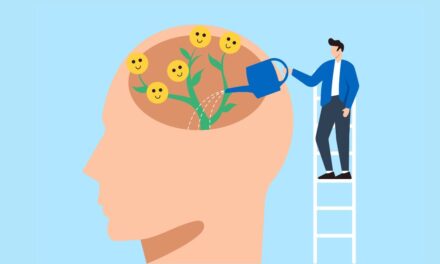
The looming specter of environmental disaster is taking a toll on students’ mental health, but learning how to take action can help.
Scientists predict that by 2050, our oceans will contain roughly the same volume of microplastics as they do animal life (Kaplan, 2016; National Oceanic and Atmospheric Administration, n.d.; United Nations Global Environment Program; 2018), and it is unclear what impact this will have on marine ecosystems. The prognosis seems bleak for life on land, too. By the end of the century, 50% of the world’s species may be extinct (McKie, 2017).
As an educator, I have always strived to keep my political views to myself. I’ve tried to create engaging activities, provide the approved curriculum materials, and maintain a lively but nonpartisan classroom culture, and that has worked well for me over the years. I’ve always believed that students needed space to grow up and decide, in their own time and using their own judgment, where they stand on the issues of the day. But as I’ve come to learn more about the looming environmental catastrophes facing the planet, I’ve begun to wonder how I can continue to take a passive, nonjudgmental role in classroom discussions about climate change, its causes, and its consequences. How much longer can I set aside the overwhelming evidence about the effects of carbon emissions and other pollutants and go about my merry classroom business as usual?
Yet, at the same time, I struggle with the prospect of weighing my students down with heavy global issues. They’re kids! I want them to have an innocent childhood. I don’t want to hit them with the threat of devastated biomes, mass extinctions, and hundreds of millions of refugees fleeing uninhabitable lands, as we may see in the coming decades.
And so my real trouble is not climate change, it is that I don’t want to steal childhood from my students.
Mental health and climate change
We know that today’s young people already face a range of mental health challenges, although it’s not clear to what extent fears of climate change play a part. In a 2018 American Psychological Association (APA) report, nearly half of teenagers surveyed said they were more worried than they were the year before. A 2013 report by the Yale College Council found that more than half of undergraduates sought mental health care from the university during their time there, and according to Peter Gray (2011), young people feel less in control of their lives now than in any other point in recent history.
People with eco-anxiety will watch the impacts of climate change and experience perceptions of loss, helplessness, and frustration if they feel they can’t make any difference, if they feel trapped. The way out is empowerment, action, and student voice.
But if a climate crisis (or the perception of it) escalates, notes the U.S. Global Change Research Program (Dodgen et al., 2016), we can anticipate serious mental health consequences for young people — especially those who experience extreme weather events. These effects include post-traumatic stress disorder, depression, general anxiety, substance abuse, suicidal thoughts, and grief. In addition, the threat of extreme weather, in and of itself, constitutes a stressor. And the mix of natural and human causes of climate change can result in feelings of anxiety, pessimism, helplessness, eroded sense of self and control, stress, distress, sadness, loss, and guilt. The APA has reported that climate change could lead people to experience a loss of personal and professional identity, social support and structures, and sense of control and autonomy, as well as increased feelings of helplessness, fear, and fatalism (Clayton et al., 2017). Noting how concern or fear of climate change can cause intense stress and anxiety, the APA even designated “climate-related despair” as a distinct mental health condition (Woodward, 2019).
Maybe, then, we all are the thieves of childhood: Our politicians, our investors, our corporations, our president, all of us who purchase single-use plastics, all thieves of childhood. Anyone who watches from the sidelines, doesn’t read the labels, and does not encourage action is a thief of childhood.
The iron law of climate change is this: The less you did to cause it, the more you feel its effects (Pielke, 2010). Some of that injustice is intergenerational: Those who poured the most carbon into the air may be dead before its effects are fully felt. There’s also a socioeconomic element: Hundreds of millions of poor and indigenous people now labor on barren remains of rain forests. Instead of going to school, their children work in factories producing cheap, disposable synthetics that are two steps from the landfill before they even hit the bargain stores; for them, childhood is already a forgotten dream (Myers & Theytaz-Bergman, 2017). These twin injustices — intergenerational and socioeconomic — explain why the environmental movement is largely led by indigenous people and the young people who are going on strike or claiming they will never have children.
Given the grave risks, I have wondered long and hard about how much of the truth about the possible devastation we should weigh our students down with. As I have looked into the eyes of my high school students, I’ve asked myself, how much can they handle?
Learning with and from students
I founded the Grauer School in Encinitas, California, in 1991. We are fairly unique among private college-prep schools in that we grade and report on not only tests and quizzes, but also the achievement of values like engagement and courage. Almost 40% of our campus is a wildlife and native habitat corridor, and every class spends substantial amounts of time outdoors. In addition, we encourage activism among our students, many of whom are able to attend because our endowment enables us to discount hundreds of thousands of tuition dollars each year for deserving kids of diverse backgrounds. Our school community understands that equity in schooling is part of our activism. (And our students understand that activism is the expression of student voice as they seek purposes “larger than themselves,” wherever they see fit, not just climate change.)
From talking and listening to our students, I’ve learned that news of climate change is permeating their minds, like a subliminal tape purring through their pillows all night long as they sleep. Anjali B., a Grade 9 student at the Grauer School told me: “What worries me about the future is the condition of the environment and planet, the animals and natural creations. I get deep anxiety and will spend time crying in my room because I’m scared for the planet.” Even among students who do not read the news, the messaging is ubiquitous, an inescapable subtext in conversations, music, the written word. And the messages echo all over the world, from urban industrial centers to suburban beach cities of California to the plateau in Altiplano where I traveled with my students in 2019.
All week, high in the Andes of Ecuador, the Quechua shamans patiently taught us about their lives and world. To the indigenous, native plants are medicine and only a fool would damage or replace them — but, of course, such destruction has happened on a scale our ancestors could never have dreamed. At high altitude, out in the elements, my high school students became immersed in the reality of a vanishing world. I saw their vulnerability to a degree I had never before fathomed, but I also saw catharsis as their pain and fear took on a manageable form for the first time and a lightness and an openness emerged in them. And now I know what to tell Anjali.
I found inspiration in the work of 17-year-old Helena Gualinga, an indigenous activist from the Ecuadorian Amazon, where she is confronting recent fires and increasing deforestation. On Instagram, she urges her 7,000 followers (www.instagram.com/helenagualinga) to see how indigenous rights connect to the environment. For her, the issue is personal and urgent: “I grew up with a constant fear that when I would go home my community wouldn’t exist anymore” she has said (Wikler & Yakupitiyage, 2019), and she has decided to answer that fear with action.
The reality of climate change can be debated to kingdom come, but the impact it is having on our youths is undeniable, immediate, and in some cases catastrophic. Because they stand to lose the most from our action or inaction on climate change, we owe them the facts from all sides — and the opportunity to respond. Where did I get the idea that I could keep this information out of the curriculum? Student activists and artists are ready for empowerment.
Our children and future generations depend on us to act meaningfully, which means teaching them honestly and fearlessly and listening a whole lot more deeply.
Newly galvanized, I asked our faculty about this, and everyone agreed it was time for the truth. And when I asked a student in the junior class if her generation could handle it, she looked in my eye and said, easy as pie, “Yes. Sure.” I should not have been surprised. These are the same students who took to the streets in the aftermath of the Parkland shootings to advocate for their right to be safe against gun violence in their schools. These students are already, at the very least, dimly aware of the looming climate crisis. When they become more fully educated about the possible reality they face, they will have the information they need to stop feeling helpless and do something to change their fate. And the act of doing something can, in fact, improve their mental health. Psychological research by the U.S. Global Change Research Program (Dodgen et al., 2016) reveals that people who are actively involved in climate change adaptation or mitigation actions tend to experience health and well-being benefits, especially reductions in anxiety and stress.
The action plan for educators
At our school, we are finding study and internship opportunities focused on the environment, sustainability, farming, and conservation in all courses of study. We now have a student officer for sustainability, and activism is increasing as we encourage students to stand up for their beliefs. As is their custom, Grauer students petitioned the administration to allow them to participate in a climate walk-out event, but the student leader Thalia M., a junior, informed me, “We’re going to do it whether the petition passes or not.” Right on. Another Grauer student testified before city hall. Bring it!
Anxiety and depression correlate with a person’s feeling of not having control over their life. People with eco-anxiety will watch the impacts of climate change and experience perceptions of loss, helplessness, and frustration if they feel they can’t make any difference, if they feel trapped. The way out is empowerment, action, and student voice. Building student resilience and agency is the responsibility of every teacher and school and school board member and curriculum designer in the country. This means coming together to cultivate students’ coping and self-regulation skills, promote students’ sense of place and connection to their community and ecosystem, and understand our new role in nurturing and teaching activism as a basic skill. My student Anjali B. says, “I hope everyone does their part soon . . . I try to be conscious of decisions that can affect the planet, like conserving energy.”
Data show that climate and health-related arguments motivate positive action (Pollack, 2018), so it’s important for our kids to see the connections between climate and health. A growing body of research shows that people who spend time outside in sunny, green, or natural spaces tend to be happier and healthier than those who don’t. A 2015 study from Stanford, for example, found that young adults who walked for an hour through parkland were less anxious afterward and performed better on a test of working memory than if they had strolled along a busy street (Bratman et al., 2015). Even posters and videos of nature have this effect (van den Berg et al., 2015) At our school, besides making sure students regularly spend time outdoors in our wildlife habitat, we live-stream video of natural environments daily in various indoor locations around campus.
The power of students
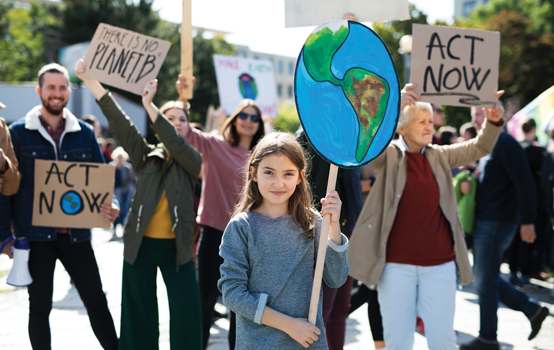
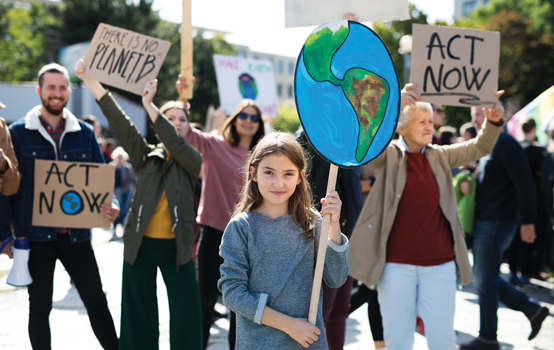
The great climate strikes that are taking place around the world have roots in the efforts of junior high and high school students who are drawing on their own efficacy and sense of empowerment and agency to insist on climate action. Our children and future generations depend on us to act meaningfully, which means teaching them honestly and fearlessly and listening a whole lot more deeply. Today’s and tomorrow’s healthiest students will be those who are deeply aware, in a truly hopeful way, of the connections between people around the planet. Even if our students can’t grasp the nuances within the maelstrom of science now being generated around climate change, they will understand the stakes, and this understanding will draw them together in action.
Students around the world are watching and responding to one another’s calls to action. They are communicating and connecting with each other, in spite of society’s perceptions of their age and inexperience. In my imagination and perhaps soon in real life, Thalia from our beach town school and Helena from the Andes will be working hand in hand as both come to see the hidden links between indigenous rights, U.S. teen shopping habits, and the air and water that they need to survive. Through connections with each other and with nature, they better understand why it’s worth it to make the sacrifices necessary to overcome our addictions to plastic, energy production, fast foods, sweatshop clothing, and to end the destruction of pristine natural spaces.
Thank the heavens for that — those kids will be more likely to protect the places they love and be less prone to the sense of powerlessness that can erode their mental health. The thief of childhood is not the one who shields these children from the truth, but rather the one who deprives them of the voice and passion they need to take charge of their lives or the world they inhabit. The major spiritual traditions teach us that everything is connected, that every child is part of a biosphere — remembering this is the key to sustainable health for ourselves and our planet.
References
American Psychological Association. (2018). Stress in America: Generation Z. Washington, DC: Author.
Bratman, G., Daily, G., Levy, B., & Gross, J. (2015). The benefits of nature experience: Improved affect and cognition. ScienceDirect, 138, 41-50.
Clayton, S., Manning, D., Krygsman, K., & Speiser, M. (2017). Mental health and our changing climate: Impacts, implications, and guidance. Washington, DC: American Psychological Association and ecoAmerica.
Dodgen, D., Donato, D., Kelly, N., La Greca, A., Morganstein, J., Reser, J., . . . & Ursano, R. (2016). Chapter 8: Mental health and well-being. In The impacts of climate change on human health in the United States: A scientific assessment (pp. 217-246). Washington, DC: U.S. Global Change Research Program.
Gray, P. (2011). The decline of play and the rise of psychopathology in children and adolescents. American Journal of Play, 3, 443-463.
Kaplan, S. (2016, January 20). By 2050, there will be more plastic than fish in the world’s oceans, study says. Washington Post.
McKie, R. (2017, February 25). Biologists think 50% of species will be facing extinction by the end of the century. The Guardian.
Myers, L. & Theytaz-Bergman, L. (2017). The neglected link: Effects of climate change and environmental degradation on child labour. Osnabreuk, Germany: Terres des Hommes International Foundation.
National Oceanic and Atmospheric Administration. (n.d.). What are microplastics? Washington, DC: Author. https://oceanservice.noaa.gov/facts/microplastics.html
Pielke, R., Jr. (2010, October 18). A positive path for meeting the global climate challenge. Yale Environment 360.
Pollack, D. (2018, October 12). Climate change and its impacts on mental health. Psychiatric Times, 35 (10).
United Nations Global Environment Program. (2018). Legal limits on single-use plastics and microplastics: A global review of national laws and regulations. New York, NY: Author.
van den Berg, M.H.E., Maas, J., Muller, R., Braun, A., Kaandorp, W., van Lien, R., . . . van den Berg, A. (2015). Autonomic nervous system responses to viewing green and built settings: Differentiating between sympathetic and parasympathetic activity. International Journal of Environmental Research and Public Health, 12 (12), 15860-15874.
Wikler, M. & Yakupitiyage, T. (2019, October 1). 11 young climate justice activists you need to pay attention to. Vice.
Woodward, B. (2019, March 26). Climate disruption and the psychiatric patient. Psychiatric Times, 36 (3).
Yale College Council. (2013, September). Report on mental health. New Haven, CT: Author.
Note: This article is adapted from a speech presented at the OESIS Student Wellness Conference in Los Angeles, California, on October 31, 2019. An audio version is available at https://anchor.fm/stuart-grauer. The article was developed with the help of Tricia Valeski, research associate at the Grauer School.
ABOUT THE AUTHOR

Stuart R. Grauer
STUART R. GRAUER is head of school at The Grauer School in Encinitas, CA. He is the author of Fearless Teaching .