Savage Inequalities: Children in America’s Schools
By Jonathan Kozol (Crown Publishers, 1991)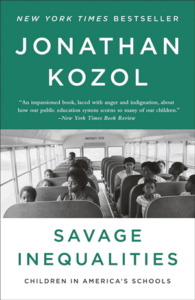
When Jonathan Kozol’s gut-wrenching narrative of the conditions of schooling in America, particularly in urban areas beset by drugs, violence, chronic unemployment, family breakdown, and a host of other maladies, was published, we were young doctoral students in educational policy (Bonnie) and political science (Lance). Kozol’s book profoundly changed our lives — spurring a lifelong interest in studying education at the intersection of politics, policy, and reform. The book has continued to inform our commitment to improving school leadership and the importance of the nested community context in which schools reside.
Kozol’s profile of the conditions of schooling in urban areas remains powerful because it’s told from the perspectives of the children who attend schools in those communities. Unlike abstract texts on school finance — and for that matter, most books on education reform that focus almost exclusively on adults — Kozol’s book relays the powerful, trenchant, sometimes tragic but often hopeful stories of young children trapped in dysfunctional schools and depressed communities. Kids, even young ones, are more perceptive and knowledgeable than adults give them credit. They don’t need to read John Rawls’ A Theory of Justice (1971) to understand inequities in education. They know when society seems to value some kids and families more than others. Their stories are heartbreaking, particularly when they talk about the dysfunctions of their communities.
Recently, we asked our graduate students, who are teachers aspiring to school leadership, whether the conditions Kozol observed more than three decades ago were still prevalent in schools. We secretly hoped they would respond, “No, not anymore” and that the book was out of date. Unfortunately, several described conditions and dysfunctional pathologies mirroring those in Kozol’s book. As evidenced by recent abysmal National Assessment for Education Progress (NAEP) scores, it’s high time we got serious about improving education. That commitment requires attention not only to what occurs within the schoolhouse doors but also to the communities in which children live. We need multifaceted, multidimensional reforms, and we need them now.
This article appears in the December 2023/January 2024 issue of Kappan, Vol. 105, No. 4, p. 7.

ABOUT THE AUTHORS

Lance D. Fusarelli
LANCE D. FUSARELLI is a professor of educational leadership and policy at North Carolina State University, Raleigh.
Bonnie C. Fusarelli
BONNIE C. FUSARELLI is a professor of educational leadership and policy at North Carolina State University, Raleigh.