|
|
| BEST OF THE WEEK
The week’s best education journalism, all in one place. |
|
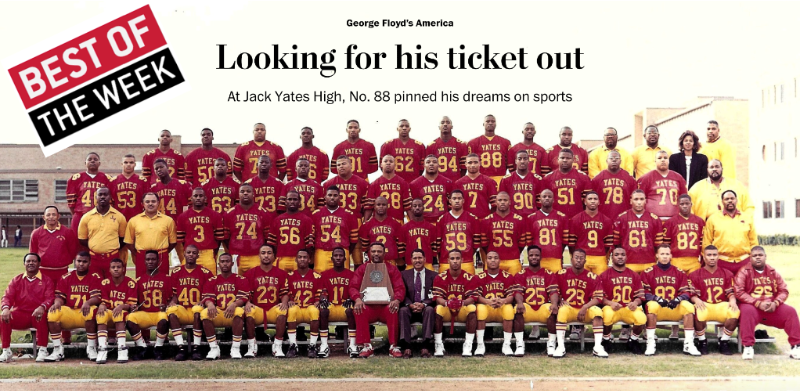
| 🏆 BEST: The best education journalism of the week is Laura Meckler’s deep dive into the inadequacies of the education available to George Floyd growing up in Houston in the late 1980s and early 1990s. Headlined At Jack Yates High School, sports — not study — was seen as the ticket out, Meckler’s piece is part of a Washington Post series on the systemic racism Floyd experienced throughout his life. It also serves as a helpful reminder of the pervasive educational challenges that were the motivation for the accountability-, charter-, and Teach For America-fueled reform era that followed.
🏆 RUNNER-UP: This is high school in a pandemic: Inside one Bronx freshman’s first day in the classroom (Chalkbeat). This story touches on all the big issues: race, immigration, in-class vs. virtual learning, family stress, and what it’s like to be a kid in a hard-hit area of the pandemic. Chalkbeat’s Alex Zimmerman does a great job capturing the excitement and nerves of a freshman who’s eager to get back to school and make the most of it, only to find she’s virtually the only one in class. She’s a captivating subject and the reader roots for her as Zimmerman follows her throughout her school day.
🏆 BIG STORY OF THE WEEK: Attendance and enrollment drops were heavily reported this week, including a huge drop in Chicago Public School attendance reported by Nader Issa for the Chicago Sun-Times. While NPR (Enrollment Is Dropping In Public Schools Around the Country), Education Week, and The 74 (‘Right Now, All Students are Mobile’: New Pandemic Data Confirms a ‘Massive Event’ Disrupting School Enrollment) covered the national story, other outlets across the country also reported various angles, including financial support in Texas, a racial component in Charlotte and New York, and face-to-face learning in Detroit. |
|
| A VETERAN REPORTER FINDS SUCCESS AND SATISFACTION STAYING LOCAL |
|
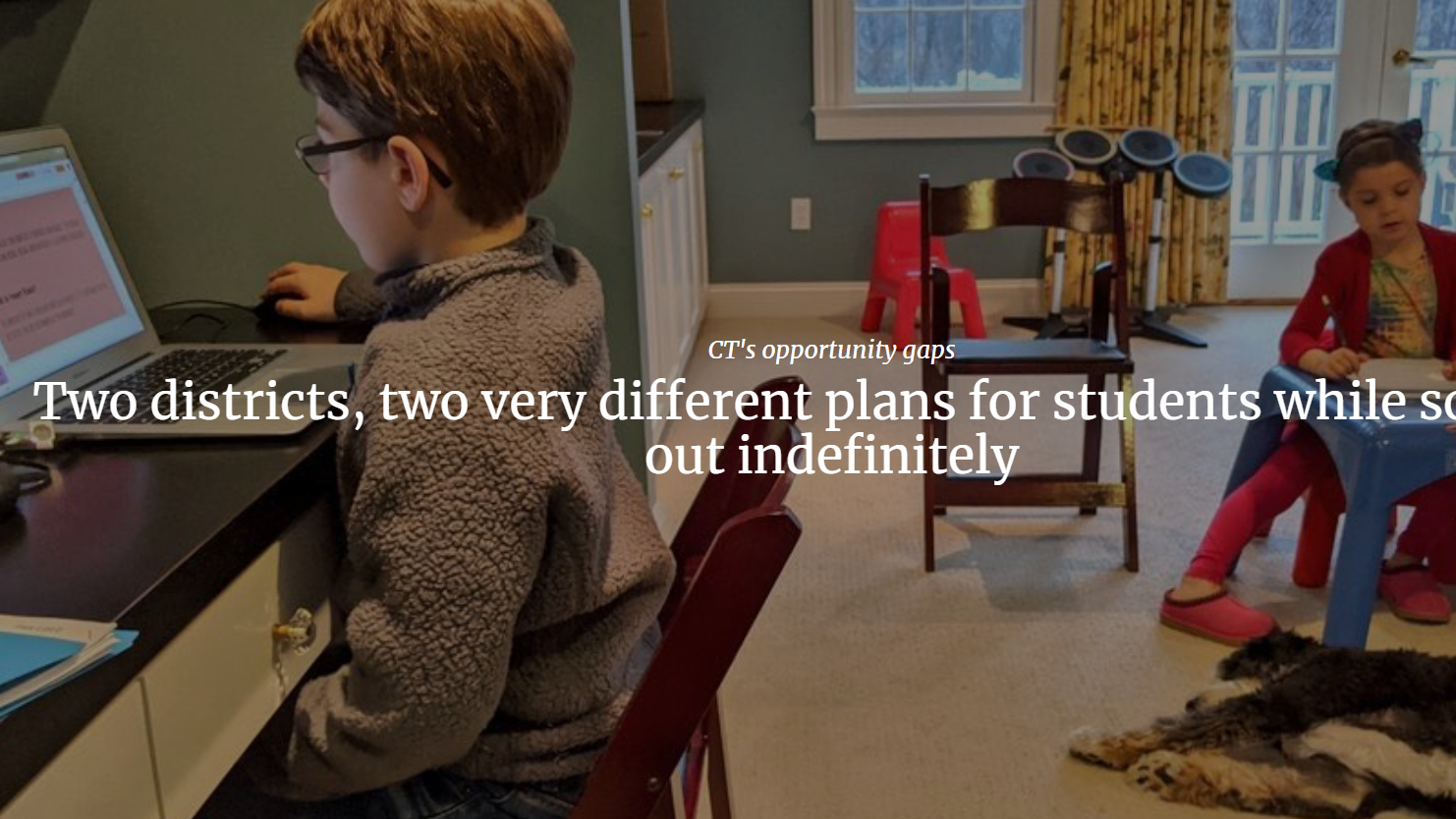
| The Connecticut Mirror’s Jacqueline Rabe Thomas may be the best education journalist you’ve never heard of. In a profile published earlier this week, I explain what’s so great about her stories and why you should be paying attention.
She’s just embarked on an exciting new challenge, writing about the impact of COVID and on disparities in other areas like housing. Her latest education piece confronts the governor’s take on remote learning attendance, which doesn’t match the data.
“A nice story about an inspiring reporter,” noted HuffPost education and politics reporter Rebecca Klein. |
|
| FALL 2020 SCHOOLS COVERAGE TURNS A CORNER |
|
| In this week’s second column, I detail how education coverage in the COVID-19 era has improved in some key ways in the past two weeks since Alec MacGillis published his harrowing New Yorker/ProPublica story.
One major factor has been the growing understanding of how political reopening decisions have been.
Another factor has been a growing understanding that schools may not be the infection vectors they had been presented to be. |
|
| MEDIA TIDBITS
Thought-provoking commentary on the latest coverage. |
|
| 📰 A BRIGHT SPOT THAT’S BEEN UNDERREPORTED: You might not know it yet, but lots of U.S. kids are back in school at least part time — without the outbreaks that were so widely predicted. The safe return of kids and adults to schools is a story that still doesn’t get as much media attention as it deserves, especially from national outlets. That’s even though roughly 30 million kids are now back in school at least part time, according to CBS Evening News’ Norah O’Donnell — and no major outbreaks so far, according to the CDC’s Anthony Fauci. There’s this widespread and quite amazing thing happening, a potential bright spot in a very grim world. Crossed fingers that the trend continues and that the story becomes more widely told than it has been so far.
📰 HOW CLOSED SCHOOLS EXACERBATE POVERTY: You might be tempted to focus on the role of President Trump or Congress when reading this New York Times story about the current economic struggles of so many families. And you’d be right. But there’s a direct connection between closed schools and economic struggles, as illustrated in two of the anecdotes presented in the Times story. Vulnerable families are disproportionately in danger of becoming infected. Many have lost work. But some of those who still have a job can’t go to work because of the school shutdown. It’s a triple-whammy for them. “What could be more cruel than a pandemic where both the virus, and the measures used to control it, disproportionately affect and burden the most disadvantaged and vulnerable members of society?” asked infectious diseases expert Alasdair Munro the other day.
📰 THE PARENT PREFERENCE MYTH: One of the most common explanations justifying remote learning is that it’s what parents want. And indeed, that may be true. However, the parent polling numbers have been overstated, according to at least one researcher. “It’s not the case that large majorities of any subsets of Americans … are vigorously seeking only remote learning,” Michael Hartney is quoted in a recent EdWeek article. Real-world evidence from districts that have offered hybrid and full-time in-person programs also suggests that parents are more interested in a return to school than it may have seemed. Even in NYC, a former hotspot with feuding elected officials and a powerful teachers union, roughly half of the parents have opted for hybrid learning.
📰 RICH REPORTER, POOR REPORTER: There was a minor media uproar in response to reporter Lee Fang’s tweet about elitism in journalism. “File this under sweeping generalizations that don’t hold water,” tweeted former education reporter Chad Livengood about the controversial tweet from The Intercept journalist. “My first full-time reporting job in 2006 paid $26,500-a-year…” While highlighting Fang’s overgeneralization, CT Mirror reporter Jacqueline Rabe Thomas reminded fellow journalists that “there is a certain level of privilege that comes with being able to take a reporting job right out of college that basically pays minimum wage.”
Missed some previous editions? You can see the archive of past newsletters here. |
|
PEOPLE, AWARDS, JOBS
Who’s going where & doing what? |
|
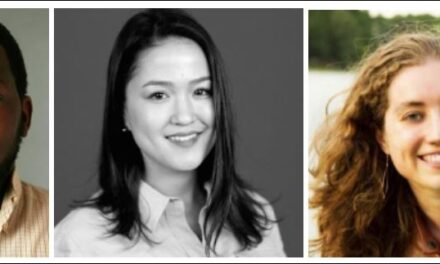
| Above: As you may already have seen, Kate Taylor is covering national education news for the Times while Dana Goldstein is out on leave. But she’s not at all new to the beat, having previously covered New York City schools. Some of my favorite previous pieces from that era include this one about how the Department of Education public school choice program exacerbates segregation. Check out her latest stories here.
🔥 Here’s some good news you may have missed (as I did) from last week. The Seattle Times’ Joy Resmovits is going to be reporting again. Those of us who remember her work from the LA Times and HuffPost know her work will likely be a treat. The last time I remember someone moving from the editor role into the writing role is Alia Wong, who produced some amazing reported stories after having edited The Atlantic’s education section for a couple of years.
🔥 Rising stars to follow: With New York Times education reporters Eliza Shapiro, Dana Goldstein, and Erica L. Green all on leave of various kinds, coronavirus schools newsletter writer Amelia Nierenberg is doing a lot of the heavy lifting. She came to the education beat this summer after finishing up a fellowship at the Times’ food desk. The Miami Herald’s Colleen Wright is only two and half years into covering the massive Miami-Dade school system but is producing some great coverage of what’s going on down there — and seems to be having the time of her life. Aaricka Washington has had a busy second half of the year, launching a successful freelance career, landing a byline in the New York Times, and then getting snatched up by Chalkbeat Indiana.
🔥 Politico’s Madina Touré, Chalkbeat’s Reema Amin, and NY1’s Jillian Jorgensen were among the education reporters who pushed back against criticism from a NYC mom upset how the reopening story is being covered. “Be careful with the ‘never’ takes,” Touré responded. “Have you watched my stories?” Jorgensen asked, before listing those she’s reported. Amin also added Chalkbeat stories and tweeted: “I’m going to assume you’ve read all of our coverage.”
🔥 Hires: Jim Roberts just came on board as The 74’s new publisher and chief strategy officer. I’m super-curious about if and how it will affect the coverage and the reception. Also, Berkshire Eagle alum Jenn Smith is the newest member of the Ed Lab team at the Seattle Times. Smith is replacing Michelle Baruchman.
🔥 Looking for work?: Edutopia is hiring a fellow for a year. EWA announced its call for proposals for the next class of reporting fellows.
🔥 Winners: Congrats to WNYC for winning a Murrow Award for Trying to Graduate from High School at 21. Congrats also to the Times-Dispatch’s Kenya Hunter, who won an award for her story on Maggie Walker Governor’s School.
Did someone forward you this newsletter? You can sign up here. |
|
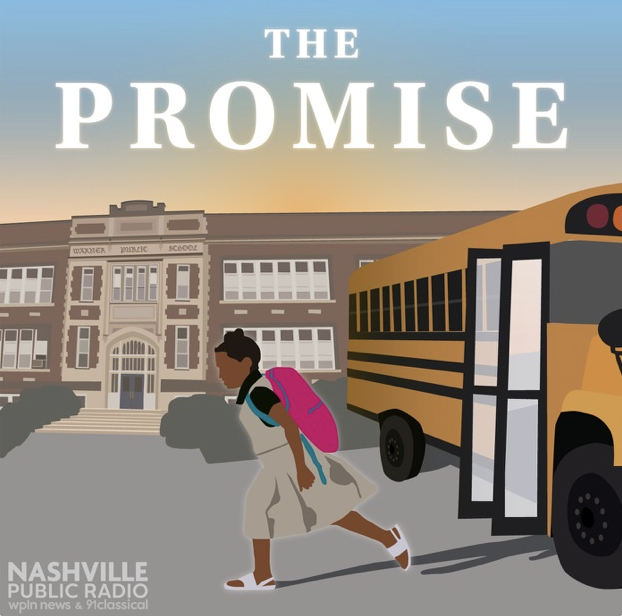
| Above: Episode 7 of Season 2 of Nashville Public Radio’s series The Promise — about public education and race — dropped this week. Catch up on all the past episodes, reported and hosted by Meribah Knight, here.
⏰ Wow! Chana Joffe-Walt was on Fresh Air to talk more about her Nice White Parents podcast series. The Grade interviewed her about her reporting and writing process a few weeks back.
⏰ Want to be a Spencer Fellow next year? Apply by Feb. 1, 2021. The current fellows are former Boston Globe education editor Linda K. Wertheimer, the LA Times’ Sonali Kohli, Detroit Free Press higher education reporter David Jesse, and Max Freedman, the co-creator of the much-admired School Colors podcast.
⏰ The Ida B. Wells Society, cofounded by Nikole Hannah-Jones, is hosting a free virtual investigative reporting workshop on how to cover COVID this week. The workshop ends Monday. In case you miss it, members of the society will be able to view recordings of the sessions later. The 1619 Project, spearheaded by Nikole, was also named one of the decade’s best works of journalism by NYU’s Arthur L. Carter Journalism Institute. Congrats, Nikole! (We also listed her story “Choosing a School for My Daughter in a Segregated City” in our roundup of the best education journalism of the decade.)
⏰ Boston Herald education reporter Alexi Cohan will be on a panel for her other beat — health — next week. She’ll be talking with other reporters about the digital transformation in health care. |
|
THE KICKER |
|
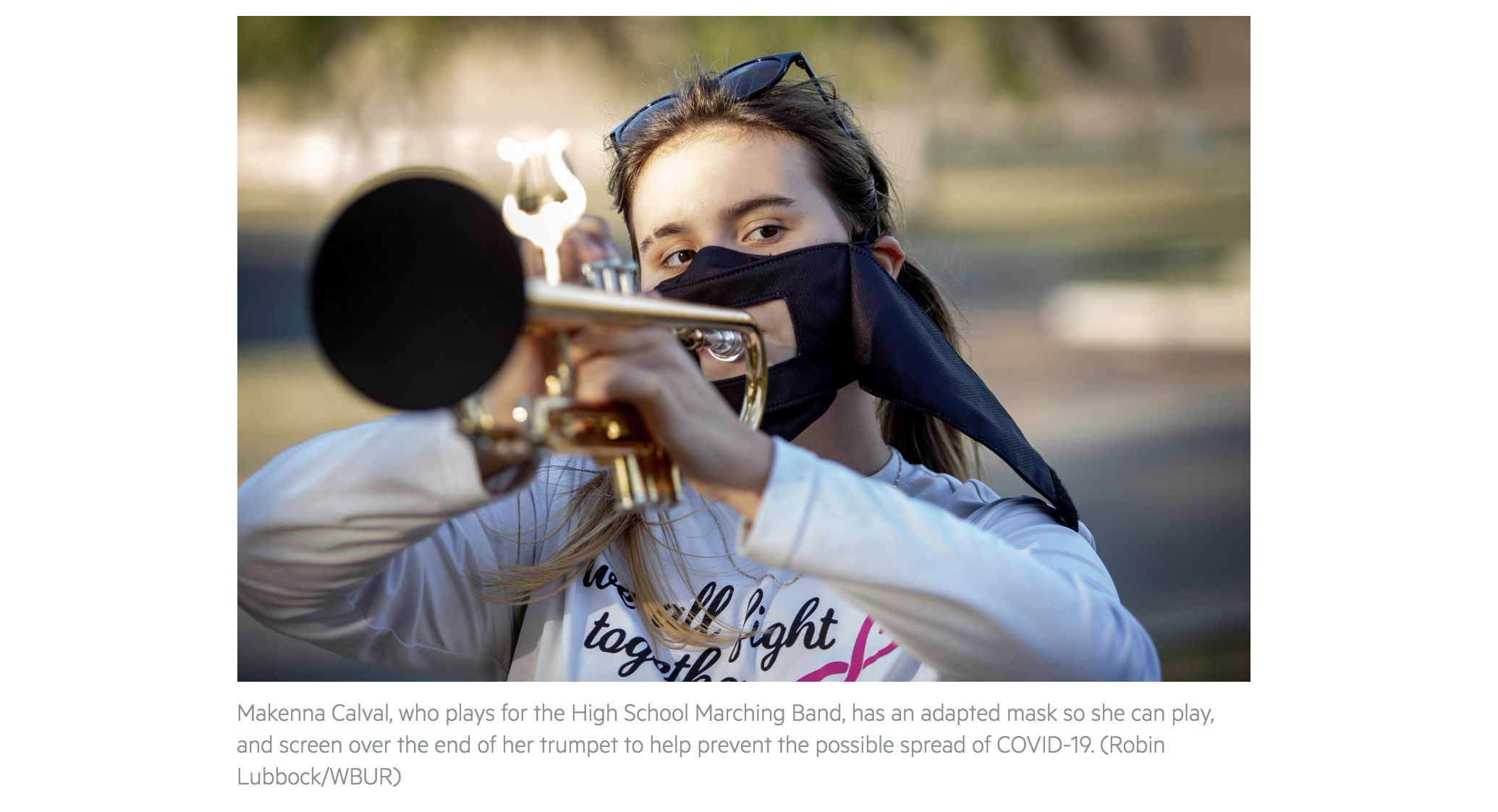
| What does band practice look like during a pandemic? WBUR Edify’s Carrie Jung tells the story, with great photos by Robin Lubbock.
Bonus kicker: Check out KUT education reporter Claire McInerny’s adorable sidekick. |
|
| That’s all, folks. Thanks for reading!
Using Feedly or FlipBoard or any other kind of news reader? You can subscribe to The Grade’s “feed” by plugging in this web address: http://www.kappanonline.org/category/the-grade/feed/.
Read more about The Grade here. You can read all the back issues of The Grade’s newsletter, Best of the Week, here. |
|
|
|
|
|
|