In this week’s newsletter: shifting safety protocols, school shooting coverage, questions reporters should be asking about CRT and banned books, & the history of the Oregon Trail video game.
CRACKDOWNS & LOOSENING UP
The big story of the week, according to us.
As Omicron gains ground and vaccines are available for kids 5 and up, some schools and districts are ratcheting up their COVID mitigation efforts — while others are looking for ways to ease them:
🔊 D.C. school systems discipline employees who flout vaccination requirements (WaPo)
🔊 Maryland takes step to end school mask mandate and let school systems decide (WaPo)
🔊 One district wants to create an in-person option for unvaccinated students (SDUT)
🔊 How new ‘learning centers’ allow some parents to avoid vaccine mandate (SacBee)
🔊 Unvaccinated students can test their way out of COVID-19 quarantine (Chicago Tribune)
🔊 A vaccine mandate for CO schoolchildren? Not so fast, say health officials (Denver Post)
🔊 Six Weeks Ago, a Vaccine Mandate Seemed Like a Lock. No More. (Portland Monthly)*
MISSING VOICES, REZONING SCHOOLS
The best education journalism of the week.
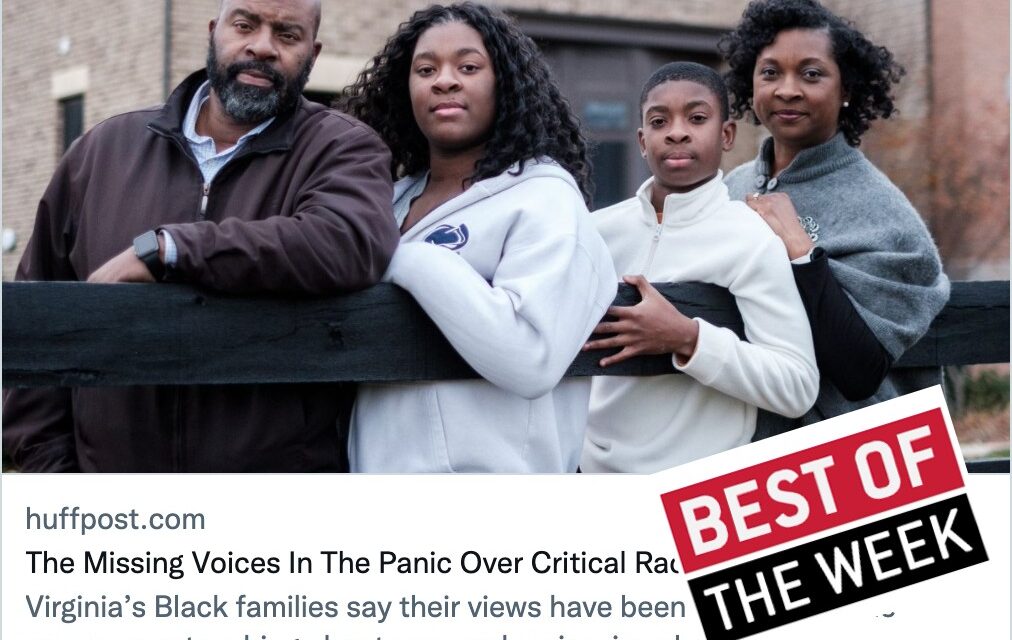
🏆 BEST: The best story of the week is The Missing Voices In The Panic Over Critical Race Theory by Melinda D. Anderson in HuffPost. Anderson’s story focuses on Loudoun County, Virginia, where perhaps the most-publicized debate over critical race theory in schools has happened. It may seem obvious to center Black parents and students in stories about the controversy over critical race theory, given that so-called CRT programs are often adopted to address long-standing inequalities in school districts that serve Black families. But as Anderson points out, many news outlets have instead centered the voices of white parents and politicians. So a seemingly familiar story starts to look a whole lot different when it features the voices and experiences of Black parents. “Think how uncomfortable Black and other people of color have been in this country for years and years,” said one source in Anderson’s piece. “What we experience is nothing compared to your child’s discomfort about learning a sensitive topic.”
🏆 RUNNER-UP: This week’s runner-up is In Minneapolis Schools, White Families Are Asked to Help Do the Integrating by Sarah Mervosh in the New York Times. Minneapolis is in the midst of a sweeping plan to integrate its schools, with about a third of students reassigned to new schools this year. Mervosh focuses on one predominantly Black, low-income high school that received a small influx of white students for the first time — along with all of their parents’ fears, biases, and values. The story features the principal, whose focus is on improving the school for the students who already attend it, and an amazing interview with one white family that decides not to send their daughter to the school. (Their choices are nicely contrasted by a supplementary Amelia Nierenberg interview with another white parent whose son is among just 13 white 9th graders in the school.) Coverage like this shows that school integration isn’t a silver bullet — or even a priority for many Black parents and school leaders. White parents remain resistant, even in liberal communities. “One of the deepest, nuanced dives into school integration efforts I’ve read in a long while,” tweeted NYT colleague Erica Green.
BONUS STORIES:
🏆 In a SF high school, the scars of remote schooling linger (WaPo)
🏆 How one school is changing its culture now that police are gone (WBEZ Chicago)
🏆 Teacher vacancies, absences have created a staffing crisis in some buildings (Philly Inquirer)
🏆 School-age children are seeking out mental health care more than ever (CT Mirror)
🏆 How One N.Y.C. Teen Made It to Her Senior Year (NYT)*
🏆 When a Hyundai is also the family home (WLVR Pennsylvania)*
*Some of this week’s stories come from Thanksgiving week when there was no newsletter. They were just too good to leave out!*
RE-CENTERING BANNED BOOK COVERAGE
New from The Grade
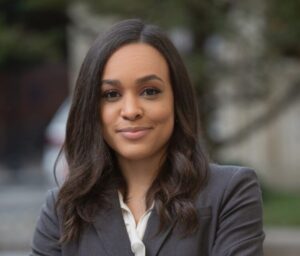
Above: Contributor Amanda Calhoun
Controversial books have been a major theme of news coverage this summer and fall, and yet, according to contributor Amanda Calhoun, too few of the articles have given historical context behind the inclusion of these books — or focused on the feelings of Black children and parents about the legacy of white supremacy in school materials.
“Where are the news stories highlighting the pressure Black children receive from white teachers…? Where is the widely publicized video of the Black parent discussing how their Black child is traumatized…?” asks Calhoun. “I have not seen them, and I want to.”
In the piece, Calhoun calls out coverage from the Washington Post, CBS News, and The Atlantic, and describes her own troubling experiences as a student who was frequently asked to read books containing racist depictions of Black characters.
ICYMI: We didn’t have a newsletter or column last week, but I did send out a list of education journalists and media projects I’m thankful for this year.
MEDIA TIDBITS
Thought-provoking commentary on the latest coverage.
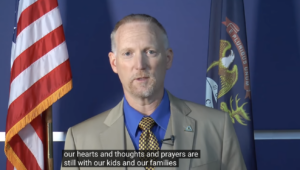
Above: Oxford Michigan superintendent Tim Throne gave a video statement on Thursday, but has not taken questions from reporters.
📰 NO FREE PASSES FOR SCHOOLS: Covering school shootings is now a familiar part of being an education journalist. Doing the job well is extremely difficult — and the cost to the reporters who are asked to undertake the work can be high.
In the aftermath of this week’s Oxford, Mich., tragedy, The Washington Post, NYT, and The 74 focused on the role of active shooter drills in protecting more kids from having been killed. Other outlets focused on the shooter’s motives, access to firearms, and on the parents’ legal culpability.
However, I’d argue that the most important focus for education reporters is determining whether school staff — teachers, administrators, and safety officers — did what they are supposed to do. What, if any, steps could school officials have taken to prevent what happened? What practical or legal obstacles did they face in taking additional action?
So far, at least, we know more from law enforcement than we do from school officials. After two separate teacher referrals on two consecutive days, the school called parents in. But, according to CNN’s coverage of a press conference from Sheriff Bouchard, “ultimately it was determined that he could go back into class.” “Should there have been different decisions made?” the local prosecutor said in an ABC News story. “Probably they will come to that conclusion.” The AP is reporting that the district superintendent says that the student’s pre-shooting behavior did not warrant disciplinary action.
Nobody knows schools better than education reporters. Let the reader decide.
📰 WHERE IS ALL THE MAGAZINE COVERAGE? I’m always on the lookout for new bylines and outlets that feature school-related coverage, especially since there’s so much less magazine-style writing about schools in places that used to feature it (like the New Yorker, Atlantic, and Harper’s) and the demise of other outlets that used to give context to education issues (The Awl, etc.). Perhaps you’ve been noticing a string of strong school COVID pieces from Tablet, “a daily online magazine of Jewish news, ideas, and culture.” Me, too. The thought-provoking essays and features I’ve come across recently include What They Did to the Kids, America’s Smug Elite Is Harming Our Kids, I Have Been Through This Before, and The Plague of the Poor. Check it out, and let me know if there are other outlets producing strong features about schools.
Looking for media commentary and analysis all day, every day? Follow me at @alexanderrusso.
PEOPLE, JOBS, KUDOS
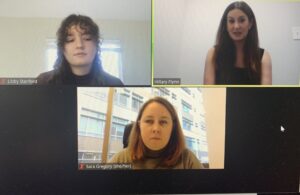
Above: The new Post and Courier Ed Lab team — Libby Stanford, Hillary Flynn, and Sara Gregory — gathered to talk about their work so far, which lately includes stories on virtual learning returning and school staffing issues in South Carolina. (H/T AL.com Ed Lab’s Ruth Serven Smith)
🔥 Let’s all remember the education reporters who are covering this week’s school shooting. “This is the first school shooting I’ve had to cover in my four years as an education reporter,” tweeted the Detroit Free Press’s Lily Altavena. “It is as terrible and confusing as many have described.” Some other education reporters covering the story include the New York Times’ Dana Goldstein, the Washington Post’s Laura Meckler, the Chalkbeat Detroit team, and the WSJ’s Ben Chapman.
🔥 Departures: After almost four years on the beat, WBEZ Chicago education reporter Adriana Cardona-Maguigad is moving on to another position at the station. The NYT’s recently named education reporter Sarah Mervosh announced that her new baby has arrived and she’s going on leave. Congrats to her, condolences to us. Come back soon, Sarah!
🔥 New hires: Congrats to Kae Petrin, Chalkbeat’s newest data viz reporter. “I’m so honored to join the excellent newsroom covering education across the U.S.,” they tweeted. Congrats to The Grade contributor Amy Silverman, who’s joining KJZZ Phoenix public radio.
🔥 Jobs: WBEZ Chicago is hiring an education reporter to replace Cardona-Maguigad. Chalkbeat is hiring two new story editors to cover mornings and evenings. EdSource is hiring two journalism residents in the Central Valley in California and Los Angeles. The Seattle Times Ed Lab is hiring a reporter. WBUR Boston public radio is still looking for a new education editor. The Wall Street Journal is still looking for an education reporter to cover K-12 schools nationwide.
🔥 New follows: Some of my latest Twitter follows are EdSource higher education reporter Ashley A. Smith, the Virginia Pilot’s Sierra Jenkins, who just started last month, and Idaho Statesman education reporter and Report for America fellow Becca Savransky.

EVENTS, RESOURCES
Above: Curious about the role education will play in the midterm elections? Join U.S. News education reporter Lauren Camera and experts on Dec. 13 at 1 p.m. ET.
⏰ Know a journalist who’s been covering education for two years or less? Encourage them to apply for EWA’s 2022 New to the Beat orientation and mentoring program. Deadline is Tuesday, Dec. 7!
⏰ Resources: If you haven’t already, you might subscribe to John Bailey’s daily COVID Policy Briefing newsletter. And if you’re interested in the Boston area, check out this smart Friday morning newsletter from the Boston Schools Fund, which addresses key issues like enrollment declines. In the latest Burbio update, take a look at where mental health school closures are happening — they are concentrated in certain states like North Carolina.
⏰ Congrats: The Hechinger Report has been on a roll lately with big, ambitious projects — including this oral history of the third year of pandemic schooling. The Atlantic’s Adam Harris, whose book “The State Must Provide” — about inequality in U.S. higher education — was included in NPR’s Best Books of 2021 list. He’s also been signed to write a second book.
THE KICKER

Did you ever die of dysentery in school? Props to Greg Toppo who wrote one of my favorite stories this week about the 50th anniversary of “Oregon Trail” and its use in schools.
That’s all, folks. Thanks for reading!
Reply to this email to send us questions, comments or tips. Know someone else who should be reading Best of the Week? Send them this link to sign up.
Using Feedly or FlipBoard or any other kind of news reader? You can subscribe to The Grade’s “feed” by plugging in this web address: http://www.kappanonline.org/category/the-grade/feed/.
Read more about The Grade here. You can read all the back issues of The Grade’s newsletter, Best of the Week, here.
By Alexander Russo with additional writing from Colleen Connolly.
ABOUT THE AUTHOR

Alexander Russo
Alexander Russo is founder and editor of The Grade, an award-winning effort to help improve media coverage of education issues. He’s also a Spencer Education Journalism Fellowship winner and a book author. You can reach him at @alexanderrusso.
Visit their website at: https://the-grade.org/