In this week’s newsletter: Things are looking more normal than they have in over two years — so far, at least. Meanwhile, reporters in Texas reveal the surprising origins of last year’s headline-grabbing book bans. (They didn’t come out of a broad-based parent movement.) A veteran magazine writer shares tips on how to cover hot-button issues and get great quotes from sources. (Curiosity is key.) And one journalist checks off the last box on his ed reporter initiation list.
MOSTLY BACK TO NORMAL
The big story of the week, according to us:
So far, so good for most students, parents, and teachers. Over half of students are back in the classroom, according to Burbio. Teacher shortages are a major factor in just nine states, according to a new study. Schools are largely open in-person full-time with mask mandates mostly eliminated (except in Head Start and a few places like Philadelphia and Milwaukee). There are lots of challenges ahead, but for now at least the mood is cautious optimism.
🔊 As a new year starts, schools prepare for fewer masks, more learning and joy (NPR)
🔊 Teachers head back to school with optimism and some worry (Chalkbeat)
🔊 Bracing for the Worst, Hoping for the Best: A Country Holds its Breath as Children Return to School (US News)
🔊 A ‘National Teacher Shortage’? New Research Reveals Vastly Different Realities Between States & Regions (The 74)
🔊 ‘A little more normal’: Berkeley kids go back to school (Berkeleyside)
🔊 After two pandemic years, this Indiana school feels closer to normal (WFYI)
🔊 Schools in Mississippi face another year in the shadow of the pandemic (NPR)
Other big stories from the week: The universal free lunches of the past two years are ending. California has created its own free lunch program, but in most districts in the country, parents are having to apply for free or reduced-price lunches. Some families have opted for full-time virtual learning, including some Uvalde families. (Others, including some special ed students, seem not to have much of a choice.) Grades and test scores show some improvements — but assignments have gotten easier, test score improvements aren’t even, and gaps remain in key areas like literacy. A few schools are banning students’ cell phones.
BEHIND TX BOOK BANS; MIXED STUDENT RECOVERY
The best education journalism of the week, according to us:
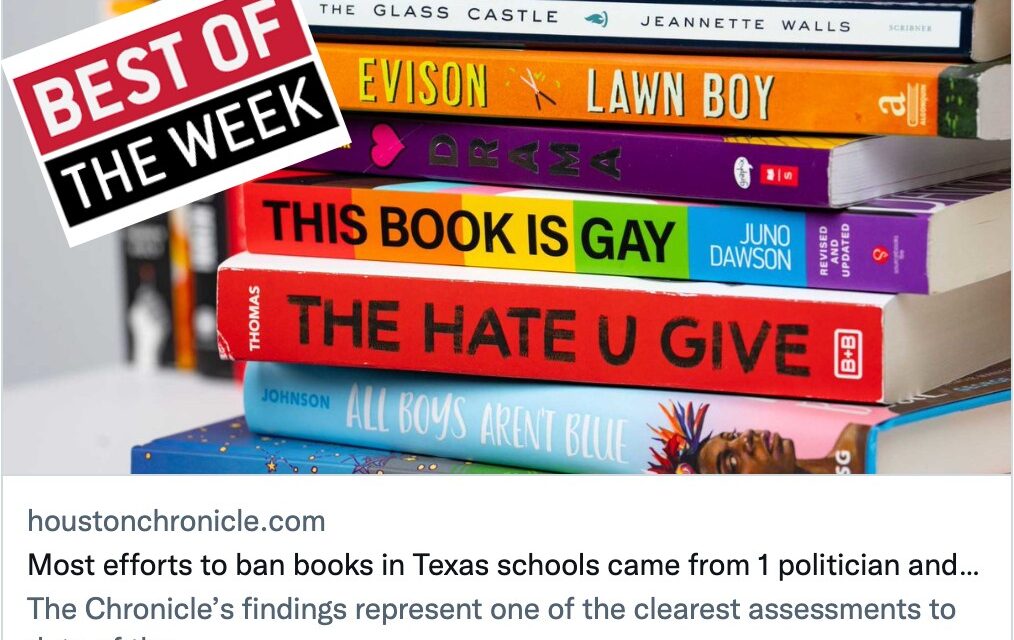
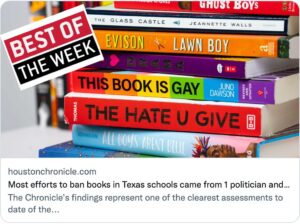
🏆 BEST: The best story of the week is Most efforts to ban books in Texas schools came from 1 politician and GOP pressure, not parents by Hannah Dellinger and Alejandro Serrano in the Houston Chronicle. Dellinger and Serrano compiled a database with more than 2,000 book reviews, challenges, and bans to report this story and found that — contradictory to the notion of a broad-based parents’ rights movement — the real culprit of the state’s headline-grabbing bans last year was a much smaller minority of politicians. Two-thirds of the book reviews — most of which occurred in the 2021-22 school year — emerged after one elected official (state Rep. Matt Krause) asked districts to look for so-called inappropriate books on their shelves from a list he circulated. Most districts ignored the request for book reviews, and a total of 269 books ended up being removed. Kudos to Dellinger and Serrano for digging deeper and finding out what was really going on behind the scenes. More reporters should follow their lead.
🏆 RUNNER-UP: This week’s runner-up is Schools are in person. Learning pace is picking up. Needs remain. by Chelsea Sheasley in the Christian Science Monitor. This story does a great job at combining research on learning loss and progress, personal stories of students’ successes and struggles, and where it all connects with the influx of one-time ESSER funds. It’s a big feat, but Sheasley pulls it off, starting with an excellent metaphor comparing students to athletes trying to run a marathon after taking two years off from running. They’ve lost their stamina. Sheasley also writes about how some students are making strides, but the road ahead remains steep. The extra tutoring and summer school that some districts are providing with ESSER funds may not last long enough to help students catch up, which could take five years. Sheasley does a great job at giving nuance to the recovery story and highlighting the bright spots as well as the areas that still need improvement.
BONUS STORIES:
🏆 Are schools overdoing it when it comes to mask mandates? (CNN)
🏆 National Head Start Association says COVID-19 rule disruptive to programs (K-12 Dive)
🏆 Youth mental health is in crisis. Are schools doing enough? (AP)
🏆 In urban districts, a new embrace of career and technical programs (Chalkbeat in the Washington Post)
🏆 Gifted Summer Programs Skew White & Wealthy. Not Baltimore’s — And It’s Free (The 74)
🏆 What’s Actually Being Taught in History Class (New York Times)
🏆 One family’s epic fight against Sandy Hook conspiracies, Alex Jones, and those who deny their son ever lived (Boston Globe Magazine)
🏆 The Surprising State Where Kids Are Making a Reading Comeback (EdPost)
‘BE MORE CURIOUS, LESS FURIOUS’
New commentary from The Grade
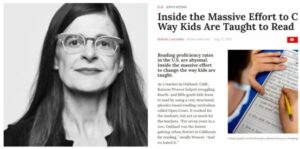
Last Friday’s TIME feature story, Inside the Massive Effort to Change the Way Kids Are Taught to Read, set off a firestorm among educators and parents who are eager to see schools reconsider the balanced literacy instruction that has long dominated American schools.
If you haven’t read it already, do yourself a favor. Then come back here and check out this week’s new interview, in which the reporter who wrote the piece explains how she found ways to add to the story, how the NAACP has recently gotten involved, and how best to write about controversial topics. Her advice? “Be more curious than furious.”
Want to learn more about this kind of approach? Watch Solutions Journalism Network co-founder David Bornstein on CNN explaining the importance of writing about what’s working as well as what’s going wrong (which you already do). The sky isn’t always falling everywhere.
Follow @alexanderrusso for thought-provoking commentary on education journalism all day, every day.
PEOPLE, JOBS
Who’s doing what, going where
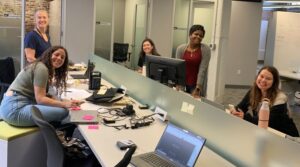
Above: The AL.com Ed Lab (and Report 4 America) is in the house! Section editor Ruth Serven Smith shared the office reunion pic, featuring (from left) reporters Savannah Tryens-Fernandes, Trisha Powell Crain (standing), Rebecca Griesbach, Kalyn Dunkins, and Sarah Swetlik.
🔥 Layoffs: Gannett laid off dozens of reporters after a bad earnings report, and at least two education journalists identified themselves as among them: the Bloomington (Indiana) Herald-Times’ Christine Stephenson and the Athens (Georgia) Banner-Herald’s Stephanie Allen. Education reporters who’ve been laid off can DM Palm Beach Post education reporter Kati Kokal to access “a team that’s working on community aid needs (networking, food assistance, insurance needs, etc.) regardless of shop union status.” You can also follow this thread from EWA’s Kavitha Cardoza on freelance opportunities for laid-off education reporters.
🔥 Career moves: The Mercury News’ Maggie Angst — the journalist behind the impressive investigation into the death of a child despite repeated entreaties to school officials — is leaving the paper. No word yet on what she’ll be up to next. Ed reporter Kayla Jimenez recently left the same paper and is now at USA Today. (Apply for Jimenez’s old job as a schools reporter at the Mercury News.) As far as we know, there’s still no word on who’s getting hired at the Boston Globe, who the new education editor at USA Today is going to be, or whether there are going to be any more hires on the AP education team.
🔥 Media appearances: The CT Mirror’s Ginny Monk was on WTIC Connecticut to talk about her story on the Kids Count data on student mental health. The Dallas Morning News Ed Lab’s Meghan Mangrum was on NBC DFW to talk about the challenge of finding teachers for Texas schools. The Washington Post’s Hannah Natanson was on the paper’s Post Reports podcast to talk about teacher shortages. NPR’s Cory Turner was on All Things Considered, talking about the first day of school in Jackson, Mississippi.
EVENTS, RESOURCES
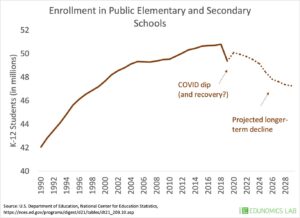
Above: Looking at this USDE map showing projected student enrollment, it seems clear we’re in a kid shortage as much as we’re in a teacher shortage. (H/t Chad Aldeman.)
⏰ ICYMI: Chalkbeat’s Kalyn Belsha moderated a panel discussion with youth leaders following the release of the documentary “Let the Little Light Shine,” now playing in Chicago. Marguerite Roza from the Edunomics Lab spoke about the ESSER funding cliff, inflation, and enrollment declines in a webinar.
⏰ Podcasts: On the Media had an episode on what it means to ban a book and who has the right to choose what students learn. On All Things Considered, host Michel Martin interviewed Morehouse administrator Walter Kimbrough about the historic jump in enrollment at HBCUs. In case you missed it last week, Marketplace had a segment on schools getting creative to boost attendance.
⏰ New reports & studies: USA Today found that just 12 of 500 mass shootings since 2006 took place on campus. A new report from the Economic Policy Institute shows that the “teacher pay penalty” — the gap between teacher pay and the salaries of their non-teacher college-educated peers — has hit a new high. A new report from TNTP shows that schools with more students in poverty assign more below-grade level work than more affluent schools — and it’s impacting literacy rates. Education Next has a report on parental anxieties over student learning dissipating as schools relax COVID measures. And a Gallup poll shows that the public is divided on student COVID vaccine requirements.
⏰ Books: Anya Kamenetz’s new book “The Stolen Year” is out next week! “I’ve been doing press interviews this week and they’ve been pretty emotional,” she tweeted. “Parents, caregivers and teachers went through a lot. So did kids.” Read a glowing review of the book in the San Francisco Chronicle and a more mixed review in EdSurge. And good news for Adam Harris fans: paperback copies of the Atlantic reporter’s book “The State Must Provide” are now available.
THE KICKER
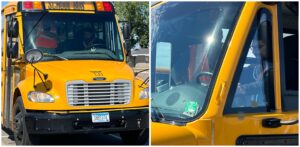
Call him Mr. Bus Driver. The Minneapolis Star-Tribune’s Eder Campuzano says he’s now “fulfilled my final rite of passage as an education reporter. Ya boy is legit now.”
That’s all, folks. Thanks for reading!
Reply to this email to send us questions, comments or tips. Know someone else who should be reading Best of the Week? Send them this link to sign up.
Using Feedly or FlipBoard or any other kind of news reader? You can subscribe to The Grade’s “feed” by plugging in this web address: http://www.kappanonline.org/category/the-grade/feed/.
Read more about The Grade here. You can read all the back issues of The Grade’s newsletter, Best of the Week, here.
By Alexander Russo with additional writing from Colleen Connolly.
ABOUT THE AUTHOR
Alexander Russo
Alexander Russo is founder and editor of The Grade, an award-winning effort to help improve media coverage of education issues. He’s also a Spencer Education Journalism Fellowship winner and a book author. You can reach him at @alexanderrusso.
Visit their website at: https://the-grade.org/