Pursuing equity for students is not enough to address racism within a school system. Leaders must also examine how racism affects educators.
For the last five years, the leadership in Maine’s Portland Public Schools (PPS) has prioritized equity within the school system. The Portland Promise, the district’s comprehensive plan, which went into effect in 2017, states that “Portland Public Schools is vigilant in supporting each and every student’s particular path to achieving high standards, rooting out systemic or ongoing inequities.” This goal is notable, not only for its unambiguous commitment to giving all students what they need, but also for acknowledging the role of institutional racism and other systems of oppression in creating barriers to the success of students of color.
Perhaps because Portland is known as a progressive city in a state recognized for its bipartisanship and independence, these efforts have been relatively uncontroversial. Led by Superintendent Xavier Botana, who came to the U.S. as a Cuban refugee, the district’s public schools are well respected, and their student enrollment is one of the most diverse in the Northeast. And the PPS school board has become increasingly diverse and more representative of the city’s population.
Although at first glance it might appear that PPS is poised to make tremendous advances in anti-racist equity work, the city’s and district’s progressive identity has been both an asset and a barrier. Thanks in part to the district’s ongoing equity initiatives, many of the district’s staff are able to define racism and recognize its negative impacts on students. However, many of these same staff members have balked at the notion that PPS schools can be inhospitable for educators of color. At the same time, many educators of color, especially those with more than a decade in the district, have expressed deep frustration with the gap between the district’s professed commitments to equity and its ongoing failures to address the institutional and interpersonal racism that they’ve experienced. Engaging in anti-racist equity work meant showing the majority white staff that, indeed, racism is alive and well throughout PPS and that educators of color often navigate hostile working conditions. Our work listening to educators of color and sharing their stories provides an example of how districts can raise awareness about their experiences.
Demographic transformations
Like many districts in the U.S., PPS has undergone significant demographic changes in the past 40 years. In 1989, the student population in Maine’s largest city was 90.5% white. In 2010, it was 64.8% white. In the 2020-21 school year, PPS’s student body was about 52% white, 29% Black, 9% Hispanic/Latinx, 6% multiracial, 5% Asian/Asian American, and less than 1% Native American/Indigenous. More than 63 languages are spoken by students and families in the district. Portland is a recognized refugee resettlement community, and substantial demographic changes have occurred following waves of global conflict. Portland’s low crime rate, reputation as a welcoming community, and strong public schools have made it a desirable locale for many immigrants already in the U.S.
As is the case in many communities, the demographics of PPS teachers have not kept pace with changes in its student population. Keenly aware that a diverse teaching staff is necessary to meet the district’s equity goals, Barbara Stoddard, executive director of human resources for PPS, made hiring educators of color a priority. She attended out-of-state job fairs and expanded the educator of color pipeline by creating internship opportunities and credentialing supports for immigrants, refugees, and asylum seekers. She also introduced an equity hiring toolkit and attempted to ensure that a person of color was present on every hiring committee. As a result of these efforts, PPS has made modest, but insufficient progress in hiring more staff of color. Since 2016, the percentage of all staff of color has increased from 7% to 14%, and teachers of color now make up 9% of the district’s lead educators.
Engaging in anti-racist equity work meant showing the majority white staff that, indeed, racism is alive and well throughout PPS.
Stoddard knew that if these efforts were to be fruitful in the long term, hiring a diverse educator workforce would not be enough. She would also need to make retention of teachers of color a focus of her efforts. A policy brief from the National Educational Policy Center recommends that school districts interested in recruiting and retaining educators of color conduct in-depth and place-based studies to understand the experiences of educators of color already in the district (Philip & Brown, 2020). With all of this in mind, Stoddard began taking the steps that brought the three of us together to research what was happening in the district and share our findings.
Show us the inequity
Stoddard reached out to one of us (Doris Santoro, with whom she had collaborated on recruitment efforts) to craft a research proposal that would amplify and analyze the voices of PPS educators of color and tap into their leadership to understand how to make sure PPS is a district where they want to stay. When the district hired and compensated Julia Hazel and Alberto Morales, two educators of color who were already recognized as district leaders, to collaborate on this research, our team was complete. Together, the three of us created an in-depth interview protocol to gather expert insights from PPS educators of color. (Santoro identifies as white, Hazel as Black, and Morales as Puerto Rican.)
Amid the pandemic, from January to June 2020, we interviewed more than 40% of the educators of color working in PPS (including paraprofessionals and other support staff) about their experiences working in the district and their perceptions of the district’s equity efforts. All participants were compensated for their time by the district. Santoro’s work was supported by her role in higher education, and she was not compensated by the district. The fact that she undertook this work as research, and not consulting, bolstered participants’ perceptions of the integrity of the study and the subsequent professional development.
Our research showed that PPS’s commitment to equity for students attracted educators of color to the district, but highly racialized school climates and policies impeded their ability to thrive. We wrote a publicly available report that described these educators’ experiences (Santoro, Hazel, & Morales, 2021) and began the process of transforming the professional culture and context. Through this process, we are learning that how the research is shared is just as important as the research itself.
It’s happening here
Ain Grooms, Duhita Mahatmya, and Eboneé Johnson (2021) have argued that interventions that only address the retention of educators of color miss the root cause: institutionalized racism. We wanted to be sure that the PPS retention efforts did not neglect this crucial aspect of educators’ experiences. Perhaps especially because Portland is a progressive city and district, we had to show white leaders and educators that institutionalized and interpersonal racism is, in fact, happening here. It’s not only happening in the district, it’s happening in their buildings. All of them. Educators of color reported uncompensated additional identity-based labor, hurtful and isolating stereotypes, and bias in hiring processes.
PPS’s commitment to equity for students attracted educators of color to the district, but highly racialized school climates and policies impeded their ability to thrive.
Most of the educators we interviewed feared that our report would ultimately become just another well-meaning effort that would end up gathering dust. We didn’t want that to happen, but we knew that we’d need to prepare for deflection and denial from white staff. One key to opening white staff members’ eyes to the impact and pervasiveness of racism would be firsthand accounts of the pain and frustration of their colleagues of color. So in our summary of key findings, distributed digitally and in print (Santoro, Hazel, & Morales, n.d.), we highlighted representative, anonymized narrative scenarios that also served as the basis for building-level professional development. Here are a few examples:
Mr. H takes a deep breath in his parked car. Honestly, he’s not sure if he can do it. He readies himself to face another day where he feels like he must prove to his colleagues that he is qualified to teach children. Frequently, other teachers physically shield children from him, like they are endangered by his presence, as if they were clutching a purse.
Mx. W prepares their resume. Again. Despite working in the district for many years, they still cannot manage to be hired as a classroom teacher. The issue of their accent comes up. Again. They are told they do not have experience. Again. Then, they watch a young, white teacher be hired for the position. Again.
George Floyd is murdered, but there is silence. Not a single colleague has reached out to Ms. P to check on her well-being. Ms. P wonders: Do they not care about the killing of another unarmed Black man? Do they not care about me? Do they not care about our Black students? Later that month, the principal reaches out and asks Ms. P if she will draft the school’s Black Lives Matter statement.
While these scenarios felt familiar to many staff members of color, many white staff members expressed surprise, skepticism, or dismay. White staff and building leaders regularly claimed that these situations couldn’t be happening in their buildings, even though our data revealed these experiences were pervasive. In fact, participants in staff development sessions frequently needed to be reminded that the scenarios were anonymized experiences of actual PPS staff members, not imaginary vignettes.
We also shared two metaphors to communicate our findings in a way that focused on the impact of racism: The smog of cultural racism (Tatum, 2003) represents the racism evident in interpersonal interactions, and the impenetrable wall of whiteness (Ahmed, 2012) represents institutionalized racism that served as a barrier to necessary cultural and structural changes. Realizing that the metaphors still might be too abstract, we worked with an artist to illustrate how educators of color experienced these phenomena. These illustrations have been foundational tools for districtwide professional development in which white staff share what they notice about the drawing. Notably, they described pain and isolation, and while some complained that these images were too disturbing, most reported that the illustrations were key to understanding the pain and exhaustion of their colleagues of color. For educators of color, the metaphors quickly became a shorthand to express the pervasive interpersonal and institutionalized racism they navigated regularly.
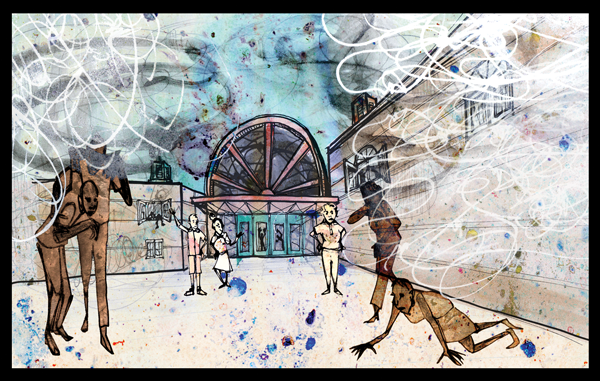
The smog of cultural racism. Illustration by Janet Antich.
Revealing the truth and limiting harm
Sharing this difficult information with PPS staff has been a deliberate, coordinated process. The district has remained committed to transparency and invited our collaboration on a comprehensive rollout plan that would prioritize the needs of staff of color, educate their white colleagues, and set the stage for ongoing equity work.
The research we conducted enabled us to document the harm already experienced and to offer specific recommendations for remedying it. However, this work came at the cost of asking educators of color to relive difficult moments and confront, yet again, the racial ignorance of white colleagues. We sought to mitigate the harm by engaging in ongoing conversations with educators of color and slowing down our timeline so we could hear and address their concerns. Participants in the study reviewed the report with Morales and Hazel prior to its districtwide distribution, and we sought their input on how to share the findings.
The dissemination of our findings took place in spring 2021. The district was working on a hybrid model at the time; classes were divided and students attended class in-person twice per week and staff were working in buildings. However, most staff meetings took place over Zoom to reduce congregating in large groups. Normally, PPS district leadership promotes building-level autonomy for constructing professional development programs. But the educators of color in the district were worried about the reactions from their white colleagues and how these reactions might affect their professional lives, so they asked that the district provide more structure for disseminating the findings. To honor their request, we created and modeled a train-the-trainer session discussing the report that building-level equity teams could adapt. Building teams then submitted plans for their discussion of the report for approval by the district’s director of diversity, equity, and inclusion. Using our model session, building leaders worked with equity team members to tailor professional development sessions that included presentations to the entire school staff, breakout groups facilitated by equity team members, and follow-up plans.
During the building-level required professional development about the report’s findings, Morales and Hazel held optional district-sponsored sessions for staff of color, who could opt out of the general sessions. Staff members who attended these sessions took the opportunity to share their own experiences of racism and what they needed from their white colleagues and building leaders. These sessions revealed the need for opportunities for healing and solidarity, and as a result of this feedback and the report’s recommendations, the district now offers healing sessions for educators of color with a licensed clinical social worker and affinity groups for employees of color and LGBTQ+ staff.
Finally, Santoro offered one white-only and two open-to-everyone optional processing sessions for race-based learning and reflection. These sessions were created so that white staff members with strong reactions could process what they were learning without further exposing staff of color, including Morales and Hazel, to any racial ignorance and resentment that arose. The three sessions quickly filled, and Santoro offered 20 more over the course of spring 2021. We find it encouraging that more than 10% of the PPS staff participated in this optional professional development, outside school time, without compensation or contact hours, and amid the pandemic. These sessions created opportunities to develop empathy, process individuals’ roles in this culture, and articulate action steps to improve working conditions for staff of color. The majority of the feedback from these sessions indicated that staff want more opportunities to reflect in small groups and to identify anti-racist actions within their reach.
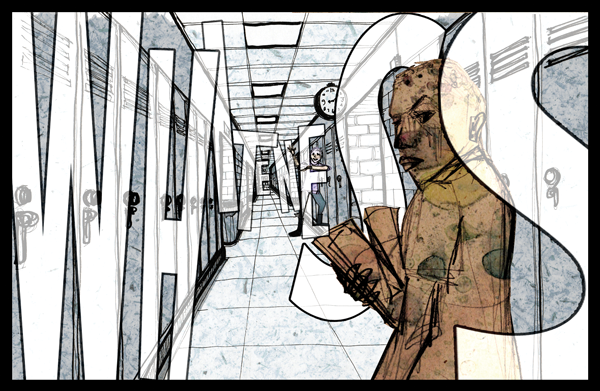
The impenetrable wall of whiteness. Illustration by Janet Antich.
A basis for transformation
Recommendations from our report provided support for some efforts that were already underway, such as development of a hiring toolkit that centered on equity, differentiated professional development, and district-sponsored affinity groups. District and building leaders have repeatedly commented that the report and its recommendations gave them leverage to pursue deferred budget priorities and the confidence to reassert the significance of equity-oriented policies. The district’s commitment to this work renewed confidence in district leadership among BIPOC (Black, Indigenous, and people of color) educators, and this trust has created opportunities for them to assert their leadership.
The 2021-22 budget included a new position of director of BIPOC career pathways and leadership development, which was approved by the PPS board, city council, and city voters. Hazel was hired for this role and, in her first year, she established a mentoring program that paired 22 beginning teachers of color with more experienced mentors of color. In this position, she runs the district’s BIPOC affinity group and serves as a resource for all staff interested in recruiting and retaining educators of color. She provides individualized support to staff members of color needing guidance regarding their roles, their professional goals and pathways, certification, and how to apply for positions.
Foundations have recognized the district’s commitment to equity for staff and awarded PPS grants to extend this work. For example, the New Schools Venture Fund will provide funding to support paraprofessionals pursing teacher certification. About 25% of the district’s paraprofessionals are people of color, compared to 6% of teachers, and there are currently 11 paraprofessionals enrolled in a credentialing program at a local community college. The district also received funding from the Barr Foundation and The New Teacher Project to conduct a talent landscape analysis to better understand the current workforce and implications of district hiring practices.
The relationship between district and building leadership and educators of color will require ongoing outreach, listening, and healing.
Additional district initiatives that arose directly from the report’s recommendations include monthly mutual support and healing sessions for educators of color and a professional learning group for principals on cultivating anti-racist professional cultures. The district is also supporting a cohort of eight staff members, 50% of whom are educators of color, in pursuing building leader certification. In spring 2022, Morales was promoted to assistant principal for one of the city’s two comprehensive high schools.
Throughout the process, district leadership listened and responded to educators of color who expressed what they needed from leaders and white colleagues. Their clear requests for accountability, for thoughtful professional development on the report in every building and department, for separate spaces for educators of color to process together, and for explicit naming of action steps taken and planned were honored by the district leadership. District leaders’ posture of humility and responsiveness enabled educators of color to say what they had long suppressed and represent the beginning stages of establishing the trust necessary to build an anti-racist culture.
The report’s analysis of interview data linked the experiences of educators of color across the district. Several educators of color remarked that they thought they were the only ones with these experiences. Their former feelings of isolation have been transformed to become a sense of solidarity as educators of color have begun to use their affinity groups to understand the power and expertise they have to support each other’s professional advancement and bring about change in the district.
The work continues
PPS’s commitment to pursue and publish this research has been a source of pride for staff, while the specific findings have been a source of despair and shame. Many educators of color remain hypervigilant and skeptical, wondering if PPS’s leadership and staff will sustain the ongoing work of dismantling institutionalized racism or if the initial expressions of commitment were merely playing to the progressive political zeitgeist. The good faith that the district has been able to demonstrate to its educators of color is fragile. The relationship between district and building leadership and educators of color will require ongoing outreach, listening, and healing.
Despite the district’s important strides, this process has revealed the areas where less progress had been made than previously believed. While some white staff members have sophisticated understandings of race and racism, leaders sometimes overestimated what many of their staff knew about these issues. And some staff of color, especially those not raised in the U.S., have been skeptical about the experiences of racism their colleagues described. These differences point to the need to continue offering differentiated professional development opportunities. But some staff — both white staff members and staff members of color — are critical of occasional professional development opportunities differentiated by race and the district’s support of affinity groups.
Transformative equity work requires confronting and then dismantling the policies and practices that benefit those of us who are white. White staff and leaders often reflexively shift equity conversations to focus on students, even when the topic is the interpersonal and institutionalized racism their colleagues experience. To some degree, this reflex may be a natural reflection of teachers’ desire to focus on their students’ needs. However, it may also be that equity is easier to embrace when it involves an act of service to someone with less institutional status. Focusing on creating equitable conditions among adults causes more friction because it may require soberly giving up established routines and abandoning settled knowledge for the benefit of other adults. This friction is where the work continues, especially for progressive communities like Portland.
References
Ahmed, S. (2012). On being included: Racism and diversity in institutional life. Duke University Press.
Grooms, A.A., Mahatmya, D., & Johnson, E.T. (2021). The retention of educators of color amidst institutionalized racism. Educational Policy 35 (2), 180-212.
Philip. T.M. & Brown, A.L. (2020). We all want more teachers of color, right? Concerns about the emergent consensus. National Education Policy Center.
Santoro, D.A., Hazel, J., & Morales, A. (2021, January). Educators of color insights report. Bowdoin College & Portland Public Schools.
Santoro, D.A., Hazel, J., & Morales, A. (n.d.). Educators of color insights report summary. Bowdoin College & Portland Public Schools.
Tatum, B.D. (2003). Why are all the Black kids sitting together in the cafeteria? And other conversations about race (5th ed.). Basic Books.
This article appears in the September 2022 issue of Kappan, Vol. 104, No. 1, pp. 22-27.

ABOUT THE AUTHORS

Doris A. Santoro
Doris A. Santoro is professor and chair of the education department at Bowdoin College, Brunswick, ME. She is the author of Demoralized: Why Teachers Leave the Profession They Love and How They Can Stay.
Julia Hazel
Julia Hazel is director of BIPOC career pathways and leadership development for Portland Public Schools, Portland, ME.
Alberto Morales
Alberto Morales is assistant principal of Portland High School in Portland Public Schools, Portland, ME.