
Understanding the links between trauma, disengagement, and disruptive behavior can enable teachers to break the cycle that leads to student dysregulation.
At a Glance
- If an activity provokes anxiety or triggers a student’s trauma, they may disengage from the activity and engage in disruptive behavior.
- Negative thoughts could be at the root of students’ disengagement and dysregulated behavior.
- Traditional activities to help students regulate their behavior, such as sensory breaks, may cause students to dwell on negative thoughts.
- Negative thoughts rising from anxiety or trauma may be greatest when students engage in independent work, without teacher support.
- Setting students up for success with independent work can help break the cycle that leads to disengagement and dysregulated behavior.
- If a student is stuck in negative thoughts, an activity to distract them from the negative thoughts can help them reengage.
Gone are the days when a teacher has only one hard-to-reach student in their class. Today’s classrooms are likely to include several students who need extra support. Early onset, prevalence, and complexity of mental health disorders among students are increasing (Geiser et al., 2019; Hertz & Barrios, 2020). Specifically, teachers are seeing growing numbers of students with autism (estimated to be 2.77% of U.S. students); anxiety (20-30%); depression (20%); ADHD (11%); and trauma (50-75%) (Cardona & Neas, 2021; Fu et. al., 2024; Maenner et al., 2023).
When students with mental health challenges become dysregulated, the resulting behaviors can interrupt lessons, hinder the learning experience for their peers, and lead to frequent removals from the classroom. These disruptions ultimately impede the development of a cohesive, connected, and engaged learning environment, where optimal engagement reflects students’ active involvement and participation in both academics and the classroom community.
Teachers across all grade levels report that disengagement and dysregulation have noticeably increased in intensity (Halitoglu & Ozcinar Uzunboylu, 2025; Stephens, 2025). In high schools, students roam the hallways, convene in the bathroom during class, and sleep or text in class. Some don’t come to school at all. Middle school students often engage in disruptive behavior such as arguing with teachers, calling out, and walking out in the middle of class. Elementary teachers see students yelling, displaying aggression, throwing objects, and running out of the room.
Conventional methods for managing distressed students often require significant time, remove students from the classroom, or depend on counselors or support staff, which are resources that are limited in many districts. Common strategies, such as movement breaks and sensory activities, may not lead to lasting calm because they do not fully address students’ emotional needs. When we shift away from these strategies and instead approach student engagement through a trauma-informed lens, we can solve problems in the moment and implement strategies that are likely to prevent future escalation, increase ongoing engagement and regulation, and create a positive learning community for all students.
How trauma and anxiety lead to disengagement
When a student makes comments like “This is stupid, I’m not doing it!” or puts their head down, it is easy to assume that they are unmotivated or choosing not to work. However, the underlying cause of disengagement is far from a willful choice.
Trauma and clinically significant anxiety can affect a student’s ability to learn and demonstrate knowledge in several ways. Once they are trauma-triggered or anxious, students no longer have full access to the frontal lobe of their brain — the part that supports most skills required to execute an academic task, including all executive functioning skills, sustained attention, future planning, and working memory (Ireton, Hughes, & Klabunde, 2024). This leaves students stuck and unable to engage.
Additionally, when students are trauma-triggered or anxious, their thinking becomes negative and inaccurate (Dehghan Manshadi, Neshat-Doost, & Jobson, 2024; Mansueto et al., 2021; Yapan, Türkçapar, & Boysan, 2022). A student whose brain is flooded with negative thoughts, such as “This is too hard for me,” “I don’t have the skill to do this activity,” or “This is going to take forever” is highly likely to disengage and avoid tasks.
Most strategies used to reengage students fail to recognize that negative thinking is often the root cause of disengagement in students with histories of anxiety or trauma. If negative or inaccurate thoughts are the real reason a student can’t initiate a writing task, offering the student a graphic organizer is not going to help.
Avoiding a reactive cycle
Engagement and regulation have a bidirectional relationship: Left unaddressed, disengagement, often escalates to dysregulation. Once students are dysregulated, a return to meaningful engagement becomes unlikely (see Figure 1).
For some students, anxiety often triggers this cycle. Many academic tasks can provoke anxiety in students, whether the challenge is real (i.e., the task is genuinely difficult) or perceived (i.e., the student believes it is too hard). This anxiety can lead to inaccurate thoughts and a skill loss associated with the frontal lobe. All of that can lead to disengagement. Without intervention, the disengagement may escalate into dysregulation and disruptive behaviors, interrupting learning for everyone.
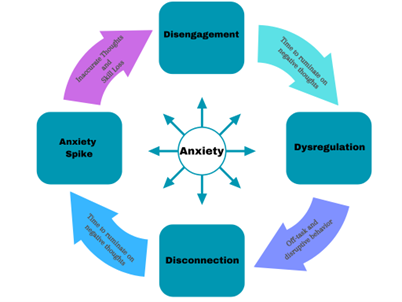
Figure 1. Disengagement/dysregulation cycle
Schools often intervene only after a student becomes dysregulated and focus solely on calming the student rather than actively reengaging them. This approach overlooks the fact that engagement itself is a regulation strategy. Many students with anxiety and trauma histories feel most calm and regulated when their thoughts are occupied (e.g., watching a class video, listening to a teacher read aloud, or being deeply immersed in a task).
Conversely, disengagement can quickly lead to dysregulation, manifesting as pacing, head-down behavior, hiding in the bathroom, or frequently leaving their seat, as this unstructured time allows negative thoughts to take hold. For students with trauma or anxiety, being alone with their thoughts can be destabilizing and unhealthy. Consider the experience of worrying about a loved one in the hospital: When immersed in work, the concern may fade, but the moment we pause, it pops to the top of our mind. Similarly, a disengaged student has more time to ruminate on negative thoughts, increasing their distress and dysregulation. By breaking this cycle and preventing the formation of negative thoughts and minimizing time for rumination, we can create a learning environment that supports both regulation and academic success.
Why common strategies often are not effective
For students with trauma histories, anxiety, or depression, traditional regulation strategies may not be effective and even can be counterproductive. These strategies, which include frequent movement breaks and sensory activities, are often unstructured, creating opportunities for rumination rather than relief, and don’t address the anxiety-provoking thoughts at the root of dysregulation. These thoughts include inaccurate beliefs about an academic task, misinterpretation of an event, or a sudden distressing memory.
Common regulation activities include having a teenager step into the hallway for a drink of water, asking a middle schooler to move to a standing desk or squeeze a fidget toy, or allowing a younger student to do jumping jacks in the hallway. However, these activities are counterproductive as they do not address the root cause of their dysregulation, separate them from the class, and the lack of structure is fodder for rumination. As a result, students may remain dysregulated and destabilized or escalate to more distressing behaviors, leading to prolonged time out of the classroom or an entire “bad day” where they never fully regain regulation as we never mitigated the underlying issue.
Prioritizing engagement to regulate
Engagement is a regulation strategy. When we prioritize engagement, students are more likely to stay on task, cooperate, remain in class, learn effectively, and feel connected to the classroom community. The subsequent success then leads to increased feelings of competence and belonging and positive associations with the academic experience and the class in general. This, in turn, results in an increased likelihood of engagement the next day (see Figure 2).
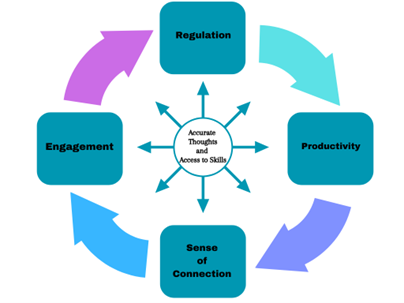
Figure 2. Engagement/regulation cycle
A key way to prioritize engagement is to set students up for success with independent tasks. The effects of anxiety and trauma are the most significant when a student is asked to do independent work. Negative thoughts about tasks may emerge as soon as the student views the materials, so we want to be thoughtful in what we ask students to do independently. Because teacher support can mitigate the effects of negative thoughts and inaccurate perceptions of the task. A student who is able to engage in a task with teacher support (e.g., following along in a whole group, participating in a small group, or working one-on-one with a teacher) may not be able to engage as successfully when working independently. Without understanding how negative and inaccurate thoughts hinder engagement, we may then assume the student is being unmotivated or lazy. Therefore, it is helpful to differentiate between a student’s instructional level work ability (i.e., with teacher support) and independent work ability (i.e., without teacher support).
For example, when asked to silently read a social studies text and answer two open-ended questions, Izzy starts to roam around the classroom and distract her peers. Yesterday, however, Izzy was able to answer a similar open-ended question with the teacher’s support, therefore her teacher assumes she’s not motivated to complete the task today.
In this situation, we need to ask, “How often does Izzy independently write the answers to open-ended questions?” Often the answer turns out to be “never.” That can lead us to suspect that open-ended questions may cause Izzy anxiety and disengagement unless she is receiving adult support. Making changes in how we ask her to show her knowledge could bypass the initial anxiety spike when she is working independently.
The value of successful independent work
During independent work time, it’s essential to give students tasks they can successfully engage with on their own. This prevents disengagement and dysregulation while fostering a sense of accomplishment. Teachers can get stuck in a cycle of giving students work they consistently disengage from, which leads to recurring dysregulation, which then requires a disproportionate amount of teacher time addressing it.
For the student, this cycle can feel like failing every day, leading to more negative thinking about the class or teacher with each unsuccessful day, resulting in even more anxiety, lost learning time, more disengagement, increased dysregulated behavior, negative feelings about the teacher and class, and less ability to complete the work in the future.
To stop the cycle, we need to collect work samples and observe what types of tasks a student can engage in independently. Independent Work Inventory (Table 1) is a valuable tool to identify an appropriate starting point. It lists tasks in two columns: input, for how students acquire knowledge, and output, for how they demonstrate their learning. The tasks are ranked from least to most likely to provoke anxiety. Through an interview or reflection on your own, teachers can use the inventory to guide their reflections such as “If you don’t prompt more production or on-task behavior, how many words will he write/read”? The activity list and ranking can be tailored for different students and specific grade levels as needed. For example, some students can engage with academic videos on their personal devices but will avoid reading a chapter book. Others may engage with a short paragraph but feel overwhelmed by multiple pages. On the output side, a student who leaves their paper blank might still be able to answer the question verbally when prompted by a teacher. Similarly, multiple-choice questions are often less intimidating than open-ended ones, causing less anxiety for students.
| Input (acquiring knowledge) | Output (demonstrating learning) |
|---|---|
| Watch a video | Verbally answer questions |
| Follow along with text read by software on a laptop | Drag-and-click laptop activity (no typing/writing requirement) |
| Read with only one sentence displayed at a time | Circle multiple-choice answers |
| Read with only one paragraph displayed at a time | Fill in the blank with a word bank |
| Read one page of text | Given a sentence starter, finish writing the sentence |
Assessing the student’s independent work level allows us to meet them where they are and promote accurate thoughts and engagement. If a student engages with a computer-based game (where they must click on the correct answer and the lights flash), but becomes agitated and disengaged with a worksheet, we must adopt a flexible approach to what independent work looks like for them.
Once we find the student’s entry point to successful engagement with independent work, we can gradually increase the difficulty. For example, if a student can engage with one paragraph at a time, we would start by breaking up a long text and giving them a paper or a screen with only one paragraph displayed at a time. After many days of success, we can add a sentence at a time, and eventually, over time, get the student to tolerate a full page of text. This should be a gradual process, paced based on data, that ensures students are engaged and learning while also increasing their tolerance and comfort for more anxiety-provoking tasks.
Regulation breaks
While we focus on preventing disengagement, we also need ways to help students who’ve become dysregulated so they can reengage quickly. Strategies that address the root causes of dysregulation can stop anxious thinking and help students regain access to the frontal lobe skills needed to reengage.
Students who struggle with negative thinking can be taught that their thoughts are fueling their dysregulation and distress. By stopping and distracting themselves from negative thought, they can reach a regulated state. The metaphor of a remote control is a nice way to illustrate this: “You’re currently stuck on a negative thought; you need to change the channel to regulate yourself.” Helpful regulation breaks that “change the channel” might include counting the green things in the room, reciting the alphabet backward, answering trivia questions, or trying to think of the last verse of a favorite song. Activities like these distract students from the negative thought, which can stop the anxiety and allow frontal lobe skills needed to engage in work, such as accurate thinking and regulation, to come back online.
Using the term “regulation breaks,” instead of movement or sensory breaks, can help teams remember to tailor the regulation strategy to the needs of students with anxiety and trauma (Minahan, 2014). Labels like sensory or movement breaks can prematurely assign a cause to dysregulation, which cannot be reliably inferred from behavior alone. The broader term regulation breaks allows data-based decision making to determine the most effective support whether sensory, movement-based, or cognitive distractions, while remembering that thought-based dysregulation is most common for anxious students.
Regulation breaks can be used proactively or in response to dysregulation. When applied reactively, it is essential to support student reengagement once they have stabilized. Otherwise, the disengagement-to-dysregulation cycle might start again. Meeting students at their current level of readiness, particularly within the context of independent work, can help students reengage, prevent further dysregulation, and maintain stability.
Engagement for regulation, connection, and growth
Rather than asking, “How do I get my student to regulate and behave?” we need to ask, “How do I support my student’s engagement?” By prioritizing engagement, we can break the cycle of students becoming anxious, then dysregulated and disconnected from the class community. Engagement helps prevent the negative impact of anxiety and trauma on learning, offering stability, regulation, and promoting mental well-being for students facing mental health challenges. Focusing on engagement first not only reduces the risk of dysregulation and disengagement but also fosters a stronger sense of connection to the classroom community. This sense of belonging deepens learning and supports both academic and emotional growth for the whole class.
References
Cardona, M.A. & Neas, K. (2021). Supporting child and student social, emotional, behavioral, and mental health needs. U.S. Department of Education.
Dehghan Manshadi, Z., Neshat-Doost, H.T., & Jobson, L. (2024). Cognitive factors as mediators of the relationship between childhood trauma and depression symptoms: The mediating roles of cognitive overgeneralisation, rumination, and social problem-solving. European Journal of Psychotraumatology, 15 (1).
Fu, J.N., Yu, W.B., Li, S.Q., & Sun, W.Z. (2024). A bibliometric analysis of anxiety and depression among primary school students. Frontiers in Psychiatry, 15, 1431215.
Geiser, K., Fehrer, K., Pyne, J., Gerstein, A., Harrison, V., & Joshi, S. (2019). San Mateo area teen mental health study. Research Brief. John W. Gardner Center for Youth and Their Communities.
Halitoglu, M. & Ozcinar Uzunboylu, Z. (2025). Teachers’ perspectives on unwanted student behaviors before, during, and after the pandemic: A classroom management evaluation. International Journal of Innovative Research in Education, 12 (1), 1-14.
Hertz, M.F. & Barrios, L.C. (2021). Adolescent mental health, COVID-19, and the value of school community partnerships. Injury Prevention, 27 (1), 85-86.
Ireton, R., Hughes, A., & Klabunde, M. (2024). A functional magnetic resonance imaging meta-analysis of childhood trauma. Biological Psychiatry: Cognitive Neuroscience and Neuroimaging, 9 (6), 561-570.
Maenner, M.J., Warren, Z., Williams, A.R., Amoakohene, E., Bakian, A.V., Bilder, D.A., Durkin, M.S., Fitzgerald, R.T., Furnier, S.M., Hughes, M.M., Ladd-Acosta, C.M., McArthur, D., Pas, E.T., Salinas, A., Vehorn, A., Williams, S., Esler, A., Grzybowski, A., Hall-Lande, J., … Shaw, K.A. (2023). Prevalence and characteristics of autism spectrum disorder among children aged 8 years — Autism and developmental disabilities monitoring network, 11 sites, United States, 2020. MMWR. Surveillance Summaries, 72.
Mansueto, G., Cavallo, C., Palmieri, S., Ruggiero, G.M., Sassaroli, S., & Caselli, G. (2021). Adverse childhood experiences and repetitive negative thinking in adulthood: A systematic review. Clinical Psychology & Psychotherapy, 28 (3), 557-568.
Minahan, J. (2014). The behavior code companion: Strategies, tools, and interventions for supporting students with anxiety-related or oppositional behaviors. Harvard Education Press.
Peetz Stephens, C. (2025, January 8). Is student behavior getting any better? What a new survey says. Education Week.
Yapan, S., Türkçapar, M.H. & Boysan, M. (2022). Rumination, automatic thoughts, dysfunctional attitudes, and thought suppression as transdiagnostic factors in depression and anxiety. Current Psychology, 41 (9), 5896-5912.
This article appears in the Spring 2026 issue of Kappan, Vol. 107, No. 5-6, pp. 51-55.

ABOUT THE AUTHOR

Jessica Minahan
Jessica Minahan is a licensed and board-certified behavior analyst, special educator, as well as a consultant to schools internationally. She is the co-author of The Behavior Code: A Practical Guide to Understanding and Teaching the Most Challenging Students (Harvard Education Press, 2012) and author of The Behavior Code Companion: Strategies, Tools, and Interventions for Supporting Students with Anxiety-Related or Oppositional Behaviors (Harvard Education Press, 2014).
Visit their website at: www.jessicaminahan.com