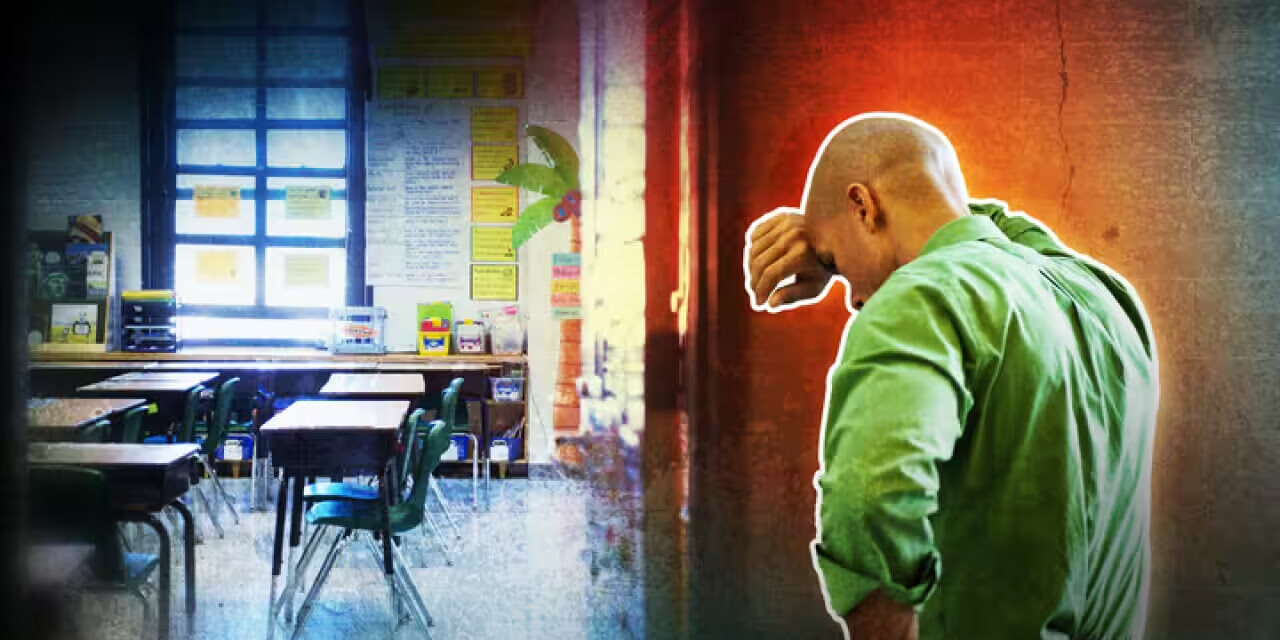
A career educator calls on parents and journalists to resist dismissing the everyday chaos that engulfs too many classrooms.
By Gail Johnson
If there has been one commonality among viewers of Netflix’s four-part series, “Adolescence,” it’s that most viewers want to dismiss the show as hyperbole.
This is particularly true for the second episode of the series, which centers on the main character Jamie’s school. This episode depicts students who are addicted to their phones and completely disengaged in school and learning, highlighting a significant issue in our educational systems and the harsh reality is that we are not flush with solutions.
I read about the second episode and when I first viewed it, I admittedly had a very defensive mindset. I have been working in public schools for 35 years as a teacher, Assistant Principal, Principal, and now 3 years as a substitute teacher. Though I frequently write about my concerns with schools, I am still protective of the institution, especially the staff.
However, on completion of this episode, I found little to defend and was quite impressed and depressed with how accurately the writers and actors portrayed the school and students.
The urge to dismiss a show featuring classroom chaos show makes total sense, because to face the truth that we have a fundamental problem with our youth is to admit that adults may well be responsible for this.
The urge to dismiss a show featuring classroom chaos makes total sense.
In “Adolescence” and in reality, the hard truth is that schools aren’t getting it done. They can be scary places for students and adults. Parents and journalists who write about schools need to understand the contemporary school experiences and not be so naive.
Like any educator who has been working for the last decade, I have witnessed firsthand the shift from universal student expectations (listen to the teacher, do homework, study, and follow the school rules) to one in which technology-addicted students are empowered to behave in the most egregious ways because they have been told their traumas (real or imagined) are the cause of their often violent misbehaviors to the most common of situations.
In particular, the current popular approaches of Social Emotional Learning, Restorative Practices, and PBIS structures are in no manner helping. In fact, we are currently learning that these practices are making schools even more intolerable for students and teachers, as these programs have convinced our teenagers that they are traumatized, even when they are not — and that their trauma should be an excuse for even the most egregious of behaviors.
Parents and journalists who write about schools need to not be so naive.
I dealt with (and still do as a substitute teacher) levels of misbehavior that would shock most outsiders, and “Adolescence” does not shy away from accurate depictions of the current status of most public schools.
In the schools and classrooms where I’ve worked, disruptions and violence toward staff and students occur daily. What were once considered socially stigmatizing behaviors such as cursing at a teacher, walking out of classroom, or disrupting a lesson are now minor infractions most other students ignore by putting on earphones and scrolling on their phones. Did you know that most schools now have an “evacuation” protocol in place, in which teachers and students learn to leave a room when a student gets violent and starts throwing desks and chairs.
Most contemporary students have little issue with addressing real and perceived threats with physical harm. This exhausts teachers, and “Adolescence” demonstrates the expected outcome: educators who are exasperated, tired of misbehaviors, wiped out by trying to teach phone-addicted students, and therefore resort to the path of least resistance: the video as a class activity.
I recently had a position for 10 days in a South Carolina middle school. Every day was a fight for authority. The students clearly had no understanding of the teacher as the instructor, and themselves as students learning. My carefully planned lessons failed miserably. The students refused to stay in seats, spoke the entire class interrupting me, and spent the better part of the class literally hitting and punching each other in what they termed, “playing.”
In the end, only one method worked, which in my exhaustion I finally relented to: put an assignment online, let the students wear headphones and listen to music while they refused to do the assignment and played video games instead. At least I had order and silence, and that is the desperation of many teachers every day.
Did you know that most schools now have an “evacuation” protocol in place?
Most parents really have no idea of what is going on in their child’s school.
Sure, they may attend an Open House, meet a few teachers, know the classes their child takes each day.
But the stark realities about the day in and day out school experiences our children have are pretty much unknown to most other than the teachers — and no one listens to or believes them anyway.
Sadly, many adults naively think that just because schools look physically the same and function almost exactly as when they were in school, then their children have similar school experiences.
Yet nothing could be further from the truth.
Today’s schools are social and academic pressure cookers. Dysregulated, angry, and lonely student behavior is commonplace.
Dysregulated, angry, and lonely student behavior is commonplace.
No one single person nor entity is going to be able to clean up this mess we call school anytime soon. It is hard to imagine any one student who will be completely immune to the negative consequences of technology either by being a victim or victimizing others. Yet as parents, we should not discount the difference we can make.
The truths revealed in “Adolescence” may not be palatable to parents, but to ignore the opportunity to address the reality of our children’s school experiences is to willingly neglect a huge part of your child’s life and we simply cannot do that.
If you blink, you may miss a telling line in the second episode where we see a man who appears to be an administrator walking with a staff member past countless students on phones and says, “We’re the security guards and social workers now, are we?”
His comment is spoken in a manner of resignation, but there is nothing dismissive about the expanding role of school staff. All school staff, no matter the title, have been subjected to such an expanded role of responsibilities and as such, the job is now untenable.
Our teachers are most impacted by this, and “Adolescence” demonstrates the expected outcome: educators who are exasperated, tired of misbehaviors, wiped out by trying to teach phone-addicted students, and therefore resort to the path of least resistance, the video as a class activity.
In this episode, one of the investigators asks a fair question: “Does it look like anyone is learning in there?”
Of course, we know the answer. No. No one is learning in that school.
Gail Johnson is a career educator who continues to work as a substitute teacher. This is her first piece for The Grade. You can follow her on Twitter here.
Previously from The Grade
Defending Mr. Malik (Faraz Ayub)
Why’s there so little coverage of everyday teacher racism? (Ranita Ray)
The media obsession with ‘bad kids’ (Cafeteria Duty)