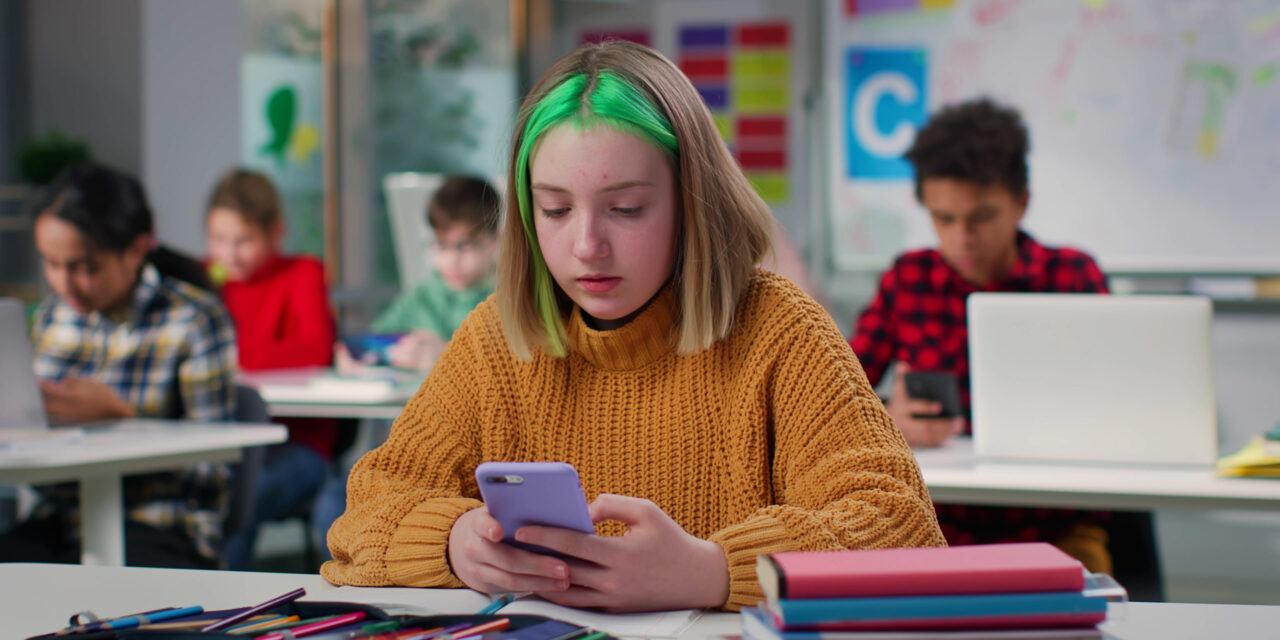
Q: “As a high school teacher, I struggle with cellphone usage in the classroom. On the one hand, I recognize that they can be tools for helping students grow; on the other hand, they are a real distraction most of the time. How can I keep students focused, while not punishing them by taking their phones away?”
- Signed, Annoyed by distractions
A: Let me take you back to 2012. Cellphones are pervasive, but not many folks I worked with see the power of using them in their classrooms. As a journalism teacher, I was teaching students to use social media as a tool to report live and use their phones for academic purposes. Once we had a protocol in class for when and how to use phones, it enhanced the learning experience. At the time, I would have been negligent if I didn’t leverage the tool each student carried on them. It wasn’t a requirement, of course; we also had a laptop cart in the classroom for students who weren’t able to use their phones during the day.
Students are attached to their phones — it’s a fact of modern life. Instead of fighting it, we should acknowledge their importance. Start by having an open conversation with your class about the role of phones in their lives and in your classroom. Ask how they use their phones for learning and what distractions they struggle with. This dialogue builds mutual respect and helps students feel heard, making them more likely to follow your guidelines.
Cellphones in the classroom are a double-edged sword. While they can enhance learning with quick access to information, collaboration tools, and educational apps, they’re also a major source of distraction. You’re not alone in grappling with this challenge as a high school teacher. The key isn’t to ban phones outright but to create a balanced approach that leverages their potential while minimizing disruptions.
Set clear expectations
Establish transparent rules about phone use. Students can be included in creating the rules and deciding the repercussions for not following them. For example, designate specific times for phone use, such as during research or group projects, while requiring them to be put away during direct instruction or independent work. Use visual cues, like a red/green card system, to signal when phones are allowed. Outline fair consequences for misuse, such as a warning and temporary removal if distractions persist. Consistency is key to avoid confusion and ensure students take the rules seriously.
Incorporate phones into learning
Turn phones from distractions into tools by integrating them into lessons. Use polling apps like Kahoot! or Mentimeter for quick quizzes or feedback. Encourage students to fact-check or explore topics in real-time during discussions. Platforms like Google Docs or Padlet allow digital collaboration, while cameras and note taking apps can help students document projects or reflections. By validating the utility of phones, you reduce the urge to use them off-task. This was my experience. When students had legitimate learning to do with their phones, most use them correctly. If you’re like I was when I started using the phones in class, I needed to be a day ahead of students and learn from them, especially if there were apps I wasn’t aware of that could be helpful. Communication apps and project management apps are great to teach students how to manage their time and communicate with group members whether they are in school or not.
Create phone-free zones
Some tasks require undivided attention. For these moments, consider installing a pocket organizer where students can place their phones during focused work. This can be a hanging shoe organizer or a calculator organizer where students’ phones will be safe and watched when gathered. Alternatively, allow short, scheduled phone breaks, such as two minutes every 20 minutes, to satisfy their need to check notifications. This approach acknowledges their habits while teaching self-regulation and focus.
Model good behavior
Students notice your habits. They’ll follow suit if you’re glued to your phone during class. Demonstrate focus by keeping your own device away unless it’s for instructional purposes. Leading by example reinforces your expectations and shows students the value of being present. You can share your thinking when you decide to use your phone so that students understand what, how, and why you are using it and how it supports your work. Unfortunately, many adults have an attachment to their phones, and researchers are looking into the impact of all usage.
Engage parents
Loop parents into your strategy by sharing your classroom phone policy and explaining how it supports learning. Encourage them to reinforce these habits at home, such as setting screen-time limits or discussing digital responsibility. A united front between school and home can make your classroom rules more effective. We know that parents want students to have their phones because of the increased safety risks that students now face when going to school.
Reflect and adapt
No strategy is perfect. Regularly assess what’s working by surveying students for feedback, observing which activities spark engagement versus distraction, and adjusting your approach as needed. Flexibility ensures your policy remains relevant and effective.
Cellphones don’t have to be the enemy. With clear boundaries, creative integration, and consistent enforcement, you can harness their potential while keeping students focused. The goal isn’t control — it’s teaching students to use technology mindfully, a skill that will serve them long after they leave your classroom. By embracing this balanced approach, you’ll create a learning environment where students thrive and phones are tools, not toys.
How does your school handle cellphones? How do you use them in your classroom? Send me an email with your comments.
Have a question that you’d like Career Confidential to answer? Email ssackstein@educatorsrising.org or fill out this short form. All names and schools will remain confidential. No identifying information will be included in the published questions and answers.
ABOUT THE AUTHOR

Starr Sackstein
Starr Sackstein is the Massachusetts state coordinator for PDK’s Educators Rising program, COO of Mastery Portfolio, an education consultant, instructional coach, and author. She was a high school English and journalism teacher and school district curriculum leader. She is the author of more than 15 educational books, including Hacking Assessment (Times 10, 2015), Making an Impact Outside of the Classroom (Routledge, 2024), and Actionable Assessment (Routledge, 2026).
Visit their website at: https://www.mssackstein.com/