A half-dozen theories about skimpy coverage of the red-state literacy surge
By Karen Vaites
This year’s NAEP results were grim, and — predictably — every publication covered them.
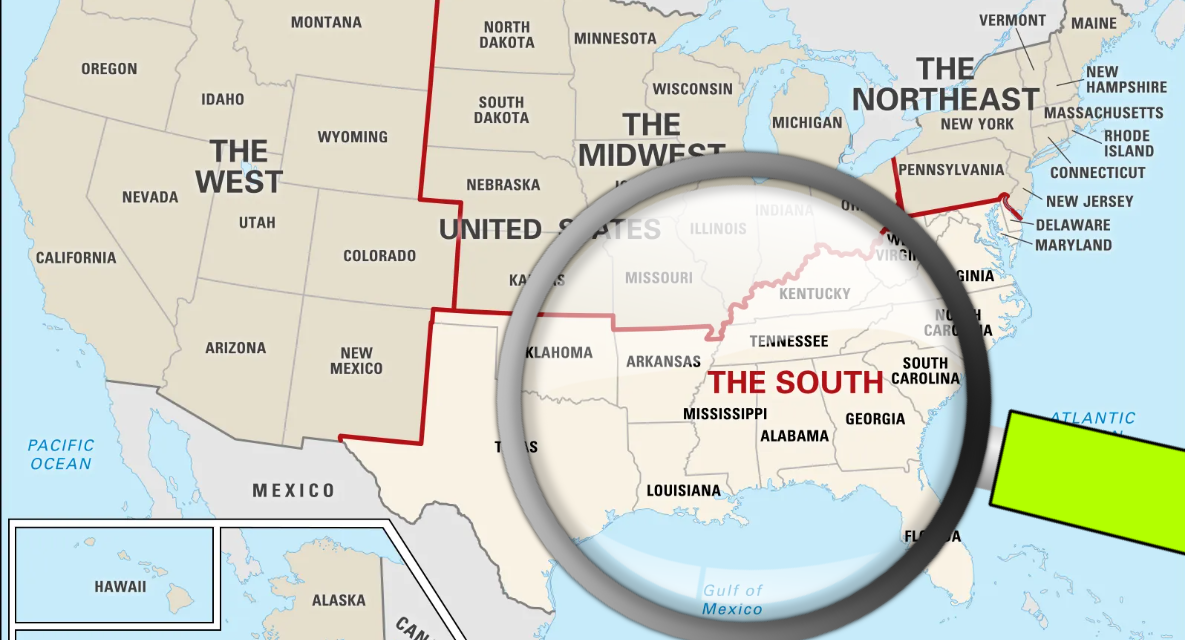
Yet four Southern states — Mississippi, Louisiana, Tennessee, and Alabama— made clear gains in English Language Arts on the NAEP, working from a common playbook.
Their successes have all earned lots of buzz in social media and from Republican officials. Just yesterday, Vice President J.D. Vance was tweeting about Mississippi’s reforms.
“This is pretty incredible,” tweeted the VP. “Smart education reform drastically improved Mississippi’s schools.”
By this point, I would have expected to see more stories about the Southern Surge. But I’m not.
By this point, I would have expected to see more stories about the Southern Surge.
Louisiana has seen some attention. The strongest coverage came from Jonaki Mehta at NPR. I really felt, after reading that deep dive, like I knew what Louisiana had done, well enough to suggest similar action in other states.
It was also a delight to see the Louisiana story in EdSurge. Other coverage has generally come in the form of surface-level interviews with Cade Brumley.
But even with these Louisiana pieces and Chad Aldeman’s new look at Mississippi in The 74, the Southern Surge still feels under-explored.
I appreciate Kevin Mahnken’s spotlight on southern states in the rankings, but I think the field is most interested in what these states did, and how it can be replicated nationwide.
So far as I’ve seen, the New York Times, Washington Post, AP, and many others have missed or ignored the trend — or they are still figuring out how to cover it.
So far as I’ve seen, the Times, Washington Post, AP, and many others have missed or ignored the trend.
Of course, there’s lots of other news to cover.
But I’ve been scratching my head, wondering why the emergence of a pattern of success, crossing by four states, isn’t a Very Important Trend Piece. Things I’ve wondered:
‘It’s been done’
Do reporters feel like this story has been kinda told, because the so-called Mississippi Miracle has been covered? If so, journalists should know that Louisiana and Tennessee took a different route in their reforms. The four states pursued the same changes, but they had a very different order of operations. By itself, that is interesting, and challenges some theories of change in the ‘science of reading’ community.
Red-state ‘cooties’
Are reporters or editors reluctant to tell the story Because Politics? After all, the Southern Surge is happening in red regions. Sometimes, positive work in red states (their leadership on science of reading reforms and efforts to close the “Honesty Gap” with parents; their relatively swift adoption of cell phone bans) gets a fraction of the attention of the negative stories (book bans, the spread of private school choice). In my own attempt to take politics out of the Southern Surge story, I noted that Louisiana’s growth happened largely under a Democrat governor. Reporters could point out that Massachusetts also attempted creative curriculum improvement initiatives.
Too hard to tell
Do reporters find the Southern Surge story hard to tell precisely because the work in these four states is multilayered, introducing complexity? I empathize, because I needed 3,000 words. Yet I was intentionally taking a deep dive into the full story in each state. Reporters could take one common thread in the work (ex. teacher training or curriculum improvement) and contrast the state-by-state choices, for a story with a manageable scope.
One aspect of the complexity for reporters to navigate: the recency bias on the part of recently-elected or -appointed officials. In Louisiana, current Superintendent Cade Brumley is naturally going to tell you about the work during his tenure. It’s human nature, and what he knows best. Yet Louisiana’s efforts began eight years before his term. Make sure you capture the story from its origins.
Literacy confusion
In sourcing a literacy story, journalists can sometimes be tripped up by something I call the Pet Thing problem. There are camps in the literacy community, and I don’t mean whole language/balanced literacy versus structured literacy. Within today’s Science of Reading community, you’ll find teacher training-centered reformers, curriculum-centered reformers, anti-curriculum camps, small group phonics vs whole group phonics debates; knowledge building advocates; reading strategies advocates; and more. They have different theories of change, and sometimes strong opinions. Periodically, journalists over-source an article from voices in one camp, resulting in a slanted piece that draws heat for its imbalance. My best advice is to have a few strong reading researchers in your rolodex, and/or a Literacy BFF who can suggest sources across a range of perspectives.
Good news? Blech.
Or (gulp) is the story getting passed over because it’s too positive? It could always be reframed as a pointed story about the 40+ states that are generally avoiding the Southern Surge playbook (she writes with a sigh).
Cut-score caution
In talks with reporters, I did uncover one challenge in getting traction for the Southern Surge story. One brilliant journalist privately acknowledged hesitation about trusting states’ own assessment data, because of periodic changes in cut scores. You only grasp the trends in Tennessee and Alabama by looking at their own recent assessments, alongside the semi-annual NAEP, for dual confirmation. I can see how journalists need to know which state data to trust, so I created a tracker for states that changed cut scores since 2020.
When journalists capture the scalable, portable models, we get the best shot at change in other states.
I hope more journalists take up Southern Surge stories, and I would suggest my overview as a helpful primer.
We desperately need positive stories in print, especially if they offer cues to state leaders, who seem poised to gain power in this administration.
When journalists capture the scalable, portable models, we get the best shot at change in other states.
Karen Vaites is an English Language Arts curriculum expert and children’s advocate based in New York. You can find and follow her at @karenvaites.
Previously from The Grade
What’s next for literacy coverage in 2024? (Karen Vaites)
When good news goes missing (Karin Chenoweth)