In this week’s newsletter: A nationwide surge of school threats. Charter schools under the microscope in their home state. Rising suspensions in Denver. How to produce school gun violence coverage that avoids encouraging copycats. A former The Grade editor on NPR! When AI makes a podcast of your story — and it’s pretty good!

SCHOOL THREATS SURGE
The big story of the week
The big K-12 education story of the week is the wave of violent threats against schools that has terrified kids, parents, and teachers, and shut down schools in many different parts of the nation (NJ Spotlight, EdWeek, Chicago Tribune, WLRN Florida Public Radio, Houston Chronicle).
Nearly three weeks since the Sept. 4 Apalachee High School shooting in Georgia, the threats — most of which are quickly debunked — only seem to be growing (Campus Safety Magazine). In Houston, a high school went on lockdown after a bomb threat (Houston Chronicle). More than 30 schools received threats in just one week (The Oklahoman).In South Carolina, authorities charged 21 juveniles with making more than 60 threats against schools in 23 counties (New York Times). In Riverside, Calif., police have now arrested two teens (LA Times).
Copycat threats against schools are common after a large-scale incident like the one that took place in Georgia, but educators and law enforcement personnel say they’re at wit’s end. “This is absolutely out of control,” said a frustrated Volusia County Sheriff Mike Chitwood, who’s posting mugshots and video to social media of young accused offenders — some as young as 11 years old — “so that everybody can see what your kid’s up to.” (AP, Politico, USA Today, Washington Post)
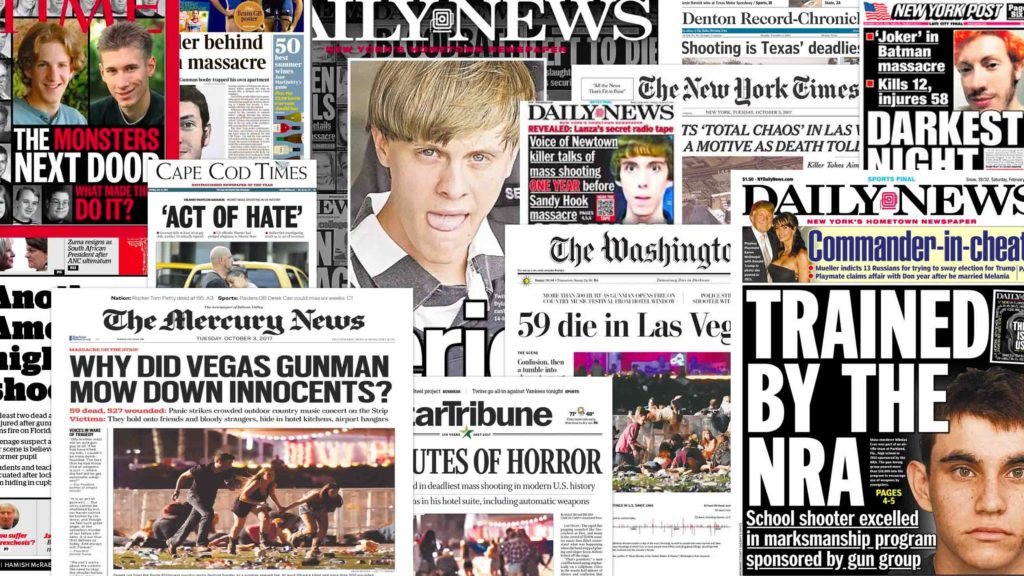
Giving readers more context about past violence, finding schools that have addressed school threats effectively, and avoiding a narrow focus on law enforcement responses could help refocus the issue and de-emphasize perpetrators. See below for this week’s new column, in which a national gun violence expert urges media outlets to avoid over-publicizing school gun violence, naming perpetrators, and amplifying threats.
Other big education stories of the week include more states debating cell phone bans — and parents pushing back, the slow pace of post-pandemic academic recovery, and state funding formula overhauls. Check out @thegrade_ for daily headlines!

FLUNKING CHARTER SCHOOLS IN MN
The best education journalism of the week
The best education journalism of the week is Most Minnesota charter schools are failing to make good on their promises by Mara Klecker and Jeffrey Meitrodt of The Minnesota Star Tribune.
Part of a series on troubles at Minnesota charter schools (other entries here, here, here and here), this is a good old fashioned, data-driven investigation into how charter students — now one in eight kids statewide — are far less likely to meet grade-level standards for math or reading than peers in traditional public schools.
Klecker, the paper’s K-12 reporter, and Meirodt, an investigative reporter, find that — in the birthplace of charter schools — just 13 of 203 charters have consistently exceeded state averages in math and reading since 2016.
While the lengthy main story falls victim to a common pitfall — charter school students by their nature aren’t always comparable to those who stay in district schools — the duo avoid easy hyperbole, largely relying on solid data and families’ experiences while acknowledging how unions have hindered the sector. An ambitious, accountability-focused series from a promising pair, this is the kind of story that other newsrooms should emulate.
Other education stories we liked this week: Suspensions are surging in Denver (Denver Post), how one college counselor navigated “the year FAFSA broke” (WBEZ), an ongoing shortage of bilingual education teachers (palabra), and the demise of the big yellow school bus (USA Today). Check out @thegrade_ for weekday education news.
DOES MEDIA COVERAGE ENCOURAGE COPYCATS?
Our latest columns and commentary
What does one of the nation’s most-quoted gun violence experts want journalists to do in the face of school gun violence?
To cover the story effectively, says Regional Gun Violence Research Consortium executive director Jaclyn Schildkraut, be sure to put the incident in context — no more than 2 percent of child gun deaths take place at school — be careful not to traumatize survivors, and avoid naming the perpetrator.
You can read the interview here.

Above: Riffing off Kendra Hurley’s viral How School Drop-Off Became a Nightmare Atlantic article, WNYC’s Brian Lehrer hosted a segment asking listeners to share their reports from school drop-off and pick-up.
PEOPLE, JOBS, & EVENTS
Who’s going where and what’s happening
📰 Segments: NPR’s All Things Considered describes how books are being restored to schools in one Florida district. NPR’s Code Switch has a timely update on the state of school book bans. CBS News has a 9/12 segment on the prevalence of gun injuries and deaths to children in homes, not schools. St. Louis Public Radio has a segment exploring “why St. Louis schools are more segregated than they were 10 years ago — and meet the parents determined to do right by their kids.”
📰 People: Much appreciation to Baltimore Banner education reporter Kristen Griffith for making sure readers know in-school shootings are rare. Kudos to WNYC reporter (and friend) Nancy Solomon for pushing back against the notion that consolidating small school districts would somehow be more expensive than NJ’s current system of hundreds of very small districts. Belated congrats to the latest crop of O’Brien Fellowship fellows, including some of our favorite education journalists. New Bedford Light education reporter Colin Hogan is scheduled to talk about his The Grade column about how to cover math instruction at the October EWA Math Seminar. Great to hear former The Grade editor Karin Klein on NPR talking about her new book, Rethinking College. Congrats to The Hechinger Report’s Ruby Franzen on being named the Nonprofit Newcomer of the Year.
📰 Research writeups: Private school enrollment by district (Seattle Times). Effectiveness of smartphone bans in schools (WNYC). Chronic absenteeism in one state (Bridge Michigan). Cognitive effects of COVID on students and teachers (The 74). Decline of students reading books in English classes (AP News). History teachers replacing books with the Internet (NY Times). Popularity of school cell phone bans among Virginia voters (Washington Post). How Boston reduced fatal shootings of male Black teenagers (Economist). Black girls face more frequent and severe discipline in school (NPR).

THE KICKER
The robots are coming for … your podcast?
Check out this eight-minute AI podcast recapping our latest interview about covering school gun violence, produced entirely by Google’s “deep dive” tool, Notebook LM:
Speaker 1: School shootings. It’s something we hear about way too often these days…
Speaker 2: Right?
Speaker 1: It makes you wonder, you know, how safe are our schools?
Speaker 2: Yeah!
Speaker 1: But then you dig a little deeper, and you find out…
That’s all, folks. Thanks for reading!
Reply to this email to send us questions, comments or tips. Know someone else who should be reading Best of the Week? Send them this link to sign up.
Using Feedly or FlipBoard or any other kind of news reader? You can subscribe to The Grade’s “feed” by plugging in this web address: http://www.kappanonline.org/category/the-grade/feed/.
Read more about The Grade here. You can read all the back issues of The Grade’s newsletter, Best of the Week, here.
By Alexander Russo with additional writing from Colleen Connolly.