A 20-year veteran shares eight school closing recommendations, including how to compare closure decisions, the importance of visiting schools slated for closure — and the value of following up the story.
By Melanie Asmar, Chalkbeat Colorado
In my 20 years as a reporter, some of the most packed meetings I’ve covered have been school board meetings with a school closure vote on the agenda. Parents, students, and teachers often show up en masse, ready to fight for their school’s survival.
I’ve watched second graders with missing front teeth tell a wall of decision makers that their school is like a family. I’ve watched board members and parents shout in frustration. I’ve also seen them cry, either out of sadness that a school will be closed or relief that it won’t.
Sometimes the results of these decisions are more complicated. I’ve written about schools that were initially spared from closure but then closed later because the underlying issues persisted. I’ve also written about schools that were closed and then reopened.
I’m not an expert, but I have learned some lessons along the way.
Here are some tips for covering school closures that I’ve gleaned from my own reporting and that of my colleagues.
This is the fourth in our latest series on covering school closures.
1: Pay attention to the demographics of the schools being recommended for closure.
School closures often disproportionately affect communities of color. If the demographics of the closing schools don’t match the demographics of the district — if the schools being closed serve a higher percentage of students of color or English language learners, for example — point that out in your reporting, capture community reaction, and question decision makers about it.
2: Compare the closing process to other districts or past decisions.
Ask officials about the criteria used to determine school closures. If possible, compare that to criteria used by other school districts or criteria used in the past. Were there any efforts to make the criteria more equitable? Did the efforts work?

Above: How Denver, Jeffco, and Aurora are approaching school closures (November 2022)
3: Listen to the people who will be affected.
Families, students, and teachers will often rally to save their schools from closure. But I’ve also covered closures where no one spoke out. In those instances, dig deeper to find out why. Is it because families were misinformed or not informed at all about an impending closure? Is it because families face barriers to taking a public stand?
4: Visit the schools that are being recommended for closure.
Whenever I’ve done this, I’ve seen wonderful things and challenging things. A school may have a tight-knit community where the teachers know every student’s name but no art or music classes. Or strong mental health supports but low reading scores. Be honest about the school’s situation, but don’t make any value judgments about what’s more important.
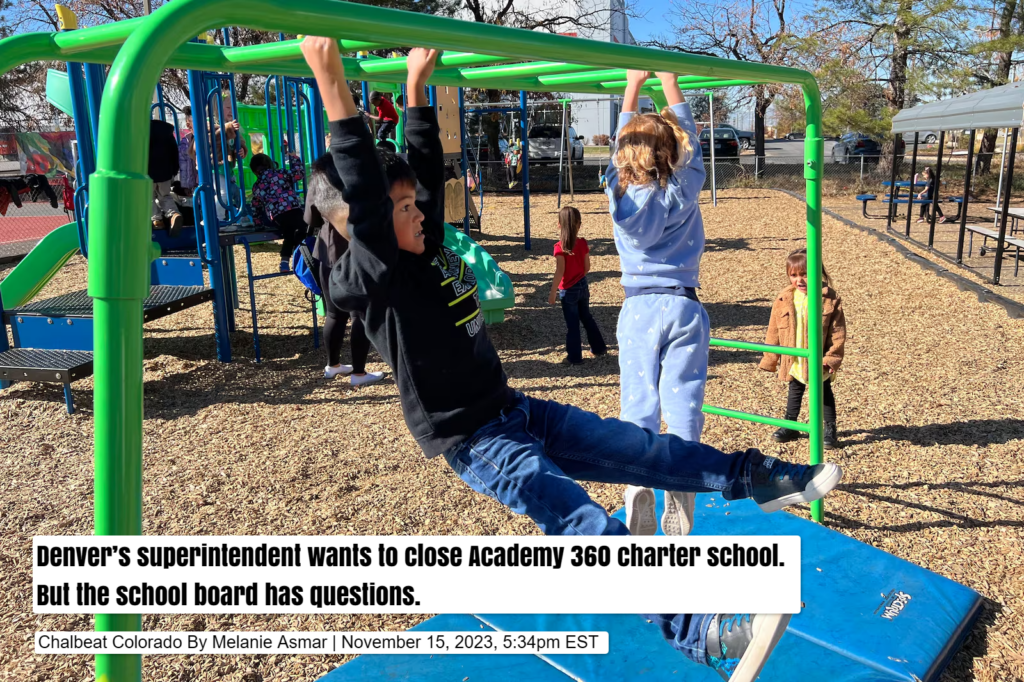
Above: Denver superintendent: Close Academy 360, a charter with low test scores (November 2023)
5: Take a step back and fact-check the reasons behind the closures.
If enrollment is declining, where did all the children go? Have birth rates decreased? Are families moving out of the district? One theory I heard from sources in the district I cover is that district-run schools were closing because too many new charter schools opened up. When I dug into the numbers, I found that the number of new district-run and charter schools over the past 20 years was about the same, but that charter schools grew at a faster rate.
6: Be careful not to adopt euphemistic language.
Call closures what they are. I have heard districts refer to closures as mergers, consolidations, right sizing — the term “school marriages” was floated at one point. If schools are consolidating, meaning students from the closing school are being sent to a specific new school, check with the new school to see if the district is providing more resources. Sometimes more resources are promised and not delivered. Sometimes the resources end up costing more than expected.
7: Ask decision makers about their own experiences with school closure.
If they have no personal experience with school closures, that’s notable. If they do, ask them to describe the circumstances: Were they a student, parent, or teacher at a school that closed? Did they agree or disagree with the decision? How did the experience shape their view of school closures? When the district I cover was facing a slew of closures a couple years ago, I knew that four of the seven school board members had personal experience. Interviewing them about it resulted in some interesting insights into how they might vote.
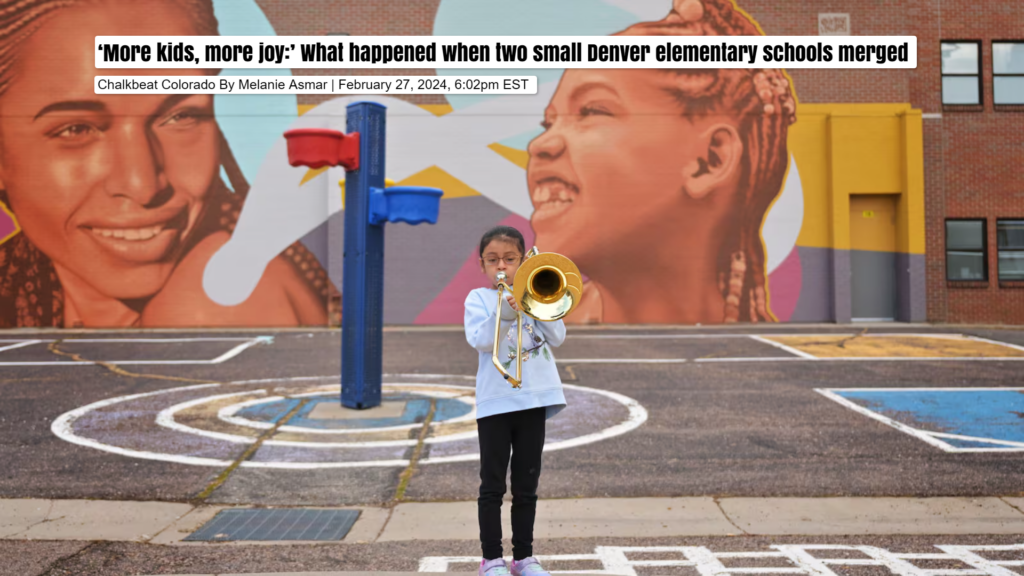
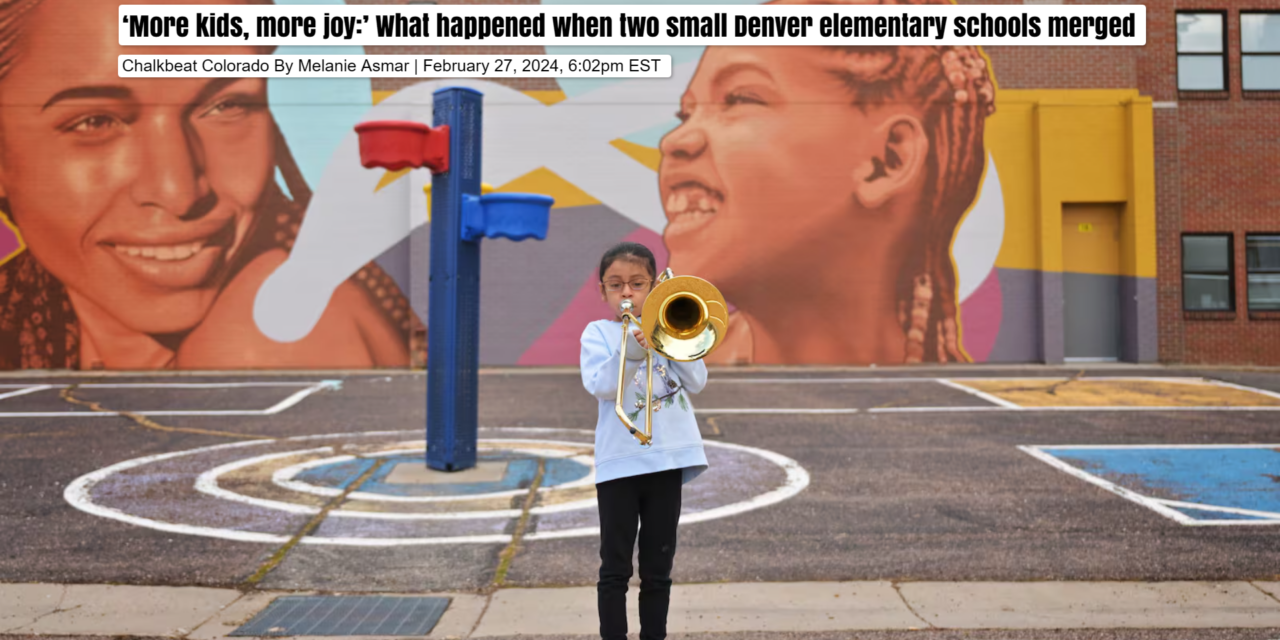
Above: ‘More kids, more joy:’ What happened when two small Denver elementary schools merged (February 2024)
8: Find out what happened to the students.
Sometimes the results will surprise you. I recently followed up with a family who was among the most vocal opponents of a school closure. When the school board voted, this mom was the only parent from any of the closing schools in the audience. But the family is happy with their new school, as are many other families. However, the extra support and funding that has made this year a “dream” at the new school, according to the principal, could soon go away.
Melanie Asmar has been a reporter for 20 years, covering education in New Hampshire, where she grew up, and in Colorado, where she’s lived for the past 15 years. She is the bureau chief of Chalkbeat Colorado and covers Denver Public Schools.
Previously from The Grade
The closer (Jill Tucker interview)
Covering Chicago’s mass school closing (Lauren FitzPatrick)
Closings are coming. Cover them well. (Tim Daly)