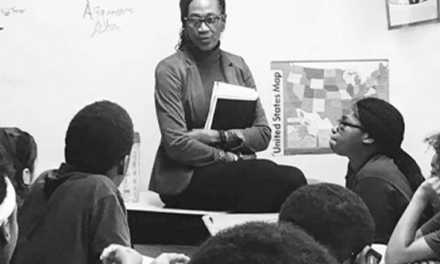
Listening, engagement, advocacy, and partnership are keys to more effectively including the community in schools.
As a former school leader, a school counselor, and a youth social worker, we know that contemporary educators want to create and sustain inclusive school communities. But we also have firsthand experiences with the ways schools can marginalize historically disenfranchised students, families, and communities (i.e., communities of color). Recognizing this dynamic, we have committed our lives to educational research that will help education leaders design the inclusive school spaces that all youth deserve through community-engaged leadership (CEL).
Community-engaged educational leadership centers student, family, and community knowledge and expertise to transform schools (Stanley & Gilzene, 2022). This approach challenges traditional leadership models by intentionally interrupting top-down institutional hierarchies with the goal of bringing students, families, and community members to share leadership. In short, CEL asks school leaders to work directly with their communities to co-design school spaces built on equity, justice, and liberation. CEL asks educational leaders to see the assets in their communities, such as community-based organizations, local faith institutions, elders who can share the history of the neighborhood, and youth organizations that support the social and academic lives of students. Collectively, community members and organizations can be partners in the development, decision making, and design of the school.

Understanding community engagement
Scholarship reveals two primary ways contemporary educational leaders engage communities: institutional-focused engagement and community-focused engagement. Institutional-focused engagement is led by school or district-based leaders and might include structured cultural events or reading nights on school grounds. Community-focused engagement more explicitly centers students, families, and communities in the decision-making process with the educational leader acting as a facilitator. Examples might include participatory budgeting practices with youth and community members (Stanley & Gilzene, 2022).
Arguably, most education leaders today tend to engage their communities through institutional-focused methods. Our goal is to help leaders more intentionally cultivate community-focused engagement. Community-engaged leadership involves an iterative and critical engagement that is reflective of history, research, context, and inequity. This approach challenges educators to consistently unlearn ideologies and practices that marginalize along the lines of race, class, gender, ability, and other forms of exclusion (Dantley, 2005).
To make the transition to community-engaged leadership, educators must commit to consistently reflecting, rethinking, reframing, and co-designing their everyday practices to meet the needs of historically excluded youth, families, and communities. Unfortunately, schools continue to be contested spaces where historically marginalized communities experience racial hostility, unwelcomeness, segregation, and exclusion. Despite significant shifts toward greater equity and social justice in educational leadership, we continue to see exclusionary disciplinary practices, severe academic achievement inequities, and disproportionate graduation and college-going rates for historically marginalized youth (Horsford, Scott, and Anderson, 2021).
In short, the schools we have developed for communities are not enough; it is time to co-construct schools with our communities. To address this, we propose the LEAP framework (Figure 1), which encompasses listening, engaging, advocating, and partnering with students, families, and communities (Stanley & Gilzene, 2022).

Preparing to LEAP
Before embarking on the LEAP journey, leaders must develop critical awareness of oppression and analyze their own biases and assumptions related to power and privilege (Dantley, 2005). Leaders should develop their equity literacy, including the knowledge and skills needed to eliminate bias and inequity in their sphere of influence (Gorski, 2018). The foundation of equity literacy is a structural understanding of inequity and an asset-based (rather than deficit-based) approach to communities that allows school personnel to develop trusting relationships with families because they recognize the assets within those communities.
CEL requires leaders to approach community members as partners and valuable knowledge contributors, rather than viewing community participation as performative or perfunctory. Before engaging in CEL, leaders must ask themselves whether they are ready to develop a collective vision with the community. In many cases, the predominately white leaders and faculty of schools will need to recognize how norms within white communities have instilled white privilege into day-to-day routines of schools (Theoharis & Haddix, 2011). School leaders can work to decenter whiteness by sharing power with the school community.
In addition, leaders should consider whether they have sufficient support and autonomy in their institutions to act on what they learn from communities. Soliciting input from communities without the intent or ability to implement changes risks breaking trust with community members. We recommend that leaders organize their community engagement efforts with other school- and district-based educators to provide the kind of support and accountability necessary to embark on this journey.
If these conditions are in place, educational leaders will be better able to use the LEAP framework to engage in an ongoing praxis of listening, engaging, advocating, and partnering with students, families, and community members.
Listening
Listening to sustain meaningful partnerships can be transformative. In the LEAP framework, listening goes beyond conventional ideas of processing and documenting what community members share. It is about centering humanity, equitably sharing power, and autonomy. This requires leaders to use listening for accountability, to recognize community agency, and ensure listening is bidirectional.
Accountable listening decenters the institutions, such as schools, and centers the aspirations of community members. Intentionally leveraging power and amplifying community voices is key. This process begins by looking within an institution to see if its members believe in the necessity of partnering with youth and community (Lyons & Brasof, 2020). For example, are they willing to shift away from holding meetings and forums within school, which requires the community come to them, and instead hold meetings in a place that community members hold dear, such as local community centers? This action acknowledges the value and presence of the community and decenters the institution.
Institutions can also promote accountable listening by deliberately sharing space with voices of the community, making community members sources of expertise. For example, adult researchers demonstrated their accountable listening by intentionally working with young people and having them write the conclusion to a published article (Conner et al., 2023). This leveraging of power to lift student voices acknowledges that youth are integral community members who are worth listening to. Having youth and adult community members express their own conclusions in spaces that have traditionally excluded them is a form of ethical, accountable listening.
Agentic listening is about recognizing community needs while also understanding what is strong about the community. To see community members as exclusively in need of service or support is not a solid foundation for creating an equitable partnership. Institutions seeking to build partnerships may mistakenly start by putting too much emphasis on deficits and problems in the community. Engaging in asset mapping can help leaders recognize community expertise (Ordoñez-Jasis & Myck-Wayne, 2012) and understand that the community has agency to solve problems.
Too often, listening can be performative or just go in one direction. This happens when schools solicit public feedback without sharing how they are incorporating community perspectives in their educational changes. Members of the community, like all of us, have a finite amount of time and energy, and “listening” to community members without any form of follow-through is ultimately disrespectful, even if well intentioned. Another example of unidirectional listening is when schools communicate only in English or set meetings without paying attention to transportation needs, community working hours, and what will promote a sense of belonging.
This kind of listening is a bridge built on a precarious foundation that could ultimately cause more harm than good. It is prescriptive and objectifying, meaning that it involves leaders directing community members toward their desired ends. True bidirectional listening goes both ways, with leaders recognizing the traditional asymmetrical power dynamics between schools and community and seeking to address them by lifting community voices.
Engaging
Engaging challenges educational leaders to intentionally immerse themselves in the contextual realities of their students, families, and communities. This work entails developing inviting school environments premised on equity, cultural responsiveness, and inclusion, as well as initiating and sustaining reciprocal relationships within the community (Stanley & Gilzene, 2022).
School leaders should recognize that not all families and community members understand contemporary school policies and practices. For example, regular school practices like individualized education program (IEP) meetings or disciplinary processes can be intimidating for families who may not fully understand the educational jargon.
Research suggests school leaders should proactively share ongoing, detailed explanations of school policies and processes before any punitive actions (Stanley & Gilzene, 2022). When parents understand the processes, they will have greater agency when visiting the school space and engaging in these processes. Additionally, school leaders can ensure that school spaces have the human resources (e.g., multilingual front desk staff) they need to support various needs of immigrant and linguistically diverse families.
Educational leaders should also extend their engagement practices beyond the school walls by attending local events and visiting families in their homes. School leaders can build stronger, reciprocal, culturally responsive relationships with families when they intentionally take time to learn about the contexts they live in (Stanley & Gilzene, 2022). To be clear, we are not suggesting that school leaders walk into families’ homes with deficit lenses (e.g., looking for problems, highlighting trauma). Instead, we suggest that educators approach home visits with the perspective that families have important knowledge and abilities to help co-construct school policies, structures, and practices.
For example, Muhammed Khalifa (2018) discusses the importance of report card deliveries, in which teams of teachers and school-based leaders hand deliver report cards to families and caregivers. These deliveries offer educators opportunities to discuss academics, social-emotional well-being, and a host of other key topics on families’ terms. Report card deliveries also give educators and caregivers opportunities to build deeper bonds and relationships and set the stage for teachers and families to co-develop responsive plans for their children.
Advocating
Advocacy is a cornerstone of a transformative partnership that centers the agency and humanity of community members and recognizes ways in which community knowledge is meaningful to the school community. School leaders can be advocates by raising awareness and offering public support for community members and by building capacity within the community so they can advocate for themselves.
Consciousness-raising involves learning about interrelated and interconnected structures of oppression and how they manifest and developing skills to transform inequitable systems. This starts with a commitment from school leaders to recognize and name local inequalities and surfacing these conditions as important pieces of knowledge (Sheth & Salisbury, 2022). There needs to be intentional focus on the intersection of community members’ respective identities and institutional oppression. True partnerships are incumbent upon providing opportunities within schools and community spaces to disrupt policies and practices that dehumanize and erase the identities of adult and youth community members. If someone’s true, whole self is not welcome in the space, then that person is not welcome at all, and their humanity is denied.
Community members are the arbiters of truth and knowledge regarding the community’s diverse goals and values.
Youth members of the Apsáalooke (Crow) Tribe of Montana engaged in consciousness-raising when they used filmmaking and digital storytelling to learn about and teach Indigenous cultural protocols, oral histories, pedagogy, and research methods (Stanton, Hall, & DeCrane, 2020). In this context, youth connected with elder Indigenous members of the community as well as institutional scholars to shift traditional teacher-student relationships to a co-learning model that is both culturally responsive and student-centered. This community-based advocacy led Indigenous youth to grow in their place and cultural consciousness while engaging in civic learning.
Community members are the arbiters of truth and knowledge regarding the community’s diverse goals and values. Schools need to center youth and adult members of the community, especially those who have been historically silenced in the traditional school hierarchies. When advocacy is self-
sustaining, all constituents share resources equitably in a climate of mutual trust in order to bring about meaningful change.
The Truth High School in the South Bronx is an example of a culturally sustaining community school where there is a recognition of collective destiny and reciprocity (Daniel, Malone, & Kirkland, 2023). Youth advocate for their own learning and enrichment through local activism and internships. This approach also brings in adult community organizers to share knowledge with educators and school leaders, which helps both bridge the distance between schools and the community. The needs and hopes of the community are prioritized over high-stakes testing performance.
Partnering
Partnering is an intentional act of leveraging established relationships with students, families, and community members to co-lead the school community. It involves ongoing collaboration on school policies, procedures, and practices as well as needs within the school community. Partnerships that bring together the school, students, families, and community members can lead to a co-defined vision for the education of youth and continued development of the school community (Stanley & Gilzene, 2022).
Many educators are familiar with the community school model, which centers the school space as a hub for community-based activities (Daniel, Malone, & Kirkland, 2023). However, schools do not need a community school designation to be a spatial asset to the community. Education leaders can open the school to host community-based civic engagement events (e.g., festivals, extracurricular activities); sustain community gardens; partner with local businesses and universities to provide adult education programs (e.g., budgeting, language courses); and offer designated space for community meetings, advocacy, and goal-setting (Stanley & Gilzene, 2022).
Scholarship suggests that school leaders can and should regularly engage students in ongoing knowledge-generation activities intended to improve school conditions (Stanley & Gilzene, 2022). Education leaders should be in ongoing dialogue and relationship-building with students to help them determine what improvements are needed at the school. Leaders can partner with students to address school-based needs, including identifying potential new teachers, evaluating teacher candidates, and deciding together who to hire at the school.
Similarly, families are experts on their own histories, community contexts, and children’s needs. Their knowledge should be at the center of everyday school processes. Involve families in decisions about school policy; school goals (e.g., areas of improvement or focus); and resource allocation (Stanley & Gilzene, 2022). For example, schools should collaborate with families to co-design discipline policies and practices, develop culturally responsive strategies that increase student engagement, and replace suspensions and other exclusionary discipline practices.
Schools can accomplish even more if they partner with the many community-based organizations and leaders who already are organizing, supporting, and uplifting youth and families (e.g., community centers, neighborhood associations, youth league coaches, faith institutions). One way to engage youth, families, and community members in the process of examining and eliminating school-community inequities is through community-based equity audits (Green, 2017). This process has four phases:
- Develop a school-based leadership team.
- Create asset maps and gain a deeper understanding of the community’s strengths.
- Organize a joint school-community leadership team.
- Collect, analyze, and discuss data to co-define future goals and actions.
This approach requires deep, multidirectional listening so leaders can understand community assets, goals, and needs; develop reciprocal relationships to help establish the school as a collective space; engage in advocacy efforts to help set a joint school-community agenda; and establish transformative partnerships to collectively design the future of the school community.
Implications for educational leaders
To get started with the LEAP model for community-engaged educational leadership, leaders should find partners in this work who can support them, reflect with them, and keep them accountable. Further, we recommend starting with listening, as it is the most critical and ongoing component of this approach.
After engaging with each of the four components of the LEAP model, we encourage leaders to reflect on the following questions with their colleagues before moving on to the next component:
- What new perspectives, ideas, or approaches have I/we gained?
- How will these new ideas inform our journey as we continue to the next component?
- What initial assumptions have been challenged?
- How will we address any unexpected challenges that arise in the process?
We would like to emphasize the importance of approaching each component by valuing the ideas and resources within the community, engaging authentically, and being willing to share power in decision making. It is our hope that education leaders follow this research-based guidance to co-
develop schools that “not only meet the educational and academic needs of students but also serve as pillars of the community — whereby the school is the community, and the community is the school” (Horsford, Scott, & Anderson, 2018, p. 97).
Note: Darrius Stanley previously shared these ideas in “Listening, Engaging, Advocating and Partnering (L.E.A.P): A model for responsible community engagement for educational leaders” in the June 2023 Journal of Research on Leadership Education.
References
Conner, J.O., Goldstein, M., Mammen, J., Hernandez, J., Phillippo, K., Pope, D., & Davidson, S. (2023). What students and teachers do to build positive reciprocal relationships: A study co-led by youth and adult researchers. American Journal of Education, 129 (4), 449-479.
Daniel, J., Malone, H.-L.S., & Kirkland, D.E. (2023). A step closer to racial equity: Towards a culturally sustaining model for community schools. Urban Education, 58 (9), 2058-2088.
Dantley, M.E. (2005). African American spirituality and Cornel West’s notions of prophetic pragmatism: Restructuring educational leadership in American urban schools. Educational Administration Quarterly, 41 (4), 651-674.
Gorski, P.C. (2018). Reaching and teaching students in poverty: Strategies for erasing the opportunity gap (2nd ed.). Teachers College Press.
Green, T.L. (2017). Community-based equity audits: A practical approach for educational leaders to support equitable community-school improvements. Educational Administration Quarterly, 53 (1), 3-39.
Horsford, S.D., Scott, J.T., & Anderson, G.L. (2018). The politics of education policy in an era of inequality: Possibilities for democratic schooling. Routledge.
Khalifa, M.A. (2018). Culturally responsive school leadership. Harvard Education Press.
Ordoñez-Jasis, R. & Myck-Wayne, J. (2012). Community mapping in action: Uncovering resources and assets for young children and their families. Young Exceptional Children, 15 (3), 31-45.
Lyons, L. & Brasof, M. (2020). Building the capacity for student leadership in high school: A review of organizational mechanisms from the field of student voice. Journal of Educational Administration, 58 (3), 357-372.
Sheth, M.J. & Salisbury, J.D. (2022). “School’s a lie”: Toward critical race intersectional pedagogy for youth intellectual activism in policy partnerships. Educational Policy, 36 (1), 100-141.
Stanley D.A. & Gilzene, A., (2022). Listening, Engaging, Advocating and Partnering (L.E.A.P): A model for responsible community-engaged leadership. Journal of Research on Leadership Education, 18 (2), 253-276.
Stanton, C.R., Hall, B., & Decrane, V.W. (2020). “Keep it sacred!”: Indigenous youth-led filmmaking to advance critical race media literacy. International Journal of Multicultural Education, 22 (2), 46-65.
Theoharis, G. & Haddix, M. (2011). Undermining racism and a Whiteness ideology: White principals living a commitment to equitable and excellent schools. Urban Education, 46 (6), 1332-1351.
This article appears in the April 2024 issue of Kappan, Vol. 105, No. 6, p. 26-31.

ABOUT THE AUTHORS

Darrius A. Stanley
Darrius A. Stanley is an assistant professor of educational leadership at the University of Minnesota-Twin Cities. He is the editor of #BlackEducatorsMatter:The Experiences of Black Teachers in an Anti-Black World (Harvard Education Press: 2024).

Dan Brogan
Dan Brogan is a graduate research assistant and instructor at the University of Minnesota-Twin Cities.
Emily Colton
Emily Colton is a graduate research assistant at the University of Minnesota-Twin Cities.