In this week’s newsletter: Education had a particularly political week. The best education story of the week gives a nuanced look at Native Americans leaving home to pursue higher education. An education reporter explains why she tweets about Gaza — and urges others to follow suit. A district makes it clear it does not want to deal with a particular ed reporter. And the LA Times predicts an Oscar for “The Last Repair Shop.”
SUPER TUESDAY EDU
The big story of the week
The big education story of the week is Super Tuesday’s education-related results — and the ever-increasing politicization (and nationalization) of school issues.
In some places, Tuesday’s primaries pitted moderate Republicans against conservatives. In North Carolina, a far-right candidate for state schools superintendent who has called public schools “indoctrination centers” beat the incumbent in the Republican primary (WRAL). In Texas, the governor’s effort to punish rural Republican school voucher opponents was only partially successful (Dallas Morning News). Right-wing challengers defeated one Republican state board of education incumbent and forced two others into runoffs (Texas Tribune).
In other places, the primaries pitted liberal candidates and ideas against more centrist Democrats. In San Francisco, voters made clear that they wanted to end the equity experiment delaying algebra (SF Chronicle, Washington Post, Mission Local). In Los Angeles, early returns suggested 3 of the 4 races will go to runoff elections (LAist, LA Daily News, LA Times).
On Thursday night, President Biden’s State of the Union address called for expanded early childhood education and higher pay for teachers (EdWeek, MSNBC). Republican House Speaker Mike Johnson stayed seated when President Biden called for expanded pre-K and improved student literacy (Brian Stelter).
For more of Tuesday’s results, check out this helpful roundup of school board elections in Arkansas, Alabama, California, Louisiana, North Carolina, and Tennessee, as well as recall elections in two California districts (Ballotpedia). For more context, last year, Moms for Liberty candidates fared poorly (Brookings). “At-large” school board elections favor wealthier Houston candidates (Houston Landing).
For a caution against amplifying the politicization of schools, check out New York Times columnist Nick Kristof’s latest, The School Issues We’re Battling Over Aren’t the Ones That Matter. “The peril for America’s children is not bare goblin buttocks, nor is it goblins being clothed,” he writes, but rather that “too many kids aren’t getting the education they need.”
Another big story of the week:
SAT CHANGES: For the first time in its nearly 100-year history, the SAT has officially gone digital, with students now taking the test on computers (NPR, AP, NYT, USA Today). Other changes include briefer reading passages and a shortened overall test time — from four hours to three. More than 1,800 colleges and universities no longer require the SAT or ACT for admission, but some schools that made the change in the pandemic have reversed course, including Brown University this week (New York Times, Washington Post).
For more, see this editorial looking at whether “test-optional” worked in increasing campus diversity (Boston Globe) and this feature arguing that “making standardized-test scores optional has harmed the disadvantaged applicants it was intended to help” (The Atlantic).
CONFLICTED DREAMS OF COLLEGE
The best education journalism of the week
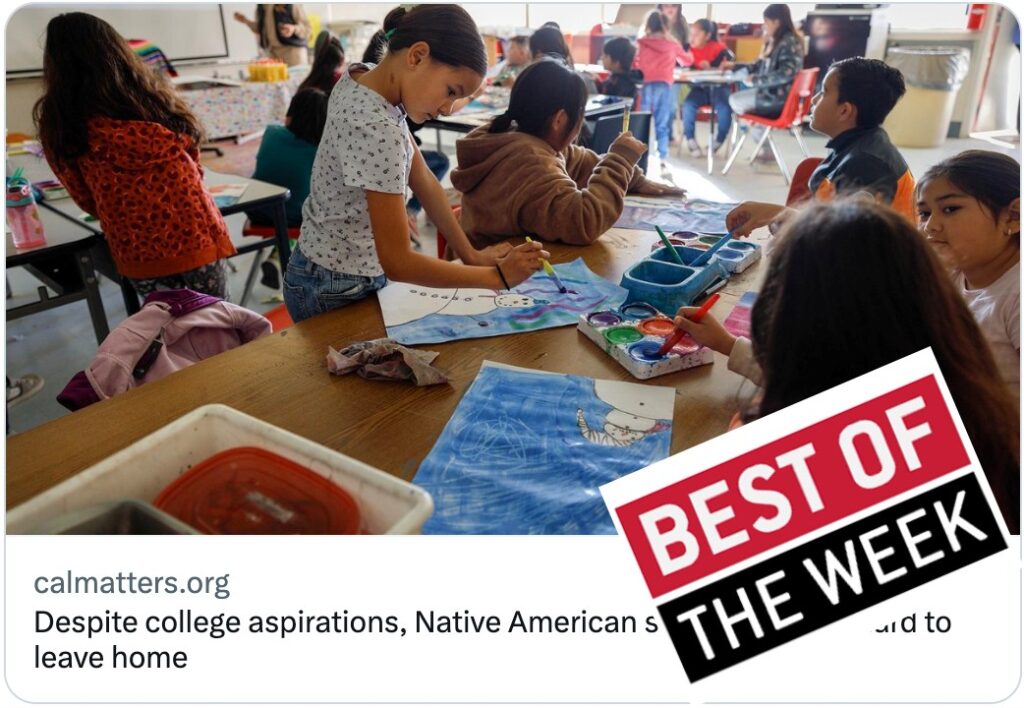
The best education story of the week is Despite college aspirations, Native American students find it hard to leave home by Carolyn Jones in CalMatters.
Not just an education piece, the story is a portrait of a small California community striving to maintain its way of life.
Through interviews with teenagers, parents, and tribal community members, Jones captures the emotional tradeoffs involved in Native Americans’ decision to leave their family and culture behind to pursue higher education.
“It’ll be like leaving a piece of my body behind,” says high school junior Dasan Lynch. “But I know I have to leave if I want to help my community.”
Jones explores state and local efforts to improve outcomes for California’s Native students, such as a new K-12 Native American curriculum and partnerships between state colleges and local tribes.
But her reporting stays anchored in the perspectives of students and parents, whose demands include more dual-enrollment opportunities for high schoolers and more instructional resources for Native languages like Quechan.
Jones also takes the time to interview tribal community members who once faced the same questions as today’s college hopefuls. Their words make the story complete.
“It’s really hard for kids who grew up on the reservation to leave the reservation,” says a cafe owner. “But it’s even harder for them to come back… That’s one thing I’m trying to do: let them know it’s possible.”
Jones’s recent story about rural districts in California also has some overlap with this one.
Other big stories of the week — and why we liked them:
🏆 With the detail of an obituary and the sweep of a national policy explainer, Rae Ellen Bichell tells the story of a Colorado teen who died from a fentanyl overdose and his friends who helped write a bill that would make it easier for students to carry naloxone in school (KFF Health News).
🏆 It’s a frustrating situation — FAFSA applications are down 38% this year — but this Katherine Knott and Liam Knox investigation into the botched rollout of the Ed Department’s new financial aid application offers a thorough accounting of the many avoidable slip-ups that led to the current confusion (Inside Higher Ed).
🏆 In this family-centered story about a widespread but potentially harmful form of autism therapy, Beth Hawkins does a deep dive into the research and carefully details what it’s like for families looking for ways to support their kids (The 74). See also our 2021 Q&A with Hawkins about schools coverage in Minneapolis.
🏆 Gail Cornwall’s day-in-the-life profile of a 38-year-old school district enrollment director combines detailed scenes, parent voices, and local history. It also points out the many factors that lead to enrollment declines and highlights the creative ways some administrators are responding (Hechinger Report).
TWEETING ABOUT GAZA
Our latest columns and commentary
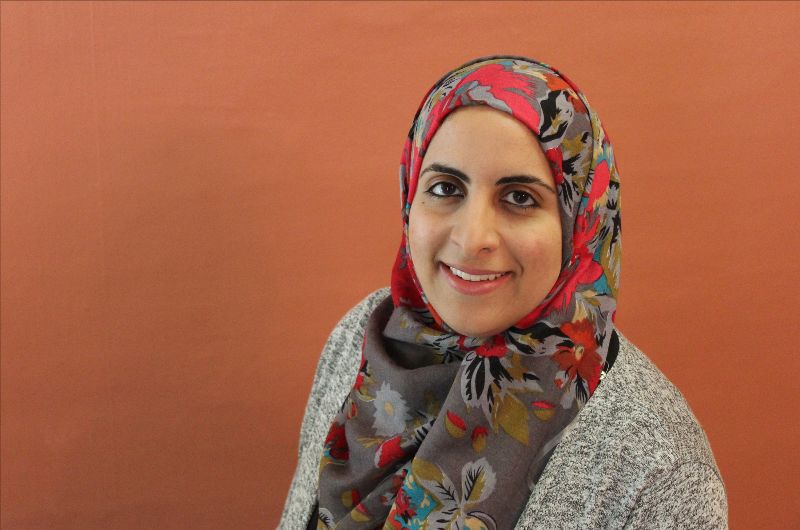
In this powerful new essay, Virginian-Pilot education reporter Nour Habib (above) explains why she has been posting on social media about the war in Gaza — and why she thinks other journalists should, too.
“I want more journalists to express themselves — and more newsrooms to make clear that they value their reporters’ humanity,” she writes. “Journalists are human. They should be able to express their humanity.”
Concerns about the treatment of outspoken younger journalists have grown in recent years. The debate about journalists expressing personal opinions goes back decades. As far as I know, this is the first time an education reporter has publicly addressed the debate when it comes to the war in Gaza.
ICYMI: We also published Boston Globe reporter Naomi Martin’s Secrets of a successful literacy investigation, the latest in our series on high-quality coverage of literacy reform.
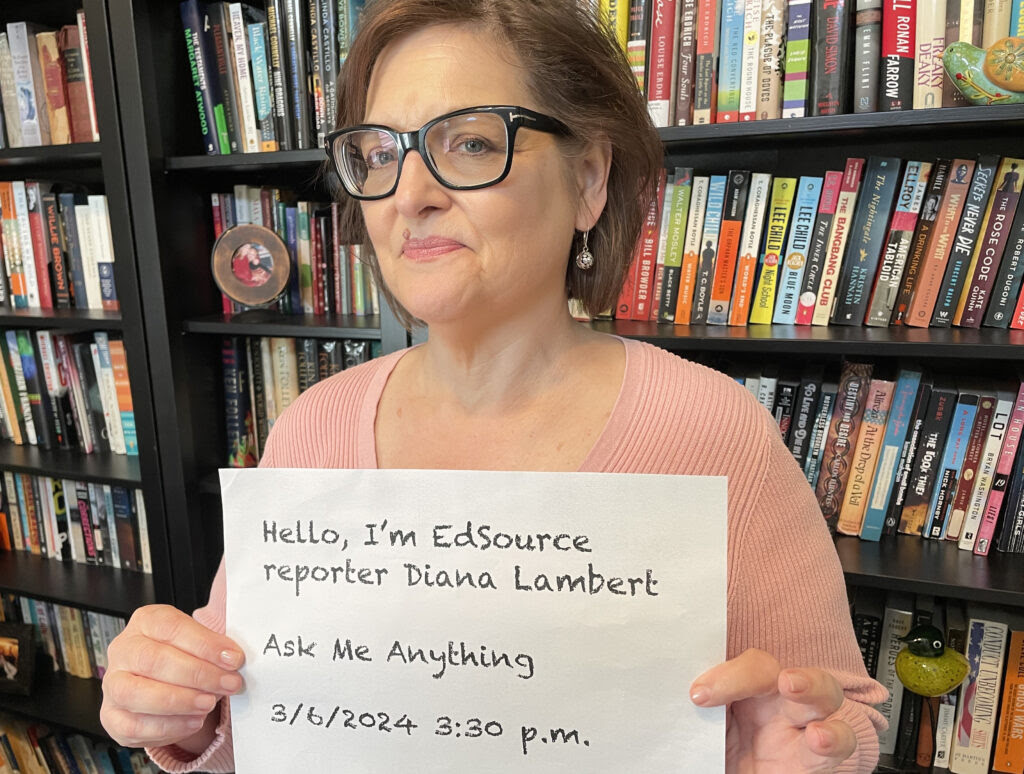
Above: EdSource’s Diana Lambert led an active discussion about the teacher shortage in a Reddit Ask Me Anything on Wednesday. Just a few weeks ago, the Columbia Journalism Review said Reddit may be “the most civilized place to look at news online.” Any other ed reporters engaging with readers on Reddit?
PEOPLE, JOBS
Who’s going where and doing what
🔥 Spotlight: Thanks to a non-journalist’s FOIA, Cobb County (Georgia) school district officials were revealed to have inappropriately accessed student files and complained about media coverage from the Cobb County Courier in particular. “We DO NOT deal with the Cobb Courier,” wrote one district official in one of several statements published by Cobb County Courier freelance education reporter Rebecca Gaunt. She recently tweeted a thread with much of her work and tells us that her relatively long history covering the district makes all the difference — along with her hard-won skepticism. “Look twice at press releases from the school district.… Unfortunately, in the case of CCSD, misleading press releases and false statements to the press have been common.”
🔥 Awards: The New York Times’ Hannah Dreier was named as a finalist in the 2024 Toner Prizes honoring excellence in political reporting for her coverage of immigrant kids. (She offered advice on covering immigrant children earlier this year and shared her insights in this 2018 interview.) Author and sociologist Ranita Ray made the shortlist for the 2024 J. Anthony Lukas Work-In-Progress Awards for her book “Violent Schools: Slow Death in the American Classroom.” (You may remember her from her 2022 Slate article, It Never Seems to Be a Good Time to Talk About Teachers’ Racism.) And lastly, NPR announced the finalists for its college podcast challenge. Congrats to all!
🔥 Job openings & opportunities: WITF in Harrisburg, Pennsylvania, is still looking for an education reporter. The South Bend Tribune in Indiana is hiring an education reporter. Politico is hiring an enterprising education reporter who is “eager to navigate Capitol Hill.” Chalkbeat Detroit is still looking for a reporter. The Baltimore Banner is hiring an early childhood education reporter. The Texas Tribune is hiring a K-12 reporter. Fort Worth Report is hiring a higher ed reporter. And the Northwestern Education Journalism Initiative is looking for two professional journalist fellows to work with graduate students on a project starting later this month.
🔥 Remembering Fazil Khan: In honor of the Hechinger Report data reporter who died in a fire in New York City, the outlet started an internship fund to support “a graduate student at Columbia Journalism School who wants to follow in Fazil’s footsteps as a data journalist.”

Above: “Black teachers report the strongest morale,” according to the EdWeek Research Center’s new Teacher Morale Index — but not by much. The overall teacher score is -13.
APPEARANCES, EVENTS, & NEW RESOURCES
What’s happening and new research
⏰ SXSW EDU: What did we miss? AL.com Ed Lab reporter Trisha Powell Crain wrote glowingly of Rebecca Sibilia’s panel on school funding formulas, where participating journalists built their own. The 74’s Mark Keierleber led a panel about the rise of surveillance tech in schools and its civil rights implications. Journalist Jenny Anderson — who previously wrote for The Grade about rethinking K-12 coverage — hosted a session about the neurobiology of human potential. For more, follow #sxswedu.
⏰ Segments, podcasts, appearances: On Sunday, “60 Minutes” dug into book bans at schools and one conservative district’s attempt to navigate the controversy. WBUR Here & Now detailed the difficulties of an early childhood educator living on a low salary. And WNYC/Gothamist education reporter Jessica Gould was on WNYC’s “The Brian Lehrer Show” talking about budget cuts for 3k and pre-K in NYC.
⏰ Events: On Monday, don’t miss this New America online event with “Disillusioned” author Benjamin Herold and the Hechinger Report’s Nirvi Shah about how policy has shaped segregation and unequal opportunity in America. Herold will also be on EWA’s What You Should Know About Suburban Schools on Wednesday. For The Grade, he recently examined his own experience: Scrutinizing suburbia — and myself.
⏰ New projects & collaborations: Check out the new edition of the IRE Journal, which features a deep dive into ABC News’ yearlong community reporting project in Uvalde following the fatal school shooting there. And Open Campus Media is now partnered with CalMatters, Chalkbeat Colorado, El Paso Matters, Mirror Indy, Mississippi Today, PublicSource, Signal Cleveland, Tampa Bay Times, Texas Tribune, The City, WBEZ Chicago, and WUNC. They’re going strong — like Report For America but focused on higher ed. I wish there was an Open K-12, too.
⏰ Research: The Wall Street Journal’s Matt Barnum dug into the sporadic data on teachers leaving the profession, finding that turnover is down from its 2022 peak but still higher than normal. The Hechinger Report’s Jill Barshay looked into an experiment that shows students may learn faster by studying their failures than by other more traditional test prep methods. K-12 Dive’s Anna Merod reported on data showing that Teach for America educators see a higher turnover than other teachers — but better student outcomes. The 74’s Kevin Mahnken revealed the potential price tag of lost learning from the pandemic: $31 trillion over the course of the 21st century. And in EdSource, Marguerite Roza and Aashish Dhammani of the Edunomics Lab consider the potential savings and other factors in deciding whether it’s worth it to close a school.
THE KICKER

“The Last Repair Shop” (above) will win an Oscar this Sunday, predicts the LA Times. If you haven’t seen the 40-minute documentary, do yourself a favor.
That’s all, folks. Thanks for reading!
Reply to this email to send us questions, comments or tips. Know someone else who should be reading Best of the Week? Send them this link to sign up.
Using Feedly or FlipBoard or any other kind of news reader? You can subscribe to The Grade’s “feed” by plugging in this web address: http://www.kappanonline.org/category/the-grade/feed/.
Read more about The Grade here. You can read all the back issues of The Grade’s newsletter, Best of the Week, here.
By Alexander Russo with additional writing from Colleen Connolly and Will Callan.
ABOUT THE AUTHOR

Alexander Russo
Alexander Russo is founder and editor of The Grade, an award-winning effort to help improve media coverage of education issues. He’s also a Spencer Education Journalism Fellowship winner and a book author. You can reach him at @alexanderrusso.
Visit their website at: https://the-grade.org/