Despite a strong first week of coverage, we still don’t have much firsthand information about what happened inside the school. Finding out more details could help limit future violence.
By Alexander Russo
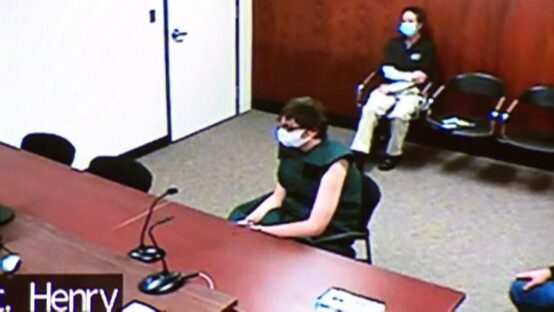
When a high school kid in suburban Detroit shot up his school last week, the initial focus was on who he was, what his motives might have been, the issue of easy access to guns in American society, and the victims and survivors of the tragedy.
The role active shooter drills may have played in limiting the number of deaths also received some early attention. But, by and large, the coverage of the Oxford High School shooting followed the standard media narrative following these events.
The narrative shifted dramatically and somewhat unusually towards the end of the week and over the weekend, focusing first on the parents’ role and then on what school staff did or didn’t do in the leadup to the tragedy.
For some, focusing on the role of the school in a school shooting is wrongheaded, given the limits of what “hardening” schools against violence can achieve and the presence of so many other societal issues such as lax gun control laws and parental negligence.
However, timely media attention on the school’s role is a crucial complement to coverage of other aspects of school shootings and a clear role for education reporters. They stand the best chance of helping us understand what really happened at Oxford High School — and possibly preventing something similar from happening again.
Education reporters stand the best chance of helping us understand what really happened at Oxford High School — and possibly preventing something similar from happening again.
It seems obvious to say that a school’s role in the events leading up to gun violence is critically important and relevant.
What did teachers, counselors, safety officers, and administrators know and do? What protocols were in place, and were they followed?
“Time and again, our research shows, adults have denied that an eventual school shooter is capable of serious violence or have failed to act on warning signs,” according to two experts in the LA Times.
Indeed, past shootings like Parkland have highlighted the importance of systems and procedures designed to keep kids safe — and the value of reporting that investigates this aspect.
After Parkland, the Sun Sentinel revealed that both the Sheriff’s Office and the school district were “unprepared for the crisis” that took place that day.
It also found that Broward County demonstrated a pattern of stonewalling and making false statements.
However, there’s a strong but mistaken belief that school staff shouldn’t be scrutinized for something that happened to them — and may have been out of their control.
“There is no school safety protocol, or battalion of school resource officers, or number of active shooter drills that can save a school from two parents who [bought their 15 year-old son] a semi-automatic handgun,” wrote the New York City educator who writes under the name Cafeteria Duty.
There’s a strong but mistaken belief that school staff shouldn’t be scrutinized for something that happened to them — and may have been out of their control.
For a few initial days after last week’s shooting, almost everything being reported was about the event, the shooter, the victims, and the responders.
That was in part because, as in many other school shooting cases, almost all the information came from local law enforcement.
However, we learned through outside sources some key details about what was going on inside the school, including teachers reporting the shooter for searching for ammo on his phone and drawing troubling images and words on a piece of paper.
And several of the details being released raised concerns about decisions made by school staff.
“Should there have been different decisions made?” the local prosecutor said in an ABC News story about the decision to release the student back to class. “Probably they will come to that conclusion.”
By and large, the district was silent. There were no district press conferences. Media inquiries were uniformly denied.
A couple of days after the shooting, superintendent Tim Throne posted a 12-minute video about what had happened, including the claim that “no discipline was warranted” against the shooter.
But again, details were scant, firsthand accounts of the deliberations were unavailable, and questions were not being taken by the district.
Details were scant, firsthand accounts of the deliberations were unavailable, and questions were not being taken by the district.
As the week went on, however, this all began to change. Media coverage began to focus squarely on the school’s role in events leading up to the shooting.
The Detroit Free Press delved into fears and tensions that had plagued the school in the weeks leading up to the shooting, though their connection to the shooting remains unclear.
This is important context for readers to understand, along with early coverage reporting that in the days leading up to the shooting some students were staying home out of fears of violence at the school.
The Wall Street Journal published a story addressing questions about what school officials could reasonably have foreseen from the student’s behavior — and what options were realistically available.
Its story notes expert views that the shooter’s behavior “was troubling in retrospect, his actions and the cascading threats didn’t necessarily signal the possibility of violence… most people who show such patterns don’t go on to commit crimes.”
The New York Times published a story about the school’s potential role in failing to prevent the shooting and potential litigation.
It cites experts who defended the school’s ability to expel the student from campus or remove him from the classroom – or to call in law enforcement. It cites research from another expert who found that “administrators sometimes worry that calling the police will violate a student’s rights.”
The Washington Post weighed in with its own coverage, weaving a statement from the superintendent that was published over the weekend.
“Some experts said they could not blame Oxford school officials for not predicting the violence they would face,” according to the Post. “Others, though, said that warning signs were clear and that officials should have checked the student’s backpack for weapons or barred him from the building based on his drawings alone.”
Bridge Michigan examined the “push-pull faced by school officials, who must weigh potential security threats facing students and staff against a concerted trend in public education to be more thoughtful about when to remove students from school grounds.”
The Associated Press story added that counselors might have been concerned about self-harm as much as threats to others, and notes that the school dean was also involved in the decision.
Despite this shift, there’s still a tremendous lack of firsthand information about what happened inside the school.
Despite this shift, we’re now a week past the shooting and there’s still a tremendous lack of firsthand information about what happened inside the school.
We’ve now heard the superintendent’s version of events. We know what law enforcement and prosecutors have told us. However, media stories focused on the school’s role are full of expert opinions, statistics, and speculation but woefully short on details about what happened in this specific instance.
We still haven’t heard from school staff, students who may have interacted with the shooter or witnessed events leading up to the shooting, or school safety officers. We still haven’t seen affidavits, transcripts. or footage from the classroom or the counselors’ office.
Only with this additional information can we answer key questions like: Why didn’t school officials search the student or isolate him until he could be evaluated? Why weren’t administrators or school safety officers involved in the decision to send the shooter back to class? Was everyone in agreement about the decision? Were other options considered?
That’s what needs to come next — detailed firsthand information about what happened at Oxford High School in the days and moments leading up to the shooting. That’s what education journalists are particularly well-positioned to provide.
Previously from The Grade
School shooting & student trauma coverage
ABOUT THE AUTHOR
Alexander Russo
Alexander Russo is founder and editor of The Grade, an award-winning effort to help improve media coverage of education issues. He’s also a Spencer Education Journalism Fellowship winner and a book author. You can reach him at @alexanderrusso.
Visit their website at: https://the-grade.org/