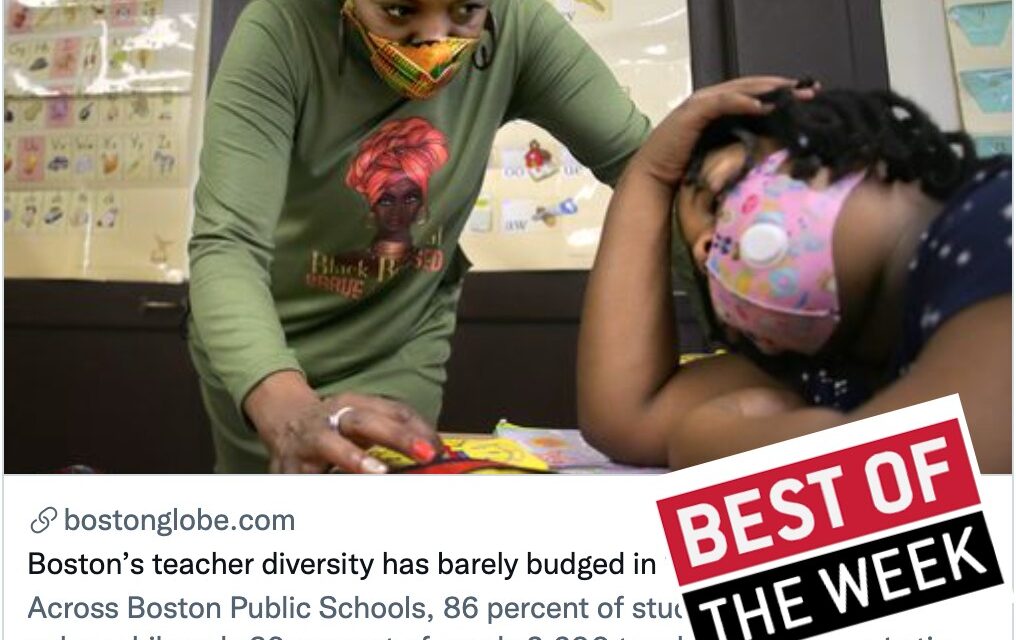
🏆 BEST: The best story of the week is Boston’s teacher diversity has barely budged in 10 years. District leaders hope the next decade will look different by Naomi Martin in the Boston Globe. It’s the third part in their series on educator diversity. In Boston, 85% of students in public schools are not white, but only 40% of school teachers and guidance counselors are people of color. That’s despite a federal court order and the creation of several programs meant to address this gap. Why does it persist? One problem is retention: hiring and then keeping teachers of color. Another, some say, is that the district isn’t prioritizing teacher diversity enough. “There’s lip service to it, maybe even some effort, but there’s no commitment to making sure that it happens,” said one former Boston School Committee member.
RELATED: Alabama wants more diverse teachers. Are efforts working? (AL.com)
🏆 RUNNER-UP: This week’s runner-up is Boys of color were hit hard by the pandemic. What do they need now? by Mila Koumpilova in Chalkbeat Chicago. The story is also the third installment in a series, this one about how Black and Latino young men are navigating school in the pandemic amid rising gun violence. Black and Latino boys consistently fall behind girls of color when it comes to educational outcomes like graduation rates, according to Koumpilova, and the pandemic has exacerbated the problem. But, she finds, little is being done to change this. “The country’s reckoning over race has brought a greater sense of urgency to the search for solutions, and districts are flush with billions of federal pandemic relief dollars,” she writes. “But so far, most efforts to rethink learning for male students of color seem to be relatively small-scale.” Fortunately, there is a faint silver lining in a few new programs, including one aimed at hiring more Black and Latino male teachers to help guide young men.
BONUS STORIES:
🏆 Federal COVID-19 aid meant to help schools recover is steered to sports (AP)
🏆 The communities are side by side. They have wildly different education outcomes – by design. (USA Today)
🏆 New York City to Phase Out Its Gifted and Talented Program (New York Times)
🏆 Boston Schools Desegregation, Then And Now (GBH)
🏆 Cleveland ISD Needed Money. The State Sent Charter Schools Instead. (Texas Monthly)

5 QUESTIONS TO ASK ABOUT VACCINE MANDATES
New from The Grade |
|
|
School vaccine mandates are increasingly popular, often including school staff, students, and student athletes.
But they’re not easy to cover, since it’s sometimes unclear when they’re going to take effect, who’s included, and what reporting and enforcement measures are going to be in place.
This week’s new column explores the ins and outs of vaccine mandates and suggests five key questions for reporters who are involved in covering them.
“It’s not just the mandate that matters,” CRPE’s Christine Pitts told me in a phone interview. “It’s the accountability and data and reporting that has to be a coordinated effort.”
According to Burbio, 61 of the top 200 districts in the nation require teacher vaccines or testing. According to CRPE, 40 of the 100 districts they’re tracking now require vaccines and/or testing for staff.
Coming soon: An education journalist reflects on being asked if she’s a parent, and how to cover math instruction better.
MEDIA TIDBITS
Thought-provoking commentary on the latest coverage. |
|
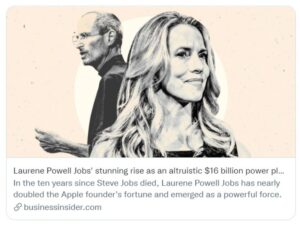
| Above: Business Insider’s profile of the Emerson Collective’s Laurene Powell Jobs, which featured juicy tidbits about the organization’s funding history with Chalkbeat.
📰 DID THE EMERSON COLLECTIVE REALLY DEFUND CHALKBEAT OVER XQ COVERAGE? This week’s Business Insider profile of the Emerson Collective’s Laurene Powell Jobs set off a small firestorm on Twitter with reporting that claims Chalkbeat lost funding because of its critical coverage of the XQ initiative to revamp American high schools. The story seems plausible on its surface, given the established history of wealthy people wanting to get their way. Still, the relationship between the Chalkbeat stories and grants to Chalkbeat is not as clear as it may seem — and the story is based on the account of a single unnamed former Emerson staffer and an email that reporter Becky Peterson has seen but will not share. More to come, but let’s beware of convenient narratives. In the meantime, former education reporter Beth Fertig announced she’s leaving WNYC and heading to XQ. No, I’m not Emerson funded.
📰 GOOD NEWS GOES BIG TIME: As recently as a couple of weeks ago, I was urging reporters to stop focusing on minor setbacks and future risks and tell readers about the successful return of in-person learning for nearly everyone — a massive increase over last year. But it didn’t seem to have much effect. Mostly, I’ve seen gloom-and-doom, “sky is falling” kinds of stories. But this week saw a big change in the coverage, featuring a U.S. News story about the leveling off of school closures nationwide and a New York Times story that bravely notes that “the vast majority of students have been in classrooms full-time and mostly uninterrupted this fall.” It’s true. Infection rates are down. School closures are down and staff vaccine mandates are up (see Burbio). District quarantine programs are being streamlined. (According to an unofficial tally, 22 states have revamped or eliminated quarantines so far.) Mask mandates are in place in 75% of the nation’s largest school districts. Things could go awry, but right now they’re going some version of OK. And the coverage is starting to reflect that.
📰 SCHOOL SAFETY DISINFORMATION: We all make mistakes, especially when we have to move too quickly. But sometimes moving fast and getting things wrong can amplify fears and erode reader trust — and often it’s not the first time we’ve fallen for a story that was too good to check. That’s what seems to have happened with the TikTok “slap a teacher” story, which was the subject of an alert from the California Teachers Association and featured by news outlets including the LA Times, USA Today, and Washington Post. However, the existence of the challenge has been disputed by TikTok and debunked by VICE and Snopes. There is no video. There is no trend. It’s all made up. The only thing to do now is to correct the story, hope readers will forgive you, and remember what happened the next time you’re seeing a story pushed that is just too good to be true. You want to be the reporter who unveils the unexpected truth, not the one who went along with the crowd — especially around important issues such as classroom safety and student discipline that have been systematically misreported in the past. These are the kinds of stories that lead to disproportionate suspensions and expulsions and police in schools.
📰 RETHINKING RURAL SCHOOLS COVERAGE: Here’s something you don’t see much in today’s world of hit jobs and attempted takedowns: A thoughtful critique of a much-admired piece of education journalism. Published in the Daily Yonder, Times Article on Rural School Misses Half the Story compares deficiency-focused coverage of rural schools such as Casey Parks’ feature story to deficiency-focused coverage of predominantly Black schools. The authors believe this approach enables a policy environment in which Black and/or rural schools are taken over or shuttered, and Black and rural teachers transferred or laid off. “Despite lack of funding, rural schools can serve as sites of learning, community, and excellence,” write the authors. “We need to understand both the problems and opportunities to make good education policy.” I’ve asked Casey Parks for her thoughts and will report back any response.
|
PEOPLE, JOBS, KUDOS
Who’s going where & doing what?
|
|
|
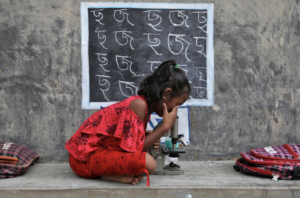
Above: The Washington Post published a nice photo essay of what classrooms around the world look like as students head back to school.
🔥 Jobs! EdSurge is hiring a part-time business reporter. Public Source in Pittsburgh is hiring a higher education reporter. The Minneapolis Star-Tribune is hiring a metro reporter to cover statewide K-12 education.The Atlanta Journal Constitution is hiring an education reporter. The Seattle Times Ed Lab is hiring a reporter. WBUR, Boston’s public radio, is hiring a new education editor. Any new job opening out there that folks might want to know about? Let us know.
🔥 New gigs: Former freelancer and Knight-Wallace journalism fellow Danielle Dreilinger was hired by USA Today as a North Carolina storytelling reporter. The Virginia Pilot’s Sara Gregory announced she’s joining the Post and Courier’s new Ed Lab in South Carolina. Former HuffPost reporter Rebecca Klein is joining New York Focus as executive editor. Former education journalist Beth Fertig announced she’s leaving WNYC for XQ, the Emerson Collective-funded effort to reinvent American high schools. Chalkbeat Chicago’s newest hire, Mauricio Peña, got his first byline for the site with a personal essay on navigating the American school system when English is your second language. Congrats also to education journalist and author Holly Korbey, who penned the cover story of the new MindSite News outlet about how schools are handling kids’ mental health after more than a year of pandemic isolation, stress, and loss.
🔥 New ed reporter follows: Annie Ma, former Charlotte Observer education reporter and current reporter for the AP covering race, ethnicity, and education, and Emma Gallegos, education reporter at the Bakersfield Californian. Anyone else I should follow? Let us know at @thegrade_ or via thegrade2015@gmail.com.
🔥 Update: Two years ago, veteran education reporter Ann Doss Helms wrote about her unexpected move from print to radio. Recently, she shared an update with us, describing the challenges of getting and keeping diverse reporters and how she’s grappling with the safety of in-person reporting at heated school board meetings. “The in-person scene can be intense, and I want to experience it,” she writes. “But when does it become worth adding an hour’s commute for a night meeting … and what level of risk is acceptable for a 62-year-old reporter covering crowds who are adamant about not wearing masks or getting vaccines?” You can read the whole thing here.
|
|
|
APPEARANCES, EVENTS
What just happened & what’s coming next?
|
|
| ⏰ Recognition: The Institute for Nonprofit News announced finalists for its new nonprofit news awards, and there are some great outlets producing strong education coverage among them, including the Sahan Journal, Oaklandside, Bridge Michigan, etc. And kudos to former Houston Chronicle education reporter Brian M. Rosenthal, who donated his Pulitizer money to help Ida B. Wells members join IRE. Congrats to all!
⏰ Appearances: The Dallas Morning News Ed Lab hosted a virtual event Tuesday on how Dallas schools will rebound from the pandemic. You can watch a replay here. Chalkbeat’s Matt Barnum talked about what’s really behind the “teacher shortage” narrative on EWA Radio. (Be careful using words like “exodus” to describe schools’ staffing shortages, or accepting the premise that it’s all about COVID.) And his colleague in Chicago Mila Koumpilova was on WBEZ Public Radio to talk about the pandemic’s impact on Black and Latino boys and young men.
⏰ Upcoming: The Atlantic is hosting an education summit on October 26 with high school and higher education leaders discussing how to better equip students with the skills needed to succeed in this new landscape. And the Center on Reinventing Public Education, RAND, and the National Association for State Boards of Education are hosting a “State of the American School District” webinar on Nov. 2, moderated by Education Week’s Alyson Klein. Register here.
Did someone forward you this newsletter? You can sign up here. |
|
|
THE KICKER
|
“I don’t have a child, and I don’t live in this town!” If you haven’t already, watch Saturday Night Live skewer the school board debates that have been all over the news lately.
|
|
|
That’s all, folks. Thanks for reading!
Reply to this email to send us questions, comments or tips. Know someone else who should be reading Best of the Week? Send them this link to sign up.
Using Feedly or FlipBoard or any other kind of news reader? You can subscribe to The Grade’s “feed” by plugging in this web address: http://www.kappanonline.org/category/the-grade/feed/.
Read more about The Grade here. You can read all the back issues of The Grade’s newsletter, Best of the Week, here.
By Alexander Russo with additional writing from Colleen Connolly.
|
|
|
|
|
|
|
|
|