I grew up in Shiprock in the Navajo Nation, near the Four Corners area of New Mexico, and that is where I live and teach today. Earlier on, I lived in a more rural part of the reservation on a farm with my grandparents. I attended school on the reservation until 6th grade, and then I moved to Chandler, Arizona, to join my mom, where she was getting her master’s degree in education. That was a complete change of environment for me, not only being exposed to non-reservation life — city life — and new and different ethnicities, but also not being around the rest of my family. There were a few other natives at my school — Pimas and Maricopas — and we gravitated toward one another. We quickly became friends because we knew we shared something that made us different.
Schooling was much more challenging in Chandler, and I had to work hard to catch up. But I was losing something, too. I was missing out on the language and cultural practices that are learned in families. I was missing out on the activities that would have brought me back to my identity.
I come from a family of educators, but I had never intended to become one myself. The birth of my son changed all that. After working as a bank teller for a few months, I started taking college classes. I decided to take a child development course to help me understand my son as he was growing up, and it ended up sparking an interest. I was already using the teachings of my grandparents and our Navajo cultural teachings to raise my son. I thought, if I can do this with one child, what would it be like to do it with a group of children?
Reflecting on my upbringing was where I found my purpose. I knew that education could be a force for good, but it could also be misused to cause harm. Like many Navajo people of his generation, my grandfather was forced to attend boarding school and was not allowed to speak his language. Raising my son, I realized why my grandfather, my mom, and other family members were educators. Education could help our people. The more our people become educated, the more we can advocate for ourselves and the more we can stand up and fight for our land, our people, and our culture.
I understood why my family pushed education so much after I had my son, and it made me reflect. Where do I want him to grow up? What do I want him to know? It was my identity and being a Dinétah person — knowing I have a place I can return home to — that had enabled me to continue through the challenging times of my life. We have the four Sacred Mountains, the songs, the prayers, and the cultural practices of my grandparents and our elders. All these things have protected me. They have grounded me and helped me know who I am.
My mom believed that she had to take me away from the Navajo Nation to provide better opportunities for me, but that pulled me away from my language and my culture. So many of our families believe they have to move their children elsewhere to get a quality education. I became a teacher here so families and students wouldn’t have to leave that place where they feel most comfortable. That gave me my purpose. I was continuing my grandfather’s legacy.
Today, I am a member of the Navajo Nation Board of Education. We want to protect our people, our families, our elders, our language, and our culture. We want to reimagine education for the Dinétah people.
As I reimagine, I think about my own early teaching experiences. I had a mentor who was a cultural Navajo language teacher. She had many years of experience teaching Navajo children her Dinétah language and incorporating it into the classroom. She even knew my grandparents, so she knew where I came from. I was very blessed to have had her for a mentor.
But there were challenges, too. Because of her deep experience, my mentor was overwhelmed with responsibilities. So, although she reviewed my lesson plans and tried to prepare me for the challenges of teaching, she didn’t have time to visit my classroom and give me feedback.
My principal, who was non-Navajo, trusted us teachers. I appreciated her confidence, but there were no formal support systems in place to help us hone our teaching skills. She had created an environment where everybody helped and supported one another, but no one provided professional development or established a teaching standard. We needed an action plan that focused on our students and their progress. I am not shy, so I was OK with figuring things out on my own, but I thought our students deserved better.
Based on my experiences as a student and teacher, I have three recommendations to ensure our school systems recruit, support, and retain Indigenous Educators.
- Start recruitment efforts early on. We should recruit students who live in the most rural communities, the ones who speak the language, to become teachers. Preparation programs should enable teachers to complete their service learning in the communities where they intend to teach. There are some good models, such as that offered by the tribal Diné College, that incorporate the teaching from our elders. We must start with young candidates and find ways to grow our own teachers.
- Provide pathways to leadership. Many teachers believe that when you teach here, in the Navajo Nation, you’re stuck with nowhere to go. We must elevate the idea that if you’re living here and you’re serving Navajo students, implementing the Navajo Nation learning philosophy, that creates a pathway to leadership.
- Ensure that schools work to understand their students, teachers, families, and communities. We must bring more Indigenous readings and perspectives into our classrooms. If educators take the time to learn about and show appreciation for and understanding of where students come from, all those special things about their family lives that excite them, it works wonders. It’s always about the relationships with students and their families. Indigenous Teachers are more likely to continue teaching if their schools honor the culture and perspectives of their students.
The history of education in the United States demonstrates that many inequities exist, which the COVID-19 pandemic has highlighted even more. But we can change that. If we encourage young people to go into teaching and if we can support them to become great teachers, they can advocate for retaining their language and their culture — and for providing an excellent education right here in our Indigenous communities. Just as I have returned to Shiprock to send my sons to school here and teach students from the families I grew up with, others can do the same. Once we build strong education systems and Indigenous Teacher voice is valued within those communities, change will come.
ABOUT THE AUTHOR

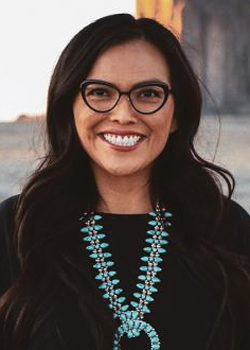
Andrea Thomas
ANDREA THOMAS is a 3rd-grade teacher at Mesa Elementary in Central Consolidated Schools in Shiprock, NM.