-
BEST OF THE WEEK
The week’s best education journalism, all in one place:
ALARMIST REOPENING STORIES AND PANDEMIC REPORTING TIPS
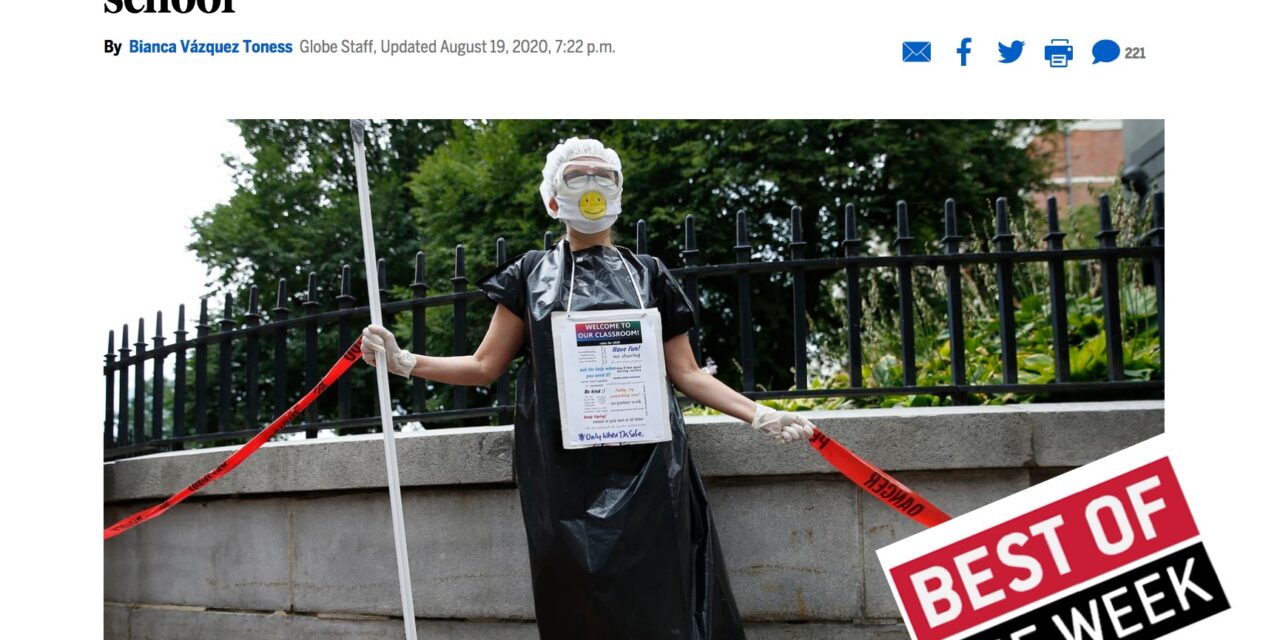
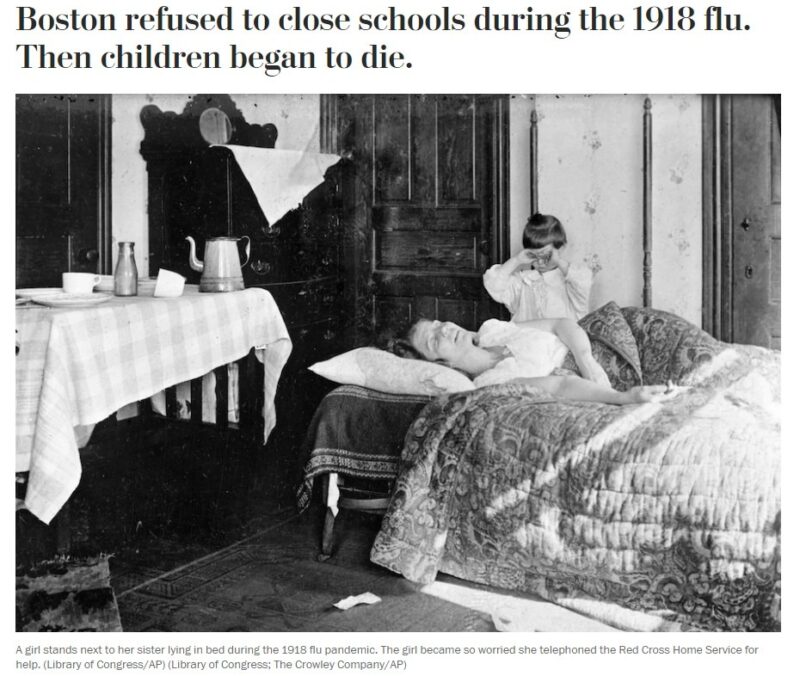
In this week’s column, I tackled the question of how to convey the serious risks and strong emotions that surround the COVID cases at schools and the larger reopening debate without unnecessarily fanning readers’ fears. That’s not an easy task, given the seriousness of the situation and the intensity of the politics. But it’s crucial, and I have some simple ideas that would help.Earlier in the week, we published a new piece from contributor Colleen Connolly about what education reporters have learned about reporting on schools in a pandemic. Reporters including the Boston Globe’s Bianca Vázquez Toness, USA Today’s Erin Richards, WBEZ Chicago’s Susie An, and the Texas Tribune’s Aliyya Swaby shared tips, including trying their best to get those in-person interviews when possible, finding new ways to connect with sources online, relying on teamwork, and scouring data for story ideas that don’t rely on face-to-face meetings. Belated thanks to the folks at Nieman Lab for including our “Education Lab” story in their recent newsletter!
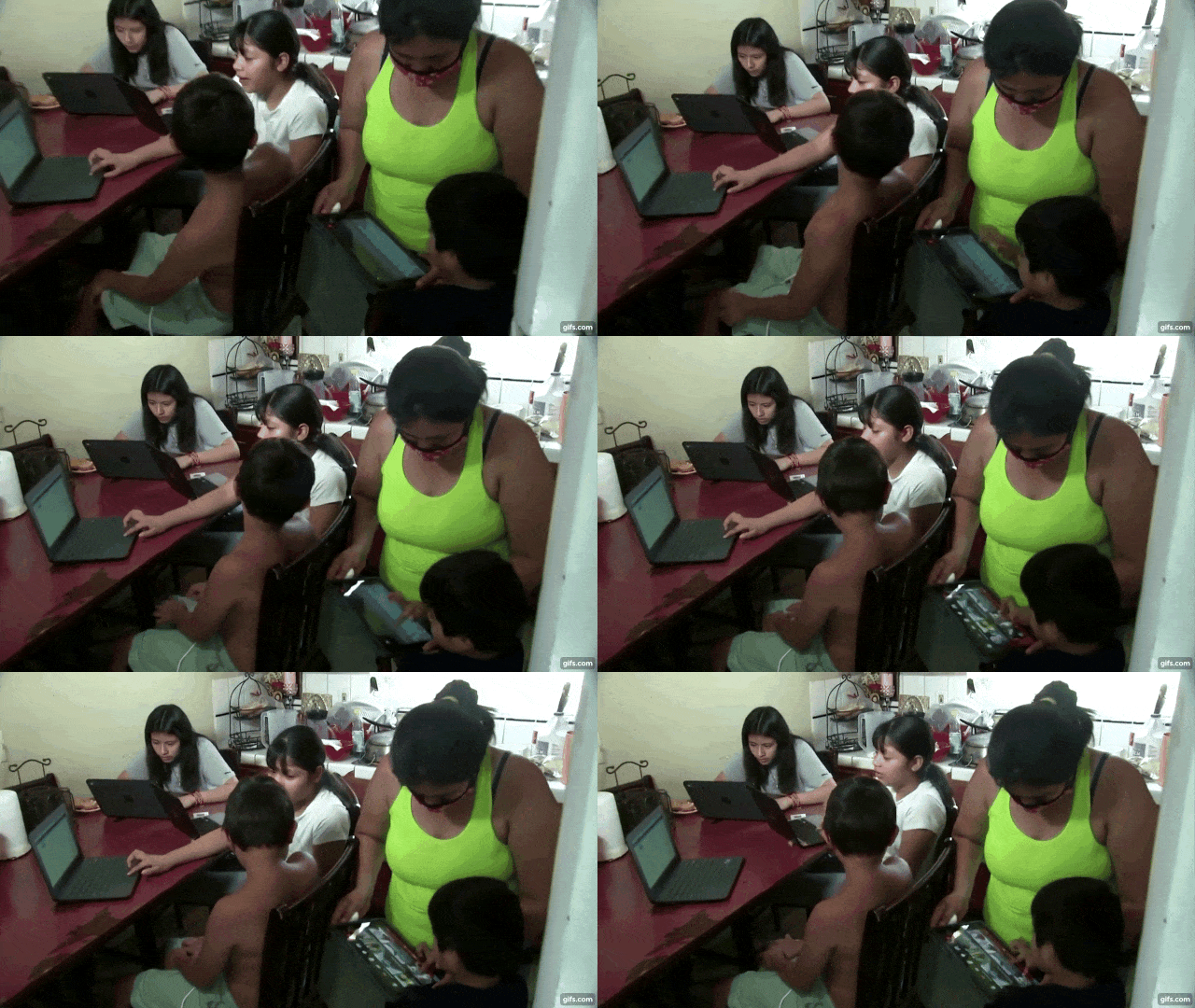
VIDEO: Five kids and one cell phone hot spot; a low-income family in Los Angeles is trying to ensure its kids can learn virtually. Watch here. MEDIA TIDBITS
Thought-provoking commentary on the latest coverage:
📰 THE UNBEARABLE WHITENESS OF PUBLIC RADIO: Laura Garbes wrote an important American Prospect piece about “how whiteness dilutes voices of color in public radio” that you should probably read if you’re interested in how race affects news coverage. “Over half of my interview sample gave examples of concrete resistance they encountered when proposing stories that made white people feel uncentered or uncomfortable,” Garbes writes, describing cringe-worthy anecdotes about oblivious editors and little-disguised efforts to keep accented voices out of stories. When you’re done, read nine education reporters reflecting on their experiences with race in the newsroom from earlier this summer.📰 SPOTLIGHTING TEACHERS UNIONS: Kudos to the Boston Globe, New York Times, Chalkbeat bureaus, and other outlets shining a light on the increasingly prominent role of teachers unions pushing back against reopening efforts. Teachers’ concerns and union efforts are important to cover, given their powerful role in shaping plans and influencing the debate. However, they also need to be distinguished from parents’ concerns and preferences, which are often quite different. Parents and teachers have publicly differed on whether or not to reopen in-person instruction in a handful of locations, and may differ in more places as schools reopen. 📰 SCHOOL REOPENING POP-UPS: The New York Times has launched a three-day-a-week newsletter on the topic called the Coronavirus Schools Briefing, produced by Adam Pasick and Amelia Nierenberg, who describes the effort as a “pop-up newsletter to help contextualize how the pandemic is changing education.” ProPublica is also making an effort to cover the story. notes reporter Annie Waldman: “@ProPublica is covering school, college and university reopenings during COVID-19, and we need your help.” In an effort more loosely connected to the reopening story, KPCC’s Jill Repogle announced that “for at least the next 2 yrs, my colleague @briannaclee & I will be reporting for @KPCC @LAist on the varied pathways to higher education & the obstacles along the way.”
📰 UNIONIZATION COMES TO NONPROFIT EDUCATION NEWS: Chalkbeat became the first nonprofit education news team that I know of to become unionized — and they did it with management cooperation. Greater newsroom diversity, transparency on salaries, and equitable protections regarding layoffs or furloughs are listed as among the reasons that they pursued unionization. (In the most recent newsroom diversity survey, Chalkbeat reported that 58 percent of its editorial staff are white.) Curious about how unionization might affect education coverage? Check out Rachel Cohen’s February story on covering education in a unionized newsroom, which features education reporters describing their experiences. Other nonprofit education news outlets like Inside Higher Ed, EdWeek, EdSource, and Hechinger Report could follow, though I don’t imagine all will do so.
Missed some previous editions? You can see the archive of past newsletters here. Additional reporting by Colleen Connolly.
PEOPLE, AWARDS, JOBS
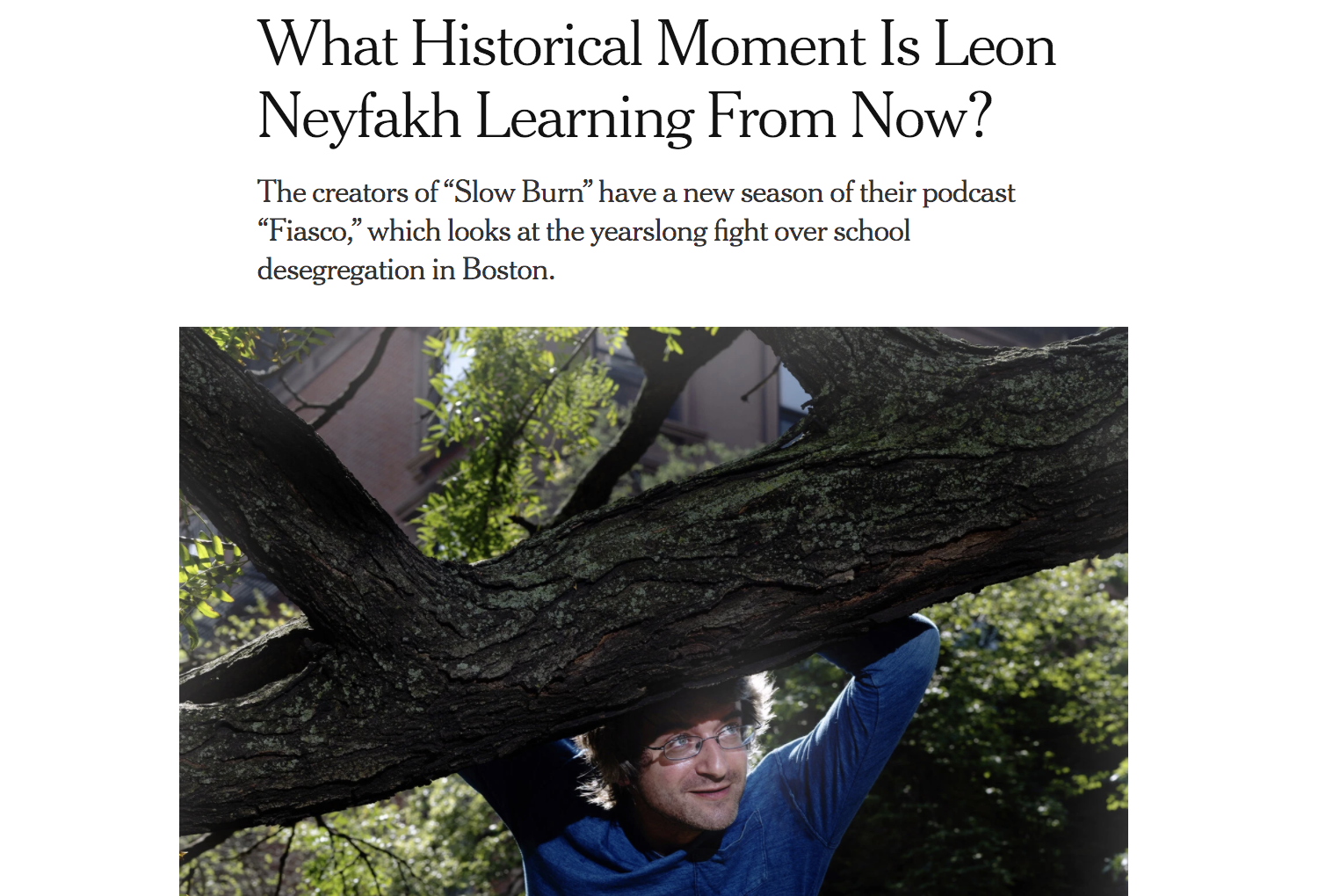
Who’s going where & doing what?🔥 The New York Times published an interview with Leon Neyfakh (above) about his latest season of the “Fiasco” podcast, which tells the story of school desegregation efforts in Boston. “What drew me to it, is it’s the kind of story if you hear it in detail, it can really teach you something about how the world works, now and forever,” Neyfakh said. Listen to the podcast here.🔥 New jobs alert! USA Today is expanding its education team and hiring a reporter to focus on inequities in education. And the Washington Post is hiring an editor to run its education team. Stephen Smith, who has been the education editor since 2017, has officially moved over to the national desk as a health and science editor. 🔥 More moves: Boston Globe reporter Malcolm Gay, who is part of The Great Divide team, is moving back to his old beat covering the arts. Gay was a lead writer and reporter for the Globe’s award-winning “Valedictorians Project” and one of the founding members of the Globe’s investigative education team.
🔥 Jessica Bakeman, education reporter for Miami’s NPR station WLRN, was named Journalist of the Year by SPJ Florida. Congratulations, Jessica!
🔥 Freelance education reporter Aaricka Washington says she’s got exciting news to share, and we can’t wait. Washington wrote an amazing piece for The Grade about her layoff experience, which too many people are experiencing this year.
Did someone forward you this newsletter? You can sign up here.
EVENTS
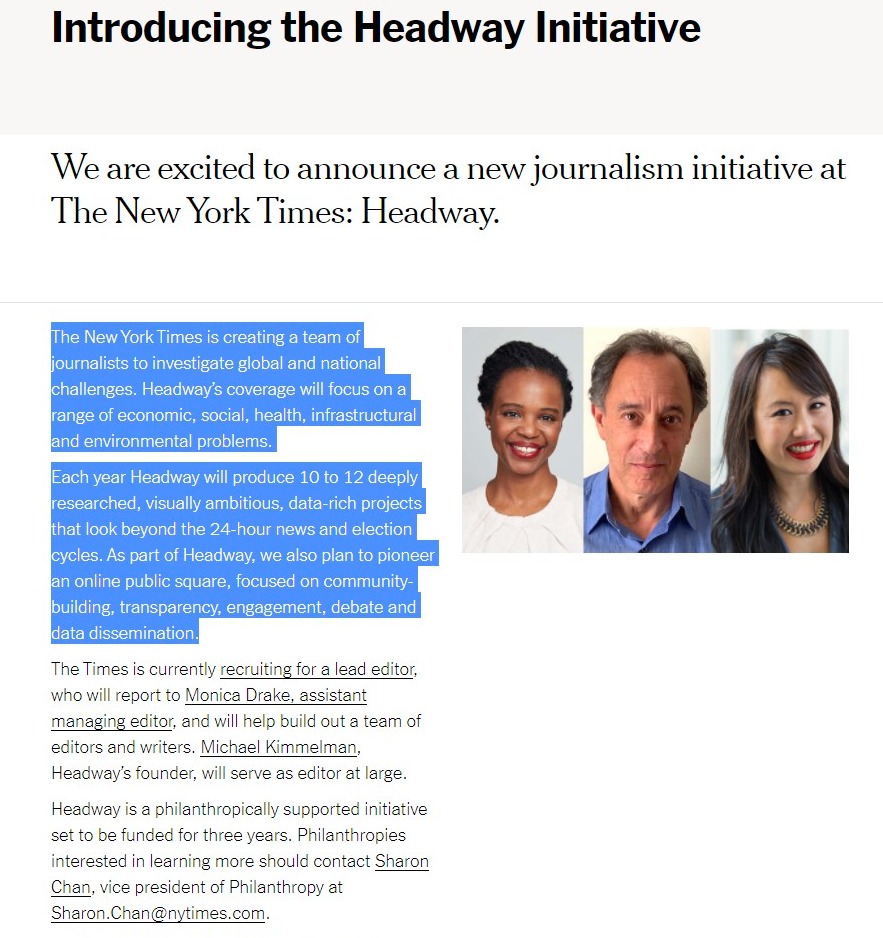
⏰ Oh, hey, here’s a new foundation-supported outfit embedded in the NYT, The Headway Initiative (above), like I mentioned a few weeks ago. Not a great name, but crossed fingers for readers that education is one of the topics the Times chooses for its deep dives. And watch out, education news nonprofits!⏰ The new Chalkbeat Philadelphia bureau is up and running, featuring longtime Notebook reporter Dale Mezzacappa. Check out their work here. They’re still looking for a bureau chief. You can apply here. ⏰ Nikole Hannah-Jones is among the featured speakers at this year’s SPJ conference September 12-13. More info here.

THE KICKER
WBUR education editor Kathleen McNerney’s 4-year-old was excited about her radio spot, but not very impressed. That’s all, folks. Thanks for reading!Reply to this email to send us questions, comments or tips. Know someone else who should be reading Best of the Week? Send them this link to sign up. Using Feedly or FlipBoard or any other kind of news reader? You can subscribe to The Grade’s “feed” by plugging in this web address: http://www.kappanonline.org/category/the-grade/feed/.
Read more about The Grade here. You can read all the back issues of The Grade’s newsletter, Best of the Week, here.
ABOUT THE AUTHOR
Alexander Russo
Alexander Russo is founder and editor of The Grade, an award-winning effort to help improve media coverage of education issues. He’s also a Spencer Education Journalism Fellowship winner and a book author. You can reach him at @alexanderrusso.
Visit their website at: https://the-grade.org/