Five ways to make your reopening coverage smart, helpful, and compelling — with example stories to use as models.
By Alexander Russo
With school districts making decisions left and right, reopening is the education topic of the moment.
Last week, New York City announced its hybrid reopening plan, offering some in-person education for those who want it. Monday, Los Angeles and San Diego announced that they would be online-only for the immediate future. Maryland’s Montgomery County Public Schools are also starting online-only, too. Atlanta had planned on hybrid but switched to remote because of rising infection rates.
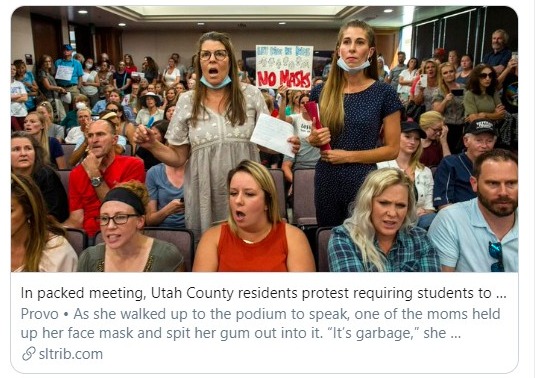
Reopening might even be the coronavirus topic of the moment, thanks to the involvement of the White House, impassioned classroom teachers and parents who’ve stormed social media to let their feelings be known, and districts that keep announcing — then sometimes revising — their reopening plans.
However, reopening is also an enormously complicated topic, spanning education, the economy, and public health. And it’s become a political and ideological lightning rod. Emotions are running high.
These factors make reopening an exciting story to cover but also create a stormy debate that makes it hard for even the most experienced, savvy education journalists not to lose their bearings.
Reopening is an enormously complicated topic, spanning education, the economy, and public health. And it’s become a political and ideological lightning rod, making it hard for even the most experienced, savvy education journalists not to lose their bearings.
Still, there are ways to cover this thorny story that leave readers informed about the process, what the available science can tell us, and — perhaps most important — what the ramifications are for student learning.
Here’s how:
FOCUS ON STUDENT IMPACT
It’s easy for the school-reopening debate to get boiled down to a simple in-person vs. online decision or a political debate that one side is winning or losing, but — I’ve said it before! — you will help readers enormously if you keep focused on the amounts and types of educational opportunities kids are going to be getting under various scenarios.
If you’re covering a district that has been moving towards resuming some version of in-person instruction, such as Kansas City, Indianapolis, Providence, and Reno, find out how the effort is going to re-engage students and make up for lost learning time.
If you’re covering a district that’s sticking with remote learning for now, dig into what exactly that’s going to look like. How is the program going to be improved over last spring, when remote learning was deemed insufficient? The New York Times’ Dana Goldstein described planning to improve remote learning as “a huge story to watch.” I agree.
In either case, remember that little-discussed labor agreements often shape what districts can and can’t require from teachers.
Related coverage: Two hours a day!? Remote learning provides meager offerings for low-income kids
AVOID GOOD GUY/BAD GUY COVERAGE
In a situation as politicized and emotional as this one, it’s enormously tempting to lean into stories that portray school reopeners as the bad guys and those urging caution as the good guys. Dunking on DeVos is fun, I get it. But the realities of what can and should be done are much more nuanced than that. There are valid concerns on all sides.
Given the controversial nature of the debate, it’s extremely important to include multiple points of view in your stories, rather than taking any one side and running with it. Most reopening stories should at least mention the perspectives of more than one of the key stakeholder groups — teachers, parents, and students — and where possible also indicate variations within each group.
A recent NYT article cited roughly half of parents wanting kids to return to in-person school overall. The Minneapolis Star-Tribune covered a statewide poll showing most parents there being OK with school reopening. Nearly 90 percent of Black respondents said they felt it was risky to return kids to school, compared with just 64 percent of whites, according to a recent poll. Some parents in Fairfax County in Virginia are pushing for a five-day in-person education in addition to the online and hybrid options offered by the district.
You get the idea. Not all parents are for reopening schools on a traditional schedule. Not all teachers (or Democrats) are against it. There’s a more nuanced story to tell.
Not all parents are for reopening schools on a traditional schedule. Not all teachers (or Democrats) are against it. There’s a more nuanced story to tell.
Related coverage: No, asking questions about remote learning isn’t ‘teacher bashing’
GIVE EXTRA VOICE TO WORKING-CLASS PARENTS
Teachers are worried, easy to find, and eager to tell their stories right now. But they’re just one part of the puzzle here. Similarly, there’s been no shortage of parent perspectives in coverage of the reopening debate, but many of these perspectives have also been from college-educated work-from-home parents rather than essential workers and others who must show up in person or are experiencing unemployment.
“We need more reporting that centers those parents,” tweeted longtime education writer Maureen Kelleher, “in part so white middle/upper middle-class folks can stop projecting on them!”
In addition, the majority of parents of school-age children in the US are no longer white, and many are not middle class. “We need to reflect that in our conversations and coverage,” tweeted Worcester (MA) School Committee member Tracy Novick.
A recent USA Today story features check-ins with more than a dozen households, describing “measured and hyper-local” — and widely varying — responses from parents regardless of geography or financial background.
GIVE EXTRA VOICE TO VULNERABLE STUDENTS
Another under-represented group in much of the reopening coverage I’ve seen is vulnerable students, who may have become disengaged from school during the spring and can’t afford a repeat of the skimpy efforts many districts were offering.
What do we know about their experience with remote instruction last spring? What happens to them if schools don’t reopen on-campus instruction in September? We need to know.
They may not be on your preferred social media platform or be comfortable talking with adults, but that makes your inclusion of them all the more important. You’re their only shot at being represented in the debate.
Find them on Instagram or TikTok, or through teachers, guidance counselors, and social service agencies who work with vulnerable families. Reach out to student activists who were engaged in the recent police violence protests. If your area is no longer on lockdown and your newsroom permits it, go to a park or fast food restaurant. It’s delicate, sometimes difficult work, but it desperately needs doing.
This new Wall Street Journal story focuses on the experiences of vulnerable kids in Jackson, Mississippi.
What do we know about vulnerable students’ experience with remote instruction last spring? What happens to them if schools don’t reopen on-campus instruction in September? We need to know.
Related coverage: Remote learning has been a mess. Writing it off will only make things worse.
CONTEXTUALIZE FEELINGS AND FEARS
Speaking of desperation: Writing about peoples’ fears is extraordinarily difficult to do well. It’s important not to discount them, especially in areas where infection rates are high and rising. But it’s also important to provide more than a litany of parents and educators’ concerns. Simply asking people how they feel and leaving it at that isn’t helpful.
It’s essential for news coverage to provide context to teachers’ views, based on available knowledge. The epidemiological facts surrounding the chances of infection in school settings have been given relatively little attention in too much reopening coverage, resulting in stories that tend to amplify concerns rather than place them in context.
“We need evidence-centered, and solution-oriented, journalism that puts forth evidence that can inform debates,” writes self-described education geek Karen Vaites on Twitter, calling for inclusion of studies and relevant case studies from other countries or from comparable situations such as daycare.
Journalists need to thread the needle of depicting peoples’ fears without simply amplifying (or appearing to ratify) them.
One of the best recent pieces about the school-reopening debate was a recent New York Times story written by a trio of science and health reporters, which gave readers important context, sketched out the limits of definitive research on COVID transmission, and detailed the relationship between community spread and preventive measures at schools. The Washington Post also recently paired an education reporter with science and political writers to good effect – a strategy that newsroom has used to cover COVID/school stories going back to March.
Writing about peoples’ fears is extraordinarily difficult to do well. It’s important not to discount them, especially in areas where infection rates are high and rising. But it’s also important to provide more than a litany of concerns.
The stories that have been bothering me the most include examples from the NYT and KUT public radio in Austin that focused narrowly on teachers’ fears, without much context or variation. We know many teachers are worried about reopening; stories along these lines did little to add to our knowledge.
But there have been standout reopening stories, too. This recent Washington Post story about Fairfax, Va., where districts are offering two different options, includes both teacher and parent perspectives and — quite aptly — describes their situation as ‘wrenching.’
Another recent Washington Post story took readers into a community that had been hard hit by COVID, where “a strong minority” of parents are disinclined to send their kids back to in-person school.
This recent LA Times story provided district, union, and other perspectives, sketching out some of the educational implications of a return to remote learning on vulnerable students. At the national level, this new Wall Street Journal story puts vulnerable kids front and center.
These are stories that help readers form their own, better-informed views of a difficult decision — yes, a wrenching one.
Related stories from The Grade
Reopening coverage should focus on students’ needs
The disengaged kids missing from the New York Times’ remote learning coverage
8 ways to make education journalism more student-centered
ABOUT THE AUTHOR
Alexander Russo
Alexander Russo is founder and editor of The Grade, an award-winning effort to help improve media coverage of education issues. He’s also a Spencer Education Journalism Fellowship winner and a book author. You can reach him at @alexanderrusso.
Visit their website at: https://the-grade.org/