Covering school shootings has become an unfortunate but familiar part of being an education journalist. Doing the job carefully and accurately is extremely difficult. Classroom safety stories are more frequent but nearly as challenging to cover well. Here are some of the main pieces published by The Grade about these challenging topics:
‘Incredibly dangerous’: gun violence coverage focused on mass school shootings.
Everyday gun violence devastating marginalized communities should be our focus, says The Guardian’s Lois Beckett in this evergreen “On The Media” interview.
School shootings aren’t crime stories; they’re public health stories
We should put these predictable performances in their place: on the back pages of the paper, not the front, at the bottom of the hour, not the top, says longtime education journalist Greg Toppo.
Warning signs in Uvalde (interview with Mark Follman)
A Mother Jones journalist makes the case for covering instances of school gun violence through a prevention-focused ‘threat assessment’ lens. But he says that’s not mostly what’s been happening in the past week.
‘If you need to cry, cry.’ 6 education reporters’ advice on covering school shootings
Be prepared for anger – and tears. Question official narratives.Go to meetings. Take ‘no’ for an answer. Take breaks. And be prepared for some extremely difficult moments.
How to escape the school safety vortex (Maureen Kelleher)
“Truly performing our duty to seek news and report it now requires us to write no more than necessary about COVID safety and make room for the stories that could have longer-term impact on the readers we serve.”
The media obsession with ‘bad kids’ (Cafeteria Duty)
Think twice about those narrowly reported ‘student misbehavior’ stories, says the anonymous educator who goes by Cafeteria Duty. They can do a lot of unintended harm.
Threat assessment, school accountability, and media coverage (newsletter item)
“Absolutely there must be scrutiny of how schools handle threat cases and prepare for potential violence,” says Mother Jones’ Mark Follman, author of a new book about gun violence.
What happened inside Oxford high school? We still need to know.
“Education reporters stand the best chance of helping us understand what really happened at Oxford High School — and possibly preventing something similar from happening again.”
The limits of ‘threat assessment’
“Lack of coordinated action is shaping up to be a key missing element of Oxford High School’s response to the warning signs presented by the school shooter, and possibly a $100 million mistake. However, the Washington Post reporters — and, more likely, their editor — underplayed the limitations of the threat assessment process.”
Parkland coverage, 12 months later
“The national coverage I’ve seen this past year has been riddled with its own issues, including a problematic focus on a narrow storyline, sloppy reporting about the prevalence of school shootings, and a lack of substantive follow-up.”
“Easily dismissed conspiracy theories and journalistic deference toward school administrators seem to have resulted in less aggressive coverage of the district’s role in the events leading up to the February 14th school shooting.”
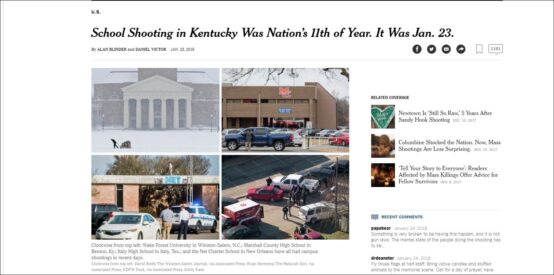
Misleading coverage of school shootings in 2018
“An examination of the coverage reveals that the small-town high school shooting was not initially given the national attention it warranted, especially on cable news. But the coverage that appeared in the following days was exaggerated, suggesting that school shootings like the one in Kentucky are common and increasingly frequent.”
Why gun violence journalism needs graphic images
“Avoiding or limiting graphic images in gun violence journalism seems squeamish and outdated, according to a small but growing chorus of voices — and may need some serious rethinking given the current role of social media.”
Why the graphic image of a mortally wounded Columbine student won a Pulitzer Prize (newsletter)
“Former Rocky Mountain editor John Temple believes that the U.S. media has fallen into the trap of depicting a sanitized version of the horror of mass shootings. Initially outraged, the student’s mother eventually supported the decision.”
How the media botched coverage of the Columbine school shooting
“Myths took root from the start, nurtured by frightened and confused students and amplified by news outlets running hard with rumor and conjecture… In fact, as Mr. Cullen notes, Columbine was less a successful school shooting than it was a failed school bombing.”
How the media got hold of the Orlando shooter’s student records
“Reporters should strive to improve their trauma coverage by taking more time to get to know the students they cover without defining them by their trauma, by explaining the science of trauma and resilience, by avoiding generalizations or assumptions, and by holding systems rather than communities accountable.”
“With internet stories lasting a lifetime or more, journalists have yet to come up with an agreed-upon strategy for preserving our “first drafts of history” while protecting innocent people from unintended long-term harm.”
ABOUT THE AUTHOR

The Grade
Launched in 2015, The Grade is a journalist-run effort to encourage high-quality coverage of K-12 education issues.